Building Blocks
This section contains fundamental products for the synthesis of organic and biological compounds. Building blocks are the essential starting materials used to construct complex molecules through various chemical reactions. They play a critical role in drug discovery, material science, and chemical research. At CymitQuimica, we offer a diverse range of high-quality building blocks to support your innovative research and industrial projects, ensuring you have the essential components for successful synthesis.
Subcategories of "Building Blocks"
- Boronic Acids & Boronic Acid Derivatives(5,756 products)
- Chiral Building Blocks(1,242 products)
- Hydrocarbon Building Blocks(6,095 products)
- Organic Building Blocks(61,038 products)
Found 196817 products of "Building Blocks"
Sort by
Purity (%)
0
100
|
0
|
50
|
90
|
95
|
100
2-[4-(Methylamino)oxan-4-yl]ethan-1-ol
CAS:<p>Versatile small molecule scaffold</p>Formula:C8H17NO2Purity:Min. 90%Color and Shape:Clear LiquidMolecular weight:159.23 g/mol2,3,4-Trimethoxy-6-methylbenzaldehyde
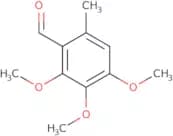
CAS:<p>2,3,4-Trimethoxy-6-methylbenzaldehyde is a synthetic coumarin with antibacterial activity. It is synthesized by the condensation of 3-hydroxyacetophenone and benzaldehyde. 2,3,4-Trimethoxy-6-methylbenzaldehyde has been shown to have antibacterial activity against both Gram-positive and Gram-negative bacteria. This molecule has also been shown to inhibit the growth of Gram negative bacteria in the presence of hydrogen peroxide. The crystal structure of this molecule was determined by XRD analysis and shows that it contains a dihedral angle of about 155°.</p>Formula:C11H14O4Purity:Min. 95%Molecular weight:210.23 g/molOctyl isocyanate
CAS:<p>Octyl isocyanate is a non-steroidal anti-inflammatory drug that belongs to the class of isocyanates. The biological activity of octyl isocyanate has been studied extensively, and it has been shown to inhibit the polymerase chain reaction (PCR). Octyl isocyanate also inhibits the growth of bacteria in vitro through metal chelation and polymyxin B., which are antibiotics that bind metal ions and disrupt bacterial cell membranes. Octyl isocyanate has been shown to be reactive in vivo, leading to autophagy and necrosis.</p>Formula:C9H17NOPurity:Min. 97 Area-%Color and Shape:Clear LiquidMolecular weight:155.24 g/mol2,4,6-Trihydroxybenzoic acid methyl ester
CAS:<p>2,4,6-Trihydroxybenzoic acid methyl ester is a synthetic compound that has been used in animal studies to investigate the inflammatory effects of substances. It has been shown to have anti-inflammatory properties in vitro and in vivo. Furthermore, 2,4,6-Trihydroxybenzoic acid methyl ester has been shown to inhibit the production of tumour necrosis factor-α (TNF-α) and other cytokines. This drug also has anti-fungal activity against Candida albicans and Aspergillus fumigatus. 2,4,6-Trihydroxybenzoic acid methyl ester is biodegradable.</p>Formula:C8H8O5Purity:Min. 95%Color and Shape:PowderMolecular weight:184.15 g/mol3,5-Difluoro-4-hydroxybenzaldehyde
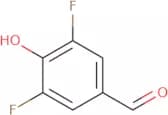
CAS:<p>3,5-Difluoro-4-hydroxybenzaldehyde is a biochemical that belongs to the group of anticancer agents. It is activated by hydroxyl radicals and inhibits cancer cells. 3,5-Difluoro-4-hydroxybenzaldehyde inhibits protein synthesis in the cell by binding to messenger RNA and preventing its translation into protein. This compound also has inhibitory properties against DNA polymerase, which prevents DNA replication and transcription. 3,5-Difluoro-4-hydroxybenzaldehyde can be used as a template for oligodeoxynucleotides (ODN) to enhance photochemical properties.</p>Formula:C7H4F2O2Purity:Min. 95%Color and Shape:Off-White PowderMolecular weight:158.1 g/mol5-Fluoro-2-hydroxybenzaldehyde
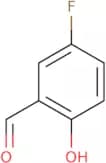
CAS:<p>5-Fluoro-2-hydroxy benzaldehyde is a hydrogen bonding compound that has been shown to be an acid complex. It reacts with copper to form a copper complex that can be detected by x-ray diffraction data. 5-Fluoro-2-hydroxybenzaldehyde also has the ability to react with hydroxyl groups, which allow for its use as a fluorescence probe. The presence of this compound in urine has been used to detect kidney disease and urinary tract infections. 5-Fluoro-2-hydroxybenzaldehyde is also thought to have antiinflammatory properties because it can inhibit kinase activity and may inhibit the production of inflammatory cytokines such as IL1β, IL6, and TNFα.</p>Formula:C7H5FO2Purity:Min. 95%Color and Shape:PowderMolecular weight:140.11 g/molFA-Leu-Gly-Pro-Ala-OH
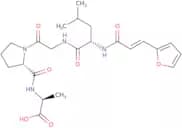
CAS:<p>FA-Leu-Gly-Pro-Ala-OH is a gelatinase inhibitor that inhibits the action of collagenase, an enzyme that breaks down collagen. It has been shown to inhibit the growth of cancer cells in vitro and may be useful as a therapeutic agent against skin cancer. FA-Leu-Gly-Pro-Ala-OH binds to the active site of the enzyme and blocks its catalytic activity by preventing proton transfer during the hydrolysis of peptide bonds. This inhibitor also has proteolytic properties, which are due to its ability to cleave proteins with basic amino acids such as arginine and lysine. The inhibitory effects of FA-Leu-Gly-Pro-Ala-OH on histological analysis were also tested on fibroblast cells with collagenase activity, which showed a significant reduction in enzyme activity after incubation with this inhibitor.</p>Formula:C23H32N4O7Purity:Min. 95%Color and Shape:PowderMolecular weight:476.52 g/mol5-Fluoroindole-2-carboxylic acid
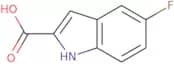
CAS:<p>5-Fluoroindole-2-carboxylic acid is a new substance that has been found to be an inhibitor of the influenza virus. It prevents the virus from replicating by inhibiting the synthesis of viral proteins and nucleic acids. 5-Fluoroindole-2-carboxylic acid can be prepared by dispersive solid phase extraction of a mixture of fluoroindole, fumaric acid, and potassium hydroxide in water. The compound has also been shown to potentiate the effects of carbamazepine on caspases and enhance mass spectrometric analysis for gaseous hydrochloric acid. 5-Fluoroindole-2-carboxylic acid produces antinociceptive effects in animals.</p>Formula:C9H6FNO2Color and Shape:PowderMolecular weight:179.15 g/mol5-Ethynylbenzo-1,3-dioxole
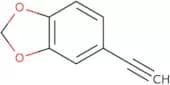
CAS:<p>5-Ethynylbenzo-1,3-dioxole is a terminal alkyne that has two terminal alkyne groups. It can form hydrogen bonds and interactions with other molecules. 5-Ethynylbenzo-1,3-dioxole is a reactive molecule that can be used to create polymers and other chemical compounds. The terminal alkynes are important for the stability of these compounds, as they bind to the polymer chains. 5-Ethynylbenzo-1,3-dioxole is used in organic chemistry to synthesize polymers and other chemical compounds.</p>Formula:C9H6O2Purity:Min. 95%Color and Shape:PowderMolecular weight:146.14 g/mol1,2-Naphthoquinone-4-sulfonic acid potassium salt
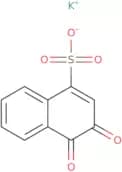
CAS:<p>1,2-Naphthoquinone-4-sulfonic acid potassium salt is a pesticide that has been shown to be active against many types of insects. It is used as an insecticide and acaricide in agriculture, horticulture, and forestry. The compound is stable and does not hydrolyze in water, making it easy to handle. This product is also a natural product that can be synthesized from cyanamide and amines, which are both commercially available. 1,2-Naphthoquinone-4-sulfonic acid potassium salt has been found to be effective at killing insects when injected into their bodies with the use of a syringe or when sprayed on the surface where they live. GC–MS analysis has shown that this compound contains no reactive functional groups or substances that would cause harm to humans or animals. Research has shown this product to be safe for use in food crops and animal feed.</p>Formula:C10H5O5SKPurity:Min. 98 Area-%Color and Shape:Orange PowderMolecular weight:276.31 g/mol2,4,6-Trihydroxybenzaldehyde
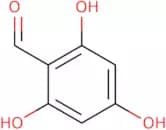
CAS:<p>2,4,6-Trihydroxybenzaldehyde is a polymerase chain inhibitor that blocks the synthesis of DNA and RNA. It has been shown to have significant cytotoxicity in vitro and has been used as an antimicrobial agent to inhibit the growth of bacteria. 2,4,6-Trihydroxybenzaldehyde also inhibits tetracycline resistance in Mycobacterium tuberculosis (Mtb) by inhibiting the production of proteins vital for bacterial cell division. This compound is structurally related to naturally occurring compounds such as anthocyanins and it has been shown to have inhibitory properties on mitochondrial membrane potential, which may be due to its ability to inhibit protein synthesis and induce apoptosis. The analytical methods used for this compound are thin layer chromatography and high performance liquid chromatography.</p>Formula:C7H6O4Purity:Min. 98 Area-%Color and Shape:PowderMolecular weight:154.12 g/mol4,4'-Dipyridyl - 98%
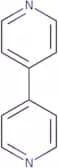
CAS:<p>4,4'-Dipyridyl is a cyclic peptide with a basic structure. It has been found to have inhibitory effects against the growth of bacteria in human serum and group P2. The x-ray crystal structures reveal that it has strong intermolecular hydrogen bonding interactions. Experimental solubility data and coordination models show that 4,4'-dipyridyl is soluble in anhydrous sodium. Structural analysis and kinetic energy calculations indicate that the inhibitor binding site is located on the hydroxyl groups of the backbone of the molecule. This ligand also binds to metal ions such as copper or zinc.</p>Formula:C10H8N2Color and Shape:Off-White PowderMolecular weight:156.19 g/mol2-(Aminomethyl)-N-(2-methoxyethyl)aniline
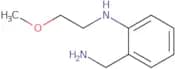
CAS:<p>Versatile small molecule scaffold</p>Formula:C10H16N2OPurity:Min. 90%Color and Shape:Clear LiquidMolecular weight:180.25 g/molFmoc-L-m-Tyrosine(tBu)-OH
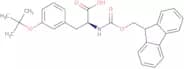
CAS:<p>Fmoc-L-m-Tyrosine is a reagent that is used in organic synthesis. It is a complex compound that can be synthesized from m-tyrosine and t-butyl bromoacetate. Fmoc-L-m-Tyrosine is also a useful intermediate for the preparation of other compounds, such as pharmaceuticals and agrochemicals. It has been shown to be a fine chemical that has a wide range of applications in the field of biotechnology and pharmaceuticals. Fmoc-L-m Tyrosine is also a versatile building block with many possible reactions, making it an excellent candidate for research chemicals, including speciality chemicals. The CAS number for this compound is 204384-71-4 and it's molecular weight is 262.3 g/mol.br></p>Formula:C28H29NO5Purity:Min. 97 Area-%Color and Shape:Off-White PowderMolecular weight:459.53 g/mol3,4,5-Trimethoxyacetophenone
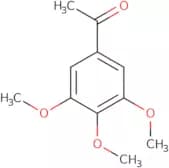
CAS:<p>3,4,5-Trimethoxyacetophenone is a natural product that has been shown to be an antimycotic. It has significant cytotoxicity against A549 cells and also inhibits the growth of cancer cells in culture. 3,4,5-Trimethoxyacetophenone has a low bioavailability due to its chemical properties and inhibitory effects on CYP3A4. This compound is metabolized by the liver into metabolites with inhibitory properties. 3,4,5-Trimethoxyacetophenone also binds to methoxy groups on proteins.</p>Formula:C11H14O4Purity:Min. 99 Area-%Color and Shape:White PowderMolecular weight:210.23 g/molFmoc-Thr(tBu)-Ser-OH
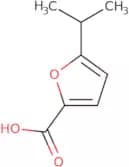
<p>Fmoc-Thr(tBu)-Ser-OH is a building block that is often used in organic synthesis as a reagent or scaffold. It can be used in the synthesis of complex compounds, such as peptides and proteins. Fmoc-Thr(tBu)-Ser-OH has been shown to be useful in the preparation of high quality reagents and research chemicals. This chemical can also be used as an intermediate for the synthesis of other compounds, such as pharmaceuticals and pesticides. Fmoc-Thr(tBu)-Ser-OH is soluble in organic solvents, which makes it versatile for use in a wide variety of reactions. Fmoc-Thr(tBu)-Ser-OH has a CAS number that can be found by searching on the Chemical Abstract Services website (CAS).</p>Formula:C26H32N2O7Purity:Min. 95%Color and Shape:PowderMolecular weight:484.54 g/mol5-(Propan-2-yl)furan-2-carboxylic acid
CAS:<p>5-(Propan-2-yl)furan-2-carboxylic acid is a reagent that can be used in the synthesis of complex compounds. It is a speciality chemical that has been found to be useful as a building block and intermediate. 5-(Propan-2-yl)furan-2-carboxylic acid can be used in the synthesis of many different types of compounds, including pharmaceuticals, agrochemicals, and fine chemicals. The compound is also used as a research chemical and a versatile building block for more complex molecules.</p>Formula:C8H10O3Purity:Min. 95%Molecular weight:154.16 g/mol2-Fluoroadenine
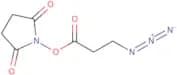
CAS:<p>2-Fluoroadenine is an inhibitor of DNA synthesis, which is used to study the effect of carcinogens on the cell cycle. It is a potent inducer of G2/M arrest in HL-60 cells, and has been shown to be cytotoxic to a number of different carcinoma cell lines. 2-Fluoroadenine disrupts collagen gel networks by binding to nitrogens in the protein matrix. This inhibits the glycosylation process that stabilizes collagen networks. The use of 2-fluoroadenine as a chemotherapeutic agent has been studied in animal models and clinical trials. 2-Fluoroadenine has been shown to inhibit mitochondrial membrane potential, leading to apoptosis caused by oxidative stress.</p>Formula:C5H4FN5Purity:Min. 98 Area-%Color and Shape:Off-White PowderMolecular weight:153.12 g/mol3-Azidopropanoate-N-hydroxysuccinimide ester
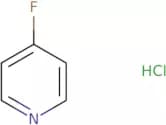
CAS:<p>3-Azidopropanoate-N-hydroxysuccinimide ester is a fluorescent probe that can be activated by the addition of an azide donor. The fluorescence of 3-azidopropanoate-N-hydroxysuccinimide ester is dependent on the presence of serum albumin and can be used as a model system for studying albumin uptake and metabolism. This probe has been shown to have good uptake in lung cancer cells, which may be due to its ability to bind with the receptor on the cell surface. 3-Azidopropanoate-N-hydroxysuccinimide ester binds to proteolytic enzymes such as plasmin, cathepsins, and elastase, which are found in high concentrations in lung cancer cells.</p>Formula:C7H8N4O4Purity:Min. 95%Color and Shape:PowderMolecular weight:212.16 g/mol4-Fluoropyridine HCl
CAS:<p>4-Fluoropyridine HCl is a pyridine that can be used as a stabilizer in organic synthesis. It can react with hydrogen fluoride to give fluorides, which are useful in organic synthesis. 4-Fluoropyridine HCl reacts with anhydrous 4-aminopyridine to give high yields of the salt of 4-aminopyridines, which are aminopyridines that have been substituted by a substituent such as chlorine, bromine, or iodine. This product is also used for the fluorination of benzene and other aromatic substrates.</p>Formula:C5H4FN·HClPurity:Min. 95%Color and Shape:PowderMolecular weight:133.55 g/mol
![2-[4-(Methylamino)oxan-4-yl]ethan-1-ol](/_next/image/?url=https%3A%2Fstatic.cymitquimica.com%2Fproducts%2F3D%2Fthumb-webp%2FHHC67998.webp&w=3840&q=75)