Building Blocks
This section contains fundamental products for the synthesis of organic and biological compounds. Building blocks are the essential starting materials used to construct complex molecules through various chemical reactions. They play a critical role in drug discovery, material science, and chemical research. At CymitQuimica, we offer a diverse range of high-quality building blocks to support your innovative research and industrial projects, ensuring you have the essential components for successful synthesis.
Subcategories of "Building Blocks"
- Boronic Acids & Boronic Acid Derivatives(5,756 products)
- Chiral Building Blocks(1,242 products)
- Hydrocarbon Building Blocks(6,095 products)
- Organic Building Blocks(61,038 products)
Found 196817 products of "Building Blocks"
Sort by
Purity (%)
0
100
|
0
|
50
|
90
|
95
|
100
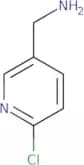
2-Chloro-5-aminomethylpyridine
CAS:<p>2-Chloro-5-aminomethylpyridine is an active substance that is used in medicine. It is a chlorinated compound, which has been shown to be effective against resistant mutants of bacteria. The mechanism of action is not yet clear, but it may be due to the formation of hydrogen chloride, which inhibits the growth of bacteria by binding to DNA and RNA. 2-Chloro-5-aminomethylpyridine has also been shown to act as an inhibitor for enzymes such as succinic dehydrogenase and glucose 6 phosphate dehydrogenase. This drug can also be detected in urine samples with a high sensitivity analytical method.</p>Formula:C6H7ClN2Purity:Min. 95%Color and Shape:Off-White PowderMolecular weight:142.59 g/mol4-Chloro-3-nitrobenzonitrile
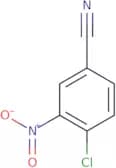
CAS:<p>4-Chloro-3-nitrobenzonitrile is a molecule with potent antibacterial activity. It is synthesized by the reaction of sodium carbonate, hydrogen chloride, and 4-chlorobenzonitrile. 4-Chloro-3-nitrobenzonitrile has shown antimicrobial properties against a wide range of bacteria, including methicillin resistant Staphylococcus aureus (MRSA) and Enterococcus faecium. This compound has been used in the treatment of infections caused by these bacteria. 4-Chloro-3-nitrobenzonitrile also has the ability to inhibit the synthesis of fatty acids and lipids in bacterial cells, which may be responsible for its antimicrobial effects.</p>Formula:C7H3ClN2O2Purity:Min. 95%Color and Shape:PowderMolecular weight:182.56 g/mol5-Chloro-2-methylindole
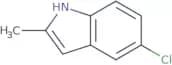
CAS:<p>5-Chloro-2-methylindole is an antimicrobial agent that is used to treat bacterial infections. It binds to the enzyme acetylacetone hydrazide, which prevents it from forming acetoacetate and 5-chloroindole. This leads to a decrease in the formation of serotonin, which may contribute to the alleviation of symptoms in patients with cerebral escherichia coli infection. 5-Chloro-2-methylindole has been shown to have antimicrobial effects against a number of bacteria, including E. coli and Staphylococcus aureus. The drug is injected intraperitoneally as a magnetic resonance imaging contrast agent for myelography, angiography, and other medical imaging procedures.</p>Formula:C9H8ClNPurity:Min. 95%Molecular weight:165.62 g/mol6-Carboxyindole
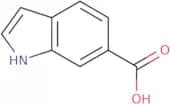
CAS:<p>6-Carboxyindole is an indole that binds to the IL-17A receptor, which leads to the production of pro-inflammatory cytokines. It has been shown to be involved in autoimmune diseases and other inflammatory conditions. 6-Carboxyindole can be used as a probe for studying the biology of IL-17A, by binding to it and inhibiting its effects. The chemical structure of 6-carboxyindole is also useful for diagnostic purposes, as it can bind to antibodies and antigens for detecting infectious diseases or other biological processes. 6-Carboxyindole can be used in the treatment of heart tissue by binding with monoclonal antibodies that are specific for cardiac proteins such as myosin light chain kinase.</p>Formula:C9H7NO2Purity:Min. 95%Molecular weight:161.16 g/mol(E)-5-(-But-1-en-1-yl)benzene-1,3-diol
CAS:<p>(E)-5-(-But-1-en-1-yl)benzene-1,3-diol is a chemical building block that reacts readily with a variety of reagents. It is also a versatile intermediate and has been used as a building block in the synthesis of complex compounds. (E)-5-(-But-1-en-1-yl)benzene-1,3-diol has been shown to be an important component in the synthesis of peptides, amines, and other organic compounds. This compound is also useful for research purposes and as a speciality chemical or fine chemical.</p>Formula:C10H12O2Purity:Min. 95%Color and Shape:PowderMolecular weight:164.2 g/mol2-tert-Butoxybenzoic acid
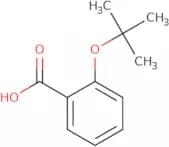
CAS:<p>2-tert-Butoxybenzoic acid is a versatile chemical that can be used as a reagent, a speciality chemical, or as an intermediate in the synthesis of other compounds. It is typically used in organic chemistry for the preparation of esters, amides, and nitriles. 2-tert-Butoxybenzoic acid is also useful as a building block for complex molecules. This compound has been shown to react with alcohols to form esters, with amines to form amides, and with nitro groups to form nitriles.</p>Formula:C11H14O3Purity:Min. 95%Color and Shape:PowderMolecular weight:194.23 g/mol4-Biphenylmethanol
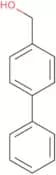
CAS:<p>4-Biphenylmethanol is a low potency naphthalene derivative that has been shown to be carcinogenic in animal studies. It is also an inhibitor of protein synthesis, which may play a role in its carcinogenic potential. 4-Biphenylmethanol has been shown to inhibit the growth of Salmonella typhimurium and Saccharomyces cerevisiae strain when used at concentrations of 50 μg/mL or higher. This compound can react with hydrochloric acid to form hydrogen bonding interactions, which may account for its observed antibacterial activity.</p>Formula:C13H12OPurity:Min. 95%Color and Shape:PowderMolecular weight:184.23 g/mol2-Bromo-5-methoxytoluene
CAS:<p>2-Bromo-5-methoxytoluene is a synthetic organic compound that is used as a chemical intermediate for cellulose derivatives. It is generated by the Friedel-Crafts reaction of bromine with toluene in the presence of aluminum chloride. 2-Bromo-5-methoxytoluene has been shown to react with cellulose derivatives and other hydrogen bond acceptors. This reaction is followed by protonation, which yields a chromophore that changes color from yellow to orange. The mechanism of this reaction can be explained by an acid catalysis mechanism, which begins with protonation of the carbonyl group (C=O) and formyl group (HC=O) groups. This causes the formation of an enolate ion, which reacts with a protonated carbonyl group to yield a formyl cation and an enolate ion. The formyl cation then reacts with another proton</p>Formula:C8H9OBrPurity:Min. 95%Color and Shape:PowderMolecular weight:201.06 g/mol1-Bromo-2-(trifluoromethoxy)ethane
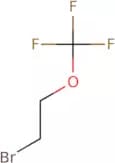
CAS:<p>1-Bromo-2-(trifluoromethoxy)ethane is a chemical compound with the formula CBrFO. It is a colorless liquid that reacts violently with water and alkali metals. 1-Bromo-2-(trifluoromethoxy)ethane has been used as a precursor to 2-chloroethyl peroxide, which can be used in organic synthesis as an oxidant or in solvents to produce chloroprene. The bromine atom in this molecule can be replaced by fluorine or chlorine atoms, forming 1-fluoro-2-(trifluoromethoxy)ethane and 1,1,1-trichloroethylene.</p>Formula:C3H4BrF3OPurity:Min. 95%Color and Shape:PowderMolecular weight:192.96 g/mol4'-Butylacetophenone
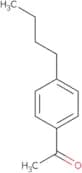
CAS:<p>4'-Butylacetophenone (BA) is a phenolic compound that has been shown to reduce the need for an acceptor in wastewater treatment. It can be used as a substitute for hexane, which is commonly used to extract hydrophobic compounds from water. 4'-Butylacetophenone has also been shown to have anti-inflammatory properties and has been used in the synthesis of nonsteroidal anti-inflammatory drugs such as diclofenac amide.</p>Formula:C12H16OPurity:Min. 95%Color and Shape:PowderMolecular weight:176.25 g/mol4-Benzyloxy-1H-indole-2-carboxylic acid methyl ester
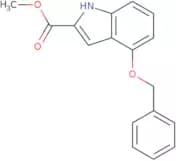
CAS:<p>4-Benzyloxy-1H-indole-2-carboxylic acid methyl ester is a high quality reagent that is used as an intermediate in the synthesis of various complex compounds, including useful scaffolds and building blocks. It is a versatile building block with a wide range of reactions that can be carried out on it. 4-Benzyloxy-1H-indole-2-carboxylic acid methyl ester has been shown to be useful for the synthesis of speciality chemicals and research chemicals. This compound has also been shown to be useful for the preparation of fine chemicals, such as pharmaceuticals, pesticides, and flavorants.</p>Formula:C17H15NO3Color and Shape:PowderMolecular weight:281.31 g/mol6-Bromo-1H-indole-3-carboxylic acid
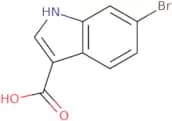
CAS:<p>6-Bromo-1H-indole-3-carboxylic acid is a natural product that is isolated from the marine sponge Smenospongia purpurea. It was first reported in 1979 and has been used for the synthesis of other compounds. 6-Bromoindole, a precursor to 6-bromo-1H-indole-3-carboxylic acid, is biosynthesized from methyl ester and NMR spectra indicate that it has a dihedral angle of 173°. This compound has been shown to have antibacterial activity against staphylococcus.</p>Formula:C9H6BrNO2Purity:Min. 95%Color and Shape:PowderMolecular weight:240.05 g/mol1-Boc-4-bromomethylpiperidine
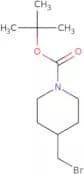
CAS:<p>1-Boc-4-bromomethylpiperidine is a versatile building block for the synthesis of complex compounds with diverse biological activity. It is an excellent reagent for the synthesis of 1,2,3-triazoles, which are useful scaffolds in the synthesis of high quality pharmaceuticals. This compound can be used as a reaction component and as a useful intermediate in various chemical reactions.</p>Formula:C11H20BrNO2Purity:Min. 97 Area-%Color and Shape:PowderMolecular weight:278.19 g/molN-α-Boc-N-ε-Fmoc-L-lysine
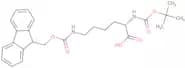
CAS:<p>N-alpha-Boc-N-epsilon-Fmoc-L-lysine is a cyclic peptide that has antimicrobial properties. The peptide is synthesized from the amino acid lysine and contains a sequence of lysine residues. N-alpha-Boc-N-epsilon-Fmoc-L-lysine can be used to treat herpes simplex virus infections and influenza virus infections. It also has the potential to neutralize glycopeptide antibiotics, such as vancomycin, by binding to their cell wall targets and interfering with the function of these molecules. In addition, this peptide can be used to manufacture insulin analogues with improved pharmacokinetic properties and increased stability in blood plasma.</p>Formula:C26H32N2O6Purity:Min. 95%Color and Shape:White To Off-White SolidMolecular weight:468.54 g/mol2-[(1-Carboxyethyl)amino]propanoic acid
CAS:<p>2-[(1-Carboxyethyl)amino]propanoic acid (CEPA) is a cell lysing agent that can be used to kill bacteria, fungi, and viruses. CEPA has antimicrobial activity against Gram-positive and Gram-negative bacteria, including MRSA, VRE, and Candida. CEPA has been shown to have chronic pulmonary effects in mice by inhibiting the growth of lung tissue cells. It also inhibits the growth of metastable tumor cells in mice. CEPA binds to the peptidoglycan layer of bacterial cell walls and causes cell lysis by disrupting hydrogen bonding interactions between water molecules and CEPA's carboxyl group. CEPA is a member of group P2 in the CID database with a chemical stability in water vapor greater than 90%. CEPA is soluble in metoprolol succinate at pH 5-6 but insoluble at pH 8 or higher due to the formation of hydrogen tartrate crystals.</p>Formula:C6H11NO4Purity:Min. 95%Molecular weight:161.16 g/mol6-[(1E)-2-(3,4-Dihydroxyphenyl)ethenyl]-3,4-dihydroxy-2H-pyran-2-one
CAS:<p>Versatile small molecule scaffold</p>Formula:C13H10O6Purity:Min. 95%Color and Shape:PowderMolecular weight:262.2 g/mol4-Benzylpyridine
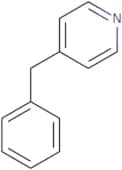
CAS:<p>4-Benzylpyridine is an organic compound with a molecular formula of C8H6N2. It has two chlorine atoms, two nitrogen atoms, and a methyl group. The chemical structure of 4-benzylpyridine is heterocyclic and it has a molecular weight of 150.4 g/mol. 4-Benzylpyridine is soluble in organic solvents, but insoluble in water. The reactivity of this compound can be explained by the presence of the C=C double bond and one or more electron withdrawing groups (-NH2, -Cl). 4-Benzylpyridine is used as an inhibitor for many reactions such as hydrogen bonding or carboxylate reactions. The x-ray crystal structures show that the molecule's shape resembles that of 1,3-benzodioxole-5-carboxylic acid (BDC) but with a benzene ring instead on a 1,3 benzo group</p>Formula:C12H11NPurity:Min. 98 Area-%Color and Shape:Colorless Clear LiquidMolecular weight:169.22 g/molN-α-Benzoyl-L-arginine ethyl ester hydrochloride
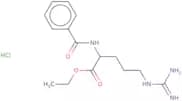
CAS:<p>Benzoyl-L-arginine ethyl ester hydrochloride is a white or beige crystalline solid with a melting point of 85°C. It is soluble in water and ethanol. It has been used as a reagent, speciality chemical, and reaction component for the synthesis of complex compounds. Benzoyl-L-arginine ethyl ester hydrochloride is used as a building block in the synthesis of an intermediate, which is then used to create scaffold drugs.</p>Formula:C15H23ClN4O3Purity:Min. 98 Area-%Color and Shape:White PowderMolecular weight:342.82 g/mol5-Bromoindole-3-carboxaldehyde
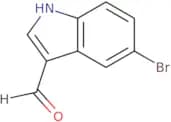
CAS:<p>5-Bromoindole-3-carboxaldehyde is a water molecule that has been crystallized in the form of an amide. It is a chemical substance with asymmetric synthesis and significant antifungal activity. 5-Bromoindole-3-carboxaldehyde is active against some strains of the fungus Candida albicans and has been shown to inhibit the growth of kidney cells. This molecule also binds to the neurokinin 1 receptor and is used as a probe for fluorescence studies. The efficient method for synthesizing 5-Bromoindole-3-carboxaldehyde includes using silico analysis to confirm the structure on a computer, then performing an asymmetric synthesis with an acid catalyst to produce this compound.</p>Formula:C9H6BrNOPurity:Min. 98 Area-%Color and Shape:PowderMolecular weight:224.05 g/mol5-Benzyloxyindole-3-acetic acid
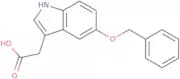
CAS:<p>5-Benzyloxyindole-3-acetic acid is a synthetic chemical that is used as a plant growth regulator. It inhibits the uptake of other plant nutrients, such as nitrates and phosphate ions by roots, which leads to decreased plant growth. This compound also has an inhibitory effect on membranes and morphology. The inhibition of membrane transport can lead to cell death, which can be seen in the case of plants treated with this chemical. 5-Benzyloxyindole-3-acetic acid has been shown to affect the response pathway of plants at temperatures between c1-c3 degrees Celsius.</p>Formula:C17H15NO3Purity:Min. 95%Color and Shape:PowderMolecular weight:281.31 g/mol



![2-[(1-Carboxyethyl)amino]propanoic acid](/_next/image/?url=https%3A%2Fstatic.cymitquimica.com%2Fproducts%2F3D%2Fthumb-webp%2FUIA75519.webp&w=3840&q=75)
![6-[(1E)-2-(3,4-Dihydroxyphenyl)ethenyl]-3,4-dihydroxy-2H-pyran-2-one](/_next/image/?url=https%3A%2Fstatic.cymitquimica.com%2Fproducts%2F3D%2Fthumb-webp%2FZWC96466.webp&w=3840&q=75)