Building Blocks
This section contains fundamental products for the synthesis of organic and biological compounds. Building blocks are the essential starting materials used to construct complex molecules through various chemical reactions. They play a critical role in drug discovery, material science, and chemical research. At CymitQuimica, we offer a diverse range of high-quality building blocks to support your innovative research and industrial projects, ensuring you have the essential components for successful synthesis.
Subcategories of "Building Blocks"
- Boronic Acids & Boronic Acid Derivatives(5,756 products)
- Chiral Building Blocks(1,242 products)
- Hydrocarbon Building Blocks(6,095 products)
- Organic Building Blocks(61,038 products)
Found 196817 products of "Building Blocks"
Sort by
Purity (%)
0
100
|
0
|
50
|
90
|
95
|
100
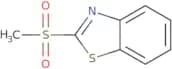
2-(Methylsulfonyl)benzothiazole
CAS:<p>Benzothiazole, 2-(methylsulfonyl)- is a chemical with anticancer activity. It is an amatoxin that inhibits the synthesis of RNA and DNA by binding to the enzyme nitro. The reactive benzothiazole moiety can be converted to a reactive amide by reaction with amine groups on proteins or nucleic acids. This compound has been shown to inhibit cellular uptake of cancer cells in xenopus oocytes and has been studied as a potential drug against cervical cancer.</p>Formula:C8H7NO2S2Purity:Min. 95%Color and Shape:PowderMolecular weight:213.28 g/mol3-Hydroxy-4-iodobenzaldehyde
CAS:<p>3-Hydroxy-4-iodobenzaldehyde is a fluorophore that is used in the synthesis of amide compounds, as well as in the production of other synthetic molecules. 3-Hydroxy-4-iodobenzaldehyde has been shown to have pharmacokinetic properties that are similar to those of fluorescein, and can be used to study the distribution and metabolism of this compound. This compound also has an oxidation potential that is higher than that of fluorescein, which makes it more useful for studying drug metabolism. The labile nature of 3-hydroxy-4-iodobenzaldehyde means it will not remain intact for long periods of time.</p>Formula:C7H5IO2Purity:Min. 95%Color and Shape:PowderMolecular weight:248.02 g/mol5-Azetidin-3-yl-3-methyl-[1,2,4]oxadiazole hydrochloride
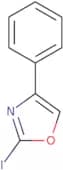
CAS:<p>5-Azetidin-3-yl-3-methyl-[1,2,4]oxadiazole hydrochloride is a solid that is used as a reagent in the preparation of other chemicals. This chemical has been shown to be useful in the synthesis of complex compounds, such as pharmaceuticals and pesticides.</p>Formula:C6H9N3O•HClPurity:Min. 95%Color and Shape:PowderMolecular weight:175.62 g/mol2-Iodo-4-phenyl-1,3-oxazole
CAS:<p>Versatile small molecule scaffold</p>Formula:C9H6INOPurity:Min. 95%Color and Shape:PowderMolecular weight:271.05 g/mol3-Iodopyrazin-2-ol
CAS:<p>Versatile small molecule scaffold</p>Formula:C4H3IN2OPurity:Min. 95%Color and Shape:PowderMolecular weight:221.98 g/molN-Methyl-N-[1H-indol-3-yl)methyl]amine
CAS:<p>N-Methyl-N-[1H-indol-3-yl)methyl]amine is a plant alkaloid that is found in many plants. It has been shown to have a high constant and to be able to be extracted from the gramine. N-Methyl-N-[1H-indol-3-yl)methyl]amine has been shown to inhibit nitrification and may have potential use as an herbicide. The reaction products of this compound are unknown, but it has been shown to inhibit biosynthesis in vitro assays. This compound also has properties that make it useful for the study of gender and dry weight expression in plants, as well as its ability to be produced by polyclonal antibodies.</p>Formula:C10H12N2Purity:Min. 95%Color and Shape:PowderMolecular weight:160.22 g/mol1-Nonanol
CAS:<p>1-Nonanol is a colorless liquid with a pleasant odor. It can be synthesized from methyl pentanoate by the asymmetric addition of an inorganic acid to the ester hydrochloride. This process results in a mixture of 1-nonanol and its isomer 2-nonanol, which can be separated using an analytical method such as gas chromatography. 1-Nonanol has been shown to have high transport properties, making it useful for detergent compositions. It has also been shown to exhibit strong hydrogen bonding abilities that may contribute to its adsorption mechanism.</p>Formula:C9H20OPurity:Min. 95%Color and Shape:Colorless Clear LiquidMolecular weight:144.25 g/mol4,4,5,5-Tetramethyl-2-[4-(pentafluorosulfanyl)phenyl]-1,3,2-dioxaborolane
CAS:<p>Versatile small molecule scaffold</p>Formula:C12H16BF5O2SPurity:Min. 80%Molecular weight:330.13 g/mol2-Bromo-4-tert-butyl-1-methyl-benzene
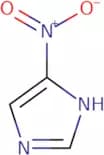
CAS:<p>2-Bromo-4-tert-butyl-1-methyl-benzene (2BTMB) is a congener of polychlorinated biphenyls (PCBs). It is an oily liquid that is insoluble in water. 2BTMB is metabolized by the liver, and has been found in the blood, adipose tissue, and eggs of salmonids. 2BTMB has shown to have physicochemical properties that are similar to other PCB congeners. The toxicity of 2BTMB is largely unknown because it has not been extensively studied. 2BTMB can magnify up the food chain through bioaccumulation and biomagnification.</p>Formula:C11H15BrPurity:Min. 95%Color and Shape:PowderMolecular weight:227.14 g/mol4-Nitroimidazole
CAS:<p>4-Nitroimidazole has a redox potential that is well suited to the reduction of nitro groups. It is an antimicrobial agent that inhibits the growth of microorganisms by inhibiting DNA synthesis. 4-Nitroimidazole can be used for the treatment of infectious diseases such as tuberculosis, leprosy, and brucellosis. In rat liver microsomes, 4-nitroimidazole reacts with NADPH to produce a nitro group and an imidazole ring with a new configuration. The reaction mechanism is based on electron transfer from NADPH to the nitro group in 4-nitroimidazole via a series of reactions that involve cytochrome P450 enzymes. This reaction has kinetic energy and matrix effects that affect its pharmacokinetics and pharmacodynamics.</p>Formula:C3H3N3O2Purity:Min. 95%Color and Shape:White PowderMolecular weight:113.07 g/mol5-Methanesulfinylpentanenitrile
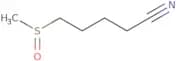
CAS:<p>5-Methanesulfinylpentanenitrile is a compound that is found in plants such as broccoli, cabbage, and cauliflower. It has been shown to have anticarcinogenic properties in cell culture studies. The activity of sulforaphane can be increased by the presence of glucosinolates. Sulforaphane inhibits the synthesis of fatty acids and is metabolized by detoxification enzymes. Amides are formed from sulforaphane, which can be detected using preparative high performance liquid chromatography (prep-HPLC). The water solubility of sulforaphane can be increased by heating it to a temperature above its boiling point so that it becomes supercritical (above its critical temperature). This allows for the preparation of dry weight samples for analysis.</p>Formula:C6H11NOSPurity:Min. 95%Molecular weight:145.23 g/molL-Tyrosine
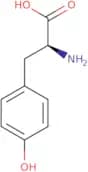
CAS:<p>Amino acid; precursor to neurotransmitters, hormones, pigments, natural phenols</p>Formula:C9H11NO3Color and Shape:White PowderMolecular weight:181.19 g/mol1-[4-(2-Methoxyethyl)phenoxy]propan-2-one
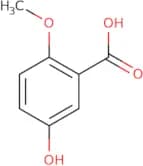
CAS:<p>1-[4-(2-Methoxyethyl)phenoxy]propan-2-one is a useful scaffold for organic synthesis. It is a versatile building block that can be used as an intermediate in the synthesis of complex compounds with pharmaceutical, agrochemical and other applications.1-[4-(2-Methoxyethyl)phenoxy]propan-2-one is also a reagent in chemical reactions, and has been used to synthesize other compounds such as 1-[4-(2-Methoxyethyl)phenoxy]propan-2-ol (CAS No. 1155083-54-7). This compound has been shown to have good reactivity and high quality, making it an excellent research chemical.</p>Formula:C12H16O3Purity:Min. 95%Molecular weight:208.25 g/mol5-Hydroxy-2-methoxybenzoic acid
CAS:<p>Apigenin is a flavonoid found in plants of the genus Labiatae, such as chamomile and feverfew. It is a potent anti-inflammatory agent that may be due to its ability to inhibit cyclooxygenase (COX) enzymes and subsequent production of proinflammatory prostaglandins, leukotrienes, and thromboxanes. Apigenin has also been shown to inhibit cancer cell growth by binding to DNA and inhibiting transcription. Apigenin is chemically stable at room temperature and has been used in techniques such as liquid chromatography-mass spectrometry (LC-MS).</p>Formula:C8H8O4Purity:Min. 95%Color and Shape:PowderMolecular weight:168.14 g/mol2-[(Dimethylcarbamothioyl)sulfanyl]acetonitrile
CAS:Versatile small molecule scaffoldFormula:C5H8N2S2Purity:Min. 95%Color and Shape:PowderMolecular weight:160.30 g/mol2-{[1-(2,4-Difluorophenyl)ethyl]amino}-N-ethylacetamide
CAS:<p>Versatile small molecule scaffold</p>Formula:C12H16F2N2OPurity:Min. 95%Color and Shape:PowderMolecular weight:242.26 g/molDL-Pantolactone
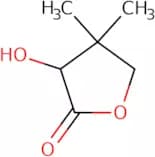
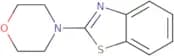
CAS:<p>DL-Pantolactone is a chiral lactone compound. In cosmetics, it is often used in formulations aimed at improving skin hydration and elasticity as it is an emulsion stabiliser. In pharmaceuticals it can be used as an intermediate in organic synthesis. The D-enantiomer is often used as a chiral auxiliary.</p>Formula:C6H10O3Purity:Min. 95%Color and Shape:White PowderMolecular weight:130.14 g/mol2-(Morpholin-4-yl)-1,3-benzothiazole
CAS:<p>2-(Morpholin-4-yl)-1,3-benzothiazole is a natural product that is found in the soil. It can be synthesized by reacting benzotriazole with morpholine and an acid catalyst. This compound has been used as a chromatographic stationary phase for the analysis of hydrocarbons and other organic compounds. The experimentally determined profile of this substance consists of peaks at m/z 265, 273, and 289. The technique used to detect these peaks was photometric.</p>Formula:C11H12N2OSPurity:Min. 95%Color and Shape:PowderMolecular weight:220.29 g/mol2-[(2-{2-[(Oxiran-2-yl)methoxy]ethoxy}ethoxy)methyl]oxirane
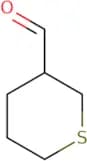
CAS:<p>2-[(2-{2-[(Oxiran-2-yl)methoxy]ethoxy}ethoxy)methyl]oxirane is an ether that is used as a polymerizable monomer in the form of diglycidyl ether. It is biocompatible and has been shown to have antibacterial efficacy against Gram-positive bacteria. 2-[(2-{2-[(Oxiran-2-yl)methoxy]ethoxy}ethoxy)methyl]oxirane is also used to produce polymers with high molecular weight and low water solubility, which are used for various biomedical applications such as human immunoglobulin production or polymerase chain reactions.</p>Formula:C10H18O5Molecular weight:218.25 g/molThiane-3-carbaldehyde
CAS:<p>Thiane-3-carbaldehyde is a fine chemical that is used in research and development as a versatile building block for the synthesis of complex compounds. Thiane-3-carbaldehyde can be used as a reagent, speciality chemical, or useful scaffold for the synthesis of high quality and useful intermediates. This compound has CAS number 61571-06-0.</p>Formula:C6H10OSPurity:Min. 95%Molecular weight:130.21 g/mol


![5-Azetidin-3-yl-3-methyl-[1,2,4]oxadiazole hydrochloride](/_next/image/?url=https%3A%2Fstatic.cymitquimica.com%2Fproducts%2F3D%2Fthumb-webp%2FKXB30398.webp&w=3840&q=75)

![N-Methyl-N-[1H-indol-3-yl)methyl]amine](/_next/image/?url=https%3A%2Fstatic.cymitquimica.com%2Fproducts%2F3D%2Fthumb-webp%2FLBA28495.webp&w=3840&q=75)

![4,4,5,5-Tetramethyl-2-[4-(pentafluorosulfanyl)phenyl]-1,3,2-dioxaborolane](/_next/image/?url=https%3A%2Fstatic.cymitquimica.com%2Fproducts%2F3D%2Fthumb-webp%2FLBC27834.webp&w=3840&q=75)

![1-[4-(2-Methoxyethyl)phenoxy]propan-2-one](/_next/image/?url=https%3A%2Fstatic.cymitquimica.com%2Fproducts%2F3D%2Fthumb-webp%2FFWB08353.webp&w=3840&q=75)
![2-[(Dimethylcarbamothioyl)sulfanyl]acetonitrile](/_next/image/?url=https%3A%2Fstatic.cymitquimica.com%2Fproducts%2F3D%2Fthumb-webp%2FLCA54035.webp&w=3840&q=75)
![2-{[1-(2,4-Difluorophenyl)ethyl]amino}-N-ethylacetamide](/_next/image/?url=https%3A%2Fstatic.cymitquimica.com%2Fproducts%2F3D%2Fthumb-webp%2FFWB46460.webp&w=3840&q=75)
![2-[(2-{2-[(Oxiran-2-yl)methoxy]ethoxy}ethoxy)methyl]oxirane](/_next/image/?url=https%3A%2Fstatic.cymitquimica.com%2Fproducts%2F3D%2Fthumb-webp%2FEAA20661.webp&w=3840&q=75)