


Building Blocks
This section contains fundamental products for the synthesis of organic and biological compounds. Building blocks are the essential starting materials used to construct complex molecules through various chemical reactions. They play a critical role in drug discovery, material science, and chemical research. At CymitQuimica, we offer a diverse range of high-quality building blocks to support your innovative research and industrial projects, ensuring you have the essential components for successful synthesis.
Subcategories of "Building Blocks"
- Boronic Acids & Boronic Acid Derivatives(5,756 products)
- Chiral Building Blocks(1,242 products)
- Hydrocarbon Building Blocks(6,095 products)
- Organic Building Blocks(61,038 products)
Found 196817 products of "Building Blocks"
Sort by
Purity (%)
0
100
|
0
|
50
|
90
|
95
|
100
2,3-Dimercaptopropanesulfonic acid sodium salt monohydrate
CAS:<p>Chelating agent for heavy metals</p>Formula:C3H8O3S3·H2O·NaPurity:(¹H-Nmr) Min. 95 Area-%Color and Shape:White/Off-White SolidMolecular weight:229.3 g/mol2,4-Dichloronitrobenzene
CAS:<p>2,4-Dichloronitrobenzene is a chemical compound that is used in the production of dyes, drugs, and pesticides. It has been shown to be effective against alopecia areata in vitro. This chemical also exhibits detoxification enzymes activity. 2,4-Dichloronitrobenzene is activated by benzalkonium chloride and then undergoes microbial metabolism. The chlorine atom on this molecule can be substituted with another kind of halogen in order to modify its properties. In vitro studies have shown that 2,4-dichloronitrobenzene is metabolized by human serum as well as wastewater treatment systems.<br>2,4-Dichloronitrobenzene</p>Formula:C6H3Cl2NO2Purity:Min. 95%Color and Shape:Solidified MassMolecular weight:192 g/mol2,3-Dihydroxypyridine
CAS:<p>2,3-Dihydroxypyridine is a chemical compound that is a metabolite of the amino acid histidine. It is an important hydrogen bond donor in biological systems. 2,3-Dihydroxypyridine has been shown to have anti-pandemic influenza activity against influenza A (H1N1) and B. The mechanism of this activity may be due to its ability to inhibit the synthesis and release of proinflammatory cytokines such as IL-6 and TNF-α. 2,3-Dihydroxypyridine also has potent anti-fungal activity against Candida albicans. This activity is due to its ability to bind to amine groups on proteins and disrupt hydrogen bonding interactions within the cell membrane. 2,3-Dihydroxypyridine has been shown to have transcriptional regulatory properties in vitro by binding to DNA at specific sequences near promoters or enhancers and inhibiting binding of other transcription factors</p>Formula:C5H5NO2Purity:Min. 95%Color and Shape:White PowderMolecular weight:111.1 g/mol4-(Dimethylamino)benzaldehyde
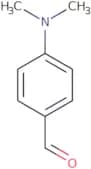
CAS:<p>4-(Dimethylamino)benzaldehyde (4DMAB) is an analytical reagent used to identify sulfa drugs. It has been shown to react with sulfonamides by the formation of a complex ion, which can be detected by analytical methods such as electrochemical impedance spectroscopy or ultraviolet spectroscopy. 4DMAB has also been studied for its anticarcinoid properties. The carcinoid syndrome is characterized by a tumor that releases serotonin and other substances into the bloodstream, causing severe diarrhea, flushing, and bronchial spasms. Studies have shown that 4DMAB inhibits the release of serotonin in this condition. As a result, it may be effective against carcinoid syndrome.</p>Formula:C9H11NOPurity:Min. 95%Color and Shape:White Slightly Yellow PowderMolecular weight:149.19 g/mol2,4-Dimethylbenzaldehyde
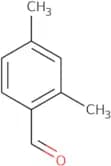
CAS:<p>2,4-Dimethylbenzaldehyde is used in the diagnosis of cancer. It reacts with acetaldehyde to form a compound that binds to hemoglobin and is excreted in the urine, leading to a diagnostic test for cancer. 2,4-Dimethylbenzaldehyde has been shown to be genotoxic in both in vitro and in vivo studies. This aromatic hydrocarbon has been shown to cause DNA strand breaks in the target cells through a reaction mechanism involving radical formation from acetaldehyde. In addition, 2,4-Dimethylbenzaldehyde has been shown to have genotoxic effects on mice exposed by inhalation or injection.</p>Formula:C9H10OPurity:Min. 90 Area-%Color and Shape:Colorless Clear LiquidMolecular weight:134.18 g/mol4,5-Dichloro-3-hydroxypyridine
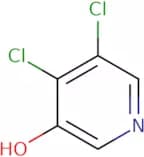
CAS:<p>4,5-Dichloro-3-hydroxypyridine is a reactive chemical that is a building block in organic synthesis. It is used as a reactant in the preparation of other compounds and as a reagent for various reactions, such as those involving amines, alcohols, and thiols. 4,5-Dichloro-3-hydroxypyridine has been found to be useful in the synthesis of heterocyclic compounds with an aromatic ring. It can also be used as an intermediate in the synthesis of pharmaceuticals. This chemical is classified by CAS number 1261269-63-9 and has an MW of 138.2 g/mol.</p>Formula:C5H3Cl2NOPurity:Min. 95%Color and Shape:White PowderMolecular weight:163.99 g/mol2-(3,5-Dichlorophenyl)-6-benzoxazole carboxylic acid
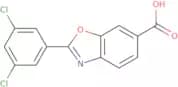
CAS:<p>2-(3,5-Dichlorophenyl)-6-benzoxazole carboxylic acid (XZP) is a diagnostic agent used in the diagnosis of certain diseases. XZP binds to the matrix metalloproteinases and inhibits their activity, which has been shown to reduce the effects of these enzymes on collagen fibers. This inhibition can be demonstrated using a titration calorimetry technique. The drug is also a potential therapeutic agent for congestive heart failure, as it can stimulate cardiac natriuretic peptide levels and reduce transthyretin levels. XZP has also been shown to be an effective adjunct therapy in vancomycin therapy for treatment of tubulointerstitial injury in rats.</p>Formula:C14H7Cl2NO3Purity:Min. 98 Area-%Color and Shape:PowderMolecular weight:308.12 g/molProbenecid
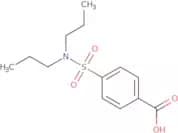
CAS:Controlled Product<p>Organic anion transporter inhibitor; pannexin 1 channel inhibitor</p>Formula:C13H19NO4SPurity:Min. 97.5 Area-%Color and Shape:White PowderMolecular weight:285.36 g/molMinoxidil
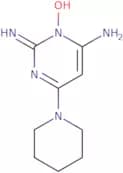
CAS:<p>Anti-androgen; anti-hypertensive; alopecia treatment</p>Formula:C9H15N5OPurity:Min. 95%Color and Shape:White Off-White PowderMolecular weight:209.25 g/mol1,6-Dimethoxynaphthalene
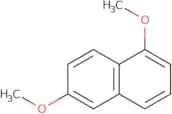
CAS:<p>1,6-Dimethoxynaphthalene is a chiral molecule that can be used as a chemical intermediate in the synthesis of pharmaceuticals. 1,6-Dimethoxynaphthalene has been shown to react with dopamine to form β-unsaturated ketones. This reaction is catalyzed by thionyl chloride. The product of this reaction can be reacted with a chloride, naphthalene or sulfinyl chloride to form five-membered diprotonated products. 1,6-Dimethoxynaphthalene also reacts with hydrosulfite to form sulfinyl functional groups, which can then be used as additives in other chemical reactions.</p>Formula:C12H12O2Purity:Min. 98 Area-%Color and Shape:Orange PowderMolecular weight:188.22 g/mol3,4-Dimethoxybenzylamine
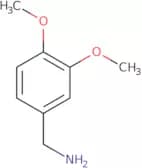
CAS:<p>3,4-Dimethoxybenzylamine is an amine that is used in the synthesis of pharmaceuticals. It can be polymerized by heating with aqueous formaldehyde and hydrochloric acid to form a resin. 3,4-Dimethoxybenzylamine inhibits serotonin receptors, exhibiting inhibitory properties at concentrations of 10-5 M. 3,4-Dimethoxybenzylamine also has pharmacokinetic properties that are similar to vitamin B1. This compound has been shown to inhibit homogeneous catalysts and is used for coatings for ganglion cells.</p>Formula:C9H13NO2Purity:Min. 95%Color and Shape:Clear LiquidMolecular weight:167.21 g/mol2,5-Dimethoxybenzaldehyde
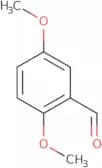
CAS:<p>Intermediate in organic synthesis</p>Formula:C9H10O3Purity:Min. 98 Area-%Color and Shape:Off-White PowderMolecular weight:166.17 g/mol4,5-Dimethoxy-2-nitrobenzoic acid
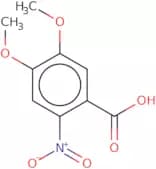
CAS:<p>4,5-Dimethoxy-2-nitrobenzoic acid (DMNB) is a nitrophenol compound that is used as an intermediate in the synthesis of pesticides. DMNB inhibits the growth of bacteria through its ability to inhibit protein synthesis and DNA replication. The inhibition is due to DMNB’s ability to covalently bind to nucleophilic sites on enzymes that are essential for these processes. It has been shown that DMNB can be degraded by microorganisms, such as bacteria, fungi, and algae. The biodegradation process may be facilitated by its solubility in water and its low molecular weight.</p>Formula:C9H9NO6Purity:Min. 97.5%Color and Shape:Yellow SolidMolecular weight:227.17 g/mol3,5-Diiodo-4-hydroxybenzoic acid
CAS:<p>3,5-Diiodo-4-hydroxybenzoic acid (3,5 DIBA) is an aminotriazole that inhibits the growth of a wide range of bacteria. 3,5 DIBA inhibits the transport of catechol and 2,6-dichlorobenzoic acid into cells. This inhibition leads to decreased levels of catechol-O-methyltransferase activity and increased levels of lysine decarboxylase activity. The combination of these two reactions causes a decrease in lysine production. Lysine is important for cell division and protein synthesis in bacteria. 3,5 DIBA also inhibits root formation in plants and has been shown to inhibit the uptake of nutrients by plant roots. Also known as: Dibenzoylmethane; 1,2-Benzenediamine, 3-[(2,6-dichlorophenyl)imino]-, diiodide;</p>Formula:C7H4I2O3Purity:Min 97%Color and Shape:PowderMolecular weight:389.91 g/mol3,5-Diiodo-4-hydroxybenzaldehyde
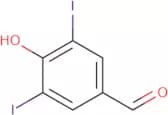
CAS:<p>3,5-Diiodo-4-hydroxybenzaldehyde (3,5-DIBA) is a functional group that contains both hydroxyl and iodide groups. The hydroxyl group is positioned ortho to the iodide group. 3,5-DIBA is found in wastewater and can be used as a bioremediation agent. It has been shown to react with chromatographic solvents and may be used for the removal of organic contaminants from water. 3,5-DIBA reacts with monoiodotyrosine in an aqueous environment to form hypoiodous acid (HIO). This reaction is catalyzed by hydrochloric acid. HIO reacts with diiodoacetic acid or iodoacetic acid to form coagulation products such as diiodoacetate or iodoacetate. These reactions are reversible and can be used for the removal of excess iodine from wastewater.</p>Formula:C7H4I2O2Purity:Min. 98 Area-%Color and Shape:Off-White PowderMolecular weight:373.91 g/mol3',4'-Dihydroxyphenylacetone
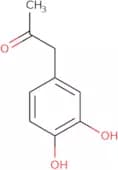
CAS:<p>3',4'-Dihydroxyphenylacetone (DOPA) is a metabolite of dopamine that is produced in the brain and kidneys. DOPA has been shown to have pharmacological properties, but its function as an endogenous neurotransmitter has not been confirmed. DOPA is also a precursor for the synthesis of melanin, which is found in skin cells. The detection of DOPA in urine samples can be used to diagnose Parkinson's disease or other conditions characterized by low levels of dopamine. The enzyme glutamate dehydrogenase converts DOPA into 3-methoxytyramine, which can be detected in urine samples using chromatographic methods. 3',4'-Dihydroxyphenylacetone may be measured in the blood plasma of patients with bacterial infections and urinary tract infections. A detectable concentration of this metabolite could indicate that the body is making use of an alternate pathway for synthesizing amines.</p>Formula:C9H10O3Purity:Min. 95%Color and Shape:Off-White PowderMolecular weight:166.17 g/mol3,4-Dibenzyloxybenzaldehyde
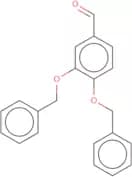
CAS:<p>3,4-Dibenzyloxybenzaldehyde is a chemical compound with the formula ClCH=C(O)CHO. This compound is an intermediate in the synthesis of the cancer drug daunorubicin. 3,4-Dibenzyloxybenzaldehyde has been shown to induce apoptosis in human ovary cells and has been detected in urine samples from patients undergoing chemotherapy for ovarian cancer. 3,4-Dibenzyloxybenzaldehyde also inhibits the production of flavonoids and has been shown to inhibit rat striatal membranes and rat atria.</p>Formula:C21H18O3Purity:Min. 95%Color and Shape:PowderMolecular weight:318.37 g/mol3',5'-Dibenzyloxyacetophenone
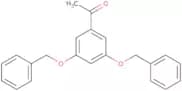
CAS:<p>3',5'-Dibenzyloxyacetophenone is a synthetic intermediate that can be used in the synthesis of 3-hydroxy-2-phenylpropionic acid. It can also be used to synthesize carbonyl reduction products, such as 3,5-dibenzyloxybenzoic acid and 2,3-dibenzyloxybenzoic acid. The carbonyl reduction reaction mechanism involves the addition of ethylene to the carbonyl group (C=O) and hydrogenation of the double bond between carbon atoms 1 and 2. This process may result in a mixture of products that are degradable or non-degradable and contain impurities.</p>Formula:C22H20O3Purity:Min. 95%Color and Shape:Beige PowderMolecular weight:332.39 g/mol1,8-Diazido-3,6-dioxaoctane
CAS:<p>1,8-Diazido-3,6-dioxaoctane is a synthetic molecule that is used in the synthesis of macrolactones, polymers, and biomolecules. It can be used as a bioconjugate to attach other functional groups to biomaterials and polymers, such as azido groups. This compound has high sensitivity and thermal stability with good solubility in organic solvents. 1,8-Diazido-3,6-dioxaoctane has been shown to be compatible with many functional groups and is an important monomer for use in cross-linked polymers.</p>Formula:C6H12N6O2Purity:Min. 95%Color and Shape:Colorless PowderMolecular weight:200.2 g/mol(R,R)-2,8-Diazabicyclo[4.3.0]nonane
CAS:<p>(R,R)-2,8-Diazabicyclo[4.3.0]nonane is an antibacterial agent that is synthesized from piperazine and fluoroquinolone derivatives. It has a high yield of (R,R)-2,8-diazabicyclo[4.3.0]nonane and a low reaction time in the microwave amination reaction. This compound can be used to replace environmentally hazardous chemicals such as mercury(II) chloride in the synthesis of (R,R)-2,8-diazabicyclo[4.3.0]nonane by avoiding the use of toxic mercury compounds and reducing the cost of production by using microwave irradiation.</p>Formula:C7H14N2Purity:Min. 95%Color and Shape:PowderMolecular weight:126.2 g/mol




![(R,R)-2,8-Diazabicyclo[4.3.0]nonane](/_next/image/?url=https%3A%2Fstatic.cymitquimica.com%2Fproducts%2F3D%2Fthumb-webp%2FFD21506.webp&w=3840&q=75)