Building Blocks
This section contains fundamental products for the synthesis of organic and biological compounds. Building blocks are the essential starting materials used to construct complex molecules through various chemical reactions. They play a critical role in drug discovery, material science, and chemical research. At CymitQuimica, we offer a diverse range of high-quality building blocks to support your innovative research and industrial projects, ensuring you have the essential components for successful synthesis.
Subcategories of "Building Blocks"
- Boronic Acids & Boronic Acid Derivatives(5,756 products)
- Chiral Building Blocks(1,242 products)
- Hydrocarbon Building Blocks(6,095 products)
- Organic Building Blocks(61,038 products)
Found 196817 products of "Building Blocks"
Sort by
Purity (%)
0
100
|
0
|
50
|
90
|
95
|
100
Dichloroacetic anhydride
CAS:<p>Please enquire for more information about Dichloroacetic anhydride including the price, delivery time and more detailed product information at the technical inquiry form on this page</p>Formula:C4H2Cl4O3Purity:Min. 95%Color and Shape:Solidified MassMolecular weight:239.9 g/mol2-Amino-5-chloro-N-methoxy-N-methylbenzamide
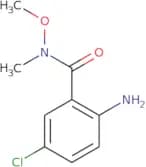
CAS:<p>Versatile small molecule scaffold</p>Formula:C9H11ClN2O2Purity:Min. 95%Color and Shape:PowderMolecular weight:214.65 g/mol4-Methoxypiperidine hydrochloride
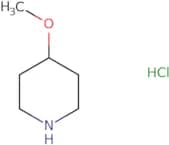
CAS:<p>4-Methoxypiperidine hydrochloride is an organic compound that belongs to the chemical class of aminomethylpiperidines. It is a cycloaddition reaction product of 5-hydroxyisoquinoline and an aldehyde, and it has been used to synthesize aminomethylene derivatives. 4-Methoxypiperidine hydrochloride is also reductively aminated with ammonia or ammonium salts to form alkylamine derivatives. The ring system in 4-methoxypiperidine hydrochloride can be modified by substituting the methyl group with other groups, such as ethyl or phenyl.</p>Formula:C6H13NO•HClPurity:Min. 95%Molecular weight:151.63 g/molN-Methylquinolin-5-amine
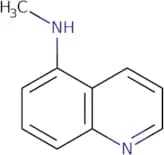
CAS:<p>Versatile small molecule scaffold</p>Formula:C10H10N2Purity:Min. 95%Color and Shape:PowderMolecular weight:158.2 g/mol2-Naphthoic acid
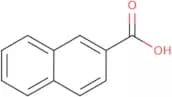
CAS:<p>2-Naphthoic acid is a chemical compound that belongs to the group of aromatic compounds. It can be found in many natural products, such as plants and animals. 2-Naphthoic acid has been shown to inhibit the activity of G protein-coupled receptors, which are involved in signal transduction. The crystal structure of 2-naphthoic acid is polymorphic and there are two possible structures: p1 and p2. Each form has different chemical properties, including reactivity with hydrogen bonds, which may lead to different biological effects.</p>Formula:C11H8O2Purity:Min. 95%Color and Shape:PowderMolecular weight:172.18 g/mol2-Naphthalenemethanol
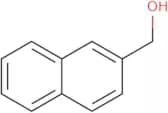
CAS:<p>2-Naphthalenemethanol is a chemical compound that belongs to the group of organic compounds. It is one of the simplest aromatic alcohols and has been used as a model for the study of other more complex molecules. 2-Naphthalenemethanol is synthesized by reacting sodium salts with borane-tetrahydrofuran complex in dry diethyl ether. The reaction mechanism involves the formation of an ester linkage between the two naphthalenes, which can then undergo hydrolysis to form an alcohol. 2-Naphthalenemethanol can be converted into its structural analog, naphthalene, via condensation reactions with formaldehyde or ethylene glycol. The chemical properties of 2-naphthalenemethanol have been studied using nuclear magnetic resonance spectroscopy (NMR) and x-ray crystallography, which revealed that it exists as a zwitterion consisting of two covalently</p>Formula:C11H10OPurity:Min. 98 Area-%Color and Shape:PowderMolecular weight:158.2 g/molHexacosanoic acid
CAS:<p>Hexacosanoic acid is a glycol ether that has been shown to have hypoglycemic activity in mice. It was also shown to increase the levels of fatty acids and decrease the levels of glycerides in rats, which may be due to its ability to inhibit the synthesis of phospholipids. Hexacosanoic acid has been used as an analytical reagent for the determination of p-hydroxybenzoic acid and uronic acid. The polymerization of hexacosanoic acid is catalyzed by a polymerase chain reaction (PCR), which can be used for diagnosis. This molecule has also been found to have anti-inflammatory properties and nitrate reductase activity.</p>Formula:C26H52O2Color and Shape:White PowderMolecular weight:396.69 g/molNicotinoylazide
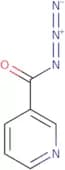
CAS:<p>Nicotinoylazide is a skin condition medication that has nitrogen atoms in its structure. It is an inhibitor of the enzyme protease, which breaks down proteins and helps regulate inflammation. Nicotinoylazide also inhibits the activity of other enzymes, such as those involved in fatty acid metabolism. <br>Nicotinoylazide has been shown to be effective in the treatment of diabetic neuropathy and bladder dysfunction caused by interstitial cystitis, although it has not been approved for use in children. The drug may be used for other conditions where protease inhibitors are beneficial, such as pediatric inflammatory bowel disease.</p>Formula:C6H4N4OPurity:Min. 95%Color and Shape:PowderMolecular weight:148.12 g/molHomogentisic acid
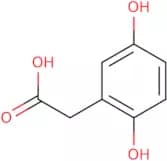
CAS:<p>Precursor of melanine synthesis in bacteria</p>Formula:C8H8O4Purity:Min 96%Color and Shape:White PowderMolecular weight:168.15 g/mol1,3-Dimethoxy-2-methylpropan-2-amine
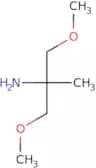
CAS:<p>1,3-Dimethoxy-2-methylpropan-2-amine is a chemical compound that is an intermediate for the synthesis of other chemicals. It can be used as a reaction component in organic chemistry to form useful scaffolds and high quality research chemicals. This compound has many uses in bioorganic chemistry, such as being a versatile building block for complex compounds and a useful intermediate for the synthesis of other chemicals. 1,3-Dimethoxy-2-methylpropan-2-amine is also said to have potential applications in the treatment of diseases such as cancer.</p>Formula:C6H15NO2Purity:Min. 95%Color and Shape:PowderMolecular weight:133.19 g/molN-Fmoc-4-ethynyl-L-phenylalanine
CAS:<p>Versatile small molecule scaffold</p>Formula:C26H21NO4Purity:Min. 95%Color and Shape:PowderMolecular weight:411.45 g/molNew Methylene Blue N
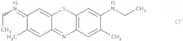
CAS:<p>New Methylene Blue N is a dye that has been shown to have antimicrobial properties. It is used as a stain in histology, as well as in the treatment of bacterial and fungal infections. New Methylene Blue N can also be used as an indicator for acidity, due to its acidic nature. The compound may also act as a substrate for nitrite reductase, which is an enzyme involved in the reduction of nitrite to nitric oxide. Nitric oxide is a potent vasodilator that relaxes vascular smooth muscle and inhibits platelet aggregation. New Methylene Blue N has also been shown to have photochemical properties, which may contribute to its ability to inhibit bacterial growth.</p>Formula:C18H22ClN3SColor and Shape:Brown PowderMolecular weight:347.91 g/mol1-Methyl-2-[(1-methyl-1H-imidazol-2-yl)disulfanyl]-1H-imidazole
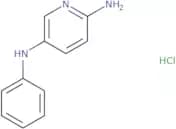
CAS:<p>1,2-Dimethyl-1H-imidazolium chloride (1MDIC) is a useful building block for the synthesis of complex compounds. It is used as a reagent in organic synthesis and has been shown to be an effective catalyst for the Diels-Alder reaction. 1,2-Dimethyl-1H-imidazolium chloride is an excellent research chemical that can be used as a reaction component in organic synthesis and provide a versatile scaffold for the synthesis of diverse structures.</p>Formula:C8H10N4S2Purity:Min. 95%Color and Shape:PowderMolecular weight:226.3 g/molN5-Phenylpyridine-2,5-diamine hydrochloride
CAS:<p>N5-Phenylpyridine-2,5-diamine hydrochloride is a fine chemical that can be used as a versatile building block in the synthesis of more complex compounds. This compound has been shown to react with anilines and form N-substituted pyridinium salts. It can also be used as a reaction component or reagent in research chemical reactions involving amines, phenols, and carboxylic acids. N5-Phenylpyridine-2,5-diamine hydrochloride is a high quality reagent that is useful for the synthesis of complex organic compounds.</p>Formula:C11H11N3•HClPurity:Min. 95%Color and Shape:PowderMolecular weight:221.68 g/mol5-[(4-Chlorophenyl)sulfanyl]furan-2-carboxylic acid
CAS:<p>Versatile small molecule scaffold</p>Formula:C11H7ClO3SPurity:Min. 95%Color and Shape:PowderMolecular weight:254.69 g/molD,L-Homotryptophan
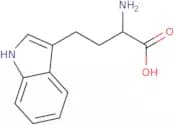
CAS:<p>D,L-Homotryptophan is a fine chemical that is used as a building block in the synthesis of complex compounds. It has been used as a reagent, speciality chemical, and intermediate. D,L-Homotryptophan is also versatile in its use as a building block for the synthesis of various chemicals. This compound has been shown to react with other chemicals to form useful scaffolds.</p>Formula:C12H14N2O2Purity:Min. 95%Color and Shape:PowderMolecular weight:218.25 g/molCaffeic acid
CAS:<p>Caffeic acid is naturally produced by the metabolism of plants and fungi. Caffeic acid has an antioxidant activity that can be higher than tocopherol in oil-in-water emulsions. Caffeic acid has proven antimicrobial activity against Staphylococcus aureus. In mice, caffeic acid inhibits the enzyme 5-lipoxygenase thus inhibititing the biosynthesis of the inflammatory mediators leukotrienes.</p>Formula:C9H8O4Purity:Min. 98.0 Area-%Molecular weight:180.16 g/mol3-Chloro-4-fluoroaniline
CAS:<p>3-Chloro-4-fluoroaniline is a versatile building block that can be used in the synthesis of many different compounds. It is a reagent that is used in research, where it can be used as a reactant or an intermediate. This chemical has been shown to have high quality and can be used as a starting material for the synthesis of other chemicals. 3-Chloro-4-fluoroaniline has been shown to react with various functional groups such as amines and acid chlorides. It is also useful for the construction of scaffolds, which are three dimensional structures that are built from small molecules and organic compounds. 3-Chloro-4-fluoroaniline is classified as a speciality chemical and its CAS number is 367-21-5.</p>Formula:C6H5ClFNMolecular weight:145.56 g/mol6-Chloro-5-fluoroindole
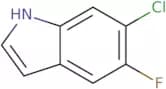
CAS:<p>6-Chloro-5-fluoroindole is a chemical compound that belongs to the class of fine chemicals. It can be used as a versatile building block for the synthesis of complex compounds.</p>Formula:C8H5ClFNMolecular weight:169.59 g/mol4-Chloroindole
CAS:<p>Please enquire for more information about 4-Chloroindole including the price, delivery time and more detailed product information at the technical inquiry form on this page</p>Formula:C8H6ClNPurity:Min. 99.0 Area-%Molecular weight:151.60 g/mol



![1-Methyl-2-[(1-methyl-1H-imidazol-2-yl)disulfanyl]-1H-imidazole](/_next/image/?url=https%3A%2Fstatic.cymitquimica.com%2Fproducts%2F3D%2Fthumb-webp%2FLCA74729.webp&w=3840&q=75)
![5-[(4-Chlorophenyl)sulfanyl]furan-2-carboxylic acid](/_next/image/?url=https%3A%2Fstatic.cymitquimica.com%2Fproducts%2F3D%2Fthumb-webp%2FLCA94222.webp&w=3840&q=75)