Building Blocks
This section contains fundamental products for the synthesis of organic and biological compounds. Building blocks are the essential starting materials used to construct complex molecules through various chemical reactions. They play a critical role in drug discovery, material science, and chemical research. At CymitQuimica, we offer a diverse range of high-quality building blocks to support your innovative research and industrial projects, ensuring you have the essential components for successful synthesis.
Subcategories of "Building Blocks"
- Boronic Acids & Boronic Acid Derivatives(5,756 products)
- Chiral Building Blocks(1,242 products)
- Hydrocarbon Building Blocks(6,095 products)
- Organic Building Blocks(61,038 products)
Found 196817 products of "Building Blocks"
Sort by
Purity (%)
0
100
|
0
|
50
|
90
|
95
|
100
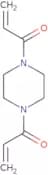
1,4-Diacrylylpiperazine
CAS:<p>Used for preparation of acrylamide gels</p>Formula:C10H14N2O2Purity:Min. 98 Area-%Color and Shape:White PowderMolecular weight:194.23 g/molN,N'-Diacetyl-L-cystine
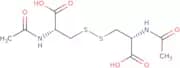
CAS:<p>N,N'-Diacetyl-L-cystine (NAC) is a cysteine derivative that is used in the preparation of samples for analysis by liquid chromatography. It has been shown to have an antiatherogenic effect in chronic bronchitis patients and has been found to be a growth factor, inhibiting apoptosis and stimulating cell proliferation. NAC also increases the activity of aminotransferases in serum samples, which can be used as an indicator of liver health. Its chemical stability and low toxicity make it an ideal candidate for use as a pharmaceutical preparation at doses below those required for its enzyme-stimulating effects.</p>Formula:C10H16N2O6S2Purity:Min. 95%Color and Shape:PowderMolecular weight:324.38 g/moltert-Butyl N-{3-azabicyclo[4.1.0]heptan-6-yl}carbamate
CAS:<p>tert-Butyl N-{3-azabicyclo[4.1.0]heptan-6-yl}carbamate is a high quality reagent that is used as a complex compound and is useful as an intermediate in the production of fine chemicals. It has CAS No. 880545-32-4 and can be used as a building block for synthesizing other compounds, such as speciality chemicals and research chemicals. Tert-butyl N-[3-(azabicyclo[4.1.0]heptan-6-yl)carbamate is also versatile and can be used in reactions to make reaction components, such as versatile building blocks or scaffolds for making other compounds.</p>Formula:C11H20N2O2Purity:Min. 95%Color and Shape:Clear LiquidMolecular weight:212.29 g/mol5-Fluoro-2-methylbenzoic acid
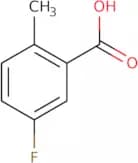
CAS:<p>5-Fluoro-2-methylbenzoic acid is a synthetic compound that has antiviral potency against the influenza A virus. It is the active form of 5-fluoro-2-methylbenzoyl chloride, which is synthesized from a Grignard reagent and an asymmetric synthesis. 5-Fluoro-2-methylbenzoic acid has been shown to have anticancer properties in vitro, which may be due to its ability to inhibit cancer cell growth through interaction with chloride channels. This drug also inhibits the activity of dehydrogenases, which are enzymes that catalyze the oxidation of various substrates by reducing them.</p>Formula:C8H7FO2Purity:Min. 95%Color and Shape:White PowderMolecular weight:154.14 g/mol1,3-Di-(2-pyrenyl)propane
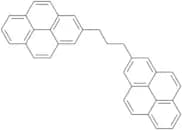
CAS:<p>1,3-Di-(2-pyrenyl)propane is a synthetic molecule that has been used as a model for the phosphatidylethanolamine (PE) component of bacterial membranes. 1,3-Di-(2-pyrenyl)propane has been shown to have a phase transition temperature of -7 degrees Celsius. It is hydrophobic and highly soluble in organic solvents like chloroform, ethanol, ether, and benzene. This molecule is kinetically inert and thermodynamically stable. The monomeric form of 1,3-Di-(2-pyrenyl)propane is not sensitive to ionizing radiation. However, in the bilayer form it is highly sensitive to radiation and can lead to the formation of double bonds that can break down into radicals.</p>Formula:C35H24Purity:Min. 95%Color and Shape:White PowderMolecular weight:444.57 g/mol4-Fluoro-1-butanol
CAS:<p>4-Fluoro-1-butanol is a gaseous protonated fluorine compound. The proton is transferred from the hydrogen to the fluorine, resulting in an intramolecular hydrogen bond. 4-Fluoro-1-butanol has been shown to undergo conformational changes due to the substituent effects of other atoms on its molecules. This molecule has been shown to be able to orient itself in different ways, depending on the experimental parameters and conditions that are used. 4-Fluoro-1-butanol has also been shown to have a strong hydrogen bond with other molecules such as water, which may be due to its ability to form a stable H···O hydrogen bond with a strong donor atom (fluorine).</p>Formula:C4H9FOPurity:Min. 95%Color and Shape:Colourless To Yellow LiquidMolecular weight:92.11 g/mol3-[5-(Pyridin-2-yl)-1,3,4-oxadiazol-2-yl]propanoic acid
CAS:<p>Versatile small molecule scaffold</p>Formula:C10H9N3O3Purity:Min. 95%Color and Shape:PowderMolecular weight:219.2 g/mol6,7-Dihydro-5H-pyrrolo[1,2-a]imidazole
CAS:<p>6,7-Dihydro-5H-pyrrolo[1,2-a]imidazole is a drug target that belongs to the class of anesthetics. It has been shown to have a protective effect against CNS damage in rats with experimental stroke. 6,7-Dihydro-5H-pyrrolo[1,2-a]imidazole also has a wide range of other effects including antiarrhythmic, antihypertensive, and antianginal properties. It can be used as an anticonvulsant or muscle relaxant and as a diuretic agent for edema and hypertension. 6,7-Dihydro-5H-pyrrolo[1,2-a]imidazole binds to the chlorine atom in the active site of the enzyme skeletal muscle chloride channel (CLC). This prevents the channel from opening and chloride ions from passing through it</p>Formula:C6H8N2Purity:Min. 95%Molecular weight:108.14 g/molN-Acetyl-L-tyrosine ethyl ester hydrate
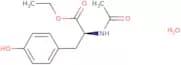
CAS:<p>N-Acetyl-L-tyrosine ethyl ester hydrate is a synthetic compound that has been used in the past as a substrate for protease activity. It is a monoclonal antibody that is used to detect the presence of human serum proteins and to prepare samples for analysis by liquid chromatography. This derivative of L-tyrosine is related to proteolytic activity and redox potential, but it does not have any biological properties. N-Acetyl-L-tyrosine ethyl ester hydrate can be prepared from soybean trypsin and caproic acid.</p>Formula:C13H17NO4·H2OPurity:Min. 96.0 Area-%Color and Shape:White Off-White PowderMolecular weight:269.29 g/mol7-Hydroxyoctanoic acid
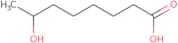
CAS:<p>7-Hydroxyloctanoic acid is a fatty acid that is naturally present in the human body. It is also found in dairy products and some vegetables. 7-Hydroxyoctanoic acid can be converted to isocaproic acid by the enzyme 3-hydroxyacyl coenzyme A dehydrogenase (HAD). HAD deficiency can lead to the accumulation of 7-hydroxyloctanoic acid, which may cause symptoms such as fatigue, dizziness, and mental confusion. The conversion of 7-hydroxyloctanoic acid to isocaproic acid is important for the production of energy from fats, so an HAD deficiency can lead to low levels of energy production.</p>Formula:C8H16O3Purity:Min. 95%Color and Shape:Clear LiquidMolecular weight:160.21 g/molN-Benzyl-3-hydroxybenzamide
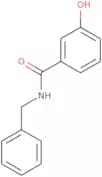
CAS:<p>Versatile small molecule scaffold</p>Formula:C14H13NO2Purity:Min. 95%Color and Shape:PowderMolecular weight:227.26 g/moltert-Butyl 1H,4H,5H,6H,7H-pyrrolo[3,2-c]pyridine-5-carboxylate
CAS:<p>Tert-Butyl 1H,4H,5H,6H,7H-pyrrolo[3,2-c]pyridine-5-carboxylate is a fine chemical that is a useful scaffold for the synthesis of various organic compounds. It is an intermediate for research chemicals and a reaction component for speciality chemicals. Tert-Butyl 1H,4H,5H,6H,7H-pyrrolo[3,2-c]pyridine-5-carboxylate has been used as a reagent in the synthesis of complex compounds. This compound has high purity and can be used as a building block in synthesis of other compounds.</p>Formula:C12H18N2O2Purity:Min. 95%Color and Shape:PowderMolecular weight:222.28 g/mol2,4-Diiodo-6-{[methyl(1-methylpiperidin-4-yl)amino]methyl}phenol oxalate
CAS:<p>2,4-Diiodo-6-[(methyl(1-methylpiperidin-4-yl)amino]methyl}phenol oxalate is a high quality chemical reagent. It is a useful intermediate for the preparation of complex compounds and has been used as a fine chemical. 2,4-Diiodo-6-[(methyl(1-methylpiperidin-4-yl)amino]methyl}phenol oxalate can be used as a building block for the synthesis of speciality chemicals. This compound can also be used as a reaction component in the synthesis of versatile chemicals.</p>Formula:C14H20I2N2O•C2H2O4Purity:Min. 95%Color and Shape:PowderMolecular weight:574.16 g/molDde biotin picolyl azide
CAS:<p>Azide-activated cleavable biotin probe</p>Formula:C38H57N9O9SPurity:Min. 95%Color and Shape:Clear LiquidMolecular weight:815.98 g/mol4,5-Dimethoxy-2-nitrobenzoic acid - Technical
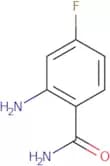
CAS:<p>4,5-Dimethoxy-2-nitrobenzoic acid is a versatile building block and reagent that can be used in research and development as well as for the production of fine chemicals. This compound has been shown to react with amines using the nitration reaction to produce a variety of useful compounds. The synthesis of this compound is not difficult, but requires care and some speciality chemicals. 4,5-Dimethoxy-2-nitrobenzoic acid is also a useful scaffold for complex compounds. It reacts readily with other building blocks to form nitrogen heterocycles and is used in the production of pharmaceuticals and pesticides.</p>Formula:C9H9NO6Purity:Min. 95%Molecular weight:227.17 g/mol2-Amino-4-fluorobenzamide
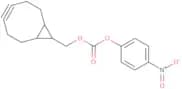
CAS:<p>2-Amino-4-fluorobenzamide is a catalyst that reacts with alcohols and cyclizes them to form quinazolinones. It has been shown to oxidize various alcohols including those with an electron-donating group, such as esters and nitro groups. 2-Amino-4-fluorobenzamide also reacts with electron-deficient alcohols, such as oximes and hydrazines. The mechanism of the oxidative cyclizations is not well understood but it is likely that they are initiated by a nucleophilic attack on the carbonyl carbon atom followed by a concerted or stepwise oxidation of the C=O double bond. The oxidative cyclization reactions are mechanistically similar to those of other catalytic oxidations, such as those used in the industrial production of acetic acid from methanol.</p>Formula:C7H7FN2OPurity:Min. 95%Color and Shape:PowderMolecular weight:154.14 g/molBCN-PNP carbonate
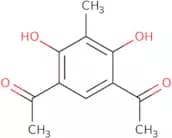
CAS:<p>BCN-PNP carbonate is a versatile building block that can be used as an intermediate in the synthesis of complex compounds. It has a variety of uses in research and as a reagent for fine chemicals. BCN-PNP carbonate is an effective reaction component for the synthesis of speciality chemicals, which are used for research purposes or as intermediates for pharmaceuticals. BCN-PNP carbonate is also useful scaffold for the synthesis of highly pure, high quality building blocks.</p>Formula:C17H17NO5Purity:Min. 95%Color and Shape:PowderMolecular weight:315.32 g/mol1,1'-(4,6-Dihydroxy-5-methyl-1,3-phenylene)diethanone
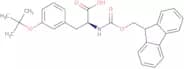
CAS:<p>1,1'-(4,6-Dihydroxy-5-methyl-1,3-phenylene)diethanone is a versatile building block that can be used in the synthesis of complex compounds. This compound is a useful intermediate for research chemicals and reagents. It has been shown to be an effective catalyst for the production of high quality products.</p>Formula:C11H12O4Purity:Min. 95%Color and Shape:Yellow To Brown SolidMolecular weight:208.21 g/molFmoc-L-m-Tyrosine(tBu)-OH
CAS:<p>Fmoc-L-m-Tyrosine is a reagent that is used in organic synthesis. It is a complex compound that can be synthesized from m-tyrosine and t-butyl bromoacetate. Fmoc-L-m-Tyrosine is also a useful intermediate for the preparation of other compounds, such as pharmaceuticals and agrochemicals. It has been shown to be a fine chemical that has a wide range of applications in the field of biotechnology and pharmaceuticals. Fmoc-L-m Tyrosine is also a versatile building block with many possible reactions, making it an excellent candidate for research chemicals, including speciality chemicals. The CAS number for this compound is 204384-71-4 and it's molecular weight is 262.3 g/mol.br></p>Formula:C28H29NO5Purity:Min. 97 Area-%Color and Shape:Off-White PowderMolecular weight:459.53 g/mol1,2-Dioleoyl-sn-glycerol
CAS:<p>1,2-Dioleoyl-sn-glycerol is a lipid molecule that contains an acyl chain of carbon atoms with two double bonds. It is formed through the union of glycerol and oleic acid. 1,2-Dioleoyl-sn-glycerol has been shown to activate diacylglycerol and fatty acid, which are important for cell signaling. The enzyme activity of 1,2-dioleoyl-sn-glycerol is dependent on its concentration in the body. This molecule also interacts with membranes by hydrogen bonding and can form a hydrophobic region that may be used to stabilize membrane structures.</p>Formula:C39H72O5Purity:Min. 95%Color and Shape:LiquidMolecular weight:620.99 g/mol

![tert-Butyl N-{3-azabicyclo[4.1.0]heptan-6-yl}carbamate](/_next/image/?url=https%3A%2Fstatic.cymitquimica.com%2Fproducts%2F3D%2Fthumb-webp%2FFKB54532.webp&w=3840&q=75)

![3-[5-(Pyridin-2-yl)-1,3,4-oxadiazol-2-yl]propanoic acid](/_next/image/?url=https%3A%2Fstatic.cymitquimica.com%2Fproducts%2F3D%2Fthumb-webp%2FIMB68525.webp&w=3840&q=75)
![6,7-Dihydro-5H-pyrrolo[1,2-a]imidazole](/_next/image/?url=https%3A%2Fstatic.cymitquimica.com%2Fproducts%2F3D%2Fthumb-webp%2FJCA64616.webp&w=3840&q=75)
![tert-Butyl 1H,4H,5H,6H,7H-pyrrolo[3,2-c]pyridine-5-carboxylate](/_next/image/?url=https%3A%2Fstatic.cymitquimica.com%2Fproducts%2F3D%2Fthumb-webp%2FPGC95879.webp&w=3840&q=75)
![2,4-Diiodo-6-{[methyl(1-methylpiperidin-4-yl)amino]methyl}phenol oxalate](/_next/image/?url=https%3A%2Fstatic.cymitquimica.com%2Fproducts%2F3D%2Fthumb-webp%2FFD181210.webp&w=3840&q=75)