Building Blocks
This section contains fundamental products for the synthesis of organic and biological compounds. Building blocks are the essential starting materials used to construct complex molecules through various chemical reactions. They play a critical role in drug discovery, material science, and chemical research. At CymitQuimica, we offer a diverse range of high-quality building blocks to support your innovative research and industrial projects, ensuring you have the essential components for successful synthesis.
Subcategories of "Building Blocks"
- Boronic Acids & Boronic Acid Derivatives(5,756 products)
- Chiral Building Blocks(1,242 products)
- Hydrocarbon Building Blocks(6,095 products)
- Organic Building Blocks(61,038 products)
Found 196817 products of "Building Blocks"
Sort by
Purity (%)
0
100
|
0
|
50
|
90
|
95
|
100
5-(Trifluoromethoxy)-1H-indole-2,3-dione
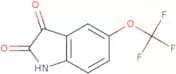
CAS:<p>5-(Trifluoromethoxy)-1H-indole-2,3-dione is a potent anticancer agent that inhibits the growth of cancer cells by inducing apoptosis. It binds to DNA, forming hydrogen bonds with guanine and adenine residues. This binding prevents the formation of hydrogen bonds between DNA bases, which are essential for maintaining the stability of DNA. The disruption of these bonds leads to chromosomal degradation and eventually cell death. 5-(Trifluoromethoxy)-1H-indole-2,3-dione has shown antifungal activity against Cryptococcus neoformans in vitro and in vivo. This drug also has an allosteric modulator effect on HL60 cells.</p>Formula:C9H4F3NO3Purity:Min. 95%Color and Shape:Red PowderMolecular weight:231.13 g/mol7-Bromo-1H-indole-3-carboxylic acid
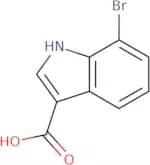
CAS:<p>Please enquire for more information about 7-Bromo-1H-indole-3-carboxylic acid including the price, delivery time and more detailed product information at the technical inquiry form on this page</p>Formula:C9H6BrNO2Purity:Min. 95%Color and Shape:PowderMolecular weight:240.05 g/mol3-[4-(Difluoromethoxy)phenyl]propanenitrile
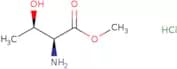
CAS:<p>Versatile small molecule scaffold</p>Formula:C10H9F2NOPurity:Min. 95%Color and Shape:PowderMolecular weight:197.18 g/molL-Threonine methyl ester hydrochloride
CAS:<p>L-Threonine methyl ester hydrochloride is a synthetic amino acid that has shown efficacy in treating Gram-negative infections. L-Threonine methyl ester hydrochloride is an agonist for the hyaluronic acid receptor and has been demonstrated to be potent in vitro against gram-negative bacteria such as Escherichia coli and Klebsiella pneumoniae. It also exhibits high stereoselectivity, with one enantiomer being more active than the other. L-Threonine methyl ester hydrochloride is currently in clinical development for cancer treatments, as it shows promise for inhibiting tumor growth and inducing apoptosis.</p>Formula:C5H11NO3•HClPurity:Min. 97%Color and Shape:Yellow PowderMolecular weight:169.61 g/mol2-(2-Hydroxyphenyl)-2-oxoacetic acid
CAS:<p>Versatile small molecule scaffold</p>Formula:C8H6O4Purity:Min. 95%Color and Shape:PowderMolecular weight:166.1 g/mol1-[3-(Trifluoromethyl)phenyl]-1H-1,2,3-triazole-4-carboxylic acid
CAS:<p>1-[3-(Trifluoromethyl)phenyl]-1H-1,2,3-triazole-4-carboxylic acid (TFTCA) is a versatile building block used as a reagent in research and speciality chemical synthesis. TFTCA is used as a reactant in the synthesis of complex compounds and can be used as an intermediate or scaffold. The compound has been used to synthesize drugs such as 3,5-dichloro-N-(3-(trifluoromethyl)phenyl)-2-thiophenecarboxamide (PF23410), which is a potent inhibitor of protein kinase C.</p>Formula:C10H6F3N3O2Purity:Min. 95%Color and Shape:PowderMolecular weight:257.17 g/mol1-Octanesulfonic acid sodium salt
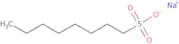
CAS:<p>1-Octanesulfonic acid sodium salt is a chemical compound that can be used to prepare surfactants. It has been shown to have a high optimum concentration for the formation of stable foam and is compatible with blood sampling, hydrophobic effect, and ester hydrochloride. 1-Octanesulfonic acid sodium salt has also been used as an analytical method for detecting sulfate ion in the presence of other ions on the basis of its reactivity with potassium permanganate. The detection limit is 0.1 ppm with a reaction solution containing 1% octanesulfonic acid sodium salt and 3% potassium permanganate. The chemical stability at pH 2 is higher than that at pH 7 because the sulfonate group acts as a buffer at low pH. 1-Octanesulfonic acid sodium salt can be quantified by means of fluorescence detector or electrochemical detector after it reacts with phenolphthalein in an acidic solution.</p>Formula:C8H18O3S•NaPurity:Min. 98%Color and Shape:White PowderMolecular weight:217.28 g/mol2,4,6-Triisopropylbenzenesulfonyl chloride
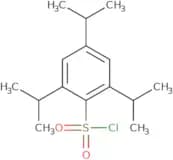
CAS:<p>2,4,6-Triisopropylbenzenesulfonyl chloride is a molecule that belongs to the class of ethylene diamine. It has been shown to inhibit the replication of herpes simplex virus in cell culture. This compound has an intramolecular hydrogen and steric interactions with a hydroxyl group. The analog of this molecule is 2,4,6-triisopropylbenzenesulfonic acid.<br>2,4,6-Triisopropylbenzenesulfonyl chloride can be used as a sulfonation agent and is known for its ability to react with nitrogen nucleophiles such as amines or ammonia.</p>Formula:C15H23SO2ClPurity:Min. 95%Molecular weight:302.86 g/mol3-Nitrobenzamide
CAS:<p>3-Nitrobenzamide is a substance that inhibits the replication of some viruses. It has been shown to inhibit the polymerase chain reaction and to be active against hepatitis B virus. 3-Nitrobenzamide was also observed to have inhibitory properties against herpes simplex virus type 1 (HSV-1) and HSV-2. The solid form of this compound is stable at room temperature, but may undergo hydrolysis in solution. 3-Nitrobenzamide reacts with water to form nitrous acid, which may cause corrosion of metal surfaces.</p>Formula:C7H6N2O3Purity:Min. 95%Color and Shape:PowderMolecular weight:166.13 g/mol6-Methylpurine
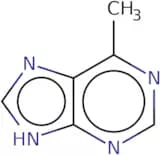
CAS:<p>6-Methylpurine is a product of the nucleotide metabolism in E. coli, which is a model organism for protein synthesis. 6-Methylpurine inhibits protein synthesis and exerts significant cytotoxicity. It has been shown to inhibit the enzyme activities of DNA polymerase alpha, DNA ligase, and RNA polymerase, as well as other enzymes involved in nitrogen metabolism. 6-Methylpurine has been shown to be an analog of adenine and has a similar reaction mechanism. The uptake of 6-methyl purine by cells is mediated by hydrogen bonds with amino acid residues on the cell membrane surface. This molecule also forms glycosidic bonds with ribose sugar groups on cellular surfaces. 6-Methylpurine plays an important role in energy metabolism through its incorporation into glucose and glycogen molecules.</p>Formula:C6H6N4Purity:Min. 98 Area-%Color and Shape:White PowderMolecular weight:134.14 g/mol1-Nitro-2,4,6-trimethoxybenzene
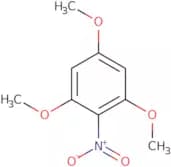
CAS:<p>1-Nitro-2,4,6-trimethoxybenzene is a chemical compound that belongs to the nitro group. It has been found to be an electron donor in bacterial cells, and has been shown to be effective against the growth of bacteria by catalytic reduction. This reaction is highly specific for nitro compounds and does not occur with other classes of compounds. Mass spectrometric analysis of the reaction solution revealed that significant amounts of hydrogen gas were generated during this process. The use of aminoguanidine as a reducing agent resulted in a decrease in the production of hydrogen gas. 1-Nitro-2,4,6-trimethoxybenzene also has been shown to inhibit cytochrome p450 enzymes in rats and humans.</p>Formula:C9H11NO5Purity:Min. 95%Color and Shape:PowderMolecular weight:213.19 g/mol3,5-Dichloro-4-hydroxyacetophenone
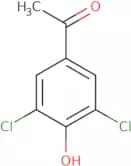
CAS:<p>3,5-Dichloro-4-hydroxyacetophenone (3,5-DCA) is a phosphorylating agent that is used as a reagent to form conjugates with amines. It has been extensively used in the synthesis of natural products and drugs. 3,5-DCA is commonly used in the kinetic method for determining phosphatase activity. 3,5-DCA has high specificity and can be used to measure acid phosphatase activity. It is also synthesized from lapatinib and can be used in biomimetic synthesis schemes for the production of anticancer drugs.</p>Formula:C8H6Cl2O2Purity:Min. 95%Color and Shape:PowderMolecular weight:205.04 g/mol4-Nitrobenzylamine hydrochloride
CAS:<p>4-Nitrobenzylamine hydrochloride is a bifunctional immobilizing agent that can be used for the immobilization of Zn2+. It reacts with nitrogen atoms, forming an amination reaction. The linker is covalently immobilized to the surface and the nature of this chemical is synthetic. 4-Nitrobenzylamine hydrochloride is synthesized by reacting nitric acid with benzaldehyde in ammonia solution at room temperature. This chemical has shown to be effective in reactions where a flow rate is needed or when diamidines are present in the reaction mixture.</p>Formula:C7H8N2O2·HClPurity:Min. 95%Color and Shape:PowderMolecular weight:188.61 g/mol1-Nitrobutane
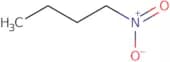
CAS:<p>1-Nitrobutane is an organic compound with the chemical formula CH3NO2. It is a colorless liquid that is soluble in water and insoluble in ether. 1-Nitrobutane can react with hydroxyl groups to form nitroalkanes and it has been used as a reaction product for kinetic measurements of hydroxyl group concentration. The reaction mechanism of 1-nitrobutane is not completely known, but it has been proposed that the hydroxyl group reacts with the nitro group by nucleophilic substitution. 1-Nitrobutane can be used as a reagent for chromatography because it absorbs ultraviolet radiation and emits photoelectrons, which can be detected by covid-19 detectors. 1-Nitrobutane also has been shown to have antiviral properties against pandemic influenza A virus (H1N1) in cultured cells and rat liver microsomes.</p>Formula:C4H9NO2Purity:Min. 95%Color and Shape:PowderMolecular weight:103.12 g/mol5-Nitrosalicylic acid
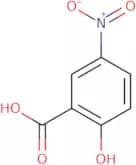
CAS:<p>5-Nitrosalicylic acid is an ethylene diamine derivative that is used in organic synthesis. It reacts with nitrogen atoms to form stable complexes. 5-Nitrosalicylic acid reacts with hydrogen and forms a protonated acid complex, which is more soluble in water than the molecule itself. The protonated acid complex can be used for the production of glycan, which are biomolecules that play a major role in the human body. Synchronous fluorescence spectroscopy has shown that 5-nitrosalicylic acid reacts with glycan by hydrogen bonding interactions and stabilizing nitro groups.</p>Formula:C7H5NO5Purity:Min. 95%Color and Shape:Slightly Yellow PowderMolecular weight:183.12 g/mol2-Nitrobenzoic acid
CAS:<p>2-Nitrobenzoic acid is a diagnostic chemical that has been used for the detection of epidermal growth factor. It also has therapeutic properties, and has been used to treat infectious diseases and autoimmune diseases. 2-Nitrobenzoic acid is an organic compound that contains two nitro groups, which are connected to a benzene ring by two carbon chains. The molecule also contains two aldehyde groups, which are connected to the benzene ring by one carbon chain each. 2-Nitrobenzoic acid is a white crystalline solid with a melting point of 118°C and boiling point of 310°C. It is soluble in water and alcohols, but insoluble in ethers or chloroform.<br>2-Nitrobenzoic acid can be synthesized from nitric acid and benzoic acid. This reaction produces enough heat to ignite the mixture if it's not cooled down first.</p>Formula:C7H5NO4Purity:Min. 94 Area-%Color and Shape:PowderMolecular weight:167.12 g/mol1-Methyl-2-[(1-methyl-1H-imidazol-2-yl)disulfanyl]-1H-imidazole
CAS:<p>1,2-Dimethyl-1H-imidazolium chloride (1MDIC) is a useful building block for the synthesis of complex compounds. It is used as a reagent in organic synthesis and has been shown to be an effective catalyst for the Diels-Alder reaction. 1,2-Dimethyl-1H-imidazolium chloride is an excellent research chemical that can be used as a reaction component in organic synthesis and provide a versatile scaffold for the synthesis of diverse structures.</p>Formula:C8H10N4S2Purity:Min. 95%Color and Shape:PowderMolecular weight:226.3 g/mol2,3-Dibromopropene - stabilized with copper chip
CAS:<p>2,3-Dibromopropene - stabilized with copper chip (2,3-DBPC) is a novel bromination reagent that can be used for the synthesis of polypeptides. This compound has been shown to react with acyl halides in an asymmetric synthesis. The reaction mechanism is thought to be via the addition of 2,3-DBPC to the carbonyl group of an acyl halide and subsequent elimination of bromoethane. 2,3-DBPC also reacts with ethanolamine in the presence of carbon disulphide and x-ray diffraction data have shown that this reaction proceeds through a 1,4 addition mechanism.</p>Formula:C3H4Br2Purity:Min. 90 Area-%Color and Shape:Brown Colorless Yellow Clear LiquidMolecular weight:199.87 g/mol3',5'-Dimethoxyacetophenone
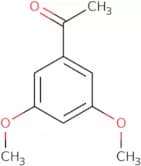
CAS:<p>3',5'-Dimethoxyacetophenone is a compound that is used as an analytical reagent, corrosion inhibitor, and a catalyst. It has been categorized as a hazardous substance by the U.S. Environmental Protection Agency (EPA) and is on the list of substances of very high concern in Europe. 3',5'-Dimethoxyacetophenone is used to prevent corrosion in metals because it reacts with chloride ions to form a protective layer of hydrochloric acid and fatty acid esters. This product has medicinal values because it can be used to synthesize flavonoids or fatty acids.</p>Formula:C10H12O3Purity:Min. 95%Color and Shape:PowderMolecular weight:180.2 g/mol2,6-Naphthalenedisulfonic acid disodium
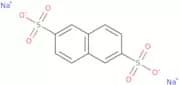
CAS:<p>2,6-Naphthalenedisulfonic acid disodium salt is a luminophore that is soluble in water. This compound has been found to have antibacterial activity against the bacteria Staphylococcus aureus and Escherichia coli. The 2,6-naphthalenedisulfonic acid disodium salt is not active against Gram-negative bacteria, such as Pseudomonas aeruginosa. It has been shown to be effective against Gram-positive bacteria by binding to the cell wall and inhibiting protein synthesis. The 2,6-naphthalenedisulfonic acid disodium salt may also be responsible for the antimicrobial activity of copper salts and other antibacterial agents.</p>Formula:C10H8O6S2•Na2Purity:Min. 95%Color and Shape:PowderMolecular weight:334.28 g/mol

![3-[4-(Difluoromethoxy)phenyl]propanenitrile](/_next/image/?url=https%3A%2Fstatic.cymitquimica.com%2Fproducts%2F3D%2Fthumb-webp%2FHSB67627.webp&w=3840&q=75)
![1-[3-(Trifluoromethyl)phenyl]-1H-1,2,3-triazole-4-carboxylic acid](/_next/image/?url=https%3A%2Fstatic.cymitquimica.com%2Fproducts%2F3D%2Fthumb-webp%2FNEA93433.webp&w=3840&q=75)



![1-Methyl-2-[(1-methyl-1H-imidazol-2-yl)disulfanyl]-1H-imidazole](/_next/image/?url=https%3A%2Fstatic.cymitquimica.com%2Fproducts%2F3D%2Fthumb-webp%2FLCA74729.webp&w=3840&q=75)