Building Blocks
This section contains fundamental products for the synthesis of organic and biological compounds. Building blocks are the essential starting materials used to construct complex molecules through various chemical reactions. They play a critical role in drug discovery, material science, and chemical research. At CymitQuimica, we offer a diverse range of high-quality building blocks to support your innovative research and industrial projects, ensuring you have the essential components for successful synthesis.
Subcategories of "Building Blocks"
- Boronic Acids & Boronic Acid Derivatives(5,756 products)
- Chiral Building Blocks(1,242 products)
- Hydrocarbon Building Blocks(6,095 products)
- Organic Building Blocks(61,038 products)
Found 196817 products of "Building Blocks"
Sort by
Purity (%)
0
100
|
0
|
50
|
90
|
95
|
100
Tetraethyl 2,2'-bipyridine-4,4'-diylbisphosphonate
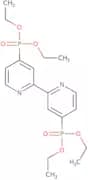
CAS:<p>Tetraethyl 2,2'-bipyridine-4,4'-diylbisphosphonate is a chemical that is used as an intermediate in the synthesis of other fine chemicals. Tetraethyl 2,2'-bipyridine-4,4'-diylbisphosphonate can be used as a building block for synthesis of more complex compounds with high chemical and biological activity. Tetraethyl 2,2'-bipyridine-4,4'-diylbisphosphonate can also be used to synthesize speciality chemicals or research chemicals. This compound has many versatile uses due to its ability to react with different substances to form new chemical compounds.</p>Formula:C18H26N2O6P2Purity:Min. 95%Color and Shape:PowderMolecular weight:428.36 g/mol2,4,5-Triamino-6-hydroxypyrimidine sulfate
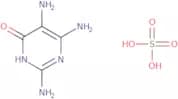
CAS:<p>2,4,5-Triamino-6-hydroxypyrimidine sulfate is a chemical compound that is a metabolite of the amino acid lysine. It is produced when lysine undergoes hydrolysis by enzymes and is converted to 2,4,5-triamino-6-hydroxypyrimidine sulfate by the addition of sulfate ions. This metabolite has been shown to have reactive properties and may play a role in mitochondrial dysfunction. 2,4,5-Triamino-6-hydroxypyrimidine sulfate has been used in binding experiments to measure the strength of protein interactions with other proteins or molecules. For example, it was used in experiments with dimethylformamide (DMF) to study the binding affinity of DMF with proteins such as cytochrome c oxidase. In these experiments, 2,4,5-triamino-6-hydroxypyrimidine sulfate was found to</p>Formula:C4H7N5O•H2SO4Purity:Min. 95%Color and Shape:PowderMolecular weight:239.21 g/mol1,2,4,5-Tetrabromobenzene
CAS:<p>1,2,4,5-Tetrabromobenzene is a brominated organic compound that forms a palladium complex. It has been studied by chemical ionization with an atmospheric pressure photoionization detector (APPI) and molecular modeling. The debromination reaction of 1,2,4,5-tetrabromobenzene was observed to take place in the liquid phase at room temperature. The detection limit for this reaction was found to be between 0.1 and 5 ppm. The most common form of 1,2,4,5-tetrabromobenzene is the monoclinic polymorph; however it can also exist as a trigonal system or as a hexagonal system when heated above its phase transition temperature. This compound is soluble in water and mercury chloride solutions but insoluble in ethers or chloroform.</p>Formula:C6H2Br4Purity:Min. 95%Color and Shape:White PowderMolecular weight:393.7 g/molGuanine
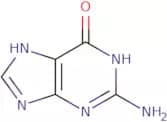
CAS:<p>Guanine is a purine base that is found in the DNA and RNA of all living cells. It plays an important role as a component of the nucleic acid molecule, where it is paired with cytosine. Guanine is involved in many chemical reactions and biological processes, including protein synthesis and cell division. The lack of guanine can lead to deficiency symptoms such as hemolytic anemia or erythrocyte cytoplasmic inclusion bodies. Guanine has been shown to have chemiluminescent properties, which can be used to detect its presence in samples containing DNA or RNA. This reaction occurs when guanine reacts with hydrogen peroxide (H2O2) to form guanidine (HN=C(NH2)NH2). The reaction produces excited states that emit light at a wavelength of 395 nm when they return to their ground state. Guanidine also has electrochemical impedance spectroscopy properties, which can be used for analytical purposes</p>Formula:C5H5N5OPurity:Min. 98 Area-%Color and Shape:PowderMolecular weight:151.13 g/mol(2,4-Di-tert-butylphenoxy)phosphonic acid
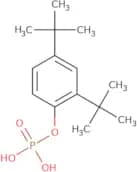
CAS:<p>(2,4-Di-tert-butylphenoxy)phosphonic acid is a fine chemical with CAS No. 18351-37-6. It is an intermediate for the production of other chemicals and can also be used as a reagent or speciality chemical. The compound is a versatile building block that can be used in the production of complex compounds with high quality and versatility. The compound has been shown to react with many functional groups, which makes it useful in research and development. (2,4-Di-tert-butylphenoxy)phosphonic acid is also a useful scaffold for the synthesis of pharmaceuticals.</p>Formula:C14H23O4PPurity:Min. 95%Color and Shape:PowderMolecular weight:286.3 g/molTrimethyl orthovalerate
CAS:<p>Used for synthesis of dihydropyran-4-ones</p>Formula:C8H18O3Purity:Min. 97 Area-%Color and Shape:Colorless Clear LiquidMolecular weight:162.23 g/molGlutamic acid
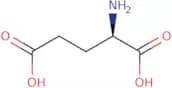
CAS:<p>Glutamic acid is a non-essential amino acid that is present in all cells. It is one of the most abundant amino acids and plays an important role in the biochemical properties and biological properties of living organisms. Glutamic acid has been found to be an important neurotransmitter and is involved in neuronal activity, which can lead to death. It also has been shown to be a potent inhibitor of DNA polymerase, which may explain the structural analysis of glutamic acid as a divalent cation coordination-activator molecule. Glutamate can be used as a model system for studying glutamate receptor function and its optimum concentration is determined using vitro assays. The dinucleotide phosphate (NADPH) oxidase pathway may be involved in the toxicity of glutamic acid as it produces reactive oxygen species.</p>Formula:C5H9NO4Purity:Min. 95%Color and Shape:White PowderMolecular weight:147.13 g/molD-Tryptophan
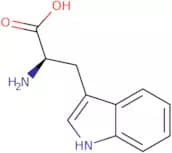
CAS:<p>D-amino acid</p>Formula:C11H12N2O2Purity:Min. 95%Color and Shape:PowderMolecular weight:204.23 g/mol2',4',6'-Trihydroxyacetophenone monohydrate
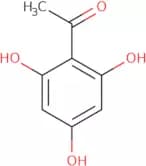
CAS:<p>2',4',6'-Trihydroxyacetophenone monohydrate is a monosodium salt of 2,4,6-trihydroxyacetophenone. It has been shown to inhibit the production of leukemia inhibitory factor (LIF) in vitro. LIF is a cytokine that regulates cell differentiation and proliferation. The matrix effect of 2',4',6'-trihydroxyacetophenone monohydrate on polymerase chain reaction was also studied with the use of a matrix-assisted laser desorption ionization time-of-flight mass spectrometer. This study revealed that the matrix effect is due to the inhibition of cyclase activity by ptelefolia and structural analysis revealed that this inhibition may be due to an interaction with nitrite ion. Preparative high performance liquid chromatography (HPLC) was used for the separation and purification of coumarin derivatives from 2',4',6'-trihydroxyacetophenone monohydrate. The toxicological studies</p>Formula:C8H8O4·H2OColor and Shape:Slightly Yellow PowderMolecular weight:186.15 g/mol2,6,8-Trichloropurine ammonium salt
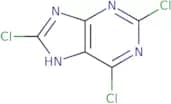
CAS:<p>2,6,8-Trichloropurine ammonium salt is a reaction product of 2,6,8-trichloropurine and ammonium hydroxide. It has been shown to inhibit the synthesis of protein in tissue cultures and to be cytotoxic.</p>Formula:C5HCl3N4NH4Purity:Min. 95%Molecular weight:241.49 g/molTris(phenylthio)methane
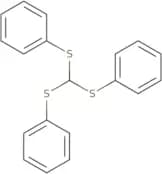
CAS:<p>Tris(phenylthio)methane is a formylating reagent that reacts with ethyl formate to produce the nitro compound. It is used in the preparation of β-amino acids and as an asymmetric synthesis catalyst. Tris(phenylthio)methane can be used as a polymerization initiator for metathesis reactions, such as the Suzuki reaction. It has been shown to be a good nucleophile and polymerizing agent when combined with hydrochloric acid or silver trifluoromethanesulfonate. Tris(phenylthio)methane may also react with chloride in the presence of base to produce phosphoric acid esters.</p>Formula:C19H16S3Purity:Min. 95%Color and Shape:Off-White PowderMolecular weight:340.53 g/mol1,2,3,6-Tetrahydropyridine
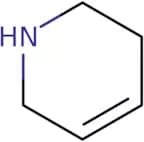
CAS:<p>1,2,3,6-Tetrahydropyridine is an experimental drug that acts as a dopamine receptor antagonist. It has been shown to induce neuronal death in the presence of excess dopamine by inhibiting the uptake of dopamine by neurons. The nitrogen atom in position 6 may be involved in binding to the receptor and initiating the conformational change needed for activation. Tetrahydropyridine binds to the D1 and D2 receptors with high affinity, but it does not bind to D4 receptors. Tetrahydropyridine can also inhibit locomotor activity in mice and rats.</p>Formula:C5H9NPurity:Min. 95%Color and Shape:Colorless Yellow Clear LiquidMolecular weight:83.13 g/molThymine
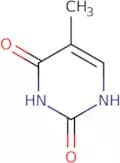
CAS:<p>Pyrimidine nucleobase; component of nucleic acids</p>Formula:C5H6N2O2Purity:Min. 99 Area-%Color and Shape:White PowderMolecular weight:126.11 g/molTetrahydro-4-methyl-2H-thiopyran-4-carboxylic acid 1,1-dioxide
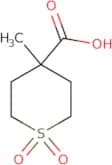
CAS:<p>Tetrahydro-4-methyl-2H-thiopyran-4-carboxylic acid 1,1-dioxide (THTPD) is a useful scaffold that can be used as a building block in organic synthesis. It is also a versatile intermediate and research chemical that can be used as a reaction component in the synthesis of complex compounds. THTPD has been shown to have high purity and quality. Tetrahydro-4-methyl-2H-thiopyran-4-carboxylic acid 1,1 - dioxide can be used as a reagent for the preparation of other compounds. CAS No.: 1713163-23-5.</p>Formula:C7H12O4SPurity:Min. 95%Color and Shape:PowderMolecular weight:192.24 g/mol2-Thiohydantoin
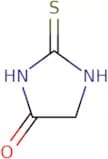
CAS:<p>2-Thiohydantoin is an organic compound that has been structurally characterized. The molecule is planar with a shape that can be described as a chair with both arms. It has been shown to have some interesting biological properties, including the ability to inhibit bowel disease and cancerous growths. 2-Thiohydantoin was also found to be an effective inhibitor of the mitochondrial membrane potential in rats and mice, suggesting it may work by inhibiting mitochondria. 2-Thiohydantoin has also been shown to increase the formation of hydrogen fluoride and other reactive oxygen species, which may contribute to its anti-bacterial activity.</p>Formula:C3H4N2OSPurity:(%) Min. 98%Color and Shape:PowderMolecular weight:116.14 g/mol3-(Trifluoromethyl)phenylacetone
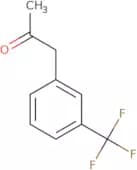
CAS:<p>3-(Trifluoromethyl)phenylacetone is a chiral iminium-type organocatalyst that is used in asymmetric organic reactions. This compound has been shown to be effective for the synthesis of chiral amines and hydroxyl groups, as well as biotransformations. 3-(Trifluoromethyl)phenylacetone binds to substrates through hydrogen bonding, steric interactions, and electrostatic interactions. It also has a high affinity for hydroxides and isosteres. 3-(Trifluoromethyl)phenylacetone can be used as an alternative to L-proline in certain biotransformations because it binds more tightly to the enzyme than L-proline does.</p>Formula:C10H9F3OPurity:Min. 95%Color and Shape:Clear LiquidMolecular weight:202.17 g/mol±,±,p-Tribromoacetophenone
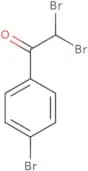
CAS:<p>Tribromoacetophenone is a brominated analog of acetophenone. It can be accessed by the reaction of an acid chloride with acetylacetone and then reacting the resulting bromide with hydrogen bromide. Tribromoacetophenone has been studied as an anti-cancer agent, but has shown little activity in animals. It is also used in the synthesis of other compounds, such as covid-19, which is being studied for its potential use as a pandemic vaccine against influenza type A H5N1.</p>Formula:C8H5OBr3Purity:Min. 95%Color and Shape:PowderMolecular weight:356.84 g/mol2-(Aminomethyl)-1,3-thiazole-4-carboxamide
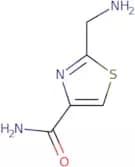
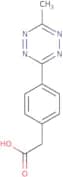
CAS:<p>2-(Aminomethyl)-1,3-thiazole-4-carboxamide is a chemical compound that can be used as a chemical reagent and as a reaction component. It is a versatile building block with many possible uses. 2-(Aminomethyl)-1,3-thiazole-4-carboxamide has been shown to be useful in the synthesis of complex compounds and fine chemicals. It is also an intermediate for the production of pharmaceuticals and other research chemicals.</p>Formula:C5H7N3OSPurity:Min. 95%Color and Shape:PowderMolecular weight:157.2 g/molMethyltetrazine-acid
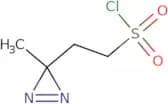
CAS:<p>Versatile small molecule scaffold</p>Formula:C11H10N4O2Purity:Min. 95%Color and Shape:PowderMolecular weight:230.22 g/mol2-(3-Methyl-3H-diazirin-3-yl)ethane-1-sulfonyl chloride
CAS:<p>Versatile small molecule scaffold</p>Formula:C4H7ClN2O2SPurity:Min. 95%Molecular weight:182.63 g/mol