Building Blocks
This section contains fundamental products for the synthesis of organic and biological compounds. Building blocks are the essential starting materials used to construct complex molecules through various chemical reactions. They play a critical role in drug discovery, material science, and chemical research. At CymitQuimica, we offer a diverse range of high-quality building blocks to support your innovative research and industrial projects, ensuring you have the essential components for successful synthesis.
Subcategories of "Building Blocks"
- Boronic Acids & Boronic Acid Derivatives(5,756 products)
- Chiral Building Blocks(1,242 products)
- Hydrocarbon Building Blocks(6,095 products)
- Organic Building Blocks(61,038 products)
Found 196817 products of "Building Blocks"
Sort by
Purity (%)
0
100
|
0
|
50
|
90
|
95
|
100
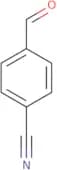
4-Cyanobenzaldehyde
CAS:<p>4-Cyanobenzaldehyde is an acid that inhibits tyrosinase, an enzyme involved in the production of melanin. It has been shown to have a strong inhibitory effect on the activity of this enzyme in a variety of biological studies. 4-Cyanobenzaldehyde is chemically stable and does not react with hydrochloric acid or water at room temperature, making it suitable for use in experiments involving these substances. This chemical also has antiinflammatory properties and can be used as a substitute for phenols in some chemical reactions. 4-Cyanobenzaldehyde is soluble in methanol and reacts with diphenolase, an enzyme involved in the synthesis of lignin, to produce benzophenone and benzoic acid. This reaction may be important for the formation of lignin during wood decomposition.</p>Formula:C8H5NOPurity:80%Color and Shape:PowderMolecular weight:131.13 g/mol5-Chloro-2-methylaminobenzophenone
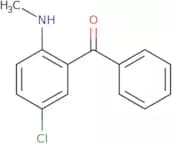
CAS:<p>5-Chloro-2-methylaminobenzophenone is an intermediate in the synthesis of 2,4-dichlorophenoxyacetic acid. 5-Chloro-2-methylaminobenzophenone is a reactive intermediate that can be used for wastewater treatment and for the production of chemicals that are used in the manufacture of other substances. It is also a reaction intermediate in chemical ionization. It has been shown to have chronic toxicity as well as carcinogenic effects when it is present in urine samples or human serum. In addition, 5-Chloro-2-methylaminobenzophenone has been found to cause light sensitivity and skin irritation when it is exposed to UV light. This chemical reacts with hydrochloric acid and pyridoxine hydrochloride to form 2,4,-dichlorophenoxyacetic acid. The activation energies for this process are between 30 and 60 kJ/mol.</p>Formula:C14H12NOClPurity:Min. 95%Color and Shape:PowderMolecular weight:245.7 g/mol2-Chloro-4-methoxybenzoic acid
CAS:<p>2-Chloro-4-methoxybenzoic acid is a model compound for the screening of acridones, which are a class of compounds with anticancer activity. 2-Chloro-4-methoxybenzoic acid has been shown to inhibit potassium t-butoxide efflux in cancer cells and induce multidrug resistance in cancer cells. Furthermore, it has been shown that 2-Chloro-4-methoxybenzoic acid inhibits mitoxantrone efflux in cancer cells, leading to an increase in mitoxantrone cytotoxicity. This compound is also able to induce a phenotype change from cancerous to normal and can be used as a chemotherapeutic agent against cancers.</p>Formula:C8H7ClO3Purity:Min. 95%Color and Shape:PowderMolecular weight:186.59 g/mol2-Chloro-4-methoxybenzoic acid methyl ester
CAS:<p>2-Chloro-4-methoxybenzoic acid methyl ester is a reagent that can be used in the preparation of various compounds. It is also a versatile building block for the synthesis of complex compounds, such as pharmaceuticals and agrochemicals. This chemical is often used as an intermediate or building block in the preparation of pharmaceuticals and agrochemicals. 2-Chloro-4-methoxybenzoic acid methyl ester has been shown to be a useful scaffold for the synthesis of drugs with high quality and low cost.</p>Formula:C9H9ClO3Purity:Min. 95%Color and Shape:PowderMolecular weight:200.62 g/mol5-Chloro-2-methylaniline
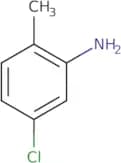
CAS:<p>5-Chloro-2-methylaniline is an organic compound that is a member of the amines class. It has been shown to be genotoxic and carcinogenic in vivo. 5-Chloro-2-methylaniline binds to DNA and inhibits the synthesis of RNA, leading to cell death. It is also toxic to aquatic organisms by inhibiting cellular respiration and causing mutations. 5-Chloro-2-methylaniline has been shown to be genotoxic in vitro and in vivo, with chronic oral toxicity observed at dietary concentrations of 0.1% (10 ppm) in animals. The toxicity of this compound may be due to its ability to form hydrogen chloride when mixed with water or other acids.</p>Formula:C7H8ClNPurity:Min. 95%Color and Shape:Clear LiquidMolecular weight:141.6 g/mol3,4,5-Trimethoxyphenylacetic acid
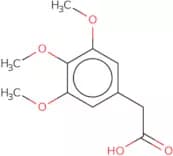
CAS:<p>3,4,5-Trimethoxyphenylacetic acid is a synthetic compound that is used as an anticancer drug. It has been shown to inhibit the growth of cancer cells in vitro and in vivo by binding to the DNA. 3,4,5-Trimethoxyphenylacetic acid has been shown to be stereoselective with respect to the anticancer activity of the two isomers. The hydroxyl group present on one side of the molecule may be responsible for this effect. 3,4,5-Trimethoxyphenylacetic acid also inhibits enzymes called oxidases that are involved in the production of prostaglandins from arachidonic acid (prostaglandins play a role in inflammation). This property may account for its anti-inflammatory effects.</p>Formula:C11H14O5Purity:Min. 95%Color and Shape:White PowderMolecular weight:226.23 g/molUracil
CAS:<p>Pyrimidine nucleobase; allosteric regulator and coenzyme for reactions</p>Formula:C4H4N2O2Purity:Min. 98 Area-%Color and Shape:White Off-White PowderMolecular weight:112.09 g/mol1,2-Naphthoquinone-4-sulfonic acid potassium salt
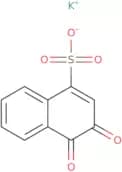
CAS:<p>1,2-Naphthoquinone-4-sulfonic acid potassium salt is a pesticide that has been shown to be active against many types of insects. It is used as an insecticide and acaricide in agriculture, horticulture, and forestry. The compound is stable and does not hydrolyze in water, making it easy to handle. This product is also a natural product that can be synthesized from cyanamide and amines, which are both commercially available. 1,2-Naphthoquinone-4-sulfonic acid potassium salt has been found to be effective at killing insects when injected into their bodies with the use of a syringe or when sprayed on the surface where they live. GC–MS analysis has shown that this compound contains no reactive functional groups or substances that would cause harm to humans or animals. Research has shown this product to be safe for use in food crops and animal feed.</p>Formula:C10H5O5SKPurity:Min. 98 Area-%Color and Shape:Orange PowderMolecular weight:276.31 g/mol2,3-Dihydroxy-4-methoxybenzaldehyde
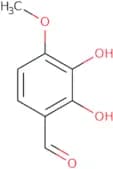
CAS:<p>2,3-Dihydroxy-4-methoxybenzaldehyde is the oxidized form of 2,3-dihydroxybenzaldehyde. It has been used in biological studies to investigate the biosynthetic pathways of reductoisomerase and analytical methods for detecting hydrogen bonds in samples. This chemical can also be found in urine samples as a metabolite of adenine nucleotide and polypeptides. The chemical has been shown to have health benefits, such as being a recombinant that helps cell culture.</p>Formula:C8H8O4Purity:Min. 95%Color and Shape:PowderMolecular weight:168.15 g/moltert-butyl N-{2-azabicyclo[2.1.1]hexan-1-ylmethyl}carbamate
CAS:<p>Versatile small molecule scaffold</p>Formula:C11H20N2O2Purity:Min. 95%Molecular weight:212.3 g/mol2-Methyl-3-nitrobenzoic acid
CAS:<p>Please enquire for more information about 2-Methyl-3-nitrobenzoic acid including the price, delivery time and more detailed product information at the technical inquiry form on this page</p>Formula:C8H7NO4Molecular weight:181.15 g/molRef: 3D-M-4209
1kgTo inquire5kgTo inquire10kgTo inquire25kgTo inquire2500gTo inquire-Unit-kgkgTo inquireN-(3-Phenylpropionyl)glycine
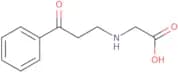
CAS:<p>N-(3-Phenylpropionyl)glycine is a metabolite of the amino acid glycine that is produced by plants. It has been used in diagnostic tests to measure the activity of enzymes involved in fatty acid metabolism and as a marker for metabolic disorders. N-(3-Phenylpropionyl)glycine can be detected in urine samples and has been used to diagnose different types of orotic aciduria, including infantile orotic aciduria. This metabolite inhibits the activity of the enzyme hexanoylglycerol O-acyltransferase, which catalyzes the conversion of hexanoylglycine to p-hydroxybenzoic acid. Hexanoylglycine is an intermediate product of human liver metabolism and it can be found in high concentrations in body tissues such as heart tissue.</p>Formula:C11H13NO3Purity:Min. 95%Color and Shape:PowderMolecular weight:207.23 g/mol1-Benzyl-1,2,3,4-tetrahydroisoquinoline hydrochloride
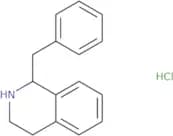
CAS:<p>1-Benzyl-1,2,3,4-tetrahydroisoquinoline hydrochloride is a drug that has been shown to have chronic toxicity in monkeys. It has been injected subcutaneously for the treatment of fascicularis and has induced parkinsonism as a symptom. The chronic effects of this drug on humans are not well known. Further investigations are required to determine whether 1-Benzyl-1,2,3,4-tetrahydroisoquinoline hydrochloride induces Parkinsonism in humans.</p>Formula:C16H17N•HClPurity:Min. 95%Color and Shape:PowderMolecular weight:259.77 g/mol1,1-Diethoxy-2-propanamine
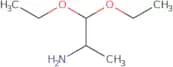
CAS:<p>1,1-Diethoxy-2-propanamine is a primary amine that serves as a versatile building block in various chemical reactions. It is commonly used in research laboratories for the synthesis of new compounds and the development of innovative chemical processes. This high-quality research chemical offers excellent purity and reliability, making it a preferred choice among chemists and scientists. Whether you are conducting experiments or exploring new avenues in chemistry, 1,1-Diethoxy-2-propanamine is an essential component to consider for your research needs.</p>Formula:C7H17NO2Purity:Min. 95%Color and Shape:Clear LiquidMolecular weight:147.22 g/molLinoleic acid - 60%min
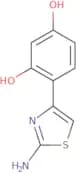
CAS:<p>Linoleic acid is a polyunsaturated fatty acid that is an important component of the human diet. It has been shown to have inhibitory properties on liver cells, and may be related to body mass index. Linoleic acid is a precursor for gamma-aminobutyric acid (GABA), which functions as a neurotransmitter in the central nervous system. Linoleyl alcohol is a metabolite of linoleic acid and has been shown to inhibit the production of antimicrobial peptides, such as cathelicidin and beta-defensin. The inhibition of this peptide may be responsible for the observed reduction in inflammatory responses and infections.</p>Formula:C18H32O2Purity:Min. 95%Color and Shape:Yellow Clear LiquidMolecular weight:280.45 g/mol4-(2-Amino-1,3-thiazol-4-yl)benzene-1,3-diol
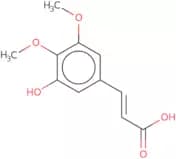
CAS:<p>Versatile small molecule scaffold</p>Formula:C9H8N2O2SPurity:Min. 95%Color and Shape:PowderMolecular weight:208.24 g/mol3,4-Dimethoxy-5-hydroxycinnamic acid
CAS:<p>3,4-Dimethoxy-5-hydroxycinnamic acid is a monoterpenoid indole alkaloid that belongs to the class of biochemical compounds. It is a promiscuous compound and can be found in many plants, such as coffee beans, black pepper, cinnamon, and thyme. 3,4-Dimethoxy-5-hydroxycinnamic acid has been shown to have antimicrobial properties against bacteria and fungi. The metabolomics study showed that this compound may also have anti-inflammatory effects. 3,4-Dimethoxy-5-hydroxycinnamic acid was shown to enhance the transcription of ferulic acid in E. coli cells. This compound was also shown to decrease the levels of transcripts for genes involved in lipid metabolism and fatty acid biosynthesis in human liver cells.</p>Formula:C11H12O5Purity:Min. 98 Area-%Color and Shape:PowderMolecular weight:224.21 g/molBicyclo[2.1.1]hexane-1-carboxylic acid
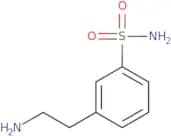
CAS:<p>Versatile small molecule scaffold</p>Formula:C7H10O2Purity:Min. 95%Molecular weight:126.15 g/mol3-(2-Aminoethyl)benzenesulfonamide
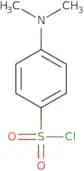
CAS:<p>3-(2-Aminoethyl)benzenesulfonamide (AEEBS) is a pyridine derivative that can be used as a reagent, speciality chemical, or in the synthesis of other compounds. AEEBS is an amine building block and has been used in the preparation of a variety of complex organic compounds, such as pharmaceuticals. This product is also useful for research purposes and can be used to synthesize different organic compounds.</p>Formula:C8H12N2O2SPurity:Min. 95%Color and Shape:PowderMolecular weight:200.26 g/mol4-(Dimethylamino)benzene-1-sulfonyl chloride
CAS:<p>Versatile small molecule scaffold</p>Formula:C8H10ClNO2SPurity:Min. 95%Color and Shape:PowderMolecular weight:219.69 g/mol




![tert-butyl N-{2-azabicyclo[2.1.1]hexan-1-ylmethyl}carbamate](/_next/image/?url=https%3A%2Fstatic.cymitquimica.com%2Fproducts%2F3D%2Fthumb-webp%2FAAC99746.webp&w=3840&q=75)


![Bicyclo[2.1.1]hexane-1-carboxylic acid](/_next/image/?url=https%3A%2Fstatic.cymitquimica.com%2Fproducts%2F3D%2Fthumb-webp%2FPCA72577.webp&w=3840&q=75)