


Building Blocks
This section contains fundamental products for the synthesis of organic and biological compounds. Building blocks are the essential starting materials used to construct complex molecules through various chemical reactions. They play a critical role in drug discovery, material science, and chemical research. At CymitQuimica, we offer a diverse range of high-quality building blocks to support your innovative research and industrial projects, ensuring you have the essential components for successful synthesis.
Subcategories of "Building Blocks"
- Boronic Acids & Boronic Acid Derivatives(5,756 products)
- Chiral Building Blocks(1,242 products)
- Hydrocarbon Building Blocks(6,095 products)
- Organic Building Blocks(61,038 products)
Found 196817 products of "Building Blocks"
Sort by
Purity (%)
0
100
|
0
|
50
|
90
|
95
|
100
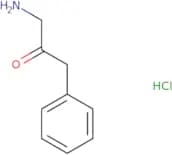
1-Amino-3-phenyl-2-propanone Hydrochloride
CAS:<p>1-Amino-3-phenyl-2-propanone Hydrochloride is a versatile building block that can be used as a reagent and speciality chemical. It can also be used as an intermediate in the synthesis of other compounds and pharmaceuticals. 1-Amino-3-phenyl-2-propanone Hydrochloride is soluble in water, ethanol, ether, chloroform, benzene, and acetone. This product has a CAS No. 41173-00-6 and can be shipped to Canada.</p>Formula:C9H12ClNOPurity:Min. 95%Molecular weight:185.65 g/molLevoglucosenone
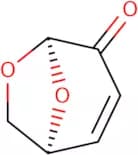
CAS:<p>Levoglucosenone is a molecule that inhibits the reaction mechanism of glycosidic bond formation. It is used in biochemical research to study reactions that involve surface methodology, such as hydroxyl group formation and zirconium oxide deposition. Levoglucosenone can be used to inhibit the acid formation that occurs during the reaction between nitrite ion and a chiral compound. The reactant solution can be activated by adding levoglucosenone to it, which will then inhibit the reaction. Sample preparation for these types of experiments involves dissolving the reactant solution in water and adding ammonium hydroxide to it, followed by adding a small amount of levoglucosenone.</p>Formula:C6H6O3Purity:Min. 95%Color and Shape:Clear LiquidMolecular weight:126.11 g/mol2-{[3-(3-Chlorophenyl)-1,2,4-oxadiazol-5-yl]sulfanyl}acetic acid
CAS:<p>2-{[3-(3-Chlorophenyl)-1,2,4-oxadiazol-5-yl]sulfanyl}acetic acid (SDZ EAA) is a monoclonal antibody that binds to mitochondrial membrane proteins. SDZ EAA can be used to detect the damaged mitochondrial membrane potential and transfer reactions in cancer tissues. SDZ EAA has been shown to cause genotoxic effects in vitro, including the induction of DNA strand breaks and chromosomal aberrations. It also causes metabolic disorders such as cardiac hypertrophy and an increase in proton levels. SDZ EAA has been shown to inhibit the synthesis of ATP through inhibition of the polymerase chain reaction and electron transport chain activity.</p>Formula:C10H7ClN2O3SPurity:Min. 95%Color and Shape:PowderMolecular weight:270.69 g/molNitrosophenidylate
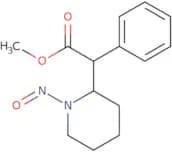
CAS:<p>Versatile small molecule scaffold</p>Formula:C14H18N2O3Purity:95%MinColor and Shape:PowderMolecular weight:262.3 g/molLinoleic acid - liquid
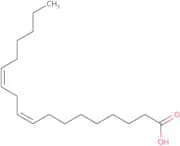
CAS:<p>Linoleic acid is a type of essential fatty acid that is found in vegetable oils. It is the most predominant polyunsaturated fatty acid and can be classified as either a cis- or trans-isomer. Linoleic acid has been shown to have inhibitory properties against bowel disease, polymerase chain reaction (PCR) analysis, and disease activity. Linoleic acid may also be used as an analytical method for determining levels of linoleate, linoleic acid, or p-hydroxybenzoic acid in body proteins. The inhibition of cancer cell proliferation by linoleic acid may be due to its ability to inhibit the production of signal peptide or 3t3-l1 preadipocytes.</p>Formula:C18H32O2Purity:94 To 96%Color and Shape:Colorless Clear LiquidMolecular weight:280.45 g/mol1-(Phenylamino)cyclopropane-1-carboxylic acid
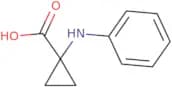
CAS:<p>1-(Phenylamino)cyclopropane-1-carboxylic acid is a high quality chemical that is a useful intermediate and building block in the synthesis of fine chemicals. It has been used as a reagent and complex compound. The CAS number for this chemical is 210576-54-8. This chemical can be used as a speciality chemical. It has also been shown to be versatile in the laboratory setting, being used as a reaction component for both synthetic and natural product syntheses.</p>Formula:C10H11NO2Purity:Min. 95%Color and Shape:PowderMolecular weight:177.2 g/mol8-Bromoadenine
CAS:<p>8-Bromoadenine is a nucleophile that reacts with electrophiles to form adducts. 8-Bromoadenine has been shown to induce DNA strand breaks and oxidative damage in vitro, which may be due to its ability to react with DNA bases and form intramolecular hydrogen bonds. 8-Bromoadenine has also been shown to cause inflammatory bowel disease in mice by increasing the production of proinflammatory cytokines. 8-Bromoadenine induces Toll-like receptor 4 (TLR4) signaling, which leads to enhancement of radiation response. This drug can also be used as the monosodium salt for treating cancer, although it only has a limited number of sequences that can be synthesized.</p>Formula:C5H4BrN5Purity:Min. 95%Color and Shape:White PowderMolecular weight:214.02 g/mol2-Methyl-5-nitropyridine
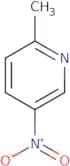
CAS:<p>2-Methyl-5-nitropyridine is an enamine that can be synthesized by the reaction of a primary amine with nitrous acid. It has been shown to react with hydrazines to form 2-methyl-5-nitropyridinium hydrazones, which are useful in organic synthesis. The reaction of 2-methyl-5-nitropyridine with acid anhydrides yields protonated carboxylic acids, which can be used as nucleophiles in the presence of metal ions. This amino acid also forms aliphatic amines and anions and reacts with aldehydes to form nitroalkenes.</p>Formula:C6H6N2O2Purity:Min. 95%Color and Shape:Beige PowderMolecular weight:138.12 g/mol2-Bromo-4-iodopyridine
CAS:<p>2-Bromo-4-iodopyridine is a coordination compound that inhibits bacterial enzyme catechol-O-methyltransferase (COMT). It is also an inhibitor of methicillin-resistant Staphylococcus aureus (MRSA) and other bacteria. 2-Bromo-4-iodopyridine binds to the active site of COMT, which is located in the bacterial cell wall, and prevents methylamine from binding to the enzyme. This prevents methylation of the catechol ring, which is required for bacterial growth. 2-Bromo-4-iodopyridine has been shown to have antimicrobial activity against Escherichia coli, Enterococcus faecalis, Bacillus subtilis, and Candida albicans.</p>Formula:C5H3BrINPurity:Min. 95%Color and Shape:PowderMolecular weight:283.88 g/mol1,4-Bis-(diphenylphosphino)butane
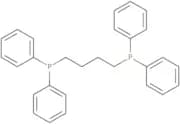
CAS:<p>1,4-Bis-(diphenylphosphino)butane is a coordination compound that contains a bicyclic heterocycle. The compounds are made up of phosphorus and nitrogen atoms which are arranged in a tetrahedral geometry. It has photochemical properties and can be used to inhibit the growth of myeloid leukemia cells. The complexes bind to amines and form stable complexes with hydroxyl groups, so they are also able to cross mitochondrial membranes. This compound has been shown to bind to copper ions in x-ray crystal structures. 1,4-Bis-(diphenylphosphino)butane binds more strongly to ethylene diamine than it does to aryl halides such as chloroethane or phenylethane. Activation energies for the binding of 1,4-bis-(diphenylphosphino)butane with ethylene diamine have been found by measuring the free energy change for its formation from</p>Formula:C28H28P2Purity:Min. 95%Color and Shape:White PowderMolecular weight:426.47 g/mol7-Methyl-2,7-diazaspiro[3.5]nonane dihydrochloride
CAS:<p>7-Methyl-2,7-diazaspiro[3.5]nonane dihydrochloride is a fine chemical that is used as a versatile building block in the synthesis of complex compounds. It has CAS No. 1588441-26-2 and can be used as a research chemical, reagent, or speciality chemical. This compound is useful for the production of high quality and useful intermediates and reaction components. 7-Methyl-2,7-diazaspiro[3.5]nonane dihydrochloride also has scaffold properties that can be used to synthesize other organic molecules with potential use as pharmaceuticals or agrochemicals.</p>Formula:C8H16N2•(HCl)2Purity:Min. 95%Color and Shape:PowderMolecular weight:213.15 g/mol2-Bromothiazole
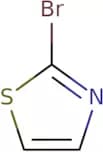
CAS:<p>2-Bromothiazole is an anticancer agent that can be prepared by coupling of 2-bromo-1,2-dithiolane and thiourea. This chemical has been found to be effective against a number of cancers in both animal and human studies. It is also used as a reagent in the industrial preparation of pesticides and dyes. 2-Bromothiazole is highly reactive with nucleophiles such as amines, alcohols, and phenols, which makes it a powerful catalyst for cross-coupling reactions. It can be used to make other organic compounds that have not been available from commercial sources due to its high reactivity. The compound's anti-inflammatory properties may be related to its ability to inhibit prostaglandin synthesis by inhibiting cyclooxygenase activity.</p>Formula:C3H2BrNSPurity:Min. 95%Color and Shape:PowderMolecular weight:164.02 g/mol8-Bromoguanine
CAS:<p>8-Bromoguanine is a nucleoside analog drug that is used as an antileukemic agent. It is a synthetic derivative of guanine and has been shown to inhibit the growth of leukemic cells by interfering with the synthesis of DNA. 8-Bromoguanine has also been shown to be reactive with eosinophil peroxidase and other electron-rich substances, which may be due to its hydroxyl group. The analytical method for 8-bromoguanine includes fluorescence spectroscopy, high pressure liquid chromatography (HPLC), and thin layer chromatography (TLC). Chemical diversity studies have shown that 8-bromoguanine can react with glycosylase or hydroxy groups, forming reaction products.</p>Formula:C5H4BrN5OPurity:Min. 97 Area-%Color and Shape:PowderMolecular weight:230.02 g/molFuran-2-sulfonamide
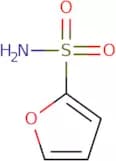
CAS:<p>Furan-2-sulfonamide is a quinoline derivative that prevents HIV from entering the host cell. It inhibits the activation of toll-like receptor (TLR) by blocking the binding of TLR ligands to their receptors. Furan-2-sulfonamide has been shown to be effective in reducing inflammation in inflammatory bowel disease, inflammatory diseases, and pancreatitis. Furan-2-sulfonamide may also have anti-cancer effects by inhibiting the growth of cancer cells and inducing apoptosis. Furan-2-sulfonamide can be used as a part of pharmaceutical preparations for treating symptoms such as pain, nausea, vomiting, or diarrhea. This drug also inhibits matrix metalloproteinases (MMP), which are enzymes that break down collagen in the body. The inhibition of MMP leads to decreased breakdown of skin or bladder tissue and increased healing time in patients with these conditions.</p>Formula:C4H5NO3SPurity:Min. 95%Color and Shape:PowderMolecular weight:147.15 g/mol[Hydroxy(propan-2-yl)carbamoyl]formic acid
CAS:<p>Hydroxy(propan-2-yl)carbamoyl formic acid is a metabolite of formaldehyde. It is used to measure formaldehyde in biological samples such as blood, serum, and urine. It also acts as a precursor for the production of other metabolites which are related to bowel disease and cardiac function. Hydroxy(propan-2-yl)carbamoyl formic acid has been shown to be a good indicator of iron homeostasis in vivo and in vitro models. This compound can be detected by chemiluminescence methods and can be used with zirconium oxide to study the effects on axonal growth.</p>Formula:C5H9NO4Purity:Min. 95%Molecular weight:147.13 g/mol3-Bromo-2-methylbenzene-1-sulfonamide
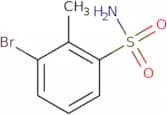
CAS:<p>3-Bromo-2-methylbenzene-1-sulfonamide is a chemical compound that is used as an intermediate in the production of other chemicals. 3-Bromo-2-methylbenzene-1-sulfonamide is a versatile building block, which can be used to make the reagent 3,3'-dimethoxybiphenyl by reacting with acetone and sodium methoxide. It can also be used to make a variety of useful compounds, such as 1,2,4,5 tetrahydroisoquinoline. This compound has CAS Number 1032507-35-9 and is a fine chemical that can be found on the list of speciality chemicals.</p>Formula:C7H8BrNO2SPurity:Min. 95%Color and Shape:PowderMolecular weight:250.12 g/mol1,2,3,4-Tetrahydroquinoxaline-5-carboxylic acid
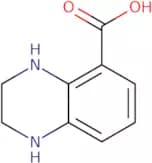
CAS:<p>1,2,3,4-Tetrahydroquinoxaline-5-carboxylic acid is a versatile building block that can be used in the synthesis of complex compounds with a wide range of applications. It has been shown to be useful as a reagent in research chemicals and as a speciality chemical. 1,2,3,4-Tetrahydroquinoxaline-5-carboxylic acid is also used in the preparation of high quality pharmaceuticals and is an important intermediate for the synthesis of drugs. The compound can also be used as a scaffold for drug design.</p>Formula:C9H10N2O2Purity:Min. 95%Color and Shape:PowderMolecular weight:178.19 g/mol2-(Methylamino)pyridine-3-methanol
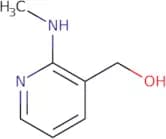
CAS:<p>2-(Methylamino)pyridine-3-methanol is an industrial chemical that is used as a solvent and in the production of potassium sulfate. It has a high boiling point, which makes it a good choice for large-scale industrial processes. 2-(Methylamino)pyridine-3-methanol is also an organic solvent, which can be used to dissolve many other molecules. This product can be used as a conditioner or tertiary butylating agent in the production of organic compounds. Its product yield is high, with only 10 grams needed to produce 1 kilogram.</p>Formula:C7H10N2OPurity:Min. 95%Color and Shape:Off-White PowderMolecular weight:138.17 g/molL-Leucine, USP
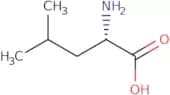
CAS:<p>Amino acid</p>Formula:C6H13NO2Purity:98.5 To 101.5%Color and Shape:White PowderMolecular weight:131.17 g/molPyrazolo[1,5-a]pyrimidine-3-carboxylic acid
CAS:<p>Pyrazolo[1,5-a]pyrimidine-3-carboxylic acid is a pyrimidine analog and an electron transfer agent. It is a potent inhibitor of the enzyme dehydrogenase, which catalyzes the conversion of nicotinamide adenine dinucleotide (NAD) to nicotinamide adenine dinucleotide phosphate (NADP). Pyrazolo[1,5-a]pyrimidine-3-carboxylic acid has been shown to have anti-inflammatory properties and also inhibits the production of b-raf protein. This drug has also been shown to be a potent inhibitor of mitochondrial electron transport in cancer cells. Pyrazolo[1,5-a]pyrimidine-3-carboxylic acid binds to the metal centers in mitochondria, thereby inhibiting oxidative phosphorylation and reducing ATP synthesis. This ultimately leads to cell death by apoptosis.</p>Formula:C7H5N3O2Purity:Min. 95%Color and Shape:White PowderMolecular weight:163.13 g/mol

![2-{[3-(3-Chlorophenyl)-1,2,4-oxadiazol-5-yl]sulfanyl}acetic acid](/_next/image/?url=https%3A%2Fstatic.cymitquimica.com%2Fproducts%2F3D%2Fthumb-webp%2FNNA74611.webp&w=3840&q=75)


![7-Methyl-2,7-diazaspiro[3.5]nonane dihydrochloride](/_next/image/?url=https%3A%2Fstatic.cymitquimica.com%2Fproducts%2F3D%2Fthumb-webp%2FNNC44126.webp&w=3840&q=75)

![[Hydroxy(propan-2-yl)carbamoyl]formic acid](/_next/image/?url=https%3A%2Fstatic.cymitquimica.com%2Fproducts%2F3D%2Fthumb-webp%2FHFA41803.webp&w=3840&q=75)
![Pyrazolo[1,5-a]pyrimidine-3-carboxylic acid](/_next/image/?url=https%3A%2Fstatic.cymitquimica.com%2Fproducts%2F3D%2Fthumb-webp%2FFP16388.webp&w=3840&q=75)