Building Blocks
This section contains fundamental products for the synthesis of organic and biological compounds. Building blocks are the essential starting materials used to construct complex molecules through various chemical reactions. They play a critical role in drug discovery, material science, and chemical research. At CymitQuimica, we offer a diverse range of high-quality building blocks to support your innovative research and industrial projects, ensuring you have the essential components for successful synthesis.
Subcategories of "Building Blocks"
- Boronic Acids & Boronic Acid Derivatives(5,756 products)
- Chiral Building Blocks(1,242 products)
- Hydrocarbon Building Blocks(6,095 products)
- Organic Building Blocks(61,055 products)
Found 199650 products of "Building Blocks"
Sort by
Purity (%)
0
100
|
0
|
50
|
90
|
95
|
100
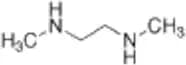
N,N’-Dimethylethanediamine
CAS:Controlled Product<p>Applications Has a DNA binding effect.<br> Not a dangerous good if item is equal to or less than 1g/ml and there is less than 100g/ml in the package<br>References Mikata, Y., et al.: Chem. Pharm. Bull., 48, 477 (2000),<br></p>Formula:C4H12N2Color and Shape:NeatMolecular weight:88.153,7-Dimethyl 2H-Furo[2,3-c]pyran-2-one (>90%)
CAS:Controlled Product<p>Applications Forest fires are actually beneficial for ecosystems, provided they don’t happen too often. After a fire, plants germinate and grow incredibly fast. KAR4 is a compound in smoke responsible for promoting the seed germination of a wide range of plant species. The researchers named the compounds “the karrikins”, for “karrik”, an aboriginal word for smoke.<br>References Sakuma, H., et al.: .Agric Biol. Chem., 45, 443 (1981), Stevens, J., et al.: Plant Soil, 298, 113 (2007), Nelson, D., et al.: Plant Physiol., 149, 863 (2009),<br></p>Formula:C9H8O3Purity:>90%Color and Shape:NeatMolecular weight:164.16Dimethyl Chlorothiophosphate (>85%)
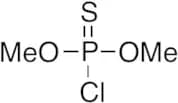
CAS:<p>Stability Moisture Sensitive<br>Applications Dimethyl chlorothiophosphate is an organophosphorus reagent that is used to synthesize phosphorus analogues of γ-aminobutyric acid, compounds that exhibit anticonvulsant properties. Dimethyl chlorothiophosphate is also used as a reagent to synthesize Parathion (P192220), a widely used pesticide.<br> Not a dangerous good if item is equal to or less than 1g/ml and there is less than 100g/ml in the package<br>References Cates, L., et al.: J. Med. Chem., 27, 654 (1984); DeBruin, K. & Boros, E.: J. Org. Chem., 55, 609 (1990); Hall, S.: J. Am. Chem. Soci., 72, 2768 (1950); Kotronarou, A. & Hoffmann, M.: Env. Sci. Tech., 26, 1460 (1992)<br></p>Formula:C2H6ClO2PSPurity:>85%Color and Shape:ColourlessMolecular weight:160.563,3-Dimethylbutyric Acid
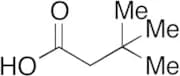
CAS:Controlled Product<p>Applications 3,3-Dimethylbutyric Acid is used in the synthesis of imidazo[4,5-c]pyridine derivatives as anitmicrobial agents.<br> Not a dangerous good if item is equal to or less than 1g/ml and there is less than 100g/ml in the package<br>References Jose. G., et. al.: Eur. J. Med. Chem., 77, 288 (2014)<br></p>Formula:C6H12O2Color and Shape:Clear Colourless To Light YellowMolecular weight:116.164-(4-Diethylaminostyryl)-1-methylpyridinium iodide
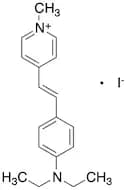
CAS:Controlled Product<p>Applications 4-(4-Diethylaminostyryl)-1-methylpyridinium iodide is a fluorescent cationic styryl probe for mitochondrial staining. It is used in the functional live cell fluorescence imaging for pulmonary neuroepithelial body microenvironments.<br></p>Formula:C18H23N2·IColor and Shape:NeatMolecular weight:267.39 + (126.90)5,7-Dimethoxycoumarin
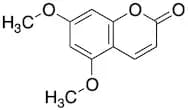
CAS:Controlled Product<p>Applications 5,7-Dimethoxycoumarin is a derivitized coumarin compound.<br></p>Formula:C11H10O4Color and Shape:NeatMolecular weight:206.19Dimethyl Yellow
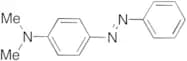
CAS:Controlled Product<p>Applications Dimethyl Yellow can induce cytochrome P-448, monooxygenase activities and UDPGT activity.<br> Not a dangerous good if item is equal to or less than 1g/ml and there is less than 100g/ml in the package<br>References Fujita, S., et. al.: Chem-Biol. Interact., 52, 15 (1984);<br></p>Formula:C14H15N3Color and Shape:Dark YellowMolecular weight:225.291,1-Dimethoxycyclohexane
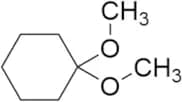
CAS:Controlled Product<p>Applications 1,1-Dimethoxycyclohexane (cas# 933-40-4) is a useful research chemical.<br></p>Formula:C8H16O2Color and Shape:NeatMolecular weight:144.2111,5-Dinitroanthraquinone
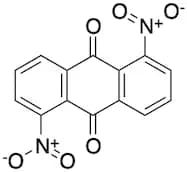
CAS:Controlled Product<p>Applications 1,5-Dinitroanthraquinone 97% (cas# 82-35-9) is a useful research chemical.<br></p>Formula:C14H6N2O6Purity:97%Color and Shape:NeatMolecular weight:298.21Dimethyl Itaconate
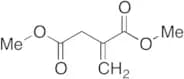
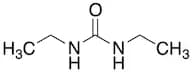
CAS:Controlled Product<p>Applications Dimethyl Itaconate is a chemical reagent used in the synthesis of functionalized 2-isoxazolines used in fragment-based drug discovery.<br>References Tran, N. et al.: Tetrahedron Lett., 56, 4119 (2015); Louise Hazeland, E. et al.: Chem. Comm., 51, 10206 (2015);<br></p>Formula:C7H10O4Color and Shape:NeatMolecular weight:158.1521,3-Diethylurea
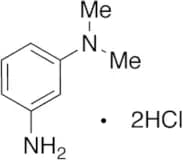
CAS:Controlled Product<p>Applications 1,3-Diethylurea<br></p>Formula:C5H12N2OColor and Shape:NeatMolecular weight:116.16N,N-Dimethyl-m-phenylenediamine, Dihydrochloride
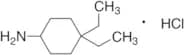
CAS:Controlled Product<p>Applications N,N-Dimethyl-m-phenylenediamine, Dihydrochloride (cas# 3575-32-4) is a compound useful in organic synthesis.<br> Not a dangerous good if item is equal to or less than 1g/ml and there is less than 100g/ml in the package<br></p>Formula:C8H12N2·2ClHColor and Shape:NeatMolecular weight:209.124,4-Diethylcyclohexan-1-amine Hydrochloride
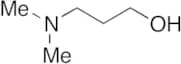
CAS:Controlled Product<p>Applications 4,4-diethylcyclohexan-1-amine hydrochloride (cas# 1087747-58-7) is a useful research chemical.<br></p>Formula:C10H21N·HClColor and Shape:NeatMolecular weight:191.741N,N-Dimethylpropanolamine
CAS:Controlled ProductFormula:C5H13NOColor and Shape:NeatMolecular weight:103.16Dimethylglyoxime
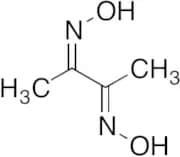
CAS:<p>Applications Dimethylglyoxime is a chelating agent which forms complexes with metals such as copper, nickel, and palladium..<br> Not a dangerous good if item is equal to or less than 1g/ml and there is less than 100g/ml in the package<br></p>Formula:C4H8N2O2Color and Shape:WhiteMolecular weight:116.123,4-Dimethylpyrazole
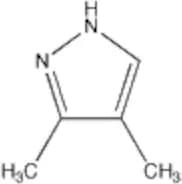
CAS:Controlled Product<p>Applications 3,4-Dimethylpyrazole (cas# 2820-37-3) is a compound useful in organic synthesis.<br></p>Formula:C5H8N2Color and Shape:White To Light YellowMolecular weight:96.133,5-Dimethylpyrazole
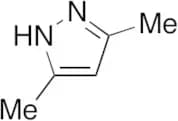
CAS:<p>Applications 3,5-Dimethylpyrazole his a catalyst in the sulfonation of acetic anhydride to sulfoacetic acid and methanedisulfonic acid. 3,5-Dimethylpyrazole has been used in the synthesis of bipyrazolic tripodal derivatives with in vitro antitumor, antifungal and antibacterial activities.<br>References Jianrattanasawat, S., Mezei, G.: Inorg. Chim. Acta, 384, 318 (2012); Radi, S., et. al.: Lett. Drug Design Disc., 9, 305 (2012); Radi, S., et. al.: Res. J. Chem. Sci., 2, 40 (2012)<br></p>Formula:C5H8N2Color and Shape:White To Off-WhiteMolecular weight:96.132,5-Dimethylpyrazine
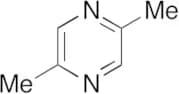
CAS:<p>Applications 2,5-Dimethylpyrazine is used as a reagent in the synthesis of bone-targeted proteasome inhibitors for multiple myeloma (MM). 2,5-Dimethylpyrazine is also used in the preparation of 3-Methyl-2,5-bis-(2-hydroxyethyl)pyrazine (M295340); a degredation product of Clavulanic Acid (C563750) which is a β-lactamase inhibitor, typically added to amoxicillin to increase its effectiveness.<br>References Agyin, J.K., et al.: Bioorg. Med. Chem. Lett., 23, 6455 (2013); Reading, C. and Cole, M.: Antimicrob. Ag. Chemother., 11, 852 (1977); Ball, A.P., et al.: Lancet, 1, 620 (1980); Brogden, R.N., et al. Drugs, 22, 337 (1981); Haginaka, J. et al.: Chem. Pharm. Bull., 33, 218 (1985)<br></p>Formula:C6H8N2Color and Shape:NeatMolecular weight:108.14

![3,7-Dimethyl 2H-Furo[2,3-c]pyran-2-one (>90%)](/_next/image/?url=https%3A%2Fstatic.cymitquimica.com%2Fproducts%2FTR%2Fthumb-webp%2FD473065.webp&w=3840&q=75)