Building Blocks
This section contains fundamental products for the synthesis of organic and biological compounds. Building blocks are the essential starting materials used to construct complex molecules through various chemical reactions. They play a critical role in drug discovery, material science, and chemical research. At CymitQuimica, we offer a diverse range of high-quality building blocks to support your innovative research and industrial projects, ensuring you have the essential components for successful synthesis.
Subcategories of "Building Blocks"
- Boronic Acids & Boronic Acid Derivatives(5,756 products)
- Chiral Building Blocks(1,242 products)
- Hydrocarbon Building Blocks(6,095 products)
- Organic Building Blocks(61,038 products)
Found 196817 products of "Building Blocks"
Sort by
Purity (%)
0
100
|
0
|
50
|
90
|
95
|
100
6-Chloro-1H-pyrazolo[3,4-b]pyridine
CAS:<p>6-Chloro-1H-pyrazolo[3,4-b]pyridine (6CPD) is a synthetic compound that acts as a cation channel blocker. 6CPD has been shown to inhibit fatty acid oxidation and cardiac uptake of fatty acids in the heart by blocking the uptake of fatty acids into the mitochondria. 6CPD also inhibits the proton uptake in the mitochondria and reduces oxygen consumption. The compound can be transplacental, which means it crosses the placenta from mother to fetus, which may cause fetal death. 6CPD is an endogenous compound that is involved in death by reducing cell proliferation and inhibiting DNA synthesis.</p>Formula:C6H4ClN3Purity:Min. 95%Molecular weight:153.57 g/mol2-[3-(Dimethylphosphoryl)phenyl]-4,4,5,5-tetramethyl-1,3,2-dioxaborolane
CAS:<p>Versatile small molecule scaffold</p>Formula:C14H22BO3PPurity:Min. 95%Color and Shape:PowderMolecular weight:280.11 g/mol3-(Azidopropyl)triethoxysilane
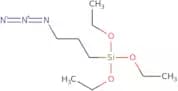
CAS:<p>3-(Azidopropyl)triethoxysilane is a chemical compound that is used as an immobilization agent for metal ions. It is typically synthesized by reacting triethoxysilane with azide and can be used to immobilize metal ions on the surface of various materials, such as glass, silicon, or other substrates. 3-(Azidopropyl)triethoxysilane has been shown to have anticancer activity in vitro against MCF-7 cells. This compound induces cancer cell death by binding to the cell membrane and disrupting its lipid bilayer. 3-(Azidopropyl)triethoxysilane also has a diameter of 6.3 nm, which allows it to cross the membrane easily.</p>Formula:C9H21N3O3SiPurity:Min. 95 Area-%Color and Shape:Clear LiquidMolecular weight:247.37 g/mol4-(Aminomethyl)piperidine
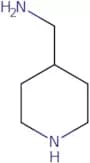
CAS:<p>Inhibitor of CD4+ - GP120 binding during HIV infection</p>Formula:C6H14N2Purity:Min. 98 Area-%Color and Shape:PowderMolecular weight:114.19 g/mol2-(2,6-dimethyl-3,6-dihydro-2H-pyran-4-yl)-4,4,5,5-tetramethyl-1,3,2-dioxaborolane
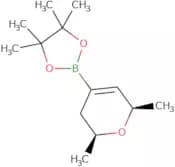
CAS:<p>2-(2,6-dimethyl-3,6-dihydro-2H-pyran-4-yl)-4,4,5,5-tetramethyl-1,3,2-dioxaborolane is a reagent that is used in the synthesis of other compounds. It is a high quality research chemical and useful scaffold for the preparation of fine chemicals. This versatile building block is also used as an intermediate or building block in the synthesis of complex compounds.</p>Formula:C13H23BO3Purity:(%) Min. 95%Color and Shape:Clear Viscous LiquidMolecular weight:238.13 g/mol1-Amino-2-(furan-2-yl)propan-2-ol
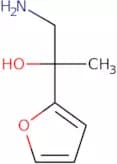
CAS:<p>1-Amino-2-(furan-2-yl)propan-2-ol is a useful building block for the synthesis of heterocycles. It is also used as a reagent for the protection of amines, hydrazones, and carbonyl groups. This compound is soluble in water and is stable under acidic conditions. 1-Amino-2-(furan-2-yl)propan-2-ol has been found to be an important intermediate in the synthesis of pharmaceuticals, pesticides, dyes, perfumes, and solar cells.</p>Formula:C7H11NO2Purity:Min. 95%Color and Shape:Clear LiquidMolecular weight:141.17 g/molNudifloramide
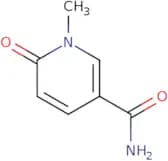
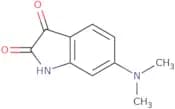
CAS:<p>Nudifloramide is an adenine nucleotide that functions in the synthesis of DNA and RNA. It has been shown to inhibit the activities of enzymes such as glutamine synthetase, glutamate dehydrogenase, and cytochrome P450. Nudifloramide is a component of cervical cancer cells and has been shown to have clinical relevance in the diagnosis of this disease. This molecule has also been found to be present in high-sensitivity C-reactive protein samples, which are used for diagnosing chronic inflammation.</p>Formula:C7H8N2O2Purity:Min. 95%Color and Shape:PowderMolecular weight:152.15 g/mol6-(Dimethylamino)-2,3-dihydro-1H-indole-2,3-dione
CAS:<p>6-(Dimethylamino)-2,3-dihydro-1H-indole-2,3-dione is a reagent that is used as a high quality intermediate for the synthesis of complex compounds. It is also a useful scaffold for the synthesis of organic compounds. 6-(Dimethylamino)-2,3-dihydro-1H-indole-2,3-dione is a speciality chemical that can be used in research and development to produce novel compounds. This compound can be used in versatile synthetic reactions and is a reaction component with many applications.</p>Formula:C10H10N2O2Purity:Min. 95%Color and Shape:PowderMolecular weight:190.2 g/mol4-Acetylbenzoic acid
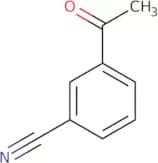
CAS:<p>4-Acetylbenzoic acid is a reactive functional group that is used to synthesize esters and amides. It has been shown to have anticancer activity in vitro, which may be due to the disruption of basic cellular proteins involved in DNA replication. 4-Acetylbenzoic acid is soluble in neutral pH and reacts with nucleophiles such as hydroxide ions or alcohols, forming alcohols or acetates respectively. The reaction mechanism for this compound is nucleophilic attack on the carbonyl carbon, followed by loss of water from the leaving group. Significant cytotoxicity has been observed in vitro at concentrations of 2mM and higher. This effect was particularly pronounced for cells exposed to radiation or treated with 4-acetylbenzoic acid before being exposed to radiation.</p>Formula:C9H8O3Purity:Min. 95%Color and Shape:White PowderMolecular weight:164.16 g/mol3-Acetylbenzonitrile
CAS:<p>3-Acetylbenzonitrile is an isomeric, asymmetric synthesis that has been synthesised in the presence of copper complex and salicylic acid. The reaction was carried out with a gaseous phase, where the chalcone was formed. The experimental techniques used were cross-coupling reactions and molecular modeling techniques. 3-Acetylbenzonitrile has been synthesised by a rationalized enthalpic approach that includes alcohol dehydrogenases and molecular modeling techniques.</p>Formula:C9H7NOPurity:Min. 95%Color and Shape:PowderMolecular weight:145.16 g/molN-(4-Aminobutyl)-1,4-butanediamine trihydrochloride
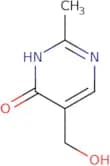
CAS:<p>N-(4-Aminobutyl)-1,4-butanediamine trihydrochloride (N(4)ABDAT) is a fine chemical and versatile building block. It can be used as an intermediate in the synthesis of pharmaceuticals and other organic chemicals. N(4)ABDAT is also a useful reagent for research purposes. The compound has a CAS number of 189340-78-1. It was originally synthesized by reacting 4-aminobutyric acid with 1,4-butanediamine, which yielded N(4)ABDAT as the major product. The chemical properties of N(4)ABDAT have been studied extensively including its reaction with potassium hydroxide, hydrochloric acid and sodium hydroxide to form different compounds.</p>Formula:C8H24Cl3N3Purity:Min. 95%Color and Shape:White PowderMolecular weight:268.65 g/mol5-(Hydroxymethyl)-2-methylpyrimidin-4(1H)-one
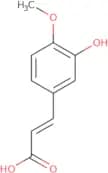
CAS:<p>5-(Hydroxymethyl)-2-methylpyrimidin-4(1H)-one is a pyrimidine compound that is used as an intermediate in the synthesis of other compounds. 5-(Hydroxymethyl)-2-methylpyrimidin-4(1H)-one is converted to 2,5-dihydro-5-[(hydroxymethyl)amino]pyrimidine-4,6-dione by the enzyme glutamic decarboxylase and may be metabolized to form 2,5-dihydro-5-[(hydroxymethyl)amino]-4,6,-dimethylpyrimidine by microorganisms. It can also be converted to 5-(hydroxymethyl)amino-2,6-dimethylpyrimidine by the enzyme carboxypeptidase B. This compound is used in biochemical analyses and has shown to damage the cellular structure of microorganisms. It</p>Formula:C6H8N2O2Purity:Min. 95%Color and Shape:PowderMolecular weight:140.14 g/moltrans-Isoferulic acid
CAS:<p>Trans-iso-ferulic acid is a bioactive phenolic compound that has been shown to have antioxidant and anti-inflammatory properties. It is produced by the metabolism of ferulic acid in the body and can be found in plant cell walls. Trans-iso-ferulic acid has been shown to act as an antimicrobial agent against bacterial strains such as Escherichia coli, Bacillus cereus, Staphylococcus aureus, Klebsiella pneumoniae, Pseudomonas aeruginosa, and Candida albicans. It also has locomotor activity and has been shown to reduce the severity of cardiac disorders. Trans-iso-ferulic acid works by blocking the synthesis of fatty acids which are necessary for energy storage and making regulatory proteins that control metabolism. Trans-iso-ferulic acid also binds to anion radicals which may scavenge free radicals that are formed during oxidative stress. This process prevents lipid peroxidation from occurring which reduces inflammation caused</p>Formula:C10H10O4Purity:Min. 95%Molecular weight:194.18 g/molTricyclo[2.2.1.0,2,6]heptane-1-carboxylic acid
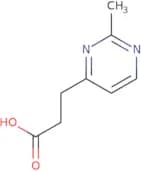
CAS:<p>Versatile small molecule scaffold</p>Formula:C8H10O2Purity:Min. 95%Molecular weight:138.16 g/mol3-(2-Methylpyrimidin-4-yl)propanoic acid
CAS:<p>Versatile small molecule scaffold</p>Formula:C8H10N2O2Purity:Min. 95%Color and Shape:PowderMolecular weight:166.18 g/mol2-Amino-N-[(2-fluorophenyl)methyl]-N-methylbutanamide
CAS:<p>Versatile small molecule scaffold</p>Formula:C12H17FN2OPurity:Min. 95%Color and Shape:PowderMolecular weight:224.27 g/mol4-Aminobenzoic acid
CAS:<p>4-Aminobenzoic acid is a chemical compound that can be used as an antibacterial agent in wastewater treatment. It has been shown to be effective against Aerobacter aerogenes and other bacteria. 4-Aminobenzoic acid is a basic compound with an aromatic ring and four amine groups. It is often used in the synthesis of polymers, pharmaceuticals, dyes, and pigments. The polymerase chain reaction (PCR) technique uses 4-aminobenzoic acid as a cofactor for DNA synthesis. Electrochemical impedance spectroscopy (EIS) is another application of this chemical compound in which it acts as a redox mediator in the electrical circuit. 4-Aminobenzoic acid also has been shown to have toxic effects on bowel disease cells, which may be due to its ability to react with nucleophilic groups on cell surfaces or by inhibiting the production of essential proteins or enzymes within the cells</p>Formula:C7H7NO2Purity:Min. 98 Area-%Color and Shape:PowderMolecular weight:137.14 g/molTetrahydro-2H-pyran-2-ol
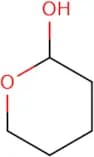
CAS:<p>Tetrahydro-2H-pyran-2-ol is a chemical compound that belongs to the class of organic compounds called alcohols. It has been shown to have a taste and smell similar to ethyl alcohol, but can be distinguished by its higher boiling point. Tetrahydro-2H-pyran-2-ol is also used as a biological sample in assays for metabolic disorders and as a reactant in cell lysis reactions. This alcohol binds with proteins, which may be due to hydrogen bonding interactions between the hydroxyl group on the alcohol and the amide group on the proteins. The conformational properties of tetrahydro-2H-pyran-2-ol are dependent on its intramolecular hydrogen bonds, which can be broken by x-ray diffraction data.</p>Formula:C20H21N3O2Purity:Min. 95%Molecular weight:335.4 g/mol1-tert-Butyl 3-methyl 1,2,5,6-tetrahydropyridine-1,3-dicarboxylate
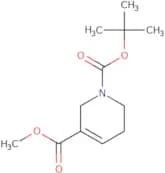
CAS:<p>1-tert-Butyl 3-methyl 1,2,5,6-tetrahydropyridine-1,3-dicarboxylate is a chemical compound that is used as a reagent in organic synthesis. It is also a useful intermediate for the production of other chemicals such as pharmaceuticals and pesticides. This compound has been found to be an effective building block for the preparation of complex compounds. The 1,2,5,6-tetrahydropyridine moiety can be used as a scaffold or building block to produce various compounds with different modifications. This class of compounds has also been found to be versatile in chemical reactions due to their ability to form covalent bonds with many types of functional groups.</p>Formula:C12H19NO4Purity:Min. 90%Color and Shape:Clear Viscous LiquidMolecular weight:241.28 g/mol5-(2-Bromoethyl)-4-methyl-1,3-thiazole
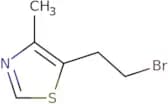
CAS:<p>Versatile small molecule scaffold</p>Formula:C6H8BrNSPurity:Min. 95%Molecular weight:206.11 g/mol
![6-Chloro-1H-pyrazolo[3,4-b]pyridine](/_next/image/?url=https%3A%2Fstatic.cymitquimica.com%2Fproducts%2F3D%2Fthumb-webp%2FNCA72551.webp&w=3840&q=75)

![2-[3-(Dimethylphosphoryl)phenyl]-4,4,5,5-tetramethyl-1,3,2-dioxaborolane](/_next/image/?url=https%3A%2Fstatic.cymitquimica.com%2Fproducts%2F3D%2Fthumb-webp%2FTID11021.webp&w=3840&q=75)


![Tricyclo[2.2.1.0,2,6]heptane-1-carboxylic acid](/_next/image/?url=https%3A%2Fstatic.cymitquimica.com%2Fproducts%2F3D%2Fthumb-webp%2FAAA69725.webp&w=3840&q=75)
![2-Amino-N-[(2-fluorophenyl)methyl]-N-methylbutanamide](/_next/image/?url=https%3A%2Fstatic.cymitquimica.com%2Fproducts%2F3D%2Fthumb-webp%2FTYB06730.webp&w=3840&q=75)