Building Blocks
This section contains fundamental products for the synthesis of organic and biological compounds. Building blocks are the essential starting materials used to construct complex molecules through various chemical reactions. They play a critical role in drug discovery, material science, and chemical research. At CymitQuimica, we offer a diverse range of high-quality building blocks to support your innovative research and industrial projects, ensuring you have the essential components for successful synthesis.
Subcategories of "Building Blocks"
- Boronic Acids & Boronic Acid Derivatives(5,756 products)
- Chiral Building Blocks(1,242 products)
- Hydrocarbon Building Blocks(6,095 products)
- Organic Building Blocks(61,038 products)
Found 196817 products of "Building Blocks"
Sort by
Purity (%)
0
100
|
0
|
50
|
90
|
95
|
100
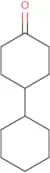
4-Cyclohexylcyclohexan-1-one
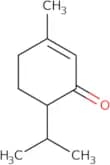
CAS:<p>4-Cyclohexylcyclohexan-1-one is an organic solvent that has a high boiling point and low vapor pressure. It is a colorless liquid with a sweet odor. 4-Cyclohexylcyclohexan-1-one is used in the production of hydrochloride salts and cyclic hydrocarbons, as well as in organic synthesis reactions involving boron nitride, reaction mechanisms, and efficient methods. Exposure to 4-cyclohexylcyclohexan-1-one can lead to chronic health effects such as dehydration and reduced lung function. The functional theory of 4-cyclohexylcyclohexan-1-one is that it reacts with water molecules to produce hydrogen chloride gas. Hydrochloric acid is produced when 4CCHC reacts with hydrochlorides salts. This reaction produces particles that are small enough to be inhaled into the lungs, which can cause particle toxicity, respiratory irritation, and pulmonary</p>Formula:C12H20OPurity:Min. 95%Color and Shape:PowderMolecular weight:180.29 g/molPiperitone
CAS:<p>Piperitone is a natural product that is isolated from the roots of Piper aduncum L. It has shown antimicrobial activity against Gram-positive and Gram-negative bacteria, fungi, and protozoa. The compound has been used as a broad-spectrum antimicrobial agent to treat infectious diseases such as malaria, leishmaniasis, and trypanosomiasis. Piperitone's mechanism of action is not well understood but it may be due to its ability to inhibit fatty acid synthesis or by inhibiting the biosynthesis of hepg2 in human erythrocytes.</p>Formula:C10H16OPurity:Min. 95%Color and Shape:Clear LiquidMolecular weight:152.23 g/mol5-Et-furan-2-carboxylic acid
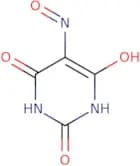
CAS:<p>5-Ethyl-furan-2-carboxylic acid is a tetrahydrofuran that can be synthesized from benzaldehyde and lithium. It has cytotoxic properties, which may be due to its acid derivative intermediates. The regiospecificity of this compound is also notable, as it was lithiated at the 5-position. This synthetic compound is an intermediate in the synthesis of other drugs such as alpidem or zolpidem.</p>Formula:C7H8O3Purity:Min. 95%Molecular weight:140.14 g/molVioluric acid
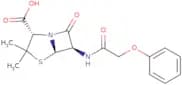
CAS:<p>Violuric acid is a chemical compound that is used in biological treatment. It has a hydroxyl group and UV absorption, which makes it reactive. Violuric acid undergoes protonation and deprotonation to form an acid complex with water. The nitrogen atoms in violuric acid can react with the oxygen atoms of water molecules to form nitrous acid, which then reacts with hydrogen peroxide to form an oxidizing agent. Violuric acid is synthesized by chain reactions between organic acids and inorganic acids. Violuric acid has a redox potential of −0.35 volts, making it an excellent reducing agent for organic compounds. In organic chemistry, violuric acid is used as a reducing agent for esters or amides.</p>Formula:C4H3N3O4Purity:Min. 95%Color and Shape:PowderMolecular weight:157.08 g/molPenicillin V
CAS:<p>Penicillin V is an antibiotic that belongs to the class of penicillins. It is used in the treatment of bacterial infections, such as streptococcal pharyngitis and infectious diseases. Penicillin V binds to the penicillin-binding proteins, which are located on the outer surface of the bacterial membrane and prevent cell wall synthesis. This binding inhibits cell wall biosynthesis by preventing transpeptidation and transglycosylation reactions and leads to cell death. Penicillin V also inhibits the production of certain cytokines, including interleukin-1β (IL-1β) and tumor necrosis factor α (TNFα), which may be a result of its ability to inhibit Toll-like receptor 4 (TLR4). The solubility data for penicillin V was obtained from experiments conducted with experimental animals. The oral cephalosporins were shown to have a greater affinity for penicillin-binding proteins than pen</p>Formula:C16H18N2O5SPurity:Min. 95%Molecular weight:350.39 g/mol4-Nitrobenzeneethanol
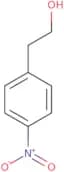
CAS:<p>4-Nitrobenzeneethanol is a primary amine that is synthesized from the amino acid L-glutamic acid and the alcohol 4-nitrobenzyl alcohol. It is activated by reaction with sodium hydroxide solution, which releases hydrogen ions. The conjugates of this compound are isomers. 4-Nitrobenzeneethanol can be used to synthesize compounds that have different functional groups, such as monoclonal antibodies for the treatment of parasitic diseases.</p>Formula:C8H9NO3Purity:Min. 95%Color and Shape:PowderMolecular weight:167.16 g/molβ-Ionone
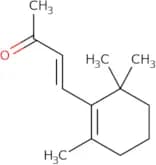
CAS:<p>2-Ionone is a carotenoid that is an intermediate in the biosynthesis of vitamin A. It is also used as a flavoring and fragrance additive and has been shown to have cancer-preventing properties. 2-Ionone inhibits the NADP-cytochrome P450 reductase, which prevents formation of NADPH, an essential cofactor in cellular respiration and biosynthesis of fatty acids. 2-Ionone also inhibits cell growth in vitro by interacting with the polymerase chain reaction (PCR) process. The physiological function of 2-Ionone is not well understood, but it has been shown to inhibit steric interactions between DNA molecules. 2-Ionone can be prepared industrially by photolysis or by thermal decomposition of acetophenone.</p>Formula:C13H20OPurity:Min. 95%Color and Shape:Clear LiquidMolecular weight:192.3 g/mol3-Hydroxy-2,3-dihydro-1H-indol-2-one
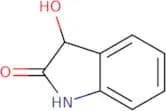
CAS:<p>3-Hydroxy-2,3-dihydro-1H-indol-2-one (3HID) is a heterocyclic compound that contains a trifluoroacetate group. It is an intermediate in the synthesis of histamine, serotonin, and melatonin. 3HID is an inhibitor of the growth factor receptor, which inhibits the proliferation of human liver cells. 3HID also has a strong affinity for basic proteins such as albumin and hemoglobin. These interactions are thought to be important for its cytotoxic activity in cancer cells. 3HID can be synthesized by reacting acetyl chloride with 2-aminobutyric acid in the presence of potassium hydroxide or sodium hydroxide at room temperature, followed by hydrolysis with water. The reaction produces 3HID and acetic acid, which can be removed by distillation. The product can then be purified by recrystallization from methanol or</p>Formula:C8H7NO2Purity:Min. 95%Color and Shape:PowderMolecular weight:149.15 g/molPhenoxazine
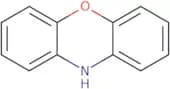
CAS:<p>Phenoxazine is a fluorescence probe that binds to DNA and has minimal toxicity. It is used in biological studies as a redox potential indicator to measure the electrochemical impedance of cells. Phenoxazine has been shown to have anti-inflammatory activity by inhibiting prostaglandin E2 levels in HL-60 cells. This drug also can be used as a model system for studying infectious diseases, such as tuberculosis, which are caused by mycobacteria. Phenoxazine has been shown to inhibit the growth of mycobacteria using an electrochemical impedance spectroscopy (EIS) polymerase chain reaction (PCR) technique.</p>Formula:C12H9NOPurity:Min. 96.5 Area-%Color and Shape:Beige PowderMolecular weight:183.21 g/mol7-Azaindole
CAS:<p>7-Azaindole is a chemical compound that can be used as a building block in organic synthesis. It can be used as a reactant in the preparation of other chemicals, such as dyes, rubber accelerators, and pharmaceuticals. 7-Azaindole is also useful as an intermediate in the production of polymers, such as polyurethanes and polyesters. This chemical is soluble in water and alcohols, but insoluble in ethers and chloroform. 7-Azaindole has been classified by the International Agency for Research on Cancer (IARC) as Group 3: Not Classifiable as to its Carcinogenicity to Humans.</p>Formula:C7H6N2Purity:Min. 98.0 Area-%Molecular weight:118.14 g/molRef: 3D-A-9500
1kgTo inquire5kgTo inquire250gTo inquire500gTo inquire2500gTo inquire-Unit-kgkgTo inquire6-Azaindole
CAS:<p>6-Azaindole is a fine chemical that can be used as a reagent, building block, and intermediate. It is a versatile compound that has been shown to have high quality and complex chemistry. 6-Azaindole is an important reaction component in the synthesis of other compounds with pharmaceutical applications such as amide synthons, amino acid esters, and pharmaceutical intermediates. 6-Azaindole can also be used as a scaffold for the preparation of indoles. CAS No: 271-29-4</p>Formula:C7H6N2Molecular weight:118.14 g/molDL-Asparagine monohydrate
CAS:<p>DL-Asparagine monohydrate is a white crystalline powder that is soluble in water. It has been used as a building block for the synthesis of various compounds and as a reaction component in chemical research.</p>Formula:C4H10N2O4Molecular weight:150.14 g/mol5-Amino-2-nitrobenzoic acid
CAS:<p>5-Amino-2-nitrobenzoic acid is a versatile compound that can be used as a reagent, a reaction component, or as a useful scaffold in research. It reacts with alcohols to produce esters and amides. The high quality of this chemical makes it suitable for use in many different reactions. CAS No. 13280-60-9</p>Formula:C7H6N2O4Molecular weight:182.14 g/molRef: 3D-A-6803
1kgTo inquire100gTo inquire250gTo inquire500gTo inquire2500gTo inquire-Unit-ggTo inquire5-Amino-2-nitrobenzoic acid
CAS:<p>5-Amino-2-nitrobenzoic acid is an organic compound that belongs to the class of versatile building block. It is a white solid that has been used as a research chemical, reagent, and specialty chemical for the synthesis of complex compounds and pharmaceuticals. 5-Amino-2-nitrobenzoic acid is also known as 2-amino-5-chlorobenzoic acid (ACBA). It is soluble in water, but insoluble in ethanol. The CAS number for this chemical is 13280-60-9.</p>Formula:C7H6N2O4Molecular weight:182.14 g/molRef: 3D-A-6802
1kgTo inquire100gTo inquire250gTo inquire500gTo inquire2500gTo inquire-Unit-ggTo inquire5-Amino-2-nitrobenzoic acid
CAS:<p>5-Amino-2-nitrobenzoic acid is a useful chemical building block that is used in the synthesis of complex compounds and useful scaffolds.</p>Formula:C7H6N2O4Molecular weight:182.13 g/molRef: 3D-A-6800
25gTo inquire50gTo inquire100gTo inquire250gTo inquire500gTo inquire-Unit-ggTo inquireMethyl 2-naphthoate
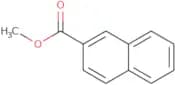
CAS:<p>Methyl 2-naphthoate is a chinese herb that has been used as a traditional medicine to treat inflammatory diseases. Methyl 2-naphthoate contains a carbonyl group, which is an important part of the molecule. The 13C NMR spectroscopy and X-ray crystal structures reveal the presence of a hydrogen bond between the carbonyl group and water molecule. The kinetic data demonstrate that methyl 2-naphthoate has significant cytotoxicity in vitro. These results were confirmed by in vivo experiments using mice with myeloma cells. Moreover, methyl 2-naphthoate was found to significantly suppress pro-inflammatory factors such as TNF-α and IL-1β.<br>Methyl 2-naphthoate is an analytical method for detecting carboxylic acid derivatives in organic solvents because it reacts with thiourea to produce colorless crystals of methyl naphthylamide.</p>Formula:C10H7CO2CH3Purity:Min. 95%Color and Shape:PowderMolecular weight:186.21 g/mol2-Amino-5-iodobenzoic acid
CAS:<p>Please enquire for more information about 2-Amino-5-iodobenzoic acid including the price, delivery time and more detailed product information at the technical inquiry form on this page</p>Formula:C7H6INO2Molecular weight:263.04 g/mol5-Aminoindole
CAS:<p>5-Aminoindole is a versatile chemical intermediate that can be used in the synthesis of many different types of compounds. It has been used as a building block for the synthesis of complex molecules, such as antibiotics and other pharmaceuticals. 5-Aminoindole is also useful in research because it is a reagent that can be used to study the reaction between proteins and nucleic acids. This chemical reacts with calf thymus DNA to produce 5-aminoindole phosphate, which can then react with an activated phosphate group on a protein or nucleic acid. 5-Aminoindole is a high quality reagent that will provide you with excellent results in your experiments.</p>Formula:C8H8N2Molecular weight:132.17 g/mol2-Amino-6-chlorobenzoic acid
CAS:<p>2-Amino-6-chlorobenzoic acid is a fine chemical that is used as a reagent or speciality chemical.</p>Formula:C7H6ClNO2Molecular weight:171.58 g/molAgaric acid
CAS:<p>Agaric acid is a high-quality, versatile chemical that is used as an intermediate in many organic and biochemistry reactions. It is also used as a reagent for the isolation of metals such as silver and gold. As a complex compound, it has many uses, including being a useful building block in the synthesis of various drugs. Agaric acid can be used to produce other chemicals such as speciality chemicals or research chemicals</p>Formula:C22H40O7Molecular weight:416.56 g/molRef: 3D-A-3920
1gTo inquire5gTo inquire250mgTo inquire500mgTo inquire2500mgTo inquire-Unit-ggTo inquire