Building Blocks
This section contains fundamental products for the synthesis of organic and biological compounds. Building blocks are the essential starting materials used to construct complex molecules through various chemical reactions. They play a critical role in drug discovery, material science, and chemical research. At CymitQuimica, we offer a diverse range of high-quality building blocks to support your innovative research and industrial projects, ensuring you have the essential components for successful synthesis.
Subcategories of "Building Blocks"
- Boronic Acids & Boronic Acid Derivatives(5,756 products)
- Chiral Building Blocks(1,242 products)
- Hydrocarbon Building Blocks(6,095 products)
- Organic Building Blocks(61,051 products)
Found 199813 products of "Building Blocks"
Sort by
Purity (%)
0
100
|
0
|
50
|
90
|
95
|
100
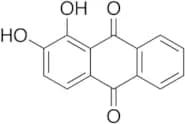
Alizarin
CAS:<p>Applications Alizarin is used widely as a prominent red dye for textile facbrics. Alizarin red is now used in biochemical assay to determine quantitatively by colorimetry, the presence of calcific deposition by cells of the osteogenic lineage. Alzarine derivatives was evaluated as new inhibitors of the HIV-1 reverse transcriptase associated DNA polymerase and RNase H. Alizarin was also shown to inhibit proliferation, tumor growth and suppress tumorigenesis in human osteosarcoma and breast cancer cell representative for bone metastasis. Dyes and metabolites.<br>References Yuan, H.S., et al.: Mycol., 3, 100 (2012); Esposito, F. et al.: FEBS. J., 278, 1444 (2011); Fotia, Caterina, J. Orthop. Rsch. 30, 1486 (2012);<br></p>Formula:C14H8O4Color and Shape:NeatMolecular weight:240.21Methyl 5-Aminopentanoate Hydrochloride
CAS:Controlled Product<p>Applications Methyl 5-Aminopentanoate Hydrochloride is used as a reactant to synthesize several compounds with therapeutic potential.<br>References Larson, Peter, et al.: ACS Med. Chem. Let, 8(11), 1148-1152 (2017);Li, Yongtao, et al.: J. of Med. Chem., 61(7), 3166-3192 (2018);Lu, Yuzhi, et al.: ACS Med. Chem. Let., 7(12), 1185-1190 (2016)<br></p>Formula:C6H13NO2·(HCl)Color and Shape:NeatMolecular weight:131.17 + (36.46)Benznidazole
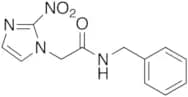
CAS:<p>Applications Benznidazole (BNZ) is traditionally used to treat Chagas disease caused by Trypanosoma cruzi. The drugs used for the treatment of this disease, Nifurtimox and Benznidazole, are toxic and present severe side effects.<br>References Abuin, G., et al.: Mol. Biochem. Parasitol ., 35, 229 (1989), Arora, P., et al.: J. Biol. Chem., 270, 6042 (1995), Campos, M., et al.: J. Immunol., 167, 416 (2001), Faundez, M., et al.: Antimicrob. Agents Chemother., 49, 126 (2005),<br></p>Formula:C12H12N4O3Color and Shape:NeatMolecular weight:260.253,4,5-Trimethoxyphenylacetic Acid
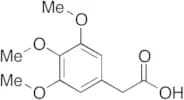
CAS:Controlled Product<p>Applications 3,4,5-Trimethoxyphenylacetic Acid is a reagent in the preparation of 3-phenylcoumarins as antidepressant agents.<br>References Sashidhara, K.V., et al.: Bioorg. Med. Chem. Lett., 24, 4876 (2014);<br></p>Formula:C11H14O5Color and Shape:NeatMolecular weight:226.23Calcium a-Hydroxy-γ-Methylmercaptobutyrate
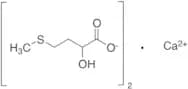
CAS:Controlled Product<p>Applications Calcium α-Hydroxy-γ-Methylmercaptobutyrate is useful in ion pairing inside Mammals and is therefore useful when it comes to nitrogen retention allowing for animal to grow quickly.<br>References Opapeju, F., et al.: Animal., 6, 1750-1756 (2012)<br></p>Formula:C5H9O3S·CaColor and Shape:NeatMolecular weight:338.454N-Acetyl-4-benzoquinone Imine
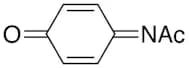
CAS:Controlled Product<p>Stability Air Sensitive, Light Sensitive, Moisture Sensitive, Temperature Sensitive<br>Applications N-Acetyl-4-benzoquinone Imine (NAPQI) is a toxic metabolite of Acetaminophen (A161220), an analgesic and antipyretic agent used as a pain reliever to treat headache, muscle aches, and arthritis (1,2,3). N-Acetyl-4-benzoquinone Imine can react with cysteine residues of hepatic proteins to yield Acetaminophen-cysteine (A161255) (4).<br>References (1) Jaeschke, H., et al.: Toxicol. Sci., 89, 31 (2006) (2) O’Malley G. F., et al.: J Med Toxicol. 11, 317 (2015)(3) McGill, M. R. and Jaeschke, H. Pharm Res. 30, 2174 (2013)(4) Frey, S. M., et al.: J Med Toxicol. 11, 218 (2015)<br></p>Formula:C8H7NO2Color and Shape:NeatMolecular weight:149.152-Acetylbenzoic Acid
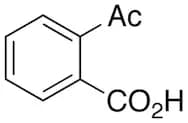
CAS:Controlled ProductFormula:C9H8O3Color and Shape:Off-WhiteMolecular weight:164.16(S)-3-Amino-4-(2,4,5-trifluorophenyl)butanoic Acid Hydrochloride
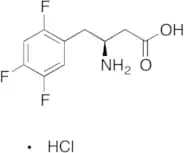
CAS:Controlled Product<p>Applications (S)-3-Amino-4-(2,4,5-trifluorophenyl)butanoic Acid Hydrochloride is used as a reagent in the synthesis of valuable β-amylalkyl-β-amino acid enantiomers.<br>References Tasnadi, G., et al.: Org. Biomol. Chem., 8, 793 (2010)<br></p>Formula:C10H10F3NO2·HClColor and Shape:Off WhiteMolecular weight:269.654-Methylenepiperidine Hydrochloride
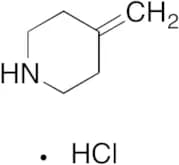
CAS:Controlled Product<p>Applications 4-Methylenepiperidine Hydrochloride is a building block that can be coupled with aryl halides via Suzuki cross-coupling to give benzyl piperidines and related compounds.<br>References Vice, S., et al.: J. Org. Chem., 66, 2487 (2001);<br></p>Formula:C6H11N•(HCl)Color and Shape:NeatMolecular weight:97.1636461-(Bromoacetyl)pyrene
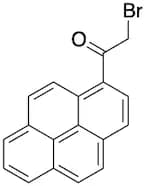
CAS:Controlled Product<p>Applications 1-(Bromoacetyl)pyrene is a novel photoinitiator.<br></p>Formula:C18H11BrOColor and Shape:NeatMolecular weight:323.1832-Phenylacetimidamide Hydrochloride
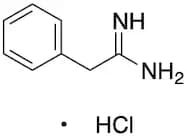
CAS:Controlled Product<p>Applications 2-Phenylacetimidamide hydrochloride (cas# 2498-46-6) is a useful research chemical.<br></p>Formula:C8H10N2·HClColor and Shape:NeatMolecular weight:134.18 + (36.46)trans,trans-2,4-Decadienal
CAS:Controlled Product<p>Applications trans,trans-2,4-Decadienal is an aldehyde with a fat flavor aroma characteristic of chicken but has a citrus odor at lower concentrations. trans,trans-2,4-Decadienal can be found in butter, cooked beef, fish, potato chips, roasted peanut, buckwheat and wheat bread crumb.<br>References Janes, D. et al.: Food Chem., 112, 120 (2008); Vermeulena, N. et al.: J. Cer. Sci., 45, 78 (2007);<br></p>Formula:C10H16OColor and Shape:Yellow LiquidMolecular weight:152.238-Bromo-1-octene
CAS:Controlled Product<p>Applications 8-Bromo-1-octene, is a building block used for the synthesis of more complex pharmaceutical compounds, such as Dithienogermole (DTG) derivatives with varying alkyl chain lengths and pendant functionalities.<br>References Zong, K., et al.: Org. Lett., 15, 1032 (2013);<br></p>Formula:C8H15BrColor and Shape:NeatMolecular weight:191.11p-Toluoyl Chloride
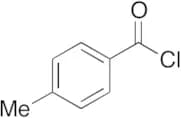
CAS:Controlled Product<p>Applications p-Toluoyl chloride is an aromatic compound used as a reagent to synthesize (+)-Yashabushitriol, a plant metabolite that is naturally found in the male flowers of Alnus sieboldiana matsum. p-Toluoyl chloride is also used as a reagent to prepare derivatives of Desloratadine (D290250). Desloratadine is a selective H1-receptor antagonist that has anti-inflammatory effects and is used to treat patients with allergic rhinitis.<br> Not a dangerous good if item is equal to or less than 1g/ml and there is less than 100g/ml in the package<br>References Berger, W.. et al.: Ann. All. Asth. Immun., 89, 485 (2002); Fang, Z., et al.: Tetrahedron Lett., 54, 6834 (2013); Feldman, K. & Simpson, R.: Tetrahedron Lett., 30, 6985 (1989); Mu, S., et al.: Chin. Chem. Lett., 24, 531 (2013)<br></p>Formula:C8H7ClOColor and Shape:NeatMolecular weight:154.59δ-Decalactone
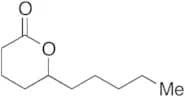
CAS:<p>Applications δ-Decalactone is a naturally occurring cyclic ester used by food and flavor industries for its coconut fragrance and taste. It is also used as a reagent in the synthesis of (±)-Massoilactone (M197600); a chemical component with antibacterial activity found in volatile oils.<br>References Schneiderman, D.K., et al.: J. Chem. Educ., 91, 131 (2014); Rali, T., et al.: Molecules, 12, 149 (2007); Zhao, J., et al.: Nat. Prod. Commun., 4, 1491 (2009); Jin, Z., et al.: Med. Plant, 3, 45 (2012)<br></p>Formula:C10H18O2Color and Shape:NeatMolecular weight:170.25Decamethyltetrasiloxane
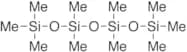
CAS:Controlled Product<p>Stability Moisture Sensitive<br>Applications A non-cyclic silicone oligomer. Used in the methylation of mercury(II) salts. Study shows that it transformed by a specific microflora and in the natural environment degraded by mechanisms similar to other organic compounds.<br>References Radeva, E. et al.: J. Optoelec. Adv. Mat., 11, 1432 (2009); Wasserbauer, R. et al.: Folia Microbiologica, 35, 384 (1990); Watanabe, N. et al.: Ecotoxic. Env. Safety, 11, 174 (1986);<br></p>Formula:C10H30O3Si4Color and Shape:Colourless To Light YellowMolecular weight:310.69(-)-O-Desmethyl-N,N-bisdesmethyl Tramadol
CAS:<p>Applications A optically active metabolite of Tramadol.<br>References Lintz, V.W., et al.: Arzneim.-Forsch./Drug Res., 31, II, 11, 1932 (1981)<br></p>Formula:C13H19NO2Color and Shape:NeatMolecular weight:221.35-(Dimethylaminomethyl)-2-furfuryl Alcohol Hydrochloride
CAS:Controlled Product<p>Impurity Ranitidine EP Impurity F<br>Stability Hygroscopic<br>Applications 5-(Dimethylaminomethyl)-2-furfuryl Alcohol Hydrochloride (Ranitidine EP Impurity F) is an intermediate in the synthesis of Ranitidine hydrochloride (R120000).<br>References Salameh, A., et al.: J. Food Sci., 71, 10 (2006), Guerrieri, P., et al.: Pharm. Res., 24, 147 (2007),<br></p>Formula:C8H13NO2·ClHColor and Shape:BrownMolecular weight:191.664,4’-Bis(maleoylamino)azobenzene
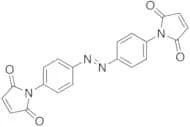
CAS:Controlled Product<p>Applications 4,4’-Bis(maleoylamino)azobenzene is a novel azobenzene derivative and a bifunctional crosslinker used for directed modification of proteins and other crosslinking processes.<br>References Hien, L.T., et al.: Russ. J. Bioorg. Chem., 35, 549 (2009); Kamenjicki, M., et al.: Macromolecules., 37, 8293 (2004);<br></p>Formula:C20H12N4O4Color and Shape:NeatMolecular weight:372.334