Building Blocks
This section contains fundamental products for the synthesis of organic and biological compounds. Building blocks are the essential starting materials used to construct complex molecules through various chemical reactions. They play a critical role in drug discovery, material science, and chemical research. At CymitQuimica, we offer a diverse range of high-quality building blocks to support your innovative research and industrial projects, ensuring you have the essential components for successful synthesis.
Subcategories of "Building Blocks"
- Boronic Acids & Boronic Acid Derivatives(5,756 products)
- Chiral Building Blocks(1,242 products)
- Hydrocarbon Building Blocks(6,095 products)
- Organic Building Blocks(61,055 products)
Found 199650 products of "Building Blocks"
Sort by
Purity (%)
0
100
|
0
|
50
|
90
|
95
|
100
Hexamethyldisiloxane
CAS:Controlled Product<p>Applications A silicon based compound that can be used to create potentially biocompatible materials. Used as a monomer in the synthesis of long chain polysiloxane structures. Used in the methylation of mercury(II) salts.<br> Not a dangerous good if item is equal to or less than 1g/ml and there is less than 100g/ml in the package<br>References Radeva, E. et al.: J. Optoelec. Adv. Mat., 11, 1432 (2009); Gandhiraman, R.P. et al.: Plama Proc. Polym., 11, 1432 (2009); Watanabe, N. et al.: Ecotoxic. Env. Safety, 11, 174 (1986);<br></p>Formula:C6H18OSi2Color and Shape:ColourlessMolecular weight:162.385-Acetyloxolan-2-one
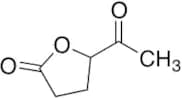
CAS:Controlled Product<p>Applications 5-acetyloxolan-2-one (cas# 29393-32-6) is a useful research chemical.<br></p>Formula:C6H8O3Color and Shape:NeatMolecular weight:128.121,2-Hexanediol
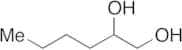
CAS:Controlled Product<p>Applications 1,2-Hexanediol is used in the synthesis of sulfamidates which lead a simple route into β-amino acids. Also used in the controlled growth of GE nanowires.<br>References Nicolaou, K. et al.: Angew. Chem. Int. Ed., 41, 834 (2002); Lotty, O. et al.: J. Mat. Chem. C., Mat. Optic. Electro. Devices., 1, 4450 (2013);<br></p>Formula:C6H14O2Color and Shape:ColourlessMolecular weight:118.171,1,3,3-Tetramethylguanidine
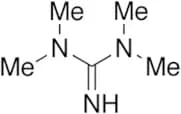
CAS:<p>Applications 1,1,3,3-Tetaramethylguanidine is used as a strong, non-nucleophilic base for alkylations in organic synthesis. 1,1,3,3-Tetramethylguanidine is an efficient and selective catalyst for the benzoylation of alcohols.<br> Not a dangerous good if item is equal to or less than 1g/ml and there is less than 100g/ml in the package<br>References Kim, S. et al.: Bull. Chem. Soc., 5, 205 (1984); Ishikawa, T. et al.: Sunthesis, 2006, 737 (2006);<br></p>Formula:C5H13N3Color and Shape:ColourlessMolecular weight:115.18Hexamethylcyclotrisiloxane
CAS:Controlled Product<p>Applications Hexamethylcyclotrisiloxane is used in the preparation of Silicone coated Celgard-2400 for the adhesion of canine platelets and leucocytes.<br> Not a dangerous good if item is equal to or less than 1g/ml and there is less than 100g/ml in the package<br>References Chawla, A.S.: Biomaterials, 2, 83 (1981)<br></p>Formula:C6H18O3Si3Color and Shape:NeatMolecular weight:222.461,6-Anhydro-β-D-glucopyranose
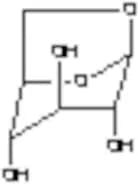
CAS:<p>Stability Hygroscopic<br>Applications 1,6-Anhydrohexopyranoses have proven to be valuable synthons for the preparation of biologically important and structurally diverse products (e.g. rifamycin S, indanomycin, thromboxane B2, (+)-biotin, tetrodotoxin, quinone, and macrolide antibiotics) as well as for modified sugars.The chemical/physical/toxicological properties have not been thoroughly investigated. Since it is known to be a minor component of certain food materials it may be regarded as of relatively low toxicity.<br>References Fraser-Reid, B., et al. J. Am. Chem. Soc. 106, 731 (1984); Edwards, M.P., et al. J. Org. Chem. 49, 3503 (1984); Kelly, A.G., and Roberts, J.S. J. Chem. Soc., Chem. Commun. 228, (1980); Ogawa, T., et al. Carbohydr. Res. 57, C31 (1977); Isobe, M., et al. Tetrahedron Lett. 28, 6485 (1987); Fresnos, J.N. and Swenton, J.S. , J. Chem. Soc., Chem. Commun. 658, (1985); Kochetkov, N.K. et al., Tetrahedron Lett. 22, 4315, 4319 (1981); Georges, M. et al., Carbohydr. Res. 130, 115 (1984); Paulsen, et al., Chem. Ber. 114, 322 (1981).<br></p>Formula:C6H10O5Color and Shape:NeatMolecular weight:162.14Tosylmethyl Isocyanide
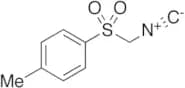
CAS:Controlled ProductFormula:C9H9NO2SColor and Shape:NeatMolecular weight:195.244,4'-Dimethyl-2,2'-bipyridine
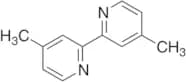
CAS:Controlled ProductFormula:C12H12N2Color and Shape:NeatMolecular weight:184.2372-Aminothiophene-3-carbonitrile
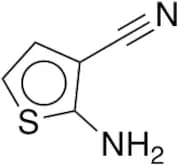
CAS:Controlled ProductFormula:C5H5N2SColor and Shape:White To YellowMolecular weight:125.17(4-Bromophenyl)urea
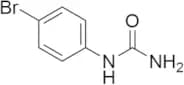
CAS:<p>Applications (4-Bromophenyl)urea (cas# 1967-25-5) is a useful research chemical.<br> Not a dangerous good if item is equal to or less than 1g/ml and there is less than 100g/ml in the package<br></p>Formula:C7H7N2OBrColor and Shape:Off-White To PurpleMolecular weight:215.054-Amino-1-butanol
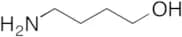
CAS:Controlled Product<p>Stability Unstable in Aqueous Solution<br>Applications 4-Amino-1-butanol is used in the synthesis of NSAIDs with anti-inflammatory properties. Also used in the synthesis of polyamine transport ligands with specificity against human cancers allowing easy access to specific cancer cells.<br> Not a dangerous good if item is equal to or less than 1g/ml and there is less than 100g/ml in the package<br>References Majumder, J. et al.: Langmuir, 29, 10254 (2013); Muth, A. et al.: J. Med. Chem., 56, 5819 (2013)<br></p>Formula:C4H11NOColor and Shape:NeatMolecular weight:89.142-Propenylfuran
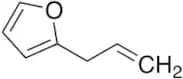
CAS:Controlled Product<p>Applications 2-Propenylfuran (cas# 75135-41-0) is a useful research chemical.<br> Not a dangerous good if item is equal to or less than 1g/ml and there is less than 100g/ml in the package<br></p>Formula:C7H8OColor and Shape:NeatMolecular weight:108.146-Mercapto-1-hexanol
CAS:Controlled Product<p>Applications 6-Mercapto-1-hexanolcan be used as a chemical linker for anchoring biological molecules to gold surfaces.<br>References McKinlay, C. J. et al.: J. Am. Chem. Soc 138, 3510 (2016)<br></p>Formula:C6H14OSColor and Shape:NeatMolecular weight:134.24rac 4-Hydroxy-3-methoxyphenylethylene Glycol
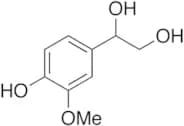
CAS:Controlled Product<p>Stability Hygroscopic<br>Applications A metabolite of Catecholamines.<br>References Kopin, I.J., et al.: J. Biol. Chem., 236, 2109 (1961), Short, F.W., et al.: J. Med. Pharm. Chem., 5, 642 (1962)<br></p>Formula:C9H12O4Color and Shape:White To Off-WhiteMolecular weight:184.19(2R,3S)-4-(2-Quinoxalinyl)-1,2,3-butanetriol
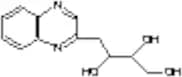
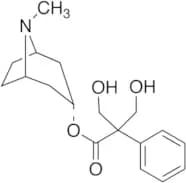
CAS:Controlled Product<p>Applications A food metabolite.<br></p>Formula:C12H14N2O3Color and Shape:Off-White To BeigeMolecular weight:234.25a-Hydroxymethyl Atropine
CAS:Controlled Product<p>Applications Byproduct produced in the preparation of Atropine.<br></p>Formula:C18H25NO4Color and Shape:NeatMolecular weight:319.402-Mercapto-4-methyl-5-thiazoleacetic Acid
CAS:Controlled Product<p>Applications 2-Mercapto-4-methyl-5-thiazoleacetic Acid is used as a reagent for determination of hydroxylamine using fused gold nanoparticles immobilized on sol-gel film modified gold electrode.<br> Not a dangerous good if item is equal to or less than 1g/ml and there is less than 100g/ml in the package<br>References Kannan, P., John, A.: Anal. Chim. Acta, 663, 158 (2010);<br></p>Formula:C6H7NO2S2Color and Shape:NeatMolecular weight:189.262-Mercaptoisobutyric Acid, 90%
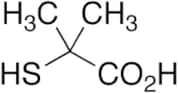
CAS:Controlled Product<p>Applications 2-Mercaptoisobutyric Acid, 90% (cas# 4695-31-2) is a compound useful in organic synthesis.<br>References McIntosh, J.M. and Siddiqui, M.A.: Can. J. Chem., 61, 1872-1875 (1983), Bienlarz, C. and Cornwall, M.J.: Tetrahedron Lett., 34 (6), 939-942 (1993)<br></p>Formula:C4H8O2SPurity:90%Color and Shape:NeatMolecular weight:120.173-Mercaptoindole
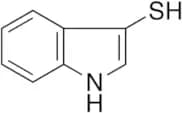
CAS:Controlled Product<p>Applications 3-Mercaptoindole (cas# 480-94-4) is a compound useful in organic synthesis.<br>References Harris, R.L.N.: Tetrahedron Letters, 51, 4465 (1969)<br></p>Formula:C8H7NSColor and Shape:BrownMolecular weight:149.212,2,6,6-Tetramethyl-1-hydroxypiperidine(May Contain up to 20% Water)
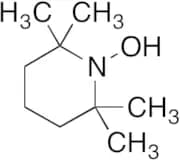
CAS:Controlled Product<p>Applications 2,2,6,6-Tetramethyl-1-hydroxypiperidine is a reactant used in various synthesis and investigations. It was used as a reactant in the study of predicting organic hydrogen atom transfer rate constants using the Marcus cross relation. 2,2,6,6-Tetramethyl-1-hydroxypiperidine was also used as a reactant in the preparation of ammonia from an iron nitrido complex.<br>References Scepaniak, J., et al.: Angew. Chem. Int. Ed., 48, 3158 (2009); Warren, J., Mayer, J.: Proc. Natl. Acad. Sci. U.S.A., 107, 5282 (2010);<br></p>Formula:C9H19NOColor and Shape:NeatMolecular weight:157.25