Building Blocks
This section contains fundamental products for the synthesis of organic and biological compounds. Building blocks are the essential starting materials used to construct complex molecules through various chemical reactions. They play a critical role in drug discovery, material science, and chemical research. At CymitQuimica, we offer a diverse range of high-quality building blocks to support your innovative research and industrial projects, ensuring you have the essential components for successful synthesis.
Subcategories of "Building Blocks"
- Boronic Acids & Boronic Acid Derivatives(5,756 products)
- Chiral Building Blocks(1,242 products)
- Hydrocarbon Building Blocks(6,095 products)
- Organic Building Blocks(61,038 products)
Found 196817 products of "Building Blocks"
Sort by
Purity (%)
0
100
|
0
|
50
|
90
|
95
|
100
1-(Azidomethyl)-4-ethenylbenzene
CAS:<p>1-(Azidomethyl)-4-ethenylbenzene is a vinyl alcohol that can be used to enhance the properties of polymers. This compound has been shown in FT-IR spectroscopy to react with carbon tetrachloride and nitrogen atoms to form a functional group. The copolymerization of styrene with 1-(azidomethyl)-4-ethenylbenzene can be used for patterning. This compound also has fluorescence properties, enabling it to be used as a fluorescent tag in microscopy and other imaging techniques.</p>Formula:C9H9N3Purity:Min. 95%Color and Shape:PowderMolecular weight:159.19 g/mol2-Phenylethanimidamide hydrochloride
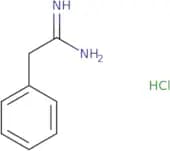
CAS:<p>2-Phenylethanimidamide hydrochloride is a chemical compound that is used as an insecticide and acaricide. It is a derivative of benzonitrile, which contains a chlorine atom. 2-Phenylethanimidamide hydrochloride is typically sprayed on plants to control pests such as mites, aphids, and beetles. This product can be mixed with other chemicals that help it stay on the plant for longer periods of time. The use of 2-phenylethanimidamide hydrochloride does not pose any health risks to humans or animals when use according to the directions on the label.</p>Formula:C8H10N2•HClPurity:Min. 95%Color and Shape:PowderMolecular weight:170.64 g/molCyclohexylmethanethiol
CAS:<p>Cyclohexylmethanethiol is a reactive chemical that is a colorless liquid with a strong odor. It is an organic compound belonging to the group of polybasic, hydroxamic acids and has been found to be an antimicrobial agent. Cyclohexylmethanethiol reacts with the hydroxyl groups on the surface of bacteria and damages the cell wall by disrupting the cross-linking of peptidoglycan. This reaction product inhibits bacterial growth by binding to proteins in the cell membrane, which prevents essential molecules from entering or exiting the cell. Cyclohexylmethanethiol also reacts with alkylthio groups on proteins in bacterial cells, which alters their function and leads to protein denaturation.</p>Formula:C7H14SPurity:Min. 95%Molecular weight:130.25 g/mol2-(4-Bromophenyl)-1,3-thiazole
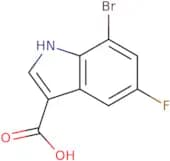
CAS:<p>Versatile small molecule scaffold</p>Formula:C9H6BrNSPurity:Min. 95%Color and Shape:PowderMolecular weight:240.12 g/mol7-Bromo-5-fluoro-1H-indole-3-carboxylic acid
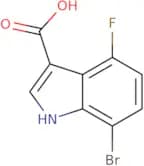
CAS:<p>Please enquire for more information about 7-Bromo-5-fluoro-1H-indole-3-carboxylic acid including the price, delivery time and more detailed product information at the technical inquiry form on this page</p>Formula:C9H5BrFNO2Purity:Min. 95%Color and Shape:PowderMolecular weight:258.04 g/mol7-Bromo-4-fluoro-1H-indole-3-carboxylic acid
CAS:<p>Please enquire for more information about 7-Bromo-4-fluoro-1H-indole-3-carboxylic acid including the price, delivery time and more detailed product information at the technical inquiry form on this page</p>Formula:C9H5BrFNO2Purity:Min. 95%Color and Shape:PowderMolecular weight:258.04 g/mol2-Hydroxy-3,4-dihydro-2H-1,4-benzoxazin-3-one
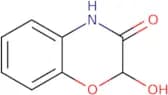
CAS:<p>2-Hydroxy-3,4-dihydro-2H-1,4-benzoxazin-3-one is a versatile compound with various applications. It is commonly used in the production of coatings and as a fatty acid leaching agent. Additionally, it is utilized in the synthesis of research chemicals such as imatinib and sildenafil citrate.</p>Formula:C8H7NO3Purity:Min. 95%Molecular weight:165.15 g/mol2-(4-Iodo-1H-1,2,3-triazol-1-yl)acetic acid
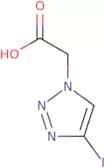
CAS:<p>2-(4-Iodo-1H-1,2,3-triazol-1-yl)acetic acid is a versatile building block that can be used as a reagent or research chemical. It is an intermediate in the synthesis of substituted 2-(4-iodo-1H-1,2,3-triazol-1-yl)acetamides with diverse substituents. This compound has been shown to have antiplatelet activity and is a potential drug candidate for treatment of cardiovascular diseases.</p>Formula:C4H4IN3O2Purity:Min. 95%Molecular weight:253 g/mol3,4,5,6-Tetrahydro-2H-cyclopenta-[D][1,3]thiazol-2-one
CAS:<p>Versatile small molecule scaffold</p>Formula:C6H7NOSPurity:Min. 95%Color and Shape:PowderMolecular weight:141.19 g/mol1-[5-Bromo-2-(difluoromethoxy)phenyl]ethan-1-one
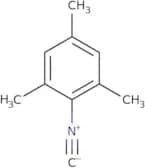
CAS:<p>1-[5-Bromo-2-(difluoromethoxy)phenyl]ethan-1-one is an organic chemical compound. It is a reaction component and a reagent. 1-[5-Bromo-2-(difluoromethoxy)phenyl]ethan-1-one has been used in research for the synthesis of complex compounds, fine chemicals, and speciality chemicals. This chemical may be used as a versatile building block, useful intermediate, or useful building block. 1-[5-Bromo-2-(difluoromethoxy)phenyl]ethan-1-one has also been shown to be a high quality product with high purity.</p>Formula:C9H7BrF2O2Purity:Min. 95%Color and Shape:PowderMolecular weight:265.05 g/mol2-Isocyano-1,3,5-trimethylbenzene
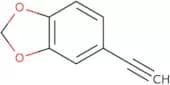
CAS:<p>2-Isocyano-1,3,5-trimethylbenzene is an organic solvent that is insoluble in water. It has been shown to be a bidentate ligand and a ruthenium complex. This compound has been studied in supramolecular chemistry and has shown reversible electrochemical properties.</p>Formula:C10H11NPurity:Min. 95%Molecular weight:145.2 g/mol5-Ethynylbenzo-1,3-dioxole
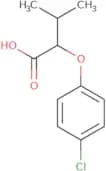
CAS:<p>5-Ethynylbenzo-1,3-dioxole is a terminal alkyne that has two terminal alkyne groups. It can form hydrogen bonds and interactions with other molecules. 5-Ethynylbenzo-1,3-dioxole is a reactive molecule that can be used to create polymers and other chemical compounds. The terminal alkynes are important for the stability of these compounds, as they bind to the polymer chains. 5-Ethynylbenzo-1,3-dioxole is used in organic chemistry to synthesize polymers and other chemical compounds.</p>Formula:C9H6O2Purity:Min. 95%Color and Shape:PowderMolecular weight:146.14 g/mol2-(4-Chlorophenoxy)-3-methylbutanoic acid
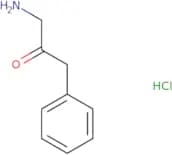
CAS:<p>Versatile small molecule scaffold</p>Formula:C11H13ClO3Purity:Min. 95%Color and Shape:PowderMolecular weight:228.67 g/mol1-Amino-3-phenyl-2-propanone Hydrochloride
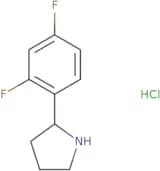
CAS:<p>1-Amino-3-phenyl-2-propanone Hydrochloride is a versatile building block that can be used as a reagent and speciality chemical. It can also be used as an intermediate in the synthesis of other compounds and pharmaceuticals. 1-Amino-3-phenyl-2-propanone Hydrochloride is soluble in water, ethanol, ether, chloroform, benzene, and acetone. This product has a CAS No. 41173-00-6 and can be shipped to Canada.</p>Formula:C9H12ClNOPurity:Min. 95%Molecular weight:185.65 g/mol2-(2,4-Difluorophenyl)pyrrolidine hydrochloride
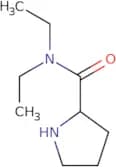
CAS:<p>Versatile small molecule scaffold</p>Formula:C10H11NF2•HClPurity:Min. 95%Color and Shape:PowderMolecular weight:219.65 g/molN,N-Diethylpyrrolidine-2-carboxamide
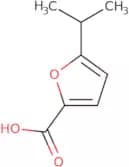
CAS:<p>Versatile small molecule scaffold</p>Formula:C9H18N2OPurity:Min. 90%Color and Shape:PowderMolecular weight:170.25 g/mol5-(Propan-2-yl)furan-2-carboxylic acid
CAS:<p>5-(Propan-2-yl)furan-2-carboxylic acid is a reagent that can be used in the synthesis of complex compounds. It is a speciality chemical that has been found to be useful as a building block and intermediate. 5-(Propan-2-yl)furan-2-carboxylic acid can be used in the synthesis of many different types of compounds, including pharmaceuticals, agrochemicals, and fine chemicals. The compound is also used as a research chemical and a versatile building block for more complex molecules.</p>Formula:C8H10O3Purity:Min. 95%Molecular weight:154.16 g/mol5-Et-furan-2-carboxylic acid
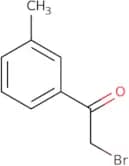
CAS:<p>5-Ethyl-furan-2-carboxylic acid is a tetrahydrofuran that can be synthesized from benzaldehyde and lithium. It has cytotoxic properties, which may be due to its acid derivative intermediates. The regiospecificity of this compound is also notable, as it was lithiated at the 5-position. This synthetic compound is an intermediate in the synthesis of other drugs such as alpidem or zolpidem.</p>Formula:C7H8O3Purity:Min. 95%Molecular weight:140.14 g/mol2-Bromo-1-(m-tolyl)ethanone
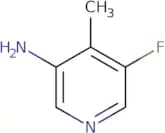
CAS:<p>2-Bromo-1-(m-tolyl)ethanone is a ketone that can be used as an oxidant. It is synthesized by the reaction of 2-bromoethanol and m-tolylmagnesium bromide in ether. The bromoethane reacts with the magnesium to form a Grignard reagent, which then reacts with the alcohol to produce the ketone. This chemical can also be used as a reagent for synthesizing biomolecules such as alkenes or solvents. 2-Bromo-1-(m-tolyl)ethanone is soluble in nonpolar solvents, making it an ideal solvent for reactions involving alkenes and other unsaturated compounds. The sequence of the synthesis involves:</p>Formula:C9H9BrOPurity:Min. 95%Color and Shape:PowderMolecular weight:213.07 g/mol5-Fluoro-4-methylpyridin-3-amine
CAS:<p>Versatile small molecule scaffold</p>Formula:C6H7FN2Purity:Min. 95%Color and Shape:PowderMolecular weight:126.13 g/mol




![3,4,5,6-Tetrahydro-2H-cyclopenta-[D][1,3]thiazol-2-one](/_next/image/?url=https%3A%2Fstatic.cymitquimica.com%2Fproducts%2F3D%2Fthumb-webp%2FHCA00118.webp&w=3840&q=75)
![1-[5-Bromo-2-(difluoromethoxy)phenyl]ethan-1-one](/_next/image/?url=https%3A%2Fstatic.cymitquimica.com%2Fproducts%2F3D%2Fthumb-webp%2FQYB99475.webp&w=3840&q=75)