Building Blocks
This section contains fundamental products for the synthesis of organic and biological compounds. Building blocks are the essential starting materials used to construct complex molecules through various chemical reactions. They play a critical role in drug discovery, material science, and chemical research. At CymitQuimica, we offer a diverse range of high-quality building blocks to support your innovative research and industrial projects, ensuring you have the essential components for successful synthesis.
Subcategories of "Building Blocks"
- Boronic Acids & Boronic Acid Derivatives(5,756 products)
- Chiral Building Blocks(1,242 products)
- Hydrocarbon Building Blocks(6,095 products)
- Organic Building Blocks(61,055 products)
Found 199650 products of "Building Blocks"
Sort by
Purity (%)
0
100
|
0
|
50
|
90
|
95
|
100
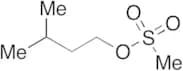
Isopentyl Mesylate
CAS:Controlled Product<p>Stability Moisture Sensitive<br>Applications Isopentyl Mesylate is used as a reagent in the synthesis of phosphonate derivatives as autotaxin (ATX) inhibitors.<br>References Cui, P., et al.: Bioorg. Med. Chem. Lett., 17, 1634 (2007)<br></p>Formula:C6H14O3SColor and Shape:NeatMolecular weight:166.24Acetylpyrazine
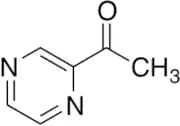
CAS:Controlled Product<p>Applications Acetylpyrazine (cas# 22047-25-2) is a useful research chemical.<br></p>Formula:C6H6N2OColor and Shape:NeatMolecular weight:122.12465-Chlorosalicylic Acid
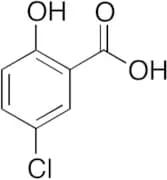
CAS:Controlled Product<p>Applications 5-Chlorosalicylic Acid, is a building block used for the manufacture of various pharmaceutical and biologically active compounds. It is used foe the synthesis of N-aryl-salicylamide derivatives as antitumor agents.<br> Not a dangerous good if item is equal to or less than 1g/ml and there is less than 100g/ml in the package<br>References Wang, J., et al.: Youji Huaxue, 33, 1026 (2013); Pauk, K., et al.: Bioorg. Med. Chem., 21, 6574 (2013);<br></p>Formula:C7H5ClO3Color and Shape:NeatMolecular weight:172.575-Chlorovaleric Acid
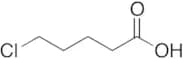
CAS:Controlled Product<p>Applications 5-Chlorovaleric acid is used in the synthesis of β-cyclodextrins linked with a cyclohexyl group via an aza-Wittig reaction.<br>References Li, D. B., et al.: Tetrahedron, Lett., 43, 1871 (2002);<br></p>Formula:C5H9ClO2Color and Shape:NeatMolecular weight:136.5775-Chlorovaleronitrile
CAS:Controlled Product<p>Applications 5-Chlorovaleronitrile is used as a reagent in the synthesis of cyanoguanidine derivatives which exhibit dual histamine H1 and H2 receptor antagonist activity. Also used in the synthesis of purine derivatives which exhibit antimicrobial activity.<br> Not a dangerous good if item is equal to or less than 1g/ml and there is less than 100g/ml in the package<br>References Kinali-Demirci, S., et al.: Med. Chem. Res., no vol., no pp. (2014); Sadek, B., et al.: Molecules, 18, 14186 (2013)<br></p>Formula:C5H8ClNColor and Shape:NeatMolecular weight:117.582-Butyloctanoic Acid
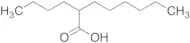
CAS:Controlled ProductFormula:C12H24O2Color and Shape:NeatMolecular weight:200.32Methyl Thiocyanate
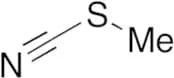
CAS:Controlled Product<p>Applications Methyl thiocyanate is a reagent that is used in the synthesis of WAK 4103 (W498200), which is a metabolite of Imidacloprid (I274990), a neonicotinoid; the active ingredient in certain neuro-active insecticides. Reports show that when exposed to neonicotinid pesticides honeybees have probelms returnign home after foraging and bumblebee colonies grow poorly and produce fewer queens.Nauen, R., et. al.: Pestic. Sci., 55, 265 (1999); Chauzat, M., et al.: Env. Entomol., 38, 514 (2009); Patial, A., et al.: Env. Ecol., 27, 320 (2009); Fernandez-Bayo, J., et al.: J. Agric., Food Chem., 57, 5435 (2009); Tomizawa, M., et al.: J. Med. Chem., 52, 3735 (2009); Chem. and Eng. News 90: 10 (2012)<br> Not a dangerous good if item is equal to or less than 1g/ml and there is less than 100g/ml in the package<br>References Nauen, R., et. al.: Pestic. Sci., 55, 265 (1999); Chauzat, M., et al.: Env. Entomol., 38, 514 (2009); Patial, A., et al.: Env. Ecol., 27, 320 (2009); Fernandez-Bayo, J., et al.: J. Agric., Food Chem., 57, 5435 (2009); Tomizawa, M., et al.: J. Med. Chem., 52, 3735 (2009); Chem. and Eng. News 90: 10 (2012)<br></p>Formula:C2H3NSColor and Shape:NeatMolecular weight:73.12N-(4-Methyl-2-thiazolyl)-guanidine hydrochloride
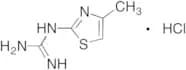
CAS:Controlled Product<p>Applications N-(4-Methyl-2-thiazolyl)-guanidine hydrochloride is the hydrochloride base salt of N-(4-Methyl-2-thiazolyl)-guanidine which is used as a test compound for various studies involving permeability through the blood-brain barrier.<br>References Bolboaca, S.D., et al.: Int. J. Mol. Sci., 12, 4348-64 (2011); Dureja, H., et al.: Acta Pharm. 57, 451-67 (2007); Fu, X., et al.: nt. J. Mol. Sci., 10, 737-50 (2005)<br></p>Formula:C5H8N4S·HClColor and Shape:NeatMolecular weight:156.21 + (36.46)a-Ketobutyric Acid
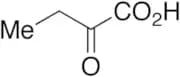
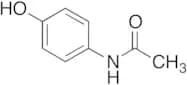
CAS:Controlled Product<p>Applications A substrate for the determination of lactate dehydrogenase isoenzymes.This compound is suitable for lactate dehydrogenase (LDH) related research.<br>References Hegeman, G., et al.: J. Bacteriol., 91, 1155 (1966), Dobritzsch, D., et al.: J. Biol. Chem., 273, 20196 (1998), Chang, A., et al.: Biochem. J., 339, 255 (1999),<br></p>Formula:C4H6O3Color and Shape:Colourless Solid With A Low Melting PointMolecular weight:102.09Acetaminophen (1 mg/mL in Methanol)
CAS:Controlled ProductFormula:C8H9NO2Color and Shape:Single SolutionMolecular weight:151.16Malonic Acid
CAS:Controlled Product<p>Applications Malonic Acid, is a small bioactive molecule, that can be used in variuos reactions. It is the classic example of a competitive inhibitor, which acts against succinate dehydrogenase (complex II) in the respiratory electron transport chain.<br>References Weiner, N., "Malonic acid", Org. Synth.; Coll. Vol. 2: 376;<br></p>Formula:C3H4O4Color and Shape:WhiteMolecular weight:104.06Malonic Acid-d4
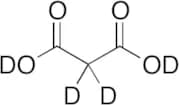
CAS:Controlled Product<p>Stability Moisture Sensitive<br>Applications Malonic Acid-d4 is the isotope labelled analog of Malonic Acid (M158005); a small bioactive molecule that can be used in various reactions. It is the classic example of a competitive inhibitor which acts against succinate dehydrogenase (complex II) in the respiratory electron transport chain.<br>References Weiner, N., "Malonic Acid", Org. Synth.; Coll. Vol. 2: 376<br></p>Formula:C3D4O4Color and Shape:NeatMolecular weight:108.086Tetrahydrodicyclopentadiene
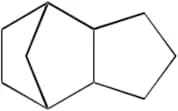
CAS:Controlled ProductFormula:C10H16Color and Shape:NeatMolecular weight:136.23Malonuric Acid
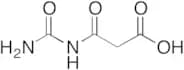
CAS:Controlled Product<p>Applications Malonuric Acid is produced during degradation of sodium barbiturates.<br>References Fretwurst, F., et al.: Arzneimittel-Forschung, 8, 44-50 (1958)<br></p>Formula:C4H6N2O4Color and Shape:NeatMolecular weight:146.12-Mercaptothiazoline
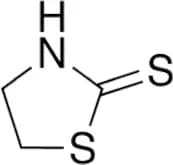
CAS:Controlled Product<p>Applications 2-Mercaptothiazoline is an antithyroid agent that strongly reduces thyroid hormone levels. 2-Mercaptothiazoline is also used as an intermediate in the preparation of pesticides and other biologically active compounds.<br> Not a dangerous good if item is equal to or less than 1g/ml and there is less than 100g/ml in the package<br>References Thomes, J. et al.: Jap. J. Pharmacol., 58, 201 (1992); Buxeraud, J. et al.: Eur. J. Med. Chem., 20, 43 (1985); Cheng, J. et al.: Nongyao, 38, 12 (1999);<br></p>Formula:C3H5NS2Color and Shape:NeatMolecular weight:119.21a-Hydroxymethyl Atropine
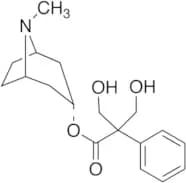
CAS:Controlled Product<p>Applications Byproduct produced in the preparation of Atropine.<br></p>Formula:C18H25NO4Color and Shape:NeatMolecular weight:319.401-Piperidineethanol
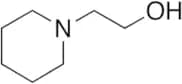
CAS:Controlled Product<p>Applications 1-Piperidineethanol (cas# 3040-44-6) is a compound useful in organic synthesis.<br></p>Formula:C7H15NOColor and Shape:NeatMolecular weight:129.20rac 4-Hydroxy-3-methoxyphenylethylene Glycol
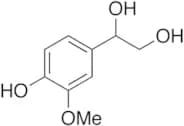
CAS:Controlled Product<p>Stability Hygroscopic<br>Applications A metabolite of Catecholamines.<br>References Kopin, I.J., et al.: J. Biol. Chem., 236, 2109 (1961), Short, F.W., et al.: J. Med. Pharm. Chem., 5, 642 (1962)<br></p>Formula:C9H12O4Color and Shape:White To Off-WhiteMolecular weight:184.19Valerophenone
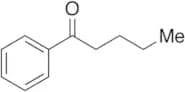
CAS:<p>Applications Valerophenone is an aromatic ketone that is often used as a tool in the study of various photochemical processes. Valerophenone is also an inhibitor of the enzyme carbonyl reductase.<br>References Lewis, F.D.: Mol. Photochem., 4, 49 (1972); Turro, N.J. et al.: Photochem. Photobiol., 26, 413 (1977); Imamura,Y. et al.: J. Enzyme Inhib. Med. Chem., 22, 105 (2007);<br></p>Formula:C11H14OColor and Shape:Light YellowMolecular weight:162.23