Building Blocks
This section contains fundamental products for the synthesis of organic and biological compounds. Building blocks are the essential starting materials used to construct complex molecules through various chemical reactions. They play a critical role in drug discovery, material science, and chemical research. At CymitQuimica, we offer a diverse range of high-quality building blocks to support your innovative research and industrial projects, ensuring you have the essential components for successful synthesis.
Subcategories of "Building Blocks"
- Boronic Acids & Boronic Acid Derivatives(5,756 products)
- Chiral Building Blocks(1,242 products)
- Hydrocarbon Building Blocks(6,095 products)
- Organic Building Blocks(61,038 products)
Found 196817 products of "Building Blocks"
Sort by
Purity (%)
0
100
|
0
|
50
|
90
|
95
|
100
1-Bromopentane
CAS:<p>1-Bromopentane is a colorless liquid that has an unpleasant odor. It is soluble in water and reacts with acids to form bromides. 1-Bromopentane has been used as an oxidation catalyst in the preparation of organic compounds under conditions of constant pressure and light exposure. It has also been used in the synthesis of polymers, such as poly(1-bromopentene). Its biological properties are not well known, but it has been shown to have CB2 receptor agonist activity and inhibitory effects on oxidative stress. The chemical kinetic data for 1-bromopentane are available at various temperatures and pressures. Chloride ions can act as catalysts for its decomposition reaction, which is a stepwise process involving the conversion of hydroxyl groups into chloride atoms. The reaction mechanism starts with the conversion of one bromine atom into a radical by abstraction of a hydrogen atom from the molecule followed by addition of another brom</p>Formula:C5H11BrPurity:Min. 98 Area-%Color and Shape:Colorless Clear LiquidMolecular weight:151.04 g/mol4-(Bromomethyl)-2-iodo-1-nitrobenzene
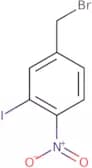
CAS:<p>4-(Bromomethyl)-2-iodo-1-nitrobenzene is a fine chemical that can be used as an intermediate for the synthesis of target molecules. It is a versatile building block with many different reactions and applications, such as research chemicals, reaction components, and speciality chemicals. This compound is also a useful building block for the synthesis of complex molecules. It has high quality and can be used as a reagent in lab experiments.</p>Formula:C7H5BrINO2Purity:Min. 95%Color and Shape:PowderMolecular weight:341.93 g/mol5-Benzyloxyindole-3-glyoxylamide
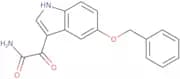
CAS:<p>5-Benzyloxyindole-3-glyoxylamide is a versatile building block that can be used in the synthesis of complex compounds. It has been shown to have a high quality and is useful as a reagent for research purposes. 5-Benzyloxyindole-3-glyoxylamide can be used as a reaction component and is useful as an intermediate in organic synthesis. 5BIGA has CAS number 22424-62-0 and is also known as 3-(benzyloxy)-5-(2,2,2-trifluoroethoxy)indole glyoxamide.</p>Formula:C17H14N2O3Purity:Min. 95%Molecular weight:294.3 g/mol3-Bromo-4-methoxybenzoic acid
CAS:<p>3-Bromo-4-methoxybenzoic acid is a methyl ester of 3-bromo-4-methoxybenzoic acid. It is used as a reagent in organic synthesis, including the hydrolysis of esters and nitriles to acids and amines respectively. The compound is also used in the synthesis of 3-bromo-4-methoxybenzamide and other bromomethyl benzoates. The trifluoroacetic acid reacts with cuprous cyanide to form ethyl formate and methoxybenzoate, which reacts with thionyl chloride to form the chloride 3-bromo-4-methoxybenzoic acid. This compound can be demethylated by acetaldehyde or alkali metal hydroxides to give methyl formate and methanol. It can also react with acetonitrile to produce 3,3′,3″</p>Formula:C8H7BrO3Purity:Min. 95%Color and Shape:PowderMolecular weight:231.04 g/mol5-Bromo-2-methoxybenzaldehyde
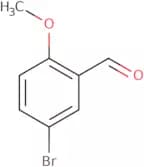
CAS:<p>5-Bromo-2-methoxybenzaldehyde is a benzodiazepine receptor ligand that has been shown to have antiviral, antibacterial and anticancer properties. 5-Bromo-2-methoxybenzaldehyde is an inhibitor of the enzyme benzyl alcohol dehydrogenase (BAHD). BAHD plays an important role in the production of reactive oxygen species (ROS) by converting benzoic acid to benzoate, which is then converted to ROS. The inhibitory concentration values for 5-bromo-2-methoxybenzaldehyde are not yet known.</p>Formula:C8H7BrO2Purity:Min. 95%Color and Shape:PowderMolecular weight:215.04 g/mol6-Bromoveratraldehyde
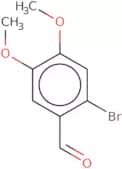
CAS:<p>6-Bromoveratraldehyde (6BrA) is a synthetic compound that has been shown to be an effective agent for inducing apoptosis in leukemia cells. It is an efficient method for synthesizing the compound and has been used as a model study for biphenyl and naphthalene. 6BrA induces cell death by topoisomerase-mediated DNA cleavage, which results in chromosomal fragmentation and high levels of reactive oxygen species in the cell.</p>Formula:C9H9BrO3Purity:Min. 95%Color and Shape:White PowderMolecular weight:245.07 g/molN-b-Boc-L-2,3-diaminopropionic acid
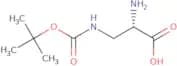
CAS:<p>N-Boc-L-2,3-diaminopropionic acid is an antimicrobial agent that has been shown to be active against Listeria monocytogenes. It inhibits the growth of bacteria by binding to cell walls and interfering with their functions. This compound has been shown to inhibit the growth of bacterial strains such as Camembert and lactobacillus at a concentration of 10mg/mL. N-Boc-L-2,3-diaminopropionic acid also has a high heat transfer coefficient, which makes it suitable for use in cooling systems for food processing plants.</p>Formula:C8H16N2O4Purity:Min. 95%Color and Shape:White PowderMolecular weight:204.22 g/molIndole-3-carboxaldehyde
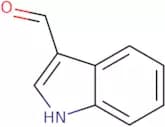
CAS:<p>Indole-3-carboxaldehyde is a chemical compound that is used as an antimicrobial agent. The biological properties of this compound are not well studied, but it has been shown to be effective against bacteria and fungi. Indole-3-carboxaldehyde has been shown to inhibit the enzyme activity of sodium carbonate, which is involved in the production of lactic acid in bacteria. This effect may contribute to its antibacterial activity. Indole-3-carboxaldehyde is also a potential anticancer agent because it can bind to toll-like receptor 4 (TLR4). Indole-3-carboxaldehyde reacts with sulfa drugs through a mechanism similar to the reaction between hydrogen peroxide and potassium permanganate. It has been shown that indole-3-carboxaldehyde can be used as a pesticide for plants and as an electrochemical impedance spectroscopy probe for histological analysis.</p>Formula:C9H7NOColor and Shape:PowderMolecular weight:145.16 g/mol3-Indolemethanol
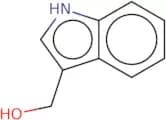
CAS:<p>3-Indolemethanol is a chemical compound that is used for chemiluminescent reaction. It can be used as an experimental model for studying the effects of 3-indolemethanol on murine hepatoma and human osteosarcoma cells in vitro. This compound has been shown to have oral hypoglycemic activity and to inhibit cancer cell growth. 3-Indolemethanol has also been shown to modulate signal pathways, such as the MAPK pathway, which may lead to pro-apoptotic protein activation or inhibition of physiological effects.</p>Formula:C9H9NOPurity:Min. 95%Color and Shape:White PowderMolecular weight:147.18 g/mol6-Bromo-2-oxindole
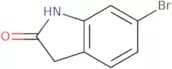
CAS:<p>6-Bromo-2-oxindole is a crystalline compound with a molecular formula of C10H6BrO. It has been shown to have a high efficiency in the production of butyric acid and other organic acids. 6-Bromo-2-oxindole is also used in electron microscopy studies as an electron acceptor, and can be used for producing polymers with crystalline structures and dihedral angles. The compound has been shown to inhibit the growth of breast cancer cells by preventing the synthesis of mda-mb-231 breast cancer cells. It also has been shown to inhibit the production of isoindigo and morphology.</p>Formula:C8H6BrNOPurity:Min. 98 Area-%Color and Shape:PowderMolecular weight:212.04 g/mol2-(4-Benzyloxyphenyl)ethanol
CAS:<p>2-(4-Benzyloxyphenyl)ethanol is an organic compound that has a particle size of less than 10 μm and is soluble in water. It is used as a reaction system for the production of tannins, which are polyphenolic compounds that have antioxidant properties. 2-(4-Benzyloxyphenyl)ethanol also inhibits maltase activity and metal ion-induced allylic oxidation. This compound can be used to inhibit fatty acid synthesis, which is important for the prevention of atherosclerosis and other cardiovascular diseases.</p>Formula:C15H16O2Purity:Min. 95%Color and Shape:PowderMolecular weight:228.29 g/mol4-Benzyloxy-3-methoxybenzaldehyde
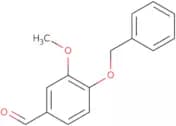
CAS:<p>4-Benzyloxy-3-methoxybenzaldehyde is a deuterium isotope analog of the natural compound benzaldehyde. This molecule has been shown to inhibit the growth of cancer cells in tissue culture by binding to DNA. The molecular mechanism of this inhibition is believed to involve an enzymatic process that results in the substitution of chloride for chlorine, thereby inhibiting DNA synthesis and preventing cell division. 4-Benzyloxy-3-methoxybenzaldehyde also inhibits the production of growth factors and thus has anticancer activity.</p>Formula:C15H14O3Purity:Min. 95%Color and Shape:PowderMolecular weight:242.27 g/mol1,6-Anhydrochitobiose hydrochloride
<p>Please enquire for more information about 1,6-Anhydrochitobiose hydrochloride including the price, delivery time and more detailed product information at the technical inquiry form on this page</p>Formula:C12H22N2O8•(HCl)xPurity:Min. 95%Color and Shape:PowderMolecular weight:322.31 g/mol3-(Azidomethyl)-4-methyl-2,5-dihydrofuran-2,5-dione, 1M in acetonitrile
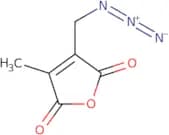
CAS:<p>Please enquire for more information about 3-(Azidomethyl)-4-methyl-2,5-dihydrofuran-2,5-dione, 1M in acetonitrile including the price, delivery time and more detailed product information at the technical inquiry form on this page</p>Formula:C6H5N3O3Purity:Min. 95%Color and Shape:PowderMolecular weight:167.12 g/mol1,5-Anhydro-D-glucitol 6-dihydrogenphosphate disodium
CAS:<p>Please enquire for more information about 1,5-Anhydro-D-glucitol 6-dihydrogenphosphate disodium including the price, delivery time and more detailed product information at the technical inquiry form on this page</p>Formula:C6H13O8P•Na2Purity:Min. 95%Molecular weight:290.12 g/mol4-Amino-1-(2-deoxy-2-fluoro-β-D-arabinofuranosyl)-2(1H)-pyrimidinone
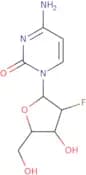
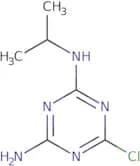
CAS:<p>Please enquire for more information about 4-Amino-1-(2-deoxy-2-fluoro-β-D-arabinofuranosyl)-2(1H)-pyrimidinone including the price, delivery time and more detailed product information at the technical inquiry form on this page</p>Formula:C9H12FN3O4Purity:Min. 95%Molecular weight:245.21 g/mol2-Amino-4-isopropylamino-6-chlorotriazine
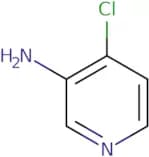
CAS:<p>Atrazine metabolite; herbicide</p>Formula:C6H10ClN5Purity:Min. 95%Color and Shape:White PowderMolecular weight:187.63 g/mol3-Amino-4-chloropyridine
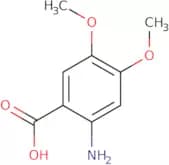
CAS:<p>3-Amino-4-chloropyridine is an organic compound with the molecular formula CHClN. It is a colorless solid that is soluble in organic solvents, such as diethyl ether and chloroform. 3-Amino-4-chloropyridine has been shown to be effective in cancer therapy by inhibiting ion channels, which are proteins that allow ions to pass through the cell membrane. This inhibition results in cell death due to lack of nutrients and oxygen. 3-Amino-4-chloropyridine inhibits the p2 receptor and induces apoptosis in cancer cells, which may be due to its ability to inhibit calcium influx and activate protein kinase C. 3-Amino-4-chloropyridine also has antiinflammatory effects by inhibiting prostaglandin synthesis.</p>Formula:C5H5ClN2Purity:Min. 95%Color and Shape:Yellow PowderMolecular weight:128.56 g/mol2-Amino-4,5-dimethoxybenzoic acid
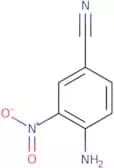
CAS:<p>2-Amino-4,5-dimethoxybenzoic acid is a potent antitumor agent that inhibits the growth of tumor cells. It has been shown to inhibit the production of epidermal growth factor (EGF) and plays a role in the inhibition of tumor cell proliferation in vitro. 2-Amino-4,5-dimethoxybenzoic acid has also been shown to have photochemical properties and can be activated by light. This compound can be used as an indicator for gravimetric analysis because it reacts with diazonium salts and produces a colored product. 2-Amino-4,5-dimethoxybenzoic acid is also reactive and may be used in Suzuki coupling reactions. This chemical compound is chemically related to other inhibitors such as mcf7 and suzuki coupling reactions.</p>Formula:C9H11NO4Purity:Min. 95%Color and Shape:Beige PowderMolecular weight:197.19 g/mol4-Amino-3-nitrobenzonitrile
CAS:<p>4-Amino-3-nitrobenzonitrile is an organic compound that is used as a precursor in the synthesis of drugs to treat infectious diseases. 4-Amino-3-nitrobenzonitrile has been shown to have potent activity against Leishmania species, including L. major and L. braziliensis. It binds to sulfoxides by a nitro group and forms a covalent bond with the sulfoxide. This results in the formation of an intramolecular hydrogen bond between the nitro group and the sulfoxide, which prevents it from forming hydrogen bonds with other molecules. Gel permeation chromatography can be used for analytical determination of this drug. 4-Amino-3-nitrobenzonitrile has also been studied using chemosensors and in vivo studies, showing that it can be used to inhibit protozoa such as Giardia lamblia, Entamoeba histolyt</p>Formula:C7H5N3O2Purity:Min. 98%Color and Shape:PowderMolecular weight:163.13 g/mol