Building Blocks
This section contains fundamental products for the synthesis of organic and biological compounds. Building blocks are the essential starting materials used to construct complex molecules through various chemical reactions. They play a critical role in drug discovery, material science, and chemical research. At CymitQuimica, we offer a diverse range of high-quality building blocks to support your innovative research and industrial projects, ensuring you have the essential components for successful synthesis.
Subcategories of "Building Blocks"
- Boronic Acids & Boronic Acid Derivatives(5,756 products)
- Chiral Building Blocks(1,242 products)
- Hydrocarbon Building Blocks(6,095 products)
- Organic Building Blocks(61,038 products)
Found 196817 products of "Building Blocks"
Sort by
Purity (%)
0
100
|
0
|
50
|
90
|
95
|
100
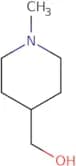
(1-Methylpiperidin-4-yl)methanol
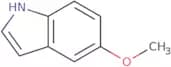
CAS:<p>(1-Methylpiperidin-4-yl)methanol is a potent inhibitor of the kinases vegfr-2 and vesicular glutamate transporter 2 (vglut2). It is also active against human tumor xenografts. The inhibitory activity was determined to be due to its ability to bind and covalently modify tyrosine residues in the kinase domain. The inhibitory potency of (1-Methylpiperidin-4-yl)methanol was found to be constant, regardless of oxygenation status. This suggests that the inhibition is not due to the binding of oxygenated metabolites. In vitro experiments showed that it inhibits cellular proliferation by blocking protein synthesis and arresting cells at G1 phase. This drug has potential as an antitumor agent because it inhibits tumor growth without affecting normal tissue or causing significant toxicity in animal models.</p>Formula:C7H15NOPurity:Min. 95%Color and Shape:Colourless to yellow liquid.Molecular weight:129.2 g/mol5-Methoxyindole
CAS:<p>5-Methoxyindole is a chemical compound that is soluble in water. It has been shown to inhibit tumor growth and induce apoptosis, as well as inhibit the expression of glycogen synthase kinase-3. The structure of 5-methoxyindole was determined by NMR spectroscopy and FT-IR spectroscopy. The compound has been observed to exhibit fluorescence properties at a wavelength of 490 nm when it is excited with UV light. A copper complex of 5-methoxyindole was studied using molecular modeling and FT-IR spectroscopy, which revealed that it can undergo nucleophilic attack by hydrogen bond formation or an acid/base reaction to form a new hydrogen bond. This study also found that 5-methoxyindole is able to form hydrogen bonds with its neighboring molecules, which may contribute to its high solubility in water.</p>Formula:C9H9NOColor and Shape:PowderMolecular weight:147.17 g/mol2-Ethoxy-4-nitrobenzoic acid
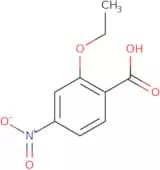
CAS:<p>2-Ethoxy-4-nitrobenzoic acid is a nitrobenzoyl compound that is used as an anticoccidial drug. It has shown to be effective against coccidiosis in poultry. 2-Ethoxy-4-nitrobenzoic acid binds to the aminobenzoate moiety of the enzyme glutamic acid decarboxylase, thereby inhibiting its activity. This inhibits the production of lactic acid and leads to cell death by lack of energy. Amprolium is a coccidiostat that inhibits the synthesis of beta-alanine in cells, which leads to inhibition of protein synthesis and cell death.</p>Formula:C9H9NO5Purity:Min. 95%Color and Shape:PowderMolecular weight:211.17 g/molEthyl 5-acetoxyindole-2-carboxylate
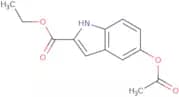
CAS:<p>Please enquire for more information about Ethyl 5-acetoxyindole-2-carboxylate including the price, delivery time and more detailed product information at the technical inquiry form on this page</p>Formula:C13H13NO4Purity:Min. 95%Molecular weight:247.25 g/molD-Tryptophan
CAS:<p>D-Tryptophan is a versatile building block that has many applications in the field of fine chemicals, research chemicals, and speciality chemicals. D-Tryptophan is a useful building block for complex compounds and can be used as a reagent or reaction component. It is also a useful scaffold in organic synthesis.</p>Formula:C11H12N2O2Purity:Min. 98.0 Area-%Molecular weight:204.23 g/molLinoleic acid - liquid
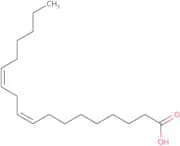
CAS:<p>Linoleic acid is a type of essential fatty acid that is found in vegetable oils. It is the most predominant polyunsaturated fatty acid and can be classified as either a cis- or trans-isomer. Linoleic acid has been shown to have inhibitory properties against bowel disease, polymerase chain reaction (PCR) analysis, and disease activity. Linoleic acid may also be used as an analytical method for determining levels of linoleate, linoleic acid, or p-hydroxybenzoic acid in body proteins. The inhibition of cancer cell proliferation by linoleic acid may be due to its ability to inhibit the production of signal peptide or 3t3-l1 preadipocytes.</p>Formula:C18H32O2Purity:94 To 96%Color and Shape:Colorless Clear LiquidMolecular weight:280.45 g/molLevoglucosenone
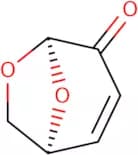
CAS:<p>Levoglucosenone is a molecule that inhibits the reaction mechanism of glycosidic bond formation. It is used in biochemical research to study reactions that involve surface methodology, such as hydroxyl group formation and zirconium oxide deposition. Levoglucosenone can be used to inhibit the acid formation that occurs during the reaction between nitrite ion and a chiral compound. The reactant solution can be activated by adding levoglucosenone to it, which will then inhibit the reaction. Sample preparation for these types of experiments involves dissolving the reactant solution in water and adding ammonium hydroxide to it, followed by adding a small amount of levoglucosenone.</p>Formula:C6H6O3Purity:Min. 95%Color and Shape:Clear LiquidMolecular weight:126.11 g/mol1-[3-(Piperidine-1-carbonyl)phenyl]methanamine
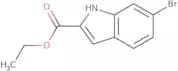
CAS:<p>Versatile small molecule scaffold</p>Formula:C13H18N2OPurity:Min. 95%Color and Shape:Clear LiquidMolecular weight:218.29 g/molEthyl 6-Bromoindole-2-carboxylate
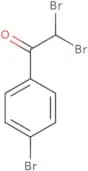
CAS:<p>Please enquire for more information about Ethyl 6-Bromoindole-2-carboxylate including the price, delivery time and more detailed product information at the technical inquiry form on this page</p>Formula:C11H10BrNO2Purity:Min. 95%Molecular weight:268.11 g/mol±,±,p-Tribromoacetophenone
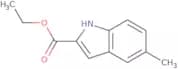
CAS:<p>Tribromoacetophenone is a brominated analog of acetophenone. It can be accessed by the reaction of an acid chloride with acetylacetone and then reacting the resulting bromide with hydrogen bromide. Tribromoacetophenone has been studied as an anti-cancer agent, but has shown little activity in animals. It is also used in the synthesis of other compounds, such as covid-19, which is being studied for its potential use as a pandemic vaccine against influenza type A H5N1.</p>Formula:C8H5OBr3Purity:Min. 95%Color and Shape:PowderMolecular weight:356.84 g/molEthyl 5-methylindole-2-carboxylate
CAS:<p>Ethyl 5-methylindole-2-carboxylate is an antioxidant that is used as a reagent in the synthesis of other compounds. It has been shown to inhibit cancer cell growth in vitro via its ability to inhibit the metabolic activity of human hepatoma cells. Ethyl 5-methylindole-2-carboxylate has also been shown to have cytotoxic activity against human hepatoma cells in vitro, and may be a potential anticancer drug candidate.</p>Formula:C12H13NO2Purity:Min. 95%Color and Shape:PowderMolecular weight:203.24 g/mol2-Azaspiro[3.5]nonane hydrochloride
CAS:<p>2-Azaspiro[3.5]nonane hydrochloride is a high quality reagent that is used as an intermediate for the synthesis of complex organic compounds, such as fine chemicals and speciality chemicals. It has been shown to be useful in the synthesis of a variety of chemical compounds, including research chemicals and versatile building blocks. This compound has the CAS number 1303968-07-1.</p>Formula:C8H15N·HClPurity:Min. 95%Molecular weight:161.67 g/molEthyl 3,5-dichloro-4-methoxybenzoate
CAS:<p>Ethyl 3,5-dichloro-4-methoxybenzoate is an organic compound that has a variety of uses. It is an intermediate in the synthesis of various other compounds and as a reagent, it reacts with amines to form ureas. Ethyl 3,5-dichloro-4-methoxybenzoate can also be used as a complex building block for synthesizing other compounds. This chemical can be used as a speciality chemical or research chemical. As a versatile building block, ethyl 3,5-dichloro-4-methoxybenzoate can be used to make reaction components for synthesizing polymers or pharmaceuticals.</p>Formula:C10H10Cl2O3Purity:Min. 95%Color and Shape:PowderMolecular weight:249.09 g/molEthyl 4-amino-2-nitrobenzoate
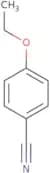
CAS:<p>Ethyl 4-amino-2-nitrobenzoate is a chemical intermediate that is used in the synthesis of other chemicals. It is also a versatile building block with many uses, such as in the production of research chemicals or as a reagent. It has CAS No. 84228-46-6 and can be purchased from various suppliers.</p>Formula:C9H10N2O4Purity:Min. 95%Color and Shape:PowderMolecular weight:210.19 g/mol4-Ethoxybenzonitrile
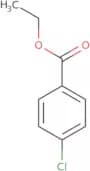
CAS:<p>4-Ethoxybenzonitrile is an organic compound that belongs to the group of nitroalkanes. It is a substrate for reductive amination, which is a reaction in which the nitro group on 4-ethoxybenzonitrile is reduced by an amine to form an amide. This reaction can be facilitated by metal catalysts, such as copper(II) acetate and zinc chloride. The reaction yields high selectivity (>90%) with respect to the product formed and has been shown to be more efficient than other reductive amination reactions. 4-Ethoxybenzonitrile has been used as a building block for various compounds, including dyestuffs, pharmaceuticals, and pesticides. 4-Ethoxybenzonitrile is also resistant to tyrosinase due to its lack of electron donating groups on its aromatic ring.</p>Formula:C9H9NOPurity:Min. 98 Area-%Color and Shape:PowderMolecular weight:147.17 g/molEthyl 4-chlorobenzoate
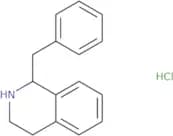
CAS:<p>Ethyl 4-chlorobenzoate is an organic compound that is a colorless liquid with a sweet odor. It has been shown to be genotoxic in the presence of impurities such as palladium-catalyzed coupling and hemolytic activity. The structure of ethyl 4-chlorobenzoate can be determined by spectrometry analyses, which show that it contains an isopropyl group and an ethyl ester group. Ethyl 4-chlorobenzoate can be synthesized efficiently using the cross-coupling reaction between chlorides and aryl halides. This synthesis follows the same mechanism as the palladium catalyzed coupling reaction, but uses chloride ions instead of palladium complexes, which are more readily available.</p>Formula:C9H9ClO2Purity:Min. 95%Color and Shape:Clear LiquidMolecular weight:184.62 g/mol1-Benzyl-1,2,3,4-tetrahydroisoquinoline hydrochloride
CAS:<p>1-Benzyl-1,2,3,4-tetrahydroisoquinoline hydrochloride is a drug that has been shown to have chronic toxicity in monkeys. It has been injected subcutaneously for the treatment of fascicularis and has induced parkinsonism as a symptom. The chronic effects of this drug on humans are not well known. Further investigations are required to determine whether 1-Benzyl-1,2,3,4-tetrahydroisoquinoline hydrochloride induces Parkinsonism in humans.</p>Formula:C16H17N•HClPurity:Min. 95%Color and Shape:PowderMolecular weight:259.77 g/mol6-Formyl-2-methyl-4H-thieno[3,2-b]pyrrole-5-carboxylic acid
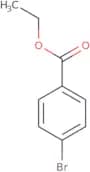
CAS:<p>Versatile small molecule scaffold</p>Formula:C9H7NO3SPurity:Min. 95%Molecular weight:209.22 g/molEthyl 4-bromobenzoate
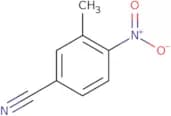
CAS:<p>Ethyl 4-bromobenzoate is a halide that can be synthesized by the cross-coupling reaction with an aryl halide and a boronic acid. This synthesis has been used successfully to prepare benzoates, which are generally more difficult to synthesize than boronic acids. The coupling reaction of ethyl 4-bromobenzoate with an aryl halide and a boronic acid in the presence of copper as catalyst yields ethyl 4-bromobenzoate in high yield. A synergistic interaction occurs between the two reagents, leading to significant cytotoxicity in vitro. This property may be due to the light emission from this compound when it is exposed to ultraviolet light. Ethyl 4-bromobenzoate is also able to inhibit aerobic glycolysis and cancer cell growth in vitro through its ability to inhibit the activity of phosphofructokinase 1 (PFK1</p>Formula:C9H9BrO2Purity:Min. 97.5 Area-%Color and Shape:Clear LiquidMolecular weight:229.07 g/mol3-Methyl-4-nitrobenzonitrile
CAS:<p>3-Methyl-4-nitrobenzonitrile is a fluorescing aromatic amine that is synthesized by aliphatic amines. It has been shown to inhibit the growth of cells in culture, which may be due to its ability to bind with and inhibit the insulin-like growth factor receptor-1 (IGF-1R). 3-Methyl-4-nitrobenzonitrile has also been shown to bind with cytochrome P450 enzymes, where it can be oxidized or reduced. The conformation of 3-methyl-4 nitrobenzonitrile is dependent on the solvent molecules present.</p>Formula:C8H6N2O2Purity:Min. 95%Color and Shape:PowderMolecular weight:162.15 g/mol


![1-[3-(Piperidine-1-carbonyl)phenyl]methanamine](/_next/image/?url=https%3A%2Fstatic.cymitquimica.com%2Fproducts%2F3D%2Fthumb-webp%2FRQB68866.webp&w=3840&q=75)
![2-Azaspiro[3.5]nonane hydrochloride](/_next/image/?url=https%3A%2Fstatic.cymitquimica.com%2Fproducts%2F3D%2Fthumb-webp%2FDCC96807.webp&w=3840&q=75)


![6-Formyl-2-methyl-4H-thieno[3,2-b]pyrrole-5-carboxylic acid](/_next/image/?url=https%3A%2Fstatic.cymitquimica.com%2Fproducts%2F3D%2Fthumb-webp%2FSIB11266.webp&w=3840&q=75)