Building Blocks
This section contains fundamental products for the synthesis of organic and biological compounds. Building blocks are the essential starting materials used to construct complex molecules through various chemical reactions. They play a critical role in drug discovery, material science, and chemical research. At CymitQuimica, we offer a diverse range of high-quality building blocks to support your innovative research and industrial projects, ensuring you have the essential components for successful synthesis.
Subcategories of "Building Blocks"
- Boronic Acids & Boronic Acid Derivatives(5,756 products)
- Chiral Building Blocks(1,242 products)
- Hydrocarbon Building Blocks(6,095 products)
- Organic Building Blocks(61,038 products)
Found 196817 products of "Building Blocks"
Sort by
Purity (%)
0
100
|
0
|
50
|
90
|
95
|
100
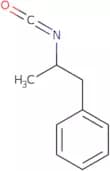
(2-Isocyanatopropyl)benzene
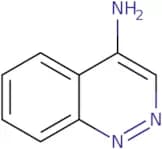
CAS:<p>Versatile small molecule scaffold</p>Formula:C10H11NOPurity:Min. 95%Color and Shape:PowderMolecular weight:161.2 g/molCinnolin-4-amine
CAS:<p>Cinnolin-4-amine is a protonated cinnoline that has been shown to have tumor-localizing properties. Cinnolin-4-amine has been shown to be cytotoxic to human tumor xenografts in mice, and this activity was demonstrated to be mediated by its interaction with the receptor for the angiotensin II type 1 receptor. It also inhibits the growth of tumor cells in culture by inhibiting DNA synthesis and protein synthesis. Cinnolin-4-amine has been shown to produce antihypertensive effects in animals and humans, which may be due to its ability to decrease blood pressure via inhibition of the sympathetic nervous system.</p>Formula:C8H7N3Purity:Min. 95%Color and Shape:PowderMolecular weight:145.16 g/mol1-[(2-Azidoethoxy)sulfonyl]-4-methylbenzene
CAS:<p>1-[(2-Azidoethoxy)sulfonyl]-4-methylbenzene is a molecule that inhibits matrix metalloproteinase, a proteolytic enzyme that degrades extracellular matrix proteins. It has been shown to inhibit the growth of cancer cells in vitro and in vivo, which may be due to its ability to inhibit the production of epidermal growth factor (EGF).</p>Formula:C9H11N3O3SPurity:Min. 95%Color and Shape:Clear LiquidMolecular weight:241.27 g/mol2-[4-(Trifluoromethyl)-1H-imidazol-1-yl]acetic acid
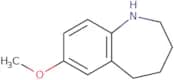
CAS:<p>Versatile small molecule scaffold</p>Formula:C6H5F3N2O2Purity:Min. 95%Color and Shape:PowderMolecular weight:194.11 g/mol7-Methoxy-2,3,4,5-tetrahydro-1H-1-benzazepine
CAS:<p>7-Methoxy-2,3,4,5-tetrahydro-1H-1-benzazepine is a fine chemical with CAS No. 46180-98-7. It is a versatile building block and useful intermediate for the synthesis of complex compounds with various functions. 7-Methoxy-2,3,4,5-tetrahydro-1H-1-benzazepine is also a reagent that can be used in research chemicals and speciality chemicals. This compound has been shown to have high quality and is an excellent reaction component for reactions producing new synthetic intermediates.</p>Formula:C11H15NOPurity:Min. 95%Molecular weight:177.24 g/molMethyl 5-chlorosalicylate
CAS:<p>Methyl 5-chlorosalicylate is a chemical compound with the molecular formula CHClO. It is a colorless liquid that has a minty odor. Methyl 5-chlorosalicylate is used in organic chemistry as an intermediate to synthesize other compounds, and it can be used in the synthesis of β-cell receptor antagonists. This drug is an analog of salicylic acid and its anti-inflammatory effects are due to the inhibition of chloride channels on macrophages. The drug's neutralizing properties have been shown by experiments with neutralizing antibody levels at physiological levels, which blocks viral replication and prevents cell damage by free radicals.</p>Formula:C8H7ClO3Purity:Min. 95%Color and Shape:White PowderMolecular weight:186.59 g/mol5-Chloro-2-methoxybenzoic methyl ester
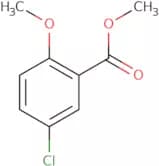
CAS:<p>5-Chloro-2-methoxybenzoic methyl ester is a versatile building block commonly used in the synthesis of various compounds. It serves as an acid methyl ester, making it suitable for use in medicinal chemistry and other synthetic applications. This compound can be obtained through pyrolysis or by reacting 5-chloro-2-methoxybenzoic acid with methanol under appropriate conditions.</p>Formula:C9H9ClO3Purity:Min. 95%Color and Shape:PowderMolecular weight:200.62 g/mol4'-Chloro-3'-methylacetophenone, 75%
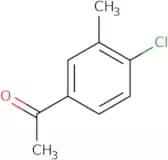
CAS:<p>4'-Chloro-3'-methylacetophenone is a colorless liquid with a fruity odor. It belongs to the group of acetophenones and is used in the synthesis of triflates. This product may be toxic by inhalation, ingestion, or skin contact.</p>Formula:C9H9ClOPurity:(%) Min. 75%Color and Shape:Clear LiquidMolecular weight:168.62 g/mol[4-Amino-3-(hydroxymethyl)phenyl]methanol
CAS:<p>4-Amino-3-(hydroxymethyl)phenyl]methanol is a molecule that is used to diagnose cancer. It binds to monomers of 4-nitroaniline, which are present in the cell nucleus and can be detected by positron emission tomography (PET) or magnetic resonance imaging (MRI). The molecular structure of this molecule includes a nitro group, an optical property, an inhibitory potency, and a methoxy group. The molecule reacts with azides to form a new chemical structure with a carbonyl group that has been shown to be useful in molecular imaging for diagnosis. This compound is also found endogenously in the body and has been shown to react with hydrogen bonds as well as other reaction intermediates.</p>Formula:C8H11NO2Purity:Min. 95%Color and Shape:PowderMolecular weight:153.18 g/mol1-[(tert-Butoxy)carbonyl]-3-ethylpyrrolidine-2-carboxylic acid
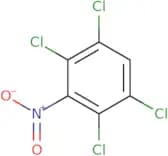
CAS:<p>1-[(tert-Butoxy)carbonyl]-3-ethylpyrrolidine-2-carboxylic acid is a versatile building block for research chemicals and reagents. It is useful as a starting material for the synthesis of complex compounds and can be used as an intermediate in a variety of chemical reactions. CAS No. 361442-24-2</p>Formula:C12H21NO4Purity:Min. 95%Molecular weight:243.3 g/mol1,2,4,5-Tetrachloro-3-nitrobenzene
CAS:<p>1,2,4,5-Tetrachloro-3-nitrobenzene is a heterocyclic compound that has the chemical formula C6H2Cl4NO2. It is a yellow crystalline solid that is soluble in organic solvents. It has applications as a standard for quantitative analysis by nuclear magnetic resonance.</p>Formula:HC6Cl4NO2Purity:Min. 95%Color and Shape:PowderMolecular weight:260.89 g/mol5-Carboxyvanillic acid
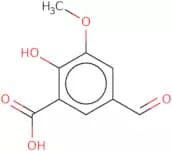
CAS:5-Carboxyvanillic acid is a chemical compound that belongs to the class of organic compounds known as carboxylic acids. It is also called o-vanillin, and it has a molecular weight of 116.19 g/mol. 5-Carboxyvanillic acid is one of the main ingredients in natural vanilla flavour. The hydroxyl group on the 5th carbon atom of this molecule reacts with a proton, which results in an addition reaction mechanism. The reaction proceeds through two steps: first, protonation occurs at the 5th carbon atom; second, deprotonation occurs at the 4th carbon atom. This chemical compound can be found as a white crystalline solid and as a volatile oil.Formula:C9H8O6Purity:Min. 95%Color and Shape:PowderMolecular weight:212.16 g/mol5-Carboxyvanillin
CAS:<p>5-Carboxyvanillin is the oxidation product of isoeugenol and p-hydroxybenzoic acid. It can be produced by reacting these two compounds with a peroxide in an oxidizing reaction. The reaction products include 5-carboxyvanillic acid, which can be hydrolyzed to vanillin. 5-Carboxyvanillin is a white crystalline solid with a chemical nature similar to that of vanillin. It has been shown to have antimicrobial properties against tissues, such as guinea pig ileum and rat liver, but not against bacterial cultures. This compound may also be used in pulping processes for the production of paper or cellulose fibers.</p>Formula:C9H8O5Purity:Min. 95%Color and Shape:PowderMolecular weight:196.16 g/mol2-Chloronaphthalene
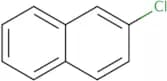
CAS:<p>2-Chloronaphthalene is a polychlorinated naphthalene that has been shown to be an effective inducer of p450 activity, which is a cytochrome P450 enzyme. 2-Chloronaphthalene is also a structural analog of the polychlorinated biphenyls (PCBs), and has been shown to have similar toxic effects on the liver. 2-Chloronaphthalene is used as an intermediate in organic synthesis and as a precursor for other compounds. It can be used to synthesize malonic acid, which can be reacted with sodium hydroxide or carbon disulfide to produce polymeric matrices such as polyvinyl chloride.</p>Formula:C10H7ClPurity:Min. 95%Color and Shape:Colourless Or White To Pink SolidMolecular weight:162.62 g/mol1-(Bicyclo[2.2.2]octan-2-yl)ethanone
CAS:<p>Versatile small molecule scaffold</p>Formula:C10H16OPurity:Min. 95%Color and Shape:PowderMolecular weight:152.23 g/mol4-Chloro-3-hydroxybenzoic acid
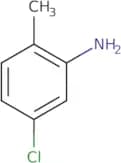
CAS:<p>4-Chloro-3-hydroxybenzoic acid (4-CHB) is a reactive compound that can be used for the detection of bacteria. 4-CHB reacts with peroxyl radicals in solution to form a chlorobenzoic acid derivative, which emits light when excited by radiation. 4-CHB is also capable of dehalogenating chlorobenzene, and can be used as a bioluminescent probe for the detection of bacteria. The reactions are efficient at low concentrations and are detectable with an ultraviolet or visible spectrophotometer.</p>Formula:C7H5ClO3Purity:Min. 95%Color and Shape:PowderMolecular weight:172.57 g/mol5-Chloro-2-methylaniline
CAS:<p>5-Chloro-2-methylaniline is an organic compound that is a member of the amines class. It has been shown to be genotoxic and carcinogenic in vivo. 5-Chloro-2-methylaniline binds to DNA and inhibits the synthesis of RNA, leading to cell death. It is also toxic to aquatic organisms by inhibiting cellular respiration and causing mutations. 5-Chloro-2-methylaniline has been shown to be genotoxic in vitro and in vivo, with chronic oral toxicity observed at dietary concentrations of 0.1% (10 ppm) in animals. The toxicity of this compound may be due to its ability to form hydrogen chloride when mixed with water or other acids.</p>Formula:C7H8ClNPurity:Min. 95%Color and Shape:Clear LiquidMolecular weight:141.6 g/mol2-Chloro-4-methoxybenzoic acid methyl ester
CAS:<p>2-Chloro-4-methoxybenzoic acid methyl ester is a reagent that can be used in the preparation of various compounds. It is also a versatile building block for the synthesis of complex compounds, such as pharmaceuticals and agrochemicals. This chemical is often used as an intermediate or building block in the preparation of pharmaceuticals and agrochemicals. 2-Chloro-4-methoxybenzoic acid methyl ester has been shown to be a useful scaffold for the synthesis of drugs with high quality and low cost.</p>Formula:C9H9ClO3Purity:Min. 95%Color and Shape:PowderMolecular weight:200.62 g/mol2-Chloro-4-methoxybenzoic acid
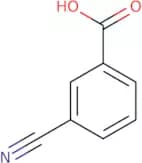
CAS:<p>2-Chloro-4-methoxybenzoic acid is a model compound for the screening of acridones, which are a class of compounds with anticancer activity. 2-Chloro-4-methoxybenzoic acid has been shown to inhibit potassium t-butoxide efflux in cancer cells and induce multidrug resistance in cancer cells. Furthermore, it has been shown that 2-Chloro-4-methoxybenzoic acid inhibits mitoxantrone efflux in cancer cells, leading to an increase in mitoxantrone cytotoxicity. This compound is also able to induce a phenotype change from cancerous to normal and can be used as a chemotherapeutic agent against cancers.</p>Formula:C8H7ClO3Purity:Min. 95%Color and Shape:PowderMolecular weight:186.59 g/mol3-Cyanobenzoic acid
CAS:<p>3-Cyanobenzoic acid is a chemical intermediate that is used to synthesize 3-cyanobenzamide. It is also a byproduct of the synthesis of benzonitrile and can be found in metal surface residues and environmental pollution. The molecule has two functional groups, one electron withdrawing and one electron donating, which are necessary for its stability. This compound can be found in high concentrations when it reacts with metal surfaces or organic solvents. 3-Cyanobenzamide was synthesized from 3-cyanobenzoic acid as an amide, which has been shown to have antimicrobial properties against Gram-positive bacteria such as Staphylococcus aureus, Streptococcus pyogenes and Enterococcus faecalis.</p>Formula:C8H5O2NPurity:Min. 95%Color and Shape:PowderMolecular weight:147.13 g/mol

![1-[(2-Azidoethoxy)sulfonyl]-4-methylbenzene](/_next/image/?url=https%3A%2Fstatic.cymitquimica.com%2Fproducts%2F3D%2Fthumb-webp%2FNEA73822.webp&w=3840&q=75)
![2-[4-(Trifluoromethyl)-1H-imidazol-1-yl]acetic acid](/_next/image/?url=https%3A%2Fstatic.cymitquimica.com%2Fproducts%2F3D%2Fthumb-webp%2FRXB25564.webp&w=3840&q=75)

![[4-Amino-3-(hydroxymethyl)phenyl]methanol](/_next/image/?url=https%3A%2Fstatic.cymitquimica.com%2Fproducts%2F3D%2Fthumb-webp%2FJQB31488.webp&w=3840&q=75)
![1-[(tert-Butoxy)carbonyl]-3-ethylpyrrolidine-2-carboxylic acid](/_next/image/?url=https%3A%2Fstatic.cymitquimica.com%2Fproducts%2F3D%2Fthumb-webp%2FLPA44224.webp&w=3840&q=75)

![1-(Bicyclo[2.2.2]octan-2-yl)ethanone](/_next/image/?url=https%3A%2Fstatic.cymitquimica.com%2Fproducts%2F3D%2Fthumb-webp%2FYAA73546.webp&w=3840&q=75)