Building Blocks
This section contains fundamental products for the synthesis of organic and biological compounds. Building blocks are the essential starting materials used to construct complex molecules through various chemical reactions. They play a critical role in drug discovery, material science, and chemical research. At CymitQuimica, we offer a diverse range of high-quality building blocks to support your innovative research and industrial projects, ensuring you have the essential components for successful synthesis.
Subcategories of "Building Blocks"
- Boronic Acids & Boronic Acid Derivatives(5,756 products)
- Chiral Building Blocks(1,242 products)
- Hydrocarbon Building Blocks(6,095 products)
- Organic Building Blocks(61,055 products)
Found 199650 products of "Building Blocks"
Sort by
Purity (%)
0
100
|
0
|
50
|
90
|
95
|
100
3-(4-Hydroxyphenyl)-1-propanol
CAS:<p>Applications 3-(4-Hydroxyphenyl)-1-propanol is a reagent in the synthesis of heteroarylmethoxyphenylalkoxyiminoalkylcarboxylic acids as leukotriene biosynthesis inhibitors.<br>References Kolasa, T. et al.: J. Med. Chem., 43, 690 (2000); Brooks, C., et al.: J. Med. Chem., 39, 2629 (1996)<br></p>Formula:C9H12O2Color and Shape:NeatMolecular weight:152.19Hydroxypropyl Chitosan
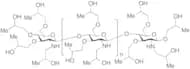
CAS:Controlled Product<p>Applications Hydroxypropyl Chitosan is an antibacterial used to make organic rectorite-based nanofibrous mats with bacterial inhibition. Hydroxypropyl Chitosanhas been shown to exhibit inhibitory effects on the levels of Fe, Zn and Ca in liver, heart, lung, spleen, kidney and femur at high dosages in mice.<br>References Deng, H., et. al.: J. Biotma. Sci-Polym. E., 24, 485 (2013); Wang, Z., et. al.: Int. J. Biol. Macromol., 64, 25 (2014);<br></p>Formula:C36H72N2O17C15H29NO7nColor and Shape:Light Yellow To BrownMolecular weight:1140.3533-Hydroxymandelic Acid
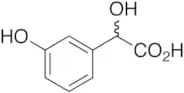
CAS:Controlled Product<p>Applications 3-Hydroxymandelic Acid (cas# 17119-15-2) is a compound useful in organic synthesis.<br></p>Formula:C8H8O4Color and Shape:NeatMolecular weight:168.152,4-Diaminopteridine-6-carboxylicAcid
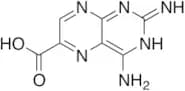
CAS:Controlled Product<p>Applications 2,4-DIAMINOPTERIDINE-6-CARBOXYLIC ACID (cas# 716-74-5) is a useful research chemical.<br></p>Formula:C7H6N6O2Color and Shape:Off-WhiteMolecular weight:206.1622-Hydroxy-5-iodobenzoic acid
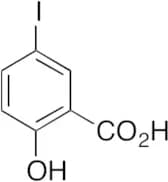
CAS:Controlled Product<p>Applications 2-hydroxy-5-iodobenzoic Acid is a reagent in various organic chemical reactions leading to pharmaceutical compounds. It is involved in the synthesis of labelled benzamide analogs for tumor imaging as well as the synthesis of the dye, Congo Red, for biological analyses.<br>References Tu, Z. et al.: J. Med. Chem., 50, 3194 (2007); Sellarajah, S. et al.: J. Med. Chem., 47, 5515 (2004);<br></p>Formula:C7H5IO3Color and Shape:NeatMolecular weight:264.02β-Hydroxyisovaleric Acid
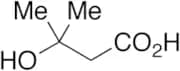
CAS:Controlled Product<p>Applications β-Hydroxyisovaleric Acid is a metabolite of the essential amino acid Leucine and is synthesized in the human body. Studies suggest that β-Hydroxyisovaleric Acid may have an effect on increasing muscle weight and strength. The presence of elevated β-Hydroxyisovaleric Acid is a sensitive marker of biotin deficiency and may indicate the presence of a genetic disorder such as biotinidase deficiency or holocarboxylase synthetase deficiency.<br> Not a dangerous good if item is equal to or less than 1g/ml and there is less than 100g/ml in the package<br>References Nissen, S. et al.: J. Appl. Physiol., 81, 2095 (1996); Wilson, G.J. et al.: Nutrit. Metab., 5, 1 (2008); Mock, D.M. et al.: Am. J. Clin. Nutrit., 76, 1061 (2002);<br></p>Formula:C5H10O3Color and Shape:NeatMolecular weight:118.13N1-(2-((2,4-Dimethylphenyl)thio)phenyl)ethane-1,2-diamine
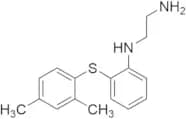
CAS:Controlled ProductFormula:C16H20N2SColor and Shape:NeatMolecular weight:272.4081-(4-Hydroxyisoxazole)-carboxylic Acid
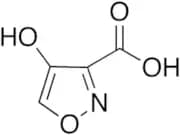
CAS:Controlled Product<p>Applications 1-(4-Hydroxyisoxazole)-carboxylic Acid (cas# 178316-77-3) is a compound useful in organic synthesis.<br></p>Formula:C4H3NO4Color and Shape:NeatMolecular weight:129.07cis-1,3-O-Benzylideneglycerol
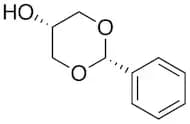
CAS:Controlled Product<p>Applications cis-1,3-O-Benzylideneglycerol (cas# 4141-19-9) is a compound useful in organic synthesis.<br></p>Formula:C10H12O3Color and Shape:NeatMolecular weight:180.203,4,5-Trimethylaniline
CAS:Controlled Product<p>Applications 3,4,5-Trimethylaniline (cas# 1639-31-2) is a useful research chemical.<br></p>Formula:C9H13NColor and Shape:NeatMolecular weight:135.2065-Hydroxyindole
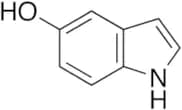
CAS:Controlled Product<p>Applications 5-Hydroxyindole is a hydroxylated indole used as a building block in the preparation of various pharmaceutical compounds such as indole based neurochemicals. 5-Hydroxyindole is a metabolite of Tryptophan (T894800). 5-Hydroxyindole displayed weak inhibitory activity on human melanoma tyrosinase. 5-Hydroxyindole also showed inhibition of serotonin transport by blood platelets.<br>References Yamazaki, Y. et al.: Zeitsch. Naturforsch. C: J. Biosci., 65, 49 (2010); Kay, W.W. et al.: Gen. Pharmacol., 8, 201 (1977); Ghebregzabher, M. et al.: J. Chrom. Biomed. Appl., 222, 191 (1981);<br></p>Formula:C8H7NOColor and Shape:NeatMolecular weight:133.15O-Benzylhydroxylamine Hydrochloride
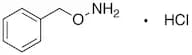
CAS:Controlled Product<p>Applications A reagent used for the synthesis of hydroxylamines and hydroxyamates.<br>References Magin, D.F., et al.: J. Chromatogr., 178, 219 (1979), Safavy, A., et al.: Bioconjug. Chem., 13, 327 (2002),<br></p>Formula:C7H9NO·HClColor and Shape:NeatMolecular weight:159.61Antioxidant GS
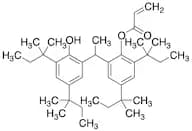
CAS:<p>Applications Antioxidant GS is a rubber compound, used in preparation of polyester.<br>References Qiu, Z., et al.: Famg. Zhuan. Shenq., (2020); Takagi, K., et al.: PCT Int. Appl., (2020);<br></p>Formula:C37H56O3Color and Shape:NeatMolecular weight:548.8393-Hydroxyindole
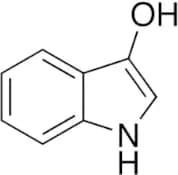
CAS:Controlled Product<p>Applications 3-Hydroxyindole is a mutation product of toluene-4-monooxygenase (T4MO), that gets spontaneously converted to indigo. Used in the preparation of indolyl-oxadiazoles with anticonvulsant activity.<br>References Rajak, H. et al.: Int. J. Pharm. Sci. Nanotech., 2, 661 (2009); McClay, K. et al.: Appl. Environ. Microbiol., 71, 5476 (2005); Berry, A. et al.: J. Ind. Microbiol. Biotech., 28, 127 (2002)<br></p>Formula:C8H7NOPurity:>85%Color and Shape:Dark Green To BlackMolecular weight:133.153-Chloro-1-propanol
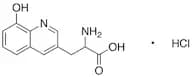
CAS:Controlled Product<p>Applications Chloropropanols have mutagenic and carcinogenic properties. The 3-monochloropropanol (3-MCPD) is the main chloropropanol found in hydrolyzates of vegetable protein (HVP) made by acid hydrolysis.<br> Not a dangerous good if item is equal to or less than 1g/ml and there is less than 100g/ml in the package<br>References Crews, C., et al.: Food Addit. Contam., 18, 271 (2001), Hamlet, C., et al.: Food Addit. Contam., 19, 15 (2002), Weisshaar, R., et al.: Eur. J. Lipid Sci. Technol., 112, 158 (2010),<br></p>Formula:C3H7ClOColor and Shape:NeatMolecular weight:94.54rac (8-Hydroxyquinolin-3-yl)alanine Dihydrochloride
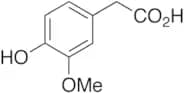
CAS:Controlled Product<p>Stability Hygroscopic<br>Applications Genetic incorporation of a metal-ion chelating amino acid into proteins as a biophysical probe.<br>References McRee, D., et al.: J. Struct. Biol., 125, 156 (1999), Wang, L., et al.: Science, 292, 498 (2001), Ioerger, T., et al.: Methods Enzymol., 374, 244 (2003),<br></p>Formula:C12H12N2O3·2ClHColor and Shape:NeatMolecular weight:305.16Homovanillic Acid
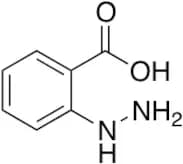
CAS:Controlled ProductFormula:C9H10O4Color and Shape:White To GreyMolecular weight:182.172-Hydrazinylbenzoic Acid
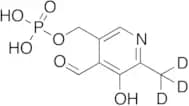
CAS:Controlled ProductFormula:C7H8N2O2Color and Shape:NeatMolecular weight:152.151Pyridoxal 5'-Phosphate-d3 (>85%)
CAS:Controlled Product<p>Stability Hygroscopic<br>Applications 3-Hydroxy-2-(methyl-d3)-5-[(phosphonooxy)methyl]-4-pyridinecarboxaldehyde is the labelled version of pyridoxal 5'-phosphate(P991715); a vitamin (enzyme co-factor).<br>References Lichstein, et al.: J. Biol. Chem., 161, 311 (1945), McPhalen, C., et al.: J. Mol. Biol., 225, 495 (1992), Fenn, T., et al.: Biochemistry, 44, 5317 (2005),<br></p>Formula:C8H7D3NO6PPurity:>85%Color and Shape:NeatMolecular weight:250.161-Chloro-2-methylpropene
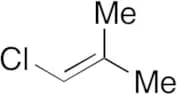
CAS:Controlled Product<p>Stability Volatile<br>Applications 1-Chloro-2-methylpropene is a reagent in the synthesis of pyrrolyl and indolyl diketo acids and esters as nucleotide-competitive non-nucleoside inhibitors of terminal deoxynucleotidyl transferase.<br> Not a dangerous good if item is equal to or less than 1g/ml and there is less than 100g/ml in the package<br>References Costi, R., et al.: J. Med. Chem., 56, 7431 (2013);<br></p>Formula:C4H7ClColor and Shape:NeatMolecular weight:90.55