Building Blocks
This section contains fundamental products for the synthesis of organic and biological compounds. Building blocks are the essential starting materials used to construct complex molecules through various chemical reactions. They play a critical role in drug discovery, material science, and chemical research. At CymitQuimica, we offer a diverse range of high-quality building blocks to support your innovative research and industrial projects, ensuring you have the essential components for successful synthesis.
Subcategories of "Building Blocks"
- Boronic Acids & Boronic Acid Derivatives(5,756 products)
- Chiral Building Blocks(1,242 products)
- Hydrocarbon Building Blocks(6,095 products)
- Organic Building Blocks(61,038 products)
Found 196817 products of "Building Blocks"
Sort by
Purity (%)
0
100
|
0
|
50
|
90
|
95
|
100
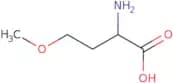
2-Amino-4-methoxybutanoic acid
CAS:<p>2-Amino-4-methoxybutanoic acid (2AMBA) is a diagnostic agent that belongs to the class of hydroxyl group containing antimicrobial agents. It has been shown to have conformational properties, which are the spatial arrangement of atoms in a molecule. 2AMBA is a small molecule with neutral pH and has been used as a substrate for peptide synthesis by the yeast Pichia pastoris. 2AMBA has also been shown to have antimicrobial activity against infectious diseases such as Escherichia coli and Pseudomonas aeruginosa, among others. This compound is synthesized by reacting malonic acid with an amine or amide. The reaction forms a cyclic peptide that contains a disulfide bond and fatty acid, which are important for its structure and function.</p>Formula:C5H11NO3Purity:Min. 95%Color and Shape:PowderMolecular weight:133.15 g/mol2-Amino-5-ethyl-phenol
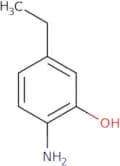
CAS:<p>2-Amino-5-ethylphenol is a phenolic compound that functions as an intermediate in the synthesis of other aminophenols. It is synthesized by reacting 2-aminoethanol with hydrochloric acid and sodium nitrite. 2-Amino-5-ethylphenol has been shown to be a proton donor, which means it can react with water to form hydrogen ions. It also has been found to interact with amines, which are organic compounds containing nitrogen. This interaction was found to depend on the concentration of the amine, pH, and temperature. The thermodynamic parameters for this reaction were determined using modelling and michaelis–menten kinetics.</p>Formula:C8H11NOPurity:Min. 95%Color and Shape:PowderMolecular weight:137.18 g/mol5-Bromo-2,3-dihydroxybenzaldehyde
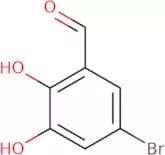
CAS:<p>5-Bromo-2,3-dihydroxybenzaldehyde is a chemical compound that is used as a reaction component. It has been used in the synthesis of high quality research chemicals and speciality chemicals. This chemical has also been used as a useful scaffold for complex compounds and as a reagent for the synthesis of fine chemicals. 5-Bromo-2,3-dihydroxybenzaldehyde is soluble in water and can be stored at room temperature.</p>Formula:C7H5BrO3Purity:Min. 95%Color and Shape:PowderMolecular weight:217.02 g/mol1-Benzyl-1,2,3,4-tetrahydroisoquinoline hydrochloride
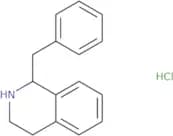
CAS:<p>1-Benzyl-1,2,3,4-tetrahydroisoquinoline hydrochloride is a drug that has been shown to have chronic toxicity in monkeys. It has been injected subcutaneously for the treatment of fascicularis and has induced parkinsonism as a symptom. The chronic effects of this drug on humans are not well known. Further investigations are required to determine whether 1-Benzyl-1,2,3,4-tetrahydroisoquinoline hydrochloride induces Parkinsonism in humans.</p>Formula:C16H17N•HClPurity:Min. 95%Color and Shape:PowderMolecular weight:259.77 g/molHomogentisic acid
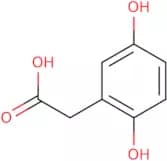
CAS:<p>Precursor of melanine synthesis in bacteria</p>Formula:C8H8O4Purity:Min 96%Color and Shape:White PowderMolecular weight:168.15 g/mol2-Methoxybenzophenone
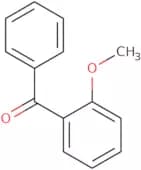
CAS:<p>2-Methoxybenzophenone is an organic chemical compound that is a benzoylating agent. It is used as a solid catalyst in the benzoic anhydride synthesis from 2-methoxybenzene and acetic acid. 2-Methoxybenzophenone reacts with chloride to form benzoic acid, which can be converted to other compounds with different functional groups. 2-Methoxybenzophenone also acts as an antioxidant and can inhibit acetylation reactions. The reaction time for this process varies depending on the nature of the carbonyl group present in the reactant.</p>Formula:C14H12O2Purity:Min. 98.0 Area-%Color and Shape:White PowderMolecular weight:212.24 g/molD,L-Homotryptophan
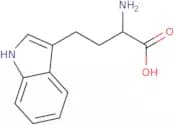
CAS:<p>D,L-Homotryptophan is a fine chemical that is used as a building block in the synthesis of complex compounds. It has been used as a reagent, speciality chemical, and intermediate. D,L-Homotryptophan is also versatile in its use as a building block for the synthesis of various chemicals. This compound has been shown to react with other chemicals to form useful scaffolds.</p>Formula:C12H14N2O2Purity:Min. 95%Color and Shape:PowderMolecular weight:218.25 g/molHomovanillic acid
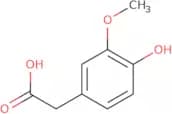
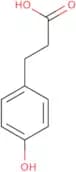
CAS:<p>Homovanillic acid is widely used as a fluorogenic substrate of peroxidase. The reaction is however not specific and has been shown to react also with soybean lipoxygenase in the presence of hydrogen peroxide. Excitation and emission wavelengths for homovanillic acid are 312 and 420 nm, respectively.</p>Formula:C9H10O4Purity:Min. 97.5 Area-%Color and Shape:Red PowderMolecular weight:182.17 g/mol3-(4-Hydroxyphenyl)propionic acid
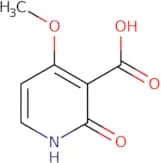
CAS:<p>Potential antioxidant; pharmaceutical intermediate</p>Formula:C9H10O3Purity:Min. 99 Area-%Color and Shape:PowderMolecular weight:166.17 g/mol4-Methoxy-2-oxo-1,2-dihydropyridine-3-carboxylic acid
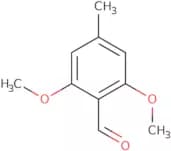
CAS:<p>4-Methoxy-2-oxo-1,2-dihydropyridine-3-carboxylic acid is a versatile building block and useful intermediate in organic synthesis. This compound can be used as a reagent or speciality chemical for research purposes. It has been shown to be an effective reactant in the preparation of diverse complex compounds. 4-Methoxy-2-oxo-1,2-dihydropyridine 3 carboxylic acid has also been shown to be a high quality material with applications in specialty chemicals and pharmaceuticals.</p>Formula:C7H7NO4Purity:Min. 95 Area-%Color and Shape:PowderMolecular weight:169.14 g/mol2,6-Dimethoxy-4-methylbenzaldehyde
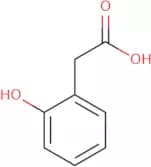
CAS:<p>2,6-Dimethoxy-4-methylbenzaldehyde (DMMB) is a useful chemical that is used as a building block in the synthesis of complex compounds. It has been shown to be an effective chemical intermediate and can be used in the synthesis of various products, such as pharmaceuticals and pesticides. DMMB can also be used to produce high quality research chemicals.</p>Formula:C10H12O3Purity:Min. 95%Color and Shape:PowderMolecular weight:180.2 g/mol2-Hydroxyphenylacetic acid
CAS:<p>2-Hydroxyphenylacetic acid is a hydroxylated phenolic acid that is structurally similar to other phenolic acids. It is present in many plants, including tea leaves and coffee beans, where it acts as an antioxidant. 2-Hydroxyphenylacetic acid has been found in the urine of humans and animals following ingestion of excessive amounts of these plants. It is also found in urine samples from patients with certain types of kidney disease. The synthesis of 2-hydroxyphenylacetic acid can be achieved by reacting ethylene diamine with sodium hydroxide solution or hydrochloric acid.</p>Formula:C8H8O3Purity:Min. 95%Color and Shape:Off-White Slightly Brown PowderMolecular weight:152.15 g/mol3-Hydroxyphenylacetic acid
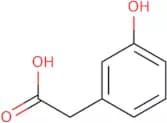
CAS:<p>3-Hydroxyphenylacetic acid is an organic compound with the formula CH(OH)(CH)COOH. It is a quinoid, meaning that it contains a benzene ring with one of the hydrogens replaced by a hydroxyl group. 3-Hydroxybenzoic acid is an important intermediate in the synthesis of several pharmaceuticals, including antipyrine and salicylic acid. It can be synthesized from phenol or benzoic acid. 3-Hydroxybenzoic acid has been shown to have antimicrobial properties against various bacteria and fungi, as well as hypoglycemic effects in rats. This compound was also shown to inhibit 4-hydroxyphenylacetate (4-HPAA) reductase activity and dopamine oxidation, two key enzymes involved in energy metabolism.</p>Formula:C8H8O3Purity:Min. 95%Color and Shape:PowderMolecular weight:152.15 g/mol3-Methoxycinnamic acid methyl ester
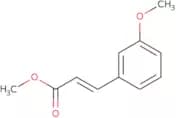
CAS:<p>3-Methoxycinnamic acid methyl ester is a high quality, versatile building block for the synthesis of complex compounds. It is an intermediate in the synthesis of reagents and fine chemicals. 3-Methoxycinnamic acid methyl ester has been used in research as a scaffold to create new chemical entities. This compound has been used as a reaction component in multistep syntheses and as a precursor to speciality chemicals.</p>Formula:C11H12O3Purity:Min. 95%Color and Shape:Colorless PowderMolecular weight:192.21 g/mol3,5-Dichloro-2-methoxybenzoic acid
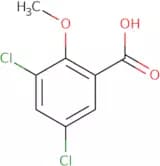
CAS:<p>3,5-Dichloro-2-methoxybenzoic acid (3,5-DMB) is a diphenyl ether with a pharmacokinetic half-life of about 3 hours. It has two isomers: the cis and trans forms. The cis isomer is more active than the trans form. The cis isomer has been shown to be effective in treatments for amine oxidase inhibitors and short-chain fatty acids. It also has growth regulator properties that are used in treatments for psoriasis and acne. 3,5-DMB inhibits bacterial growth by binding to the enzyme dioxygenase, which catalyzes the conversion of 4-hydroxybenzoic acid into 4-hydroxyphenylpyruvic acid; this prevents the production of catecholamines and subsequent cell proliferation. This drug binds to apical membranes in the intestine by attaching to sulfhydryl groups on proteins involved in transport processes, preventing uptake</p>Formula:C8H6Cl2O3Purity:Min. 95%Color and Shape:White PowderMolecular weight:221.04 g/mol4-(2-Amino-1,3-thiazol-4-yl)benzene-1,3-diol
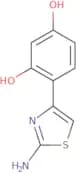
CAS:<p>Versatile small molecule scaffold</p>Formula:C9H8N2O2SPurity:Min. 95%Color and Shape:PowderMolecular weight:208.24 g/mol7-Hydroxyquinoline-(1H)-2-one
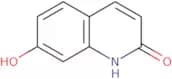
CAS:<p>7-Hydroxyquinoline-(1H)-2-one is a quinoline derivative that binds to epidermal growth factor (EGF) receptors. It has been shown to inhibit the chloride current in neurons, which may be due to its ability to bind to the dopamine receptors in these cells. 7-Hydroxyquinoline-(1H)-2-one also inhibits DNA and protein synthesis by binding to nucleophilic nitrogen atoms and protonated nitrogen atoms, respectively. It has been shown to have an inhibitory effect on cancer cell growth in control experiments. This drug is not active against normal cells because it does not bind well to them. 7-Hydroxyquinoline-(1H)-2-one binds with high affinity to piperazine and this interaction can be used as a fluorescent probe for the presence of quinoline derivatives.</p>Formula:C9H7NO2Purity:Min. 95%Color and Shape:PowderMolecular weight:161.16 g/molMethyl 5-nitrosalicylate
CAS:<p>Methyl 5-nitrosalicylate is a chemical compound that belongs to the group of 4-hydroxycoumarin derivatives. It is an inhibitor of the reaction between salicylic acid and nitrous acid, inhibiting the formation of 5-nitrosalicylic acid. Methyl 5-nitrosalicylate has shown inhibitory activity against various nitro compounds, including benzofurans. The inhibitory effect on oxidation reactions may be due to its ability to act as a ligand and form coordination complexes with metal ions such as copper, zinc, and iron. Methyl 5-nitrosalicylate also has anti-inflammatory properties that are due to its ability to inhibit prostaglandin synthesis by blocking cyclooxygenase enzyme activity.<br>Methyl 5-nitrosalicylate can be synthesized in a few ways. One method includes reacting methyl salicylate with nitrous acid in the presence of light</p>Formula:C8H7NO5Purity:Min. 95%Color and Shape:PowderMolecular weight:197.14 g/mol2-Methyl-3-nitrobenzoic acid
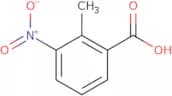
CAS:<p>2-Methyl-3-nitrobenzoic acid is a diketone that is used as a synthetic building block for the synthesis of fatty acid esters. This compound is also used to normalize butyric acid levels in blood, and has been shown to inhibit the formation of coumarin derivatives from nitrosalicylic acid. 2-Methyl-3-nitrobenzoic acid is an organic molecule with a molecular weight of 128.17 g/mol, and has four functional groups: two methyl groups, one carboxyl group, and one phenyl group. The compound reacts with a solution containing nitrite ions in an acidic environment to form nitrous acid (HONO) and 2-methylene-3-nitrobenzaldehyde (2MNB). 2MNB is soluble in water and has a solubility data of 0.0012 g/100 mL at 25 degrees Celsius.</p>Formula:C8H7NO4Purity:Min. 98 Area-%Color and Shape:PowderMolecular weight:181.15 g/molIdebenone
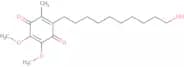
CAS:<p>Used for treatment of Alzheimer's disease and Friedreich's ataxia</p>Formula:C19H30O5Purity:Min. 98 Area-%Color and Shape:PowderMolecular weight:338.44 g/mol