Building Blocks
This section contains fundamental products for the synthesis of organic and biological compounds. Building blocks are the essential starting materials used to construct complex molecules through various chemical reactions. They play a critical role in drug discovery, material science, and chemical research. At CymitQuimica, we offer a diverse range of high-quality building blocks to support your innovative research and industrial projects, ensuring you have the essential components for successful synthesis.
Subcategories of "Building Blocks"
- Boronic Acids & Boronic Acid Derivatives(5,756 products)
- Chiral Building Blocks(1,242 products)
- Hydrocarbon Building Blocks(6,095 products)
- Organic Building Blocks(61,038 products)
Found 196817 products of "Building Blocks"
Sort by
Purity (%)
0
100
|
0
|
50
|
90
|
95
|
100
2-Azaspiro[3.3]heptane-1-carboxylic acid hydrochloride
CAS:<p>2-Azaspiro[3.3]heptane-1-carboxylic acid hydrochloride is a versatile building block that can be used in the synthesis of a wide variety of chemical compounds. It is a high quality, useful intermediate that has been shown to be an effective scaffold for synthesis of various complex compounds.</p>Formula:C7H11NO2•HClPurity:Min. 95%Molecular weight:177.63 g/mol4-Bromo-2-fluoroaniline
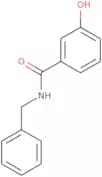
CAS:<p>4-Bromo-2-fluoroaniline is a sulfonated compound that can be synthesized from 2,4,6-trimethylbenzenamine and malonic acid. It is an acidic chemical that reacts with hydroxide solution to form a molecule with a chlorinated aromatic ring. 4-Bromo-2-fluoroaniline has been used in clinical studies as an oral anti-cancer agent in the treatment of malignant melanoma and breast cancer. This drug inhibits epidermal growth factor receptor (EGFR), which may lead to decreased cell proliferation, apoptosis, and tumor formation.</p>Formula:C6H5BrFNPurity:Min. 99%Color and Shape:PowderMolecular weight:190.01 g/molN-Benzyl-3-hydroxybenzamide
CAS:<p>Versatile small molecule scaffold</p>Formula:C14H13NO2Purity:Min. 95%Color and Shape:PowderMolecular weight:227.26 g/mol1,4-Benzoquinone
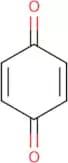
CAS:<p>Intermediate in organic syntheses; pharmaceutical secondary standard</p>Formula:C6H4O2Purity:Min. 95%Color and Shape:Yellow PowderMolecular weight:108.09 g/mol1,3-Benzenedialdehyde
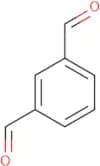
CAS:<p>1,3-Benzenedialdehyde (1,3-BD) is a compound that is formed from the oxidation of benzene by copper chloride in a model system. It can be used as a substrate film to study covalent linkages. The electrochemical impedance spectroscopy (EIS) technique has been used to determine the stability of 1,3-BD in reaction solution. The EIS results show that 1,3-BD is stable and its complexes are relatively stable. This compound also reacts with malonic acid to form 1,2-benzenediol and 2-methylmalonic acid. The molecular structure of 1,3-BD has been determined using X-ray crystallography and it was found that nitrogen atoms are present on the molecule. Chemical reactions have not been observed with 1,3-BD when subjected to heat or light.</p>Formula:C8H6O2Purity:Min. 95%Color and Shape:PowderMolecular weight:134.13 g/mol2-(1-Ethyl-1H-pyrazol-4-yl)acetic acid
CAS:<p>Versatile small molecule scaffold</p>Formula:C7H10N2O2Purity:Min. 95%Color and Shape:PowderMolecular weight:154.17 g/mol1-(Chloromethyl)-3,5-diiodobenzene
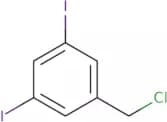
CAS:<p>1-(Chloromethyl)-3,5-diiodobenzene is a versatile and high quality chemical building block that is useful for research purposes. It can be used as a reagent or speciality chemical in the synthesis of other compounds. This compound has been shown to be an intermediate for the synthesis of more complex compounds, such as pharmaceuticals, agrochemicals, and fine chemicals. 1-(Chloromethyl)-3,5-diiodobenzene has many uses in organic chemistry including as a reaction component or scaffold for the construction of complex molecules.</p>Formula:C7H5ClI2Purity:Min. 95%Color and Shape:PowderMolecular weight:378.37 g/mol2-Benzoylbenzoic acid
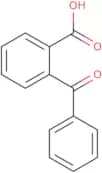
CAS:<p>2-Benzoylbenzoic acid is an organic compound with the chemical formula C6H5CO2. It is a white solid that is soluble in water, ethanol, and ether. 2-Benzoylbenzoic acid is stable at room temperature, but decomposes when heated to above 200°C. This compound can be used as a catalyst for the synthesis of polymers.<br>2-Benzoylbenzoic acid is used as a raw material for the production of ferrocenecarboxylic acid and ethylene diamine. The activity index of 2-benzoylbenzoic acid was found to be high (0.7) when it was tested against Streptococcus mutans and Staphylococcus aureus.</p>Formula:C14H10O3Purity:Min. 95%Color and Shape:White PowderMolecular weight:226.23 g/mol2,4-Dihydroxypyrimidine-5-carboxylic acid anhydrous
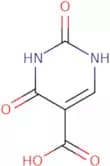
CAS:<p>2,4-Dihydroxypyrimidine-5-carboxylic acid anhydrous (2,4DPA) is a metabolite of the drug 2,4-diaminopyrimidine. It inhibits protein synthesis in cells through hydrogen bonding interactions with dna duplexes and has been shown to be toxic to bacteria by inhibiting fatty acid biosynthesis. 2,4DPA is used as a standard in biological assays to measure uptake and light exposure. The analytical method for measuring 2,4DPA relies on hydrochloric acid (HCl) as a solvent that converts the material into its dimethyl ester derivative. This derivative can be quantified by gas chromatography/mass spectrometry (GCMS).</p>Formula:C5H4N2O4Purity:Min. 94.0 Area-%Color and Shape:White Off-White PowderMolecular weight:156.1 g/mol4,4'-Dinonyl-2,2'-bipyridine
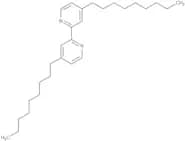
CAS:<p>4,4'-Dinonyl-2,2'-bipyridine is a high-yield transfer reagent that is used in organic synthesis. It can be used to transfer aryl or alkyl groups from ancillary to the functional group on the substrate. 4,4'-Dinonyl-2,2'-bipyridine is also used for the production of polymers and organic semiconductors. In addition, this compound has been shown to be useful in the production of silicon solar cells and as a catalyst for photovoltaic devices. 4,4'-Dinonyl-2,2'-bipyridine has been shown to be thermostable and can be used in temperatures up to 200°C. This compound is also a ligand with ruthenium complex properties and can be used as an electron acceptor in radiation therapy procedures.</p>Formula:C28H44N2Purity:Min. 98 Area-%Color and Shape:White PowderMolecular weight:408.68 g/moltert-Butylisocyanate
CAS:<p>Tert-butylisocyanate is a reactive chemical that contains a carboxylate group. It is an ester hydrochloride that can be synthesized by reacting trifluoroacetic acid with molybdenum trioxide. This compound has been studied using X-ray crystal structures and the intramolecular hydrogen transfer reaction between two nitrogen atoms in the molecule. Tert-butylisocyanate is stable in solution because it does not react with water or alkalis, but does react with sodium carbonate, forming sodium cyanate and tetrabutylammonium hydroxide. Tert-butylisocyanate reacts with inorganic acids such as sulfuric acid to form its corresponding salts. The chelate ligand of tert-butylisocyanate prevents it from reacting with transition metals such as copper and iron, but will react with zinc metal.</p>Formula:C5H9NOPurity:Min. 98 Area-%Color and Shape:Colorless Clear LiquidMolecular weight:99.13 g/mol3-[(1H-1,2,3,4-Tetrazol-5-yl)methyl]-1H-indole
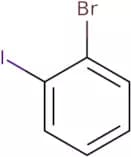
CAS:<p>Versatile small molecule scaffold</p>Formula:C10H9N5Purity:Min. 95%Color and Shape:PowderMolecular weight:199.21 g/mol1-Bromo-2-iodobenzene
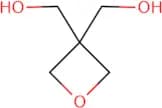
CAS:<p>1-Bromo-2-iodobenzene is an aryl halide that is used in analytical chemistry as a model system for copper chloride. It is also used to study the interaction of 5-HT1A receptors with aromatic hydrocarbons and has been shown to be effective in treating cervical cancer. The light emission from 1-Bromo-2-iodobenzene can be used as a probe for asymmetric synthesis, and it can also be used in metathesis reactions to isolate yield. 1-Bromo-2-iodobenzene binds to lysine residues on proteins and blocks the activity of enzymes by forming covalent bonds with amino acid residues in the active site.</p>Formula:C6H4BrIPurity:Min. 98%Color and Shape:Yellow Clear LiquidMolecular weight:282.9 g/mol3,3-Bis(hydroxymethyl)oxetane
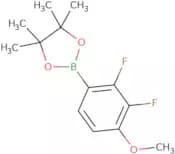
CAS:<p>3,3-Bis(hydroxymethyl)oxetane is a monomer that belongs to the class of polyols. It is synthesized by ring-opening polymerization of 3,3-bis(hydroxymethyl)oxetane with trifluoromethanesulfonic acid as the catalyst. The kinetic studies show that this monomer reacts with water at high rates and has a high melting point. It is also found to be an excellent uptake agent for organic nitrates. 3,3-Bis(hydroxymethyl)oxetane can be used in the production of polyurethanes and other polymers as well as in cosmetic products.</p>Formula:C5H10O3Purity:Min. 95%Color and Shape:PowderMolecular weight:118.13 g/mol2-(2,3-Difluoro-4-methoxyphenyl)-4,4,5,5-tetramethyl-1,3,2-dioxaborolane
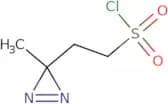
CAS:<p>Versatile small molecule scaffold</p>Formula:C13H17BF2O3Purity:Min. 95%Color and Shape:PowderMolecular weight:270.08 g/mol2-(3-Methyl-3H-diazirin-3-yl)ethane-1-sulfonyl chloride
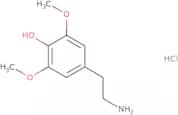
CAS:<p>Versatile small molecule scaffold</p>Formula:C4H7ClN2O2SPurity:Min. 95%Molecular weight:182.63 g/mol3,5-Dimethoxy-4-hydroxyphenethylamine hydrochloride
CAS:Controlled Product<p>3,5-Dimethoxy-4-hydroxyphenethylamine hydrochloride is a fine chemical that is used as a building block for other compounds and as a reagent in research. It has been shown to be an effective intermediate in the synthesis of many complex compounds, such as 3,4-methylenedioxyamphetamine (MDA) and 3,4-methylenedioxymethamphetamine (MDMA), which are both psychoactive drugs. This building block can also be used to synthesize speciality chemicals such as psychotropic drugs or pharmaceuticals.</p>Formula:C10H16ClNO3Purity:Min. 95%Color and Shape:PowderMolecular weight:233.69 g/mol4-Bromo-1-butene
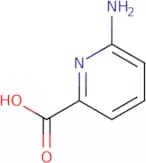
CAS:<p>4-Bromo-1-butene is a colorless liquid with a boiling point of 102°C. It is soluble in ethanol, acetone, and chloroform. 4-Bromo-1-butene undergoes an acid-catalyzed phase transition to the solid form at temperatures below its melting point. 4-Bromobutene can be synthesized by reacting ethyl bromide with 1-butene in the presence of a catalyst such as copper or silver oxide. The kinetic energy of the reaction is determined by measuring the rate of evolution of hydrogen bromide gas from the reaction mixture. The β-unsaturated ketone reacts with dimethyl fumarate in the presence of sodium hydroxide to produce 4-bromobutene and 2,2'-difluoroethanol. This product has been shown to have IR spectra similar to those for other products containing a hydroxyl group such as phenol and</p>Formula:C4H7BrPurity:Min. 95%Color and Shape:Colorless Clear LiquidMolecular weight:135 g/mol6-Amino-2-pyridinecarboxylic acid
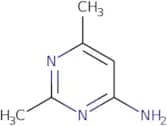
CAS:<p>6-Amino-2-pyridinecarboxylic acid is a potentiating agent that belongs to the class of cyclic peptides. It has been shown to have anti-leukemic activity and can be used for the treatment of leukemia. The mechanism of action is not yet fully understood, but it may involve hydrogen bonding interactions with other molecules or cavities in proteins. 6-Amino-2-pyridinecarboxylic acid forms stable complexes with halides and intramolecular hydrogen bonds. This drug also has quantum theory effects, including a short lifetime in solution and an increase in fluorescence intensity when excited with light at low energies.</p>Formula:C6H6N2O2Purity:Min. 95%Color and Shape:PowderMolecular weight:138.12 g/mol4-Amino-2,6-dimethylpyrimidine
CAS:<p>4-Amino-2,6-dimethylpyrimidine (4ADMP) is an organic solvent that inhibits the enzyme acetylcholinesterase. It has been shown to be a potent and selective inhibitor of human immunodeficiency virus type 1 (HIV-1) replication in vitro. 4ADMP is a prodrug that undergoes reduction to form a reactive intermediate that binds to the active site of acetylcholinesterase and inhibits its activity. The nitrogen atom in 4ADMP stabilizes the intermediate and prevents it from reacting with other proteins. This agent also has muscarinic M1 receptor agonist activity, which may be due to its ability to allosterically modulate the receptor and increase the affinity for acetylcholine.</p>Formula:C6H9N3Purity:Min. 95%Color and Shape:PowderMolecular weight:123.16 g/mol
![2-Azaspiro[3.3]heptane-1-carboxylic acid hydrochloride](/_next/image/?url=https%3A%2Fstatic.cymitquimica.com%2Fproducts%2F3D%2Fthumb-webp%2FJBD30513.webp&w=3840&q=75)



![3-[(1H-1,2,3,4-Tetrazol-5-yl)methyl]-1H-indole](/_next/image/?url=https%3A%2Fstatic.cymitquimica.com%2Fproducts%2F3D%2Fthumb-webp%2FQAA99212.webp&w=3840&q=75)