Building Blocks
This section contains fundamental products for the synthesis of organic and biological compounds. Building blocks are the essential starting materials used to construct complex molecules through various chemical reactions. They play a critical role in drug discovery, material science, and chemical research. At CymitQuimica, we offer a diverse range of high-quality building blocks to support your innovative research and industrial projects, ensuring you have the essential components for successful synthesis.
Subcategories of "Building Blocks"
- Boronic Acids & Boronic Acid Derivatives(5,756 products)
- Chiral Building Blocks(1,242 products)
- Hydrocarbon Building Blocks(6,095 products)
- Organic Building Blocks(61,038 products)
Found 196817 products of "Building Blocks"
Sort by
Purity (%)
0
100
|
0
|
50
|
90
|
95
|
100
1,8-Diazaspiro[4.5]decan-2-one dihydrochloride
CAS:<p>Versatile small molecule scaffold</p>Formula:C8H14N2O•(HCl)2Purity:Min. 95%Color and Shape:PowderMolecular weight:227.13 g/molOrcinol monohydrate
CAS:<p>Orcinol monohydrate is a high quality chemical that can be used as a reagent, complex compound, or useful intermediate in the synthesis of fine chemicals. It is also an important building block in the synthesis of other compounds. This product has CAS No. 6153-39-5 and is classified as a speciality chemical. It is also a versatile building block that can be used as a reaction component in organic syntheses.</p>Formula:C7H10O3Molecular weight:142.16 g/molEthyl 4-iodobenzoate
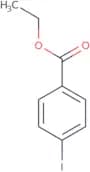
CAS:<p>Ethyl 4-iodobenzoate is an amide that reacts with a variety of substances, including retinoic acid and pemetrexed. It is a reactive substance that can be used in the synthesis of other substances such as iron oxides and transfer mechanism. Ethyl 4-iodobenzoate is also used for the preparation of picolinic acid and crystalline structure. Radical coupling reactions are most common and involve halides, phenyl groups, and aryl halides. The reaction temperature ranges from room temperature to 100 ˚C, while the reaction mechanism varies depending on the type of coupling reaction.</p>Formula:C9H9IO2Purity:Min. 95%Color and Shape:PowderMolecular weight:276.07 g/mol2-Amino-5-chlorobenzonitrile
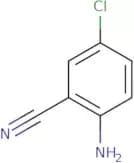
CAS:<p>2-Amino-5-chlorobenzonitrile is a potent inhibitor of butyrylcholinesterase (BChE) and has been shown to inhibit the activity of this enzyme in cell lung cancer and muscle. 2-Amino-5-chlorobenzonitrile also inhibits the activity of other enzymes, such as acetylcholinesterase (AChE) and phosphatidylcholine esterase (PCE), that are found in the membranes of cells. This inhibition leads to increased levels of acetylcholine in the synaptic cleft, which may lead to an increase in muscular contractions. 2-Amino-5-chlorobenzonitrile is also a product yield enhancer for chromene synthesis.</p>Formula:C7H5ClN2Purity:Min. 95%Color and Shape:PowderMolecular weight:152.58 g/molL-Histidine acetate
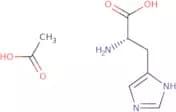
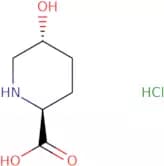
CAS:Controlled Product<p>L-Histidine acetate is a white, crystalline powder that has a constant melting point and can be soluble in water. It has a monoclinic crystal system with a crystal form of α-l-histidine dihydrogen acetate. L-Histidine acetate is an amino acid that is necessary for the biosynthesis of proteins and the metabolism of histamine. L-Histidine acetate has been studied using x-ray diffraction and optical properties to determine its functional groups. The activation energy for this compound is found to be at 4.1 kcal/mol, which is lower than most other compounds in nature. The frequencies of light waves are measured at 3,040 cm-1 and the evaporation rate at 15°C is 0.039 cm3/s.</p>Formula:C6H9N3O2•C2H4O2Purity:Min. 95%Molecular weight:215.21 g/mol(2S,5R)-5-Hydroxypiperidine-2-carboxylic acid hydrochloride
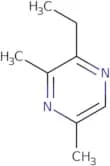
CAS:<p>(2S,5R)-5-Hydroxypiperidine-2-carboxylic acid hydrochloride is a fine chemical that is useful as a building block in organic synthesis. It is also used as an intermediate in the production of other chemicals and may be used to synthesize complex compounds. This compound has a CAS number of 824943-40-0 and may be available at competitive prices.</p>Formula:C6H12ClNO3Purity:Min. 95%Color and Shape:Off-White PowderMolecular weight:181.62 g/mol2-Ethyl-3,5-dimethylpyrazine
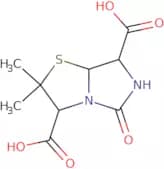
CAS:<p>2-Ethyl-3,5-dimethylpyrazine (2E-DMP) is a fatty acid that is produced by the reaction of unsaturated ketones and fatty acids. 2E-DMP has been shown to have an inhibitory effect on the activity of kidney bean lipoxygenase. It also inhibits the growth of mammalian cells in culture. 2E-DMP has a molecular weight of 152.24, a melting point of -50 degrees Celsius, and a boiling point at 230 degrees Celsius. The compound has not been tested for carcinogenic or mutagenic effects in mammals or humans.</p>Formula:C8H12N2Purity:Min. 95%Color and Shape:Clear LiquidMolecular weight:136.19 g/mol8-Hydroxypenillic acid
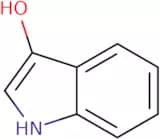
CAS:<p>8-Hydroxypenillic acid is an intermediate in the synthesis of penicillin. It is produced by the enzyme 8-hydroxylase, which converts L-lysine to L-3,4-dihydroxyphenylalanine. This reaction requires a number of cofactors, including magnesium ions and oxygen. The product is then converted to 8-hydroxypenillic acid by the enzyme hydroxypenicillinase. Inhibition of this enzyme leads to accumulation of 8-hydroxypenillic acid, which can be used as a biomarker for production of penicillin.</p>Formula:C9H12N2O5SPurity:Min. 95%Color and Shape:PowderMolecular weight:260.27 g/mol3-Hydroxyindole
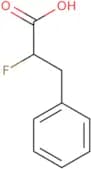
CAS:<p>A building block research chemical</p>Formula:C8H7NOPurity:(¹H-Nmr) Min. 95 Area-%Color and Shape:PowderMolecular weight:133.15 g/mol2-Fluoro-3-phenylpropanoic acid
CAS:<p>Versatile small molecule scaffold</p>Formula:C9H9FO2Purity:Min. 95%Color and Shape:PowderMolecular weight:168.16 g/mol2-[2-(Morpholin-4-yl)ethoxy]ethan-1-amine
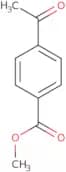
CAS:<p>2-[2-(Morpholin-4-yl)ethoxy]ethan-1-amine is a research chemical that is used as a reagent, reaction component, or building block in the synthesis of more complex compounds. It can be used to synthesize fine chemicals such as pharmaceuticals and agrochemicals.</p>Formula:C8H18N2O2Purity:Min. 95%Color and Shape:Clear LiquidMolecular weight:174.24 g/molMethyl 4-acetylbenzoate
CAS:<p>Methyl 4-acetylbenzoate is a synthetic compound that can be used for the synthesis of imatinib and other pharmaceuticals. It is an effective method for the synthesis of butyric acid with high enantiomeric purity. The cross-coupling reaction was first reported by Suzuki in 1979, which has been widely applied to organic synthesis because it is efficient and produces simple byproducts. This reaction has also been used in the synthesis of model compounds and natural products, as well as in environmental pollution studies.</p>Formula:C10H10O3Purity:Min. 95%Color and Shape:PowderMolecular weight:178.18 g/mol6-Oxa-1-azaspiro[3.5]nonane hydrochloride
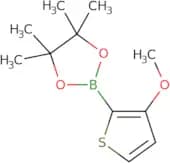
CAS:<p>6-Oxa-1-azaspiro[3.5]nonane hydrochloride is a fine chemical that can be used as a versatile building block, useful intermediate, and a reaction component in research and development. It has been shown to have high quality and is a reagent that can be used in the synthesis of complex compounds. CAS No. 1956324-37-0.</p>Formula:C7H14ClNOPurity:Min. 95%Color and Shape:PowderMolecular weight:163.64 g/mol3-Methoxythiophene-2-boronic acid pinacol ester
CAS:<p>3-Methoxythiophene-2-boronic acid pinacol ester is a ligand that can be used in the synthesis of organic molecules. It undergoes nucleophilic substitution reactions and has been shown to be an excellent substrate for Suzuki coupling reactions. This reactant can also be used as a backbone in the synthesis of optical materials, such as semiconductors. 3-Methoxythiophene-2-boronic acid pinacol ester is capable of forming a variety of substitutions and transfers with benzothiadiazole derivatives, which have been shown to have an acceptor effect on organic molecules.</p>Formula:C11H17BO3SPurity:Min. 95%Color and Shape:PowderMolecular weight:240.13 g/mol(Acetyloxy)(furan-2-yl)methyl acetate
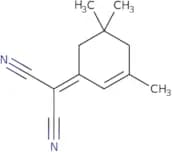
CAS:<p>Acetyloxy(furan-2-yl)methyl acetate is a hydrazone molecule that is used in pharmaceutical preparations. It is synthesized by the condensation of crotonylidene and acetyloxyacetic acid. This compound has shown promising anticancer activity with an activation energy of 8.3 kcal/mol for the formation of the reactive species. Acetyloxy(furan-2-yl)methyl acetate has also been shown to be effective against methicillin resistant Staphylococcus aureus, although it does not have any activity against Gram positive bacteria such as Mycobacterium tuberculosis or Mycobacterium avium complex.</p>Formula:C9H10O5Purity:Min. 95%Color and Shape:PowderMolecular weight:198.17 g/mol(3,5,5-Trimethylcyclohex-2-enylidene)malononitrile
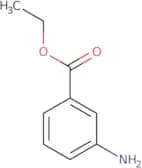
CAS:<p>(3,5,5-Trimethylcyclohex-2-enylidene)malononitrile is a versatile compound that has various applications in different fields. It is commonly used as a research chemical and has shown promising results in the development of new medicaments. Its unique structure and properties make it an ideal candidate for further exploration.</p>Formula:C12H14N2Purity:Min. 95%Molecular weight:186.25 g/molEthyl 3-aminobenzoate
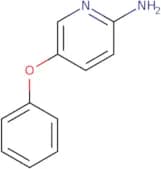
CAS:<p>Ethyl 3-aminobenzoate is a chemical that is used as an anesthetic. It is administered intravenously and has been shown to have effects on the cardiovascular system, such as lowering blood pressure, decreasing heart rate and increasing the time it takes for the heart to recover after a contraction. Ethyl 3-aminobenzoate also affects the central nervous system by causing anesthesia and changes in brain function. Its effects are reversible with administration of naloxone or flumazenil.</p>Formula:C9H11NO2Purity:Min. 95%Color and Shape:PowderMolecular weight:165.19 g/mol5-Phenoxypyridin-2-amine
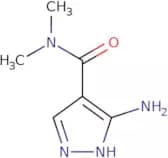
CAS:<p>5-Phenoxypyridin-2-amine is a useful scaffold that can be used as a reaction component, reagent, or intermediate. It is an aromatic compound with a benzene ring and pyridine group and has the CAS number 64064-68-2. 5-Phenoxypyridin-2-amine can be used as a building block for organic synthesis and as an intermediate for other compounds. This product can also be used to create complex compounds that are difficult to synthesize in other ways.</p>Formula:C11H10N2OPurity:Min. 95%Color and Shape:PowderMolecular weight:186.21 g/mol5-Amino-N,N-dimethyl-1H-pyrazole-4-carboxamide
CAS:<p>Versatile small molecule scaffold</p>Formula:C6H10N4OPurity:Min. 95%Color and Shape:PowderMolecular weight:154.17 g/mol2,4-Dihydroxyphenylacetic acid
CAS:<p>2,4-Dihydroxyphenylacetic acid (2,4-DPA) is a norepinephrine (NE) precursor that acts as an anxiolytic drug. It is also a dopamine (DA) precursor and has been shown to inhibit the production of inflammatory cytokines by suppressing the production of tumor necrosis factor-α (TNF-α) in cell culture. 2,4-DPA has been shown to have antiinflammatory activity in animal models and in human cells. This drug enhances the effects of hydrochloric acid on amino acid analysis and may be used as an alternative to hydrochloric acid for preparative high performance liquid chromatography. 2,4-DPA is also capable of irreversible inhibition of bacterial dna gyrase and dna topoisomerase I enzymes. 2,4-DPA has been shown to inhibit the growth of infectious bacteria such as Mycobacterium tuberculosis and Mycobacterium</p>Formula:C8H8O4Purity:Min. 95%Color and Shape:PowderMolecular weight:168.15 g/mol
![1,8-Diazaspiro[4.5]decan-2-one dihydrochloride](/_next/image/?url=https%3A%2Fstatic.cymitquimica.com%2Fproducts%2F3D%2Fthumb-webp%2FGDD38984.webp&w=3840&q=75)


![2-[2-(Morpholin-4-yl)ethoxy]ethan-1-amine](/_next/image/?url=https%3A%2Fstatic.cymitquimica.com%2Fproducts%2F3D%2Fthumb-webp%2FVAA20713.webp&w=3840&q=75)
![6-Oxa-1-azaspiro[3.5]nonane hydrochloride](/_next/image/?url=https%3A%2Fstatic.cymitquimica.com%2Fproducts%2F3D%2Fthumb-webp%2FGDD32437.webp&w=3840&q=75)