Building Blocks
This section contains fundamental products for the synthesis of organic and biological compounds. Building blocks are the essential starting materials used to construct complex molecules through various chemical reactions. They play a critical role in drug discovery, material science, and chemical research. At CymitQuimica, we offer a diverse range of high-quality building blocks to support your innovative research and industrial projects, ensuring you have the essential components for successful synthesis.
Subcategories of "Building Blocks"
- Boronic Acids & Boronic Acid Derivatives(5,756 products)
- Chiral Building Blocks(1,242 products)
- Hydrocarbon Building Blocks(6,095 products)
- Organic Building Blocks(61,038 products)
Found 196817 products of "Building Blocks"
Sort by
Purity (%)
0
100
|
0
|
50
|
90
|
95
|
100
6-Formyl-2-methyl-4H-thieno[3,2-b]pyrrole-5-carboxylic acid
CAS:<p>Versatile small molecule scaffold</p>Formula:C9H7NO3SPurity:Min. 95%Molecular weight:209.22 g/molBenzene-1,3,5-tricarbaldehyde
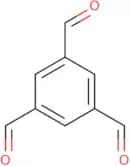
CAS:<p>Trifluoroacetic acid is a nonsteroidal anti-inflammatory drug that belongs to the group of carboxylic acids. Benzene-1,3,5-tricarbaldehyde is used as an intermediate in the synthesis of trifluoroacetic acid and has been shown to be effective against microbial infections. It has been shown to inhibit the growth of bacteria such as Staphylococcus aureus and Bacillus cereus by disrupting their DNA replication. Benzene-1,3,5-tricarbaldehyde also inhibits the production of inflammatory cytokines and reduces inflammation. The compound has chemical stability and does not react with human serum or other biological fluids.</p>Formula:C9H6O3Purity:Min. 95%Color and Shape:PowderMolecular weight:162.15 g/mol2-Nitrobenzenesulfonyl chloride
CAS:<p>2-Nitrobenzenesulfonyl chloride is a cyclic peptide that has been shown to be effective in the synthesis of a variety of biologically active compounds. It is used in the preparation of hydrochloric acid, hydroxyl group, lysine residues, and methyl ketones. It also has been used in analytical methods for the determination of cancer. 2-Nitrobenzenesulfonyl chloride is an aziridine with a Michaelis-Menten kinetics. This chemical structure allows hydrogen bonding with proteins, which is important for conformational changes and biological activity. 2-Nitrobenzenesulfonyl chloride has also been shown to inhibit cancer cells as well as human serum through hydrogen bond interactions.</p>Formula:C6H4ClNO4SPurity:Min. 95%Color and Shape:Slightly Yellow PowderMolecular weight:221.62 g/mol1-Amino-2-naphthol-4-sulfonic acid
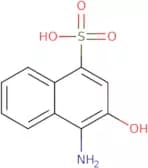
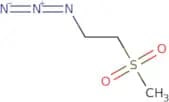
CAS:<p>1-Amino-2-naphthol-4-sulfonic acid is a fluorescent dye that belongs to the class of naphtholsulfonates. It has been shown to react with protonated hydroxyl groups, which are present in the matrix, and form an electrochemical impedance spectrum. The fluorescence of tryptophan can be used as a probe to detect the presence of 1-amino-2-naphthol-4-sulfonic acid in a solution. This reaction mechanism suggests that adsorption is the dominating process for 1-amino-2-naphthol-4-sulfonic acid.</p>Formula:C10H9NO4SColor and Shape:PowderMolecular weight:239.25 g/mol1-Azido-2-(methylsulfonyl)ethane solution in dichloromethane
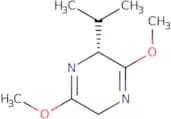
CAS:<p>Versatile small molecule scaffold</p>Formula:C3H7N3O2SPurity:Min. 95%Color and Shape:Clear LiquidMolecular weight:149.17 g/mol(R)-2,5-Dihydro-3,6-dimethoxy-2-isopropylpyrazine
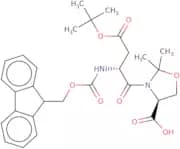
CAS:<p>(R)-2,5-Dihydro-3,6-dimethoxy-2-isopropylpyrazine and its enantiomer (S)-2,5-Dihydro-3,6-dimethoxy-2-isopropylpyrazine are also known as Schöllkopf chiral auxiliaries or Schöllkopf reagents, and are used to produce optically pure α-amino acids via asymmetric synthesis. The Schöllkopf reagent can be deprotonated at the prochiral α-carbon, and the resulting enolate is trapped with electrophiles to yield adducts with high (typically > 95% d.e.) diastereoselectivity. The enolate is essentially planar, and the steric bulk of the isopropyl group directs the incoming electrophile to attack from the opposite face, yielding trans adducts. A wide range of electrophiles including alkyl halides, alkyl sulfonates, acyl chlorides, aldehydes, ketones, epoxides, thioketones and enones can be used. Hydrolysis, typically under mild acidic conditions, yields the non-substituted amino acid with high (typically > 95 e.e.) enantiopurity.</p>Formula:C9H16N2O2Purity:Min. 98%Color and Shape:Colorless Yellow Clear LiquidMolecular weight:184.24 g/molFmoc-D-Asp(OtBu)-L-Ser(Psi(Me,Me)pro)-OH
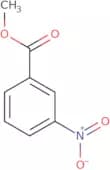
<p>Fmoc-D-Asp(OtBu)-L-Ser(Psi(Me,Me)pro)-OH is a high quality reagent that can be used as an intermediate in the synthesis of complex compounds. It is a useful building block for the synthesis of speciality chemicals and research chemicals. Fmoc-D-Asp(OtBu)-L-Ser(Psi(Me,Me)pro)-OH is also a versatile building block that can be used to synthesize different types of compounds.</p>Formula:C29H34N2O8Purity:Min. 95%Color and Shape:PowderMolecular weight:538.59 g/mol3-Nitrobenzoic acid methyl ester
CAS:<p>3-Nitrobenzoic acid methyl ester is an organic compound that contains a hydroxyl group and a nitro group. It can be synthesized by the reaction of 3-nitrophenol and methanol in a solvent such as water or ethanol. The nitro group is important for the solvating power of this molecule, which has been shown to have approximations with other molecules. 3-Nitrobenzoic acid methyl ester is found in two different forms: the cis form and the trans form, which differ in the orientation of their nitro groups. The cis form is more stable than the trans form because it has a dipole moment. The vibrational frequencies are also higher for the cis form than for its trans counterpart. 3-Nitrobenzoic acid methyl ester has been shown to react with nintedanib, which is used to treat cancer, and inhibit kinetics. The kinetic data obtained from this study can</p>Formula:C8H7NO4Purity:(Gc) Min. 98%Color and Shape:PowderMolecular weight:181.15 g/mol4-Formyl-N-methylbenzenesulfonamide
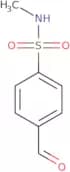
CAS:<p>4-Formyl-N-methylbenzenesulfonamide is a fine chemical that is used as a versatile building block in the synthesis of complex compounds, research chemicals, and reagents. It is highly useful as a reagent or speciality chemical in laboratory experiments involving many different reactions. 4-Formyl-N-methylbenzenesulfonamide has been shown to be an excellent intermediate for the synthesis of high quality products. This product can also be used as a scaffold in complex organic syntheses.</p>Formula:C8H9NO3SPurity:Min. 95%Color and Shape:PowderMolecular weight:199.23 g/mol2,3-Dihydroxy-3-phenylpropanoic acid
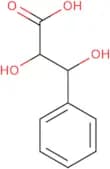
CAS:<p>2,3-Dihydroxy-3-phenylpropanoic acid is a monocarboxylic acid and a benzenes. It has been shown to have antimicrobial properties against bacteria such as Staphylococcus aureus, Proteus vulgaris, and Klebsiella pneumoniae. The monocarboxylic acid inhibits bacterial growth by binding to the beta subunit of the enzyme DNA gyrase, which is necessary for DNA replication. 2,3-Dihydroxy-3-phenylpropanoic acid also binds to the beta subunit of the enzyme RNA polymerase and prevents mRNA synthesis, thus inhibiting protein synthesis in bacteria. !-- --> !-- --> !-- --> !-- --> !-- --> !-- --> !-- --></p>Formula:C9H10O4Purity:Min. 95%Color and Shape:PowderMolecular weight:182.17 g/molN6-Trifluoroacetyl-L-lysine N-carboxyanhydride
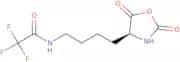
CAS:<p>Trifluoroacetyl-L-lysine N-carboxyanhydride is an N6-trifluoroacetylated lysine derivative that is used in the synthesis of peptides. It is a racemic mixture of L and D forms, which is hydrolyzed to form L-glutamic acid, NH4Cl, and CO2. Trifluoroacetyl-L-lyside N-carboxyanhydride has been shown to be useful in the formation of bonds between amino acids, such as lysine and dipeptides. The compound is also used for the protection of lysine against oxidation during peptide synthesis.</p>Formula:C9H11F3N2O4Purity:Min. 95%Color and Shape:White PowderMolecular weight:268.19 g/molTrimethyl orthovalerate
CAS:<p>Used for synthesis of dihydropyran-4-ones</p>Formula:C8H18O3Purity:Min. 97 Area-%Color and Shape:Colorless Clear LiquidMolecular weight:162.23 g/mol1-(3-Azetidinyl)-pyrrolidine dihydrochloride
CAS:<p>1-(3-Azetidinyl)-pyrrolidine dihydrochloride is a high quality, versatile building block that can be used as a reagent in the synthesis of complex compounds and as an intermediate in the synthesis of fine chemicals. 1-(3-Azetidinyl)-pyrrolidine dihydrochloride is an excellent starting material for the synthesis of a wide range of compounds. It can also act as a speciality chemical or research chemical. 1-(3-Azetidinyl)-pyrrolidine dihydrochloride has CAS No. 1024589-68-1 and can be found on our website at www.chemistryworldstore.com</p>Formula:C7H14N2•(HCl)2Purity:Min. 95%Color and Shape:PowderMolecular weight:199.12 g/mol1,2,5,6-Diepoxycyclooctane
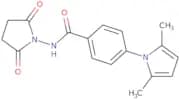
CAS:<p>1,2,5,6-Diepoxycyclooctane is a chemical compound that has been used as a crosslinking agent for the polymerization of epoxies. It is also used as a reactive intermediate in organic synthesis. 1,2,5,6-Diepoxycyclooctane can be prepared by reacting epichlorohydrin with ethylene oxide and then hydrogenation. This chemical compound is stable to ultraviolet light and does not react with cationic surfactants. 1,2,5,6-Diepoxycyclooctane can form monoadducts or diploid adducts when it reacts with chemicals such as dioxane and benzene. The nmr spectra of 1,2,5,6-diepoxycyclooctane show signals characteristic of epoxides.</p>Formula:C8H12O2Purity:Min. 95%Color and Shape:PowderMolecular weight:140.18 g/mol4-(2,5-Dimethyl-1H-pyrrol-1-yl)-N-(2,5-dioxopyrrolidin-1-yl)benzamide
CAS:<p>4-(2,5-Dimethyl-1H-pyrrol-1-yl)-N-(2,5-dioxopyrrolidin-1-yl)benzamide is a useful scaffold that can be used to synthesize high quality and versatile building blocks. This compound is also a useful intermediate in the synthesis of complex compounds. This chemical is not an approved pharmaceutical, but it has shown promising activity as an antihistamine.</p>Formula:C17H17N3O3Purity:Min. 95%Molecular weight:311.33 g/moltert-Butyl N-{3-azabicyclo[4.1.0]heptan-6-yl}carbamate
CAS:<p>tert-Butyl N-{3-azabicyclo[4.1.0]heptan-6-yl}carbamate is a high quality reagent that is used as a complex compound and is useful as an intermediate in the production of fine chemicals. It has CAS No. 880545-32-4 and can be used as a building block for synthesizing other compounds, such as speciality chemicals and research chemicals. Tert-butyl N-[3-(azabicyclo[4.1.0]heptan-6-yl)carbamate is also versatile and can be used in reactions to make reaction components, such as versatile building blocks or scaffolds for making other compounds.</p>Formula:C11H20N2O2Purity:Min. 95%Color and Shape:Clear LiquidMolecular weight:212.29 g/mol4,4'-Dipyridyl
CAS:<p>Please enquire for more information about 4,4'-Dipyridyl including the price, delivery time and more detailed product information at the technical inquiry form on this page</p>Formula:C10H8N2Molecular weight:156.19 g/mol4,4'-Dihydroxy-2,2'-bipyridine
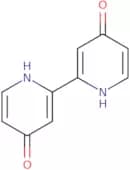
CAS:<p>4,4'-Dihydroxy-2,2'-bipyridine is a metallo-organic compound that can be used as a homogeneous catalyst for the oxidation of hydroxyl groups. It is also used in cancer research because it has been shown to inhibit tumor cell proliferation and induce apoptosis. 4,4'-Dihydroxy-2,2'-bipyridine is an activated form of 2,2'-bipyridyl with a hydroxyl group on its ortho position. It can be prepared by reacting bromine with the metal salt of 2-hydroxybenzaldehyde in the presence of sodium hydroxide. This reaction produces two products: 4,4'-dihydroxy-2,2'-bipyridine and 2-bromoethanol. The deuterium isotope is used for nuclear magnetic resonance spectroscopy studies because it has a spin quantum number of one and does not cause chemical shift</p>Formula:C10H8N2O2Purity:Min. 98 Area-%Color and Shape:White PowderMolecular weight:188.18 g/mol2-Acetoxybenzonitrile
CAS:<p>2-Acetoxybenzonitrile is an atypical, acidic organic compound with a molecular weight of 136.06 g/mol. It has a melting point of -5.5 °C and decomposes spontaneously at high temperatures to form benzonitrile, carbon dioxide, and water. 2-Acetoxybenzonitrile is able to act as a competitive inhibitor of acetylsalicylic acid (ASA) in the kinetic determination of ASA using acetylation as the rate-determining step. In this experiment, 2-acetoxybenzonitrile was found to be an effective inhibitor of acetylation with a KI value of 1.8 x 10 M. The spectrometer can be used to determine the molecular weight and purity of 2-acetoxybenzonitrile by measuring its absorbance in the ultraviolet region.<br>2-Acetoxybenzonitrile binds metal cations such as Cu(II), Fe(</p>Formula:C9H7NO2Purity:Min. 95%Color and Shape:Clear LiquidMolecular weight:161.16 g/mol3,4-Dimethoxy-5-hydroxycinnamic acid
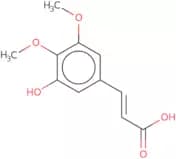
CAS:<p>3,4-Dimethoxy-5-hydroxycinnamic acid is a monoterpenoid indole alkaloid that belongs to the class of biochemical compounds. It is a promiscuous compound and can be found in many plants, such as coffee beans, black pepper, cinnamon, and thyme. 3,4-Dimethoxy-5-hydroxycinnamic acid has been shown to have antimicrobial properties against bacteria and fungi. The metabolomics study showed that this compound may also have anti-inflammatory effects. 3,4-Dimethoxy-5-hydroxycinnamic acid was shown to enhance the transcription of ferulic acid in E. coli cells. This compound was also shown to decrease the levels of transcripts for genes involved in lipid metabolism and fatty acid biosynthesis in human liver cells.</p>Formula:C11H12O5Purity:Min. 98 Area-%Color and Shape:PowderMolecular weight:224.21 g/mol
![6-Formyl-2-methyl-4H-thieno[3,2-b]pyrrole-5-carboxylic acid](/_next/image/?url=https%3A%2Fstatic.cymitquimica.com%2Fproducts%2F3D%2Fthumb-webp%2FSIB11266.webp&w=3840&q=75)




![tert-Butyl N-{3-azabicyclo[4.1.0]heptan-6-yl}carbamate](/_next/image/?url=https%3A%2Fstatic.cymitquimica.com%2Fproducts%2F3D%2Fthumb-webp%2FFKB54532.webp&w=3840&q=75)