Building Blocks
This section contains fundamental products for the synthesis of organic and biological compounds. Building blocks are the essential starting materials used to construct complex molecules through various chemical reactions. They play a critical role in drug discovery, material science, and chemical research. At CymitQuimica, we offer a diverse range of high-quality building blocks to support your innovative research and industrial projects, ensuring you have the essential components for successful synthesis.
Subcategories of "Building Blocks"
- Boronic Acids & Boronic Acid Derivatives(5,756 products)
- Chiral Building Blocks(1,242 products)
- Hydrocarbon Building Blocks(6,095 products)
- Organic Building Blocks(61,038 products)
Found 196817 products of "Building Blocks"
Sort by
Purity (%)
0
100
|
0
|
50
|
90
|
95
|
100
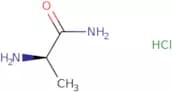
D-Alanine amide hydrochloride
CAS:<p>D-Alanine amide hydrochloride is a molecule that belongs to the class of organic solvents. It is a chiral compound with high specificity for d-alanine. D-Alanine amide hydrochloride has been shown to block bacterial strains such as Acinetobacter, Ochrobactrum and Stenotrophomonas maltophilia. This drug also inhibits the growth of bacteria by binding to the active site of enzymes, preventing them from catalyzing reactions. The stereoselectivity of this drug is due to its pharmacophore that mimics the three amino acids found in d-alanine: an amide, an aliphatic chain, and a hydroxyl group.</p>Formula:C3H8N2O·HClColor and Shape:White Off-White PowderMolecular weight:124.57 g/mol5-Aminopyrimidine
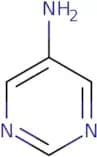
CAS:5-Aminopyrimidine is a synthetic compound that has been shown to have inhibitory effects on the nervous system. The structural formula of 5-aminopyrimidine is C6H4N3O2. It is a structural analogue of pyrimidine and can be used as an anticancer drug. 5-Aminopyrimidine can also be used in the treatment of diseases such as diabetes and Parkinson’s disease. The reaction mechanism of 5-aminopyrimidine begins with the formation of an unstable diazonium salt, which then reacts with a chloride ion to form an alloxan intermediate. This intermediate then reacts with phosphate group to form a product that is soluble in water.Formula:C4H5N3Purity:Min. 95%Color and Shape:White PowderMolecular weight:95.1 g/molAzobenzene
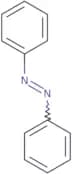
CAS:<p>Azobenzene is an azobenzene that binds to the actin filaments and inhibits their polymerization. It has been shown to inhibit the polymerization of actin filaments in human serum, which may be due to its ability to react with the nitrogen atoms in actin. Azobenzene has also been shown to have a thermal expansion coefficient of 0.015x10⁻⁵/°C, which is much larger than that of most other compounds. The molecular geometry of azobenzene is planar and symmetrical, with two hydrogen atoms on each nitrogen atom on both sides of the molecule. This symmetry leads to a low intramolecular hydrogen bonding energy. The molecule’s photochemical properties are also interesting because it has a long lifetime and can be excited by wavelengths between 400-500 nm.</p>Formula:C12H10N2Purity:Min. 97.5 Area-%Color and Shape:PowderMolecular weight:182.22 g/mol2-{1-[(Pyridin-3-yl)methyl]piperidin-2-yl}ethan-1-ol
CAS:<p>Versatile small molecule scaffold</p>Formula:C13H20N2OPurity:Min. 95%Color and Shape:PowderMolecular weight:220.31 g/mol9-Azabicyclo[3.3.1]nonane N-oxyl
CAS:<p>9-Azabicyclo[3.3.1]nonane N-oxyl (ABNO) is a reaction component in copper catalysed aerobic oxidation of alcohols. ABNO is a less hindered nitroxyl radical that exhibits an enhanced reactivity compared with TEMPO. Low catalyst loading (1 mol%) of ABNO can efficiently catalyse oxidation of alcohols in the presence of a Cu+ species and atmospheric oxygen to give the corresponding aldehyde or ketone.</p>Formula:C8H14NOPurity:Min. 95 Area-%Color and Shape:PowderMolecular weight:140.2 g/mol2,2-Dimethylcyclobutan-1-one
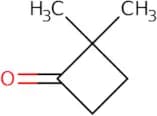
CAS:<p>2,2-Dimethylcyclobutan-1-one is a cycloaddition product of sodium methoxide and trimethylchlorosilane. It is used as an alkylating agent in the preparation of fatty acids. 2,2-Dimethylcyclobutan-1-one can be prepared by reaction of zinc chloride with chlorinated hydrocarbons or alkynes. The product can be purified by distillation and deuterated. The reactants are thermally decomposed to form the desired product at elevated temperatures (≥200 °C). The reaction proceeds via nucleophilic substitution of chloride for the chlorine atom that is attached to the alkene. This process generates a new double bond between carbon atoms 4 and 5 in the molecule. Lastly, 2,2-dimethylcyclobutan-1-one has been found to form a complex with anthracene and emulsifying agents that stabilizes it against thermal decomposition.</p>Formula:C6H10OPurity:Min. 95%Color and Shape:Clear LiquidMolecular weight:98.14 g/mol2-Isocyanatopyridine
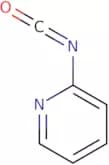
CAS:<p>2-Isocyanatopyridine is a synthetic chemical that has been shown to be an effective anti-cancer agent. It is a hemibasic, heterocyclic compound with two isomers, cis and trans. The cis form exhibits more potent antitumor activity than the trans form. 2-Isocyanatopyridine has been synthesized using mesoporous silica, which provides the molecule with a high surface area and good adsorption properties. Hydrogen bonding between the isocyanate group and hydrogen atoms in the naphthyridine ring are responsible for its functionalizing effects. 2-Isocyanatopyridine binds to receptors on cancer cells and inhibits cell proliferation by interfering with cell signaling pathways.<br>2-Isocyanatopyridine has been shown to inhibit tumor growth in mice bearing human colon carcinoma xenografts.</p>Formula:C6H4N2OPurity:Min. 95%Color and Shape:Brown PowderMolecular weight:120.11 g/mol4-Aminopyridine-2-carboximidamide dihydrochloride
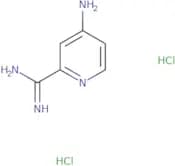
CAS:<p>Versatile small molecule scaffold</p>Formula:C6H10Cl2N4Purity:Min. 95%Color and Shape:PowderMolecular weight:209.07 g/mol2-Isopropylbenzoic acid
CAS:<p>2-Isopropylbenzoic acid is a fine chemical that belongs to the group of aromatic compounds and has the molecular formula C8H10O2. This compound is used in research as an intermediate for organic synthesis, such as the production of pharmaceuticals. 2-Isopropylbenzoic acid is also a versatile building block for complex molecules, such as dyes and fragrances. It can be used as a reagent or speciality chemical in research and development, such as in polymer chemistry. 2-Isopropylbenzoic acid can be used as a reaction component for synthesis of other chemicals, such as pharmaceuticals. As an intermediate, it can be used in the production of synthetic drugs and other bioactive molecules that are difficult to synthesize by other means due to its high quality.</p>Formula:C10H12O2Purity:Min. 95%Color and Shape:White PowderMolecular weight:164.2 g/mol4-[(1E)-Prop-1-en-1-yl]phenol
CAS:<p>Eugenol is a phenolic compound and the main active ingredient of clove oil. Eugenol has been shown to have antioxidant, anti-inflammatory, analgesic, and antimicrobial properties. It also inhibits the growth of cancer cells in vitro (mcf-7 cells). The mechanism of eugenol’s activity is not well understood. It may involve activation of adenine nucleotide levels by inhibiting the production of p-hydroxybenzoic acid or by increasing nucleotide levels by inhibiting the conversion to p-hydroxybenzoic acid. Eugenol also inhibits bacterial DNA gyrase and topoisomerase IV, which are enzymes that maintain the integrity of bacterial DNA. This inhibition leads to cell death by inhibiting protein synthesis. Eugenol has been shown to inhibit mineralization in petunia plants and may have a similar effect on human bone tissue.</p>Formula:C9H10OPurity:90%Molecular weight:134.17 g/mol4-[(1E)-3-Hydroxyprop-1-en-1-yl]phenol
CAS:<p>4-[(1E)-3-Hydroxyprop-1-en-1-yl]phenol (4-HP) is a natural compound that belongs to the group of polyphenols. It is one of the main constituents of the plant extract, which is obtained from leaves of the plant Ferula communis. 4-HP has been shown to have antiinflammatory activity by inhibiting prostaglandin synthesis in 3T3-L1 preadipocytes. The synergic effect can be explained by a combination of its antioxidant and antiinflammatory properties. In an analytical method, 4-HP was found to be present in ferulic acid and p-hydroxybenzoic acid. 4-HP also inhibits dna polymerase activity and rna synthesis at low concentration levels. The mechanism of action may be due to the inhibition of bacterial dna gyrase and topoisomerase I, leading to bacterial cell death.</p>Formula:C9H10O2Purity:Min. 95%Molecular weight:150.17 g/mol7H-Imidazo[4,5-d]pyrimidine
CAS:<p>7H-imidazo[4,5-d]pyrimidine is a small molecule that exhibits receptor activity against toll-like receptors. It has been shown to inhibit the production of proinflammatory cytokines and chemokines in HL60 cells. 7H-imidazo[4,5-d]pyrimidine also inhibits the activities of enzymes involved in purine metabolism and cellular metabolic processes, as well as intracellular targets including protein kinases, phosphatases and transcription factors. 7H-imidazo[4,5-d]pyrimidine has been shown to be effective against solid tumours such as murine sarcoma virus and plant tumors. This drug also inhibits the enzymatic activity of p2y receptors that are involved in inflammation and platelet aggregation.</p>Formula:C5H4N4Purity:Min. 95%Color and Shape:PowderMolecular weight:120.11 g/mol6-Formyl-2-methyl-4H-thieno[3,2-b]pyrrole-5-carboxylic acid
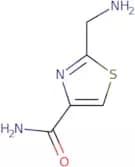
CAS:<p>Versatile small molecule scaffold</p>Formula:C9H7NO3SPurity:Min. 95%Molecular weight:209.22 g/mol2-(Aminomethyl)-1,3-thiazole-4-carboxamide
CAS:<p>2-(Aminomethyl)-1,3-thiazole-4-carboxamide is a chemical compound that can be used as a chemical reagent and as a reaction component. It is a versatile building block with many possible uses. 2-(Aminomethyl)-1,3-thiazole-4-carboxamide has been shown to be useful in the synthesis of complex compounds and fine chemicals. It is also an intermediate for the production of pharmaceuticals and other research chemicals.</p>Formula:C5H7N3OSPurity:Min. 95%Color and Shape:PowderMolecular weight:157.2 g/mol2,3-Dimethoxybenzeneethanamine
CAS:Controlled Product<p>2,3-Dimethoxybenzeneethanamine is a drug substance that belongs to the class of amines. It has been shown to have proarrhythmic effects in animal studies, and has also shown hypotensive properties. 2,3-Dimethoxybenzeneethanamine inhibits the binding of phenylephrine to adrenoceptors in rat heart tissue. This compound can be used as a chromatographic standard for dimethoxyphenethylamines and isomers due to its spectrometric properties.</p>Formula:C10H15NO2Purity:Min. 98%Color and Shape:Clear LiquidMolecular weight:181.23 g/mol2-Iodoethanol - stabilised with copper
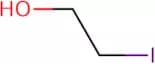
CAS:<p>2-Iodoethanol is a chemical compound that has the chemical formula CH2CHIO2. It is used as a reagent in analytical chemistry, as well as in pharmaceutical preparations and polymerase chain reactions. The hydroxyl group on the ethoxy side of this molecule is important for its reactivity, with 2-iodoethanol having an electron affinity of 5.4 eV. This reactivity can also be seen when it is reacted with sodium carbonate to form sodium ethoxide, which has been shown to have anti-hyperproliferative properties. 2-Iodoethanol has been shown to be particularly effective against plant metabolites, such as 5-membered heteroaryl compounds.</p>Formula:C2H5IOPurity:Min. 98.5 Area-%Color and Shape:PowderMolecular weight:171.96 g/mol(R)-5-Methoxy-2,3-dihydro-1H-inden-1-amine hydrochloride
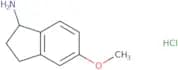
CAS:Controlled Product<p>Versatile small molecule scaffold</p>Formula:C10H14ClNOPurity:Min. 95%Color and Shape:PowderMolecular weight:199.68 g/mol9-Ethylguanine
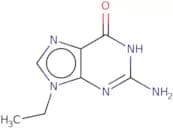
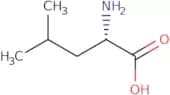
CAS:<p>9-Ethylguanine is a protonated guanine derivative that has significant cytotoxicity. It is an analog of the natural nucleobase guanosine and is structurally similar to the group P2 purine base, hypoxanthine. 9-Ethylguanine specifically binds with nitrogen atoms in DNA, forming hydrogen bonds with adjacent bases. The compound has low potency and therefore must be administered at high doses for it to be effective. 9-Ethylguanine has been shown to have anticancer activity against cervical cancer cells in cell cultures, but no biological studies have been conducted on other cancer types.</p>Formula:C7H9N5OPurity:Min. 95%Color and Shape:PowderMolecular weight:179.18 g/molL-Leucine, USP
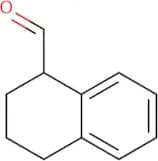
CAS:<p>Amino acid</p>Formula:C6H13NO2Purity:98.5 To 101.5%Color and Shape:White PowderMolecular weight:131.17 g/mol1,2,3,4-Tetrahydronaphthalene-1-carbaldehyde
CAS:<p>1,2,3,4-Tetrahydronaphthalene-1-carbaldehyde is an organic compound that contains a nitrogen atom. It is used to treat autoimmune diseases and eye disorders. The compound has been shown to inhibit the production of glutamate in the retina of rats with experimental autoimmune encephalomyelitis (EAE), which may be due to its ability to suppress the activation of microglia cells and the release of proinflammatory cytokines. Tetrahydronaphthalene-1-carbaldehyde also inhibits cancer cell growth by binding to estrogen receptors and regulating gene expression. This drug also has anti-inflammatory effects by inhibiting cyclooxygenase 2 and lipoxygenase, as well as being a control agent for chronic kidney disease.</p>Formula:C11H12OPurity:Min. 95%Color and Shape:Clear LiquidMolecular weight:160.22 g/mol

![2-{1-[(Pyridin-3-yl)methyl]piperidin-2-yl}ethan-1-ol](/_next/image/?url=https%3A%2Fstatic.cymitquimica.com%2Fproducts%2F3D%2Fthumb-webp%2FZZB80618.webp&w=3840&q=75)
![9-Azabicyclo[3.3.1]nonane N-oxyl](/_next/image/?url=https%3A%2Fstatic.cymitquimica.com%2Fproducts%2F3D%2Fthumb-webp%2FFA59534.webp&w=3840&q=75)

![4-[(1E)-Prop-1-en-1-yl]phenol](/_next/image/?url=https%3A%2Fstatic.cymitquimica.com%2Fproducts%2F3D%2Fthumb-webp%2FVAA64939.webp&w=3840&q=75)
![4-[(1E)-3-Hydroxyprop-1-en-1-yl]phenol](/_next/image/?url=https%3A%2Fstatic.cymitquimica.com%2Fproducts%2F3D%2Fthumb-webp%2FVAA64940.webp&w=3840&q=75)
![7H-Imidazo[4,5-d]pyrimidine](/_next/image/?url=https%3A%2Fstatic.cymitquimica.com%2Fproducts%2F3D%2Fthumb-webp%2FFI34476.webp&w=3840&q=75)
![6-Formyl-2-methyl-4H-thieno[3,2-b]pyrrole-5-carboxylic acid](/_next/image/?url=https%3A%2Fstatic.cymitquimica.com%2Fproducts%2F3D%2Fthumb-webp%2FSIB11266.webp&w=3840&q=75)