Building Blocks
This section contains fundamental products for the synthesis of organic and biological compounds. Building blocks are the essential starting materials used to construct complex molecules through various chemical reactions. They play a critical role in drug discovery, material science, and chemical research. At CymitQuimica, we offer a diverse range of high-quality building blocks to support your innovative research and industrial projects, ensuring you have the essential components for successful synthesis.
Subcategories of "Building Blocks"
- Boronic Acids & Boronic Acid Derivatives(5,756 products)
- Chiral Building Blocks(1,242 products)
- Hydrocarbon Building Blocks(6,095 products)
- Organic Building Blocks(61,038 products)
Found 196817 products of "Building Blocks"
Sort by
Purity (%)
0
100
|
0
|
50
|
90
|
95
|
100
2-[2-(Morpholin-4-yl)ethoxy]ethan-1-amine
CAS:<p>2-[2-(Morpholin-4-yl)ethoxy]ethan-1-amine is a research chemical that is used as a reagent, reaction component, or building block in the synthesis of more complex compounds. It can be used to synthesize fine chemicals such as pharmaceuticals and agrochemicals.</p>Formula:C8H18N2O2Purity:Min. 95%Color and Shape:Clear LiquidMolecular weight:174.24 g/mol4-Methyl-2,3-dihydro-1H-inden-1-amine hydrochloride
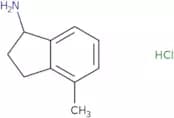
CAS:Controlled Product<p>Versatile small molecule scaffold</p>Formula:C10H13N•HClPurity:Min. 95%Molecular weight:183.68 g/molIndole-4-carboxylic acid methyl ester
CAS:<p>Indole-4-carboxylic acid methyl ester is a fine chemical that is used as a building block in the synthesis of complex compounds. It can be used as a reagent, speciality chemical, or intermediate, and it has versatile applications in the synthesis of pharmaceuticals and dyes. Indole-4-carboxylic acid methyl ester has been shown to react with alcohols to form ketones, which are useful scaffolds for organic chemistry. It can also be used as a reaction component for the synthesis of other compounds.</p>Formula:C10H9NO2Molecular weight:175.19 g/molRef: 3D-I-2510
1kgTo inquire50gTo inquire100gTo inquire250gTo inquire500gTo inquire-Unit-ggTo inquireIndole-4-carboxaldehyde
CAS:<p>Please enquire for more information about Indole-4-carboxaldehyde including the price, delivery time and more detailed product information at the technical inquiry form on this page</p>Formula:C9H7NOMolecular weight:145.16 g/molIndole-3-carboxaldehyde
CAS:<p>Indole-3-carboxaldehyde is a versatile building block that can be used as an intermediate in the production of complex compounds. It is also a research chemical and reagent for speciality chemicals. Indole-3-carboxaldehyde has been shown to react with other chemicals to form high quality, useful intermediates or reaction components. This compound can also be used as a scaffold for chemical synthesis.</p>Formula:C9H7NOMolecular weight:145.16 g/molRef: 3D-I-2200
1kgTo inquire100gTo inquire250gTo inquire500gTo inquire2500gTo inquire-Unit-kgkgTo inquireIndole-3-carbinol
CAS:<p>Indole-3-carbinol is a fine chemical that has been used for research purposes as a reagent and speciality chemical. Indole-3-carbinol is also a versatile building block and reaction intermediate in organic synthesis, which has been used for the synthesis of many complex compounds. Indole-3-carbinol is also an important precursor to pharmaceuticals, including antiestrogens and anti-angiogenesis agents. Indole-3-carbinol has been shown to have antiinflammatory effects, which may be due to its ability to inhibit prostaglandin synthesis.</p>Formula:C9H9NOPurity:Min. 99 Area-%Molecular weight:147.18 g/molRef: 3D-I-2100
1kgTo inquire50gTo inquire100gTo inquire250gTo inquire500gTo inquire-Unit-ggTo inquireIndole-3-butyric acid
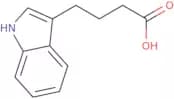
CAS:Indole-3-butyric acid is a chemical compound that has a wide range of applications. It is used in the synthesis of many organic compounds and can be used as a reagent or speciality chemical. Indole-3-butyric acid is also used as an intermediate in the synthesis of other compounds, such as indoles, indanones, and benzofuranones. The high quality of this compound makes it a useful scaffold for constructing complex molecules.Formula:C12H13NO2Molecular weight:203.24 g/molRef: 3D-I-2005
1kgTo inquire5kgTo inquire100gTo inquire10kgTo inquire2500gTo inquire-Unit-kgkgTo inquireIndole-3-acetyl-DL-tryptophan
CAS:<p>Indole-3-acetyl-DL-tryptophan is a useful intermediate for the synthesis of various biologically active compounds. It is a white solid that can be synthesized from indole and tryptophan using acetic acid as a catalyst. Indole-3-acetyl-DL-tryptophan has been used in the synthesis of several complex compounds, such as β-(N) indolyloxypropanal, which is a fine chemical with potential use in the production of polyurethane foam. This compound has also been found to be an effective building block for the synthesis of novel scaffolds, such as 2-(1H-indol-2-yl)-N-(2H-[1,2,4]triazol-3-yl)ethanamine. Indole 3 acetyl DL tryptophan has also been shown to be an excellent intermediate in the synthesis of other heterocycles, such as pyrazolo</p>Formula:C21H19N3O3Molecular weight:361.4 g/molRef: 3D-I-1700
1gTo inquire5gTo inquire10gTo inquire500mgTo inquire2500mgTo inquire-Unit-ggTo inquireIndole-3-acetic acid
CAS:<p>Plant growth hormone. Regulates cell membrane electron transport and proton flux, plays important roles in a number of plant activities, including: development of the embryo, leafformation, phototropism, gravitropism, apical dominance, fruit development, abscission, root initiation.</p>Formula:C10H9NO2Purity:Min. 99 Area-%Molecular weight:175.19 g/mol3,5-Diiodophenol
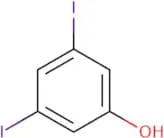
CAS:<p>Versatile small molecule scaffold</p>Formula:C6H4I2OPurity:Min. 95%Molecular weight:345.9 g/molN-Fmoc-4-ethynyl-L-phenylalanine
CAS:<p>Versatile small molecule scaffold</p>Formula:C26H21NO4Purity:Min. 95%Color and Shape:PowderMolecular weight:411.45 g/molD-Cysteine
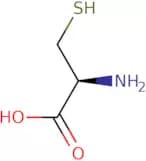
CAS:<p>D-Cysteine is the L-cysteine stereoisomer. It has been shown to inhibit the response of nicotinic acetylcholine receptors and toll-like receptor 4, which are proteins that play a role in inflammation. D-Cysteine also inhibits the production of nitric oxide by inhibiting NADPH oxidase. This inhibition leads to decreased inflammation, as well as decreased oxidation of proteins and DNA. D-Cysteine has been shown to be a specific inhibitor of wild type strains of Escherichia coli, but not mutant strains with defects in iron homeostasis. The enzyme activity for d-cysteine is also inhibited by l-cysteine, which may result in drug interactions. D-Cysteine can be found naturally in foods such as garlic, onions, broccoli, and cauliflower.</p>Formula:C3H7NO2SColor and Shape:White PowderMolecular weight:121.16 g/mol5-Chloroindole-3-acetic acid
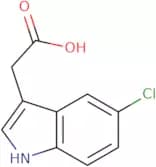
CAS:<p>5-Chloroindole-3-acetic acid (5CI3A) is a compound that belongs to the indole class of compounds. It is structurally similar to the amino acid tryptophan, which makes it a good template molecule for the synthesis of other indoles. 5CI3A is mainly found in plants and bacteria, where it acts as an auxin. In plants, 5CI3A stimulates cell elongation and leaf growth by interacting with plant hormones such as auxins and gibberellins. This compound also binds to serum albumin, which may be responsible for its low toxicity in humans. 5CI3A has been shown to inhibit the activity of human serum albumin by forming hydrogen bonds with it. This inhibition reduces the binding affinity of 5CI3A for other proteins in serum, making it less likely to interact with them than if there were no binding competition.</p>Formula:C10H8ClNO2Color and Shape:PowderMolecular weight:209.63 g/mol2-Carboxy-3,4-dimethoxybenzaldehyde
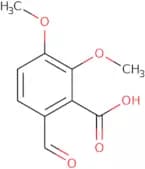
CAS:<p>2-Carboxy-3,4-dimethoxybenzaldehyde is a chemical that belongs to the class of compounds known as butyric acid derivatives. It is a colorless liquid with a pungent odor and can be used in pharmaceutical preparations as an antispasmodic or a sedative. 2-Carboxy-3,4-dimethoxybenzaldehyde has been shown to have radical scavenging activities in tissue culture systems and dry weight reaction products in the presence of hydrochloric acid and chloride ion. This compound can also act as an acid complexing agent for hydrogen chloride and depressant activity on animal behavior.</p>Formula:C10H10O5Purity:Min. 95%Color and Shape:White Yellow PowderMolecular weight:210.18 g/mol1,4-Cyclohexanedione monoethlylene acetal
CAS:<p>1,4-Cyclohexanedione monoethlylene acetal is a hydrochloric acid analog of pyrazole. It has been shown to bind selectively to serotonin receptors in the central nervous system and is used as an anti-inflammatory drug. 1,4-Cyclohexanedione monoethlylene acetal has a stereoselective profile that can be used for the treatment of inflammatory diseases. It has also been shown to have immunosuppressant properties, which may be due to its ability to inhibit T-cell proliferation and cytokine production.</p>Formula:C8H12O3Purity:Min. 95%Color and Shape:White PowderMolecular weight:156.18 g/mol6-FAM azide
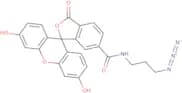
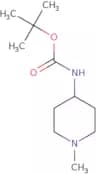
CAS:<p>6-Fluorescein Azide or 6-FAM azide finds application in biomolecules labelling. 6-FAM azide reacts with a terminal alkyne or cyclooctene derivative with a fast click reaction, forming a stable adduct.</p>Formula:C24H18N4O6Purity:Min. 95%Color and Shape:PowderMolecular weight:458.43 g/moltert-Butyl N-(1-methylpiperidin-4-yl)carbamate
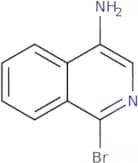
CAS:<p>Versatile small molecule scaffold</p>Formula:C11H22N2O2Purity:Min. 95%Color and Shape:PowderMolecular weight:214.3 g/mol1-Bromoisoquinolin-4-amine
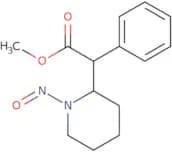
CAS:<p>Versatile small molecule scaffold</p>Formula:C9H7BrN2Purity:Min. 95%Color and Shape:PowderMolecular weight:223.07 g/molNitrosophenidylate
CAS:<p>Versatile small molecule scaffold</p>Formula:C14H18N2O3Purity:95%MinColor and Shape:PowderMolecular weight:262.3 g/mol3-Methyl-5-(trifluoromethyl)isoxazole-4-carboxylic acid
CAS:<p>Versatile small molecule scaffold</p>Formula:C6H4F3NO3Purity:Min. 95%Molecular weight:195.1 g/mol
![2-[2-(Morpholin-4-yl)ethoxy]ethan-1-amine](/_next/image/?url=https%3A%2Fstatic.cymitquimica.com%2Fproducts%2F3D%2Fthumb-webp%2FVAA20713.webp&w=3840&q=75)