Building Blocks
This section contains fundamental products for the synthesis of organic and biological compounds. Building blocks are the essential starting materials used to construct complex molecules through various chemical reactions. They play a critical role in drug discovery, material science, and chemical research. At CymitQuimica, we offer a diverse range of high-quality building blocks to support your innovative research and industrial projects, ensuring you have the essential components for successful synthesis.
Subcategories of "Building Blocks"
- Boronic Acids & Boronic Acid Derivatives(5,756 products)
- Chiral Building Blocks(1,242 products)
- Hydrocarbon Building Blocks(6,095 products)
- Organic Building Blocks(61,038 products)
Found 196817 products of "Building Blocks"
Sort by
Purity (%)
0
100
|
0
|
50
|
90
|
95
|
100
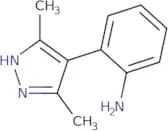
2-(3,5-Dimethyl-1H-pyrazol-4-yl)aniline
CAS:<p>Versatile small molecule scaffold</p>Formula:C11H13N3Purity:Min. 95%Color and Shape:PowderMolecular weight:187.24 g/mol4-Nitrobenzophenone
CAS:<p>4-Nitrobenzophenone is an aromatic organic compound that is synthesized by the nitration of benzophenone. The coordination complex formed with p. aeruginosa was found to be acidic and readily hydrolyzed in water. This compound has been used in the synthesis of cinnamic acid derivatives, which are intermediates for azo dyes and pharmaceuticals. 4-Nitrobenzophenone can also undergo acylation reactions to form esters or amides with alcohols or carboxylic acids. It is also a precursor to the drug metronidazole, which is used to treat bacterial infections. Acute toxicity studies have shown that this compound has low acute toxicities and causes no irritation on skin contact. 4-Nitrobenzophenone reacts with hydrogen fluoride to form hydrogen chloride and x-ray crystal structures have shown that it forms tetrahedral complexes with chlorine, fluorine, and bromine at low temperatures (0</p>Formula:C13H9NO3Purity:Min. 95%Color and Shape:PowderMolecular weight:227.22 g/mol4-Nitrobenzylamine hydrochloride
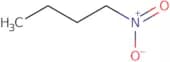
CAS:<p>4-Nitrobenzylamine hydrochloride is a bifunctional immobilizing agent that can be used for the immobilization of Zn2+. It reacts with nitrogen atoms, forming an amination reaction. The linker is covalently immobilized to the surface and the nature of this chemical is synthetic. 4-Nitrobenzylamine hydrochloride is synthesized by reacting nitric acid with benzaldehyde in ammonia solution at room temperature. This chemical has shown to be effective in reactions where a flow rate is needed or when diamidines are present in the reaction mixture.</p>Formula:C7H8N2O2·HClPurity:Min. 95%Color and Shape:PowderMolecular weight:188.61 g/mol1-Nitrobutane
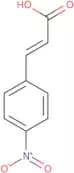
CAS:<p>1-Nitrobutane is an organic compound with the chemical formula CH3NO2. It is a colorless liquid that is soluble in water and insoluble in ether. 1-Nitrobutane can react with hydroxyl groups to form nitroalkanes and it has been used as a reaction product for kinetic measurements of hydroxyl group concentration. The reaction mechanism of 1-nitrobutane is not completely known, but it has been proposed that the hydroxyl group reacts with the nitro group by nucleophilic substitution. 1-Nitrobutane can be used as a reagent for chromatography because it absorbs ultraviolet radiation and emits photoelectrons, which can be detected by covid-19 detectors. 1-Nitrobutane also has been shown to have antiviral properties against pandemic influenza A virus (H1N1) in cultured cells and rat liver microsomes.</p>Formula:C4H9NO2Purity:Min. 95%Color and Shape:PowderMolecular weight:103.12 g/moltrans-4-Nitrocinnamic acid
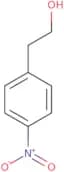
CAS:<p>Trans-4-nitrocinnamic acid is an organic compound that is synthesized from 4-hydroxycinnamic acid by nitration with aqueous or alcoholic nitric acid. Trans-4-Nitrocinnamic acid has been shown to inhibit tyrosinase activity in the presence of metal hydroxides, such as copper, zinc, and iron. The reaction mechanism is unclear but may involve an initial protonation of the phenolic group followed by an electron transfer to the nitro group. This reaction results in an irreversible inhibition of tyrosinase activity. Trans-4-Nitrocinnamic acid also reacts with hydrochloric acid to produce a carboxylate salt that can be used for sample preparation.</p>Formula:C9H7NO4Purity:Min. 95%Color and Shape:PowderMolecular weight:193.16 g/mol4-Nitrobenzeneethanol
CAS:<p>4-Nitrobenzeneethanol is a primary amine that is synthesized from the amino acid L-glutamic acid and the alcohol 4-nitrobenzyl alcohol. It is activated by reaction with sodium hydroxide solution, which releases hydrogen ions. The conjugates of this compound are isomers. 4-Nitrobenzeneethanol can be used to synthesize compounds that have different functional groups, such as monoclonal antibodies for the treatment of parasitic diseases.</p>Formula:C8H9NO3Purity:Min. 95%Color and Shape:PowderMolecular weight:167.16 g/mol1-Hydroxyisoquinoline
CAS:<p>1-Hydroxyisoquinoline is a molecule with a carbonyl group and is found in heart tissue. It has been proposed as a treatment for herpes simplex virus, but no studies have been done to confirm this. 1-Hydroxyisoquinoline can be prepared by reacting hydrochloric acid with sodium salts. This molecule also has the ability to inhibit cancer cells and may have potential as an anticancer agent. It also has anti-inflammatory properties, which may be due to its inhibition of prostaglandin synthesis. The mechanism of action for 1-hydroxyisoquinoline is not yet fully understood, but it inhibits the replication of DNA and RNA in cancer cells.</p>Formula:C9H7NOPurity:Min. 98 Area-%Color and Shape:White PowderMolecular weight:145.16 g/mol2-Hydroxy-6-methoxybenzaldehyde
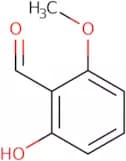
CAS:<p>2-Hydroxy-6-methoxybenzaldehyde is a molecule that can form hydrogen bonds with other molecules. FT-IR spectroscopy has shown that this compound has a copper complex and an acidic proton, which may be due to intramolecular hydrogen bonding interactions. The compound also has been shown to have potent inhibitory activity against cellular growth and cancer cells in vitro. 2-Hydroxy-6-methoxybenzaldehyde is a metal chelator and can therefore bind to metals such as iron and copper. It is genotoxic, which means it damages DNA by causing DNA strand breaks or crosslinks, leading to cell death. This chemical may also cause genetic mutations through the formation of tautomers that make DNA replication difficult. Gel chromatography shows that 2HMB has a low molecular weight (MW) and high solubility.</p>Formula:C8H8O3Purity:Min. 95%Color and Shape:PowderMolecular weight:152.15 g/molp-Naphtholbenzein
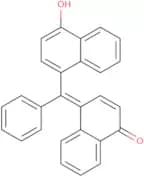
CAS:<p>p-Naphtholbenzein is a fluorescent dye that is used in the diagnosis of human pathogens. It can be used to detect the presence of fatty acids, which are found on the surface of bacteria and in the cell wall. p-Naphtholbenzein elutes from an agar plate at pH 6.0 and can be detected using a spectrophotometer. The fluorescence of p-naphtholbenzein is absorbed by fatty acids, which emit light when excited by ultraviolet light. This makes it useful for detecting fatty acid content in cells, organisms, and surfaces. It is also used as an excipient in subclinical mastitis treatments to help reduce inflammation and improve milk production. In biodiesel reactions, p-naphtholbenzein acts as an optimal reaction catalyst because it stabilizes hydroxybenzoic acid (HBA) with benzalkonium chloride (BZK).</p>Formula:C27H18O2Color and Shape:PowderMolecular weight:374.43 g/mol4-Hydroxy-3,5-dimethylbenzoic acid
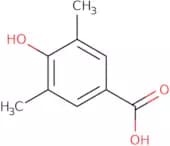
CAS:<p>4-Hydroxy-3,5-dimethylbenzoic acid (4HDMBA) is an antimicrobial agent that inhibits bacterial cell growth by binding to the GyrA subunit of DNA gyrase. It is a potent inhibitor of the GyrA subunit, with activity against both mutant and wild type strains. 4HDMBA also has anticancer activity in vitro and in vivo studies have shown that it can inhibit the growth of cells from human cancer cell lines. 4HDMBA is synthesized by reacting amide with chloroacetyl chloride. The carboxylate group on 4HDMBA can be transformed into a hydroxyl group by reaction with sodium hydroxide. The chemical structure of 4HDMBA includes a hydroxy group, a chlorine atom, and a hydroxyl group.</p>Formula:C9H10O3Purity:Min. 95%Color and Shape:PowderMolecular weight:166.17 g/moltert-Butyl 3-(piperidin-4-yl)azetidine-1-carboxylate
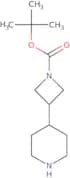
CAS:<p>tert-Butyl 3-(piperidin-4-yl)azetidine-1-carboxylate is a fine chemical that is used as a reagent, research chemical, or speciality chemical. It has been shown to be a versatile building block and useful scaffold for the synthesis of complex compounds. This compound has been shown to undergo a number of reactions, including cyclization and Michael addition.</p>Formula:C13H24N2O2Purity:Min. 95%Molecular weight:240.34 g/mol4-Octylbenzenesulfonic acid sodium salt
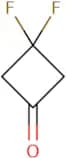
CAS:<p>4-Octylbenzenesulfonic acid sodium salt is a versatile building block that is used in the synthesis of pharmaceuticals, agrochemicals, and specialty chemicals. The compound is soluble in water and can be used as an intermediate in organic synthesis. 4-Octylbenzenesulfonic acid sodium salt has been used as a reagent for research purposes and as a starting material for the synthesis of other compounds. It is also used as a building block for complex molecules. CAS No. 6149-03-7</p>Formula:C14H21NaO3SPurity:Min. 97 Area-%Color and Shape:PowderMolecular weight:292.37 g/mol3,3-Difluorocyclobutanone
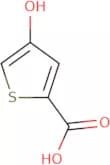
CAS:<p>Versatile small molecule scaffold</p>Formula:C4H4F2OPurity:Min. 95%Color and Shape:Clear LiquidMolecular weight:106.07 g/mol4-Hydroxy-2-thiophenecarboxylic acid
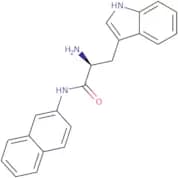
CAS:<p>4-Hydroxy-2-thiophenecarboxylic acid is a chemical intermediate that can be used in the production of various other chemicals. The compound is a versatile building block for complex compounds and fine chemicals. CAS No. 40748-90-1.</p>Formula:C5H4O3SPurity:Min. 95%Color and Shape:PowderMolecular weight:144.15 g/molL-Tryptophan β-naphthylamide
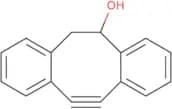
CAS:<p>L-Tryptophan beta-naphthylamide is a fine chemical that is useful for research purposes. It can be used as a versatile building block in the synthesis of other chemicals and can also be used as a reaction component. L-Tryptophan beta-naphthylamide has been used to synthesize complex compounds such as 5,6-dihydroindolizine, which has been shown to have anti-inflammatory properties. This compound can also be used as a reagent in organic synthesis.</p>Formula:C21H19N3OPurity:Min. 95%Color and Shape:PowderMolecular weight:329.4 g/mol4-dibenzocyclooctynol
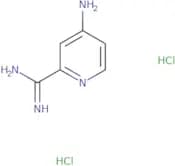
CAS:<p>4-Dibenzocyclooctynol (4DC) is a synthetic compound that has been shown to be an efficient crosslinker for proteins. It is a ring-opening polymerization agent that reacts with amines and thiols, which are chemical groups found on the side chains of amino acids in proteins. 4DC has been used for the histological analysis of cells, and it has also been used as a pharmacological treatment for Parkinson's disease. 4DC can bind to dopamine receptors, stabilizing them and preventing the degeneration of neurons in the brain. This drug also has potential applications in medical research as a tool for studying glycoconjugates and molecular modeling.</p>Formula:C16H12OPurity:Min. 95%Color and Shape:PowderMolecular weight:220.27 g/mol4-Aminopyridine-2-carboximidamide dihydrochloride
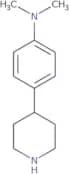
CAS:<p>Versatile small molecule scaffold</p>Formula:C6H10Cl2N4Purity:Min. 95%Color and Shape:PowderMolecular weight:209.07 g/molN,N-Dimethyl-4-(piperidin-4-yl)aniline
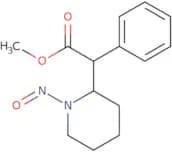
CAS:<p>Versatile small molecule scaffold</p>Formula:C13H20N2Purity:90%MinColor and Shape:PowderMolecular weight:204.31 g/molNitrosophenidylate
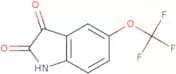
CAS:<p>Versatile small molecule scaffold</p>Formula:C14H18N2O3Purity:95%MinColor and Shape:PowderMolecular weight:262.3 g/mol5-(Trifluoromethoxy)-1H-indole-2,3-dione
CAS:<p>5-(Trifluoromethoxy)-1H-indole-2,3-dione is a potent anticancer agent that inhibits the growth of cancer cells by inducing apoptosis. It binds to DNA, forming hydrogen bonds with guanine and adenine residues. This binding prevents the formation of hydrogen bonds between DNA bases, which are essential for maintaining the stability of DNA. The disruption of these bonds leads to chromosomal degradation and eventually cell death. 5-(Trifluoromethoxy)-1H-indole-2,3-dione has shown antifungal activity against Cryptococcus neoformans in vitro and in vivo. This drug also has an allosteric modulator effect on HL60 cells.</p>Formula:C9H4F3NO3Purity:Min. 95%Color and Shape:Red PowderMolecular weight:231.13 g/mol