Building Blocks
This section contains fundamental products for the synthesis of organic and biological compounds. Building blocks are the essential starting materials used to construct complex molecules through various chemical reactions. They play a critical role in drug discovery, material science, and chemical research. At CymitQuimica, we offer a diverse range of high-quality building blocks to support your innovative research and industrial projects, ensuring you have the essential components for successful synthesis.
Subcategories of "Building Blocks"
- Boronic Acids & Boronic Acid Derivatives(5,756 products)
- Chiral Building Blocks(1,242 products)
- Hydrocarbon Building Blocks(6,095 products)
- Organic Building Blocks(61,038 products)
Found 196817 products of "Building Blocks"
Sort by
Purity (%)
0
100
|
0
|
50
|
90
|
95
|
100
tert-Butyl 7-oxo-2-azaspiro[4.4]nonane-2-carboxylate
CAS:<p>Versatile small molecule scaffold</p>Formula:C13H21NO3Purity:Min. 95%Molecular weight:239.31 g/mol4,5-Dichloro-3-thiophenecarboxylic acid
CAS:<p>4,5-Dichloro-3-thiophenecarboxylic acid (4,5-DTTC) is an organic compound that is a useful building block and can be used as a reactive intermediate in the synthesis of other chemicals. 4,5-DTTC has been shown to react with alkenes at room temperature to produce a variety of thioethers. This reaction was facilitated by the use of copper(II) chloride as a catalyst. 4,5-DTTC has also been shown to be a good starting material for synthesizing pharmaceuticals such as antihistamines and antibiotics.</p>Formula:C5H2Cl2O2SPurity:Min. 95%Color and Shape:PowderMolecular weight:197.04 g/mol6-Formyl-2-methyl-4H-thieno[3,2-b]pyrrole-5-carboxylic acid
CAS:<p>Versatile small molecule scaffold</p>Formula:C9H7NO3SPurity:Min. 95%Molecular weight:209.22 g/mol2-{[(9H-Fluoren-9-yl)methoxy]carbonyl}-1,2,3,4-tetrahydroisoquinoline-6-carboxylic acid
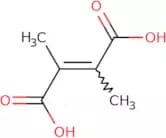
CAS:<p>2-{[(9H-Fluoren-9-yl)methoxy]carbonyl}-1,2,3,4-tetrahydroisoquinoline-6-carboxylic acid is a high quality reagent. It is a useful intermediate for the synthesis of various complex compounds. This compound is also a useful scaffold and building block for research chemicals. 2-{[(9H-Fluoren-9-yl)methoxy]carbonyl}-1,2,3,4-tetrahydroisoquinoline-6-carboxylic acid is versatile in that it can be used as a reaction component in different reactions.</p>Formula:C25H21NO4Purity:Min. 95%Color and Shape:PowderMolecular weight:399.4 g/mol(2E)-Dimethylbut-2-enedioic acid
CAS:<p>Dimethylbutanedioic acid is a fatty acid that is found in the human body. Dimethylbutanedioic acid has been shown to have immunomodulatory effects, which are mediated by its ability to inhibit the synthesis of proinflammatory cytokines, such as tumor necrosis factor-α and interleukin-6. Dimethylbutanedioic acid is a potent inhibitor of the proliferation of various types of cells, including hyperproliferative cells. It has been shown to inhibit the diameter of these cells and reduce their number. This agent also inhibits allergic reactions and inorganic particles from reaching the lungs.</p>Formula:C6H8O4Purity:Min. 95%Molecular weight:144.12 g/mol3-Iodo-[1,2,3]triazolo[1,5-α]pyridine
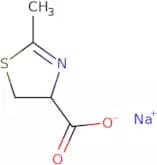
CAS:<p>3-Iodo-[1,2,3]triazolo[1,5-α]pyridine is a fine chemical that is used as a versatile building block in the synthesis of complex compounds. It has been shown to be an intermediate for research chemicals and as a reaction component in reactions with other chemicals. 3-Iodo-[1,2,3]triazolo[1,5-α]pyridine is also a useful scaffold for the production of drugs. The compound can be synthesized from readily available starting materials and has the advantage of being easily purified. 3-Iodo-[1,2,3]triazolo[1,5-α]pyridine has CAS No. 916756-21-3 and a molecular weight of 219.27 g/mol.</p>Formula:C6H4IN3Purity:Min. 95%Color and Shape:PowderMolecular weight:245.02 g/molSodium 2-methyl-4,5-dihydro-1,3-thiazole-4-carboxylate
CAS:<p>Versatile small molecule scaffold</p>Formula:C5H6NNaO2SPurity:Min. 95%Color and Shape:PowderMolecular weight:167.16 g/molCis-2-Benzyltetrahydropyrrolo[3,4-C]Pyrrole-1,3(2H,3Ah)-Dione
CAS:<p>Cis-2-Benzyltetrahydropyrrolo[3,4-C]Pyrrole-1,3(2H,3Ah)-Dione is a compound that is used as a chemical intermediate in the research and development of new medicines. It has been shown to be an effective building block for the synthesis of complex compounds with interesting biological activity.</p>Formula:C13H14N2O2Purity:Min. 95%Color and Shape:PowderMolecular weight:230.26 g/mol5-Chloro-indan-2-ylamine hydrochloride
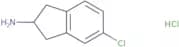
CAS:Controlled Product<p>5-Chloro-indan-2-ylamine hydrochloride is a chemical that can be used as a building block in the synthesis of other chemicals. It is a reagent and useful scaffold in organic synthesis reactions, such as Friedel-Crafts reactions, and can be used to produce indenes. 5-Chloro-indan-2-ylamine hydrochloride is also an intermediate for the production of complex compounds, fine chemicals, and pharmaceuticals. The CAS number for this chemical is 73536-86-4.</p>Formula:C9H10NCl·HClPurity:Min. 95%Color and Shape:PowderMolecular weight:204.09 g/mol4-Chloro-3,5-dimethylbenzoic acid
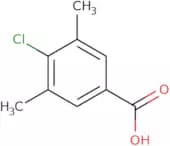
CAS:<p>4-Chloro-3,5-dimethylbenzoic acid (4CMB) is a building block in organic chemistry. It can be used as a reagent, speciality chemical, and research chemical. 4CMB is used to make an intermediate for the synthesis of other chemicals and it can also be used as a reaction component in more complex reactions. CAS No. 90649-78-8</p>Formula:C9H9ClO2Purity:Min. 95%Color and Shape:PowderMolecular weight:184.62 g/mol3-Hydroxyheptanoic acid
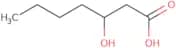
CAS:<p>3-Hydroxyheptanoic acid is a synthetic fatty acid that has been shown to have anti-cancer activity in vitro and in vivo. 3-Hydroxyheptanoic acid binds to the hydrophobic amino acids found in the membrane of cancer cells, preventing them from functioning as a transporter for nutrients and oxygen. This leads to cell death by depriving cells of vital nutrients. 3-Hydroxyheptanoic acid also inhibits the growth of mutant cells that have lost their ability to repair DNA damage, which may be due to its inhibition of protein synthesis. The hydrophobic nature of this molecule may also inhibit cancer cell invasion by inhibiting fatty acid synthase and other enzymes involved in lipid production.</p>Formula:C7H14O3Purity:Min. 95%Color and Shape:PowderMolecular weight:146.18 g/mol2-(Aminomethyl)-N-(2-methoxyethyl)aniline
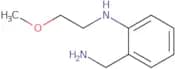
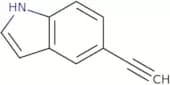
CAS:<p>Versatile small molecule scaffold</p>Formula:C10H16N2OPurity:Min. 90%Color and Shape:Clear LiquidMolecular weight:180.25 g/mol5-Ethynyl-1H-indole
CAS:<p>5-Ethynyl-1H-indole is a synthetic compound that has been shown to inhibit the enzyme p450, which is involved in the metabolism of dopamine. Dopamine is a neurotransmitter and hormone that regulates many functions including movement, emotional response, motivation, and sexual desire. It also plays an important role in the development of Parkinson's disease. 5-Ethynyl-1H-indole has also been shown to bind to nicotinic acetylcholine receptors (nAChR) at α7 nicotinic acetylcholine receptors. 5-Ethynyl-1H-indole is being studied as a potential cancer drug due to its antitumour activity. The anti-cancer effect may be related to its ability to inhibit enzymatic reactions involving acetylcholine or its ability to block acetylcholine from binding with its receptor on muscle cells.</p>Formula:C10H7NPurity:Min. 95%Molecular weight:141.17 g/mol1-(Bicyclo[2.2.2]octan-2-yl)ethanone
CAS:<p>Versatile small molecule scaffold</p>Formula:C10H16OPurity:Min. 95%Color and Shape:PowderMolecular weight:152.23 g/mol(Aminomethyl)dimethylphenylsilane
CAS:<p>Aminomethyl)dimethylphenylsilane is a polarizer that has shown growth inhibitory activity against pancreatic carcinoma cells. It has also been found to have pharmacological properties, including anti-cancer and anti-inflammatory effects. Aminomethyl)dimethylphenylsilane is non-selective and non-steroidal, meaning it can inhibit the synthesis of prostaglandins and other eicosanoids. This drug has been shown to be toxic in humans, with side effects such as cardiovascular disorders, alzheimer 's disease, and cancer cell growth.</p>Formula:C9H15NSiPurity:Min. 95%Molecular weight:165.31 g/mol(2S,5R)-5-Methyl-2-prop-1-en-2-ylcyclohexan-1-one
CAS:<p>(2S,5R)-5-Methyl-2-prop-1-en-2-ylcyclohexan-1-one is a natural product that is structurally similar to the antibiotic piperitone. It has significant antifungal activity and was found to have minimal inhibitory concentration values against bacterial enzymes. The compound has been shown to bind to dinucleotide phosphate and inhibit bacterial enzyme catalysis. This inhibition leads to an accumulation of substrates for the enzyme and a decrease in the production of ATP. (2S,5R)-5-Methyl-2-prop-1-en-2-ylcyclohexanone inhibits the growth of Candida albicans and Cryptococcus neoformans strains but not Trichophyton mentagrophytes. This may be due to its ability to bind with high affinity to rat liver microsomes, but not human microsomes. (2S,5R)-5</p>Formula:C10H16OPurity:Min. 95%Color and Shape:Clear LiquidMolecular weight:152.23 g/mol2-(2-Hydroxyphenyl)-2-oxoacetic acid
CAS:<p>Versatile small molecule scaffold</p>Formula:C8H6O4Purity:Min. 95%Color and Shape:PowderMolecular weight:166.1 g/mol3-[(1H-1,2,3,4-Tetrazol-5-yl)methyl]-1H-indole
CAS:<p>Versatile small molecule scaffold</p>Formula:C10H9N5Purity:Min. 95%Color and Shape:PowderMolecular weight:199.21 g/molEthyl 2-{methyl[(pyridin-2-yl)methyl]amino}acetate
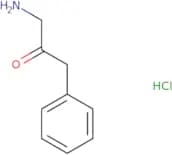
CAS:<p>Versatile small molecule scaffold</p>Formula:C11H16N2O2Purity:Min. 95%Color and Shape:PowderMolecular weight:208.26 g/mol1-Amino-3-phenyl-2-propanone Hydrochloride
CAS:<p>1-Amino-3-phenyl-2-propanone Hydrochloride is a versatile building block that can be used as a reagent and speciality chemical. It can also be used as an intermediate in the synthesis of other compounds and pharmaceuticals. 1-Amino-3-phenyl-2-propanone Hydrochloride is soluble in water, ethanol, ether, chloroform, benzene, and acetone. This product has a CAS No. 41173-00-6 and can be shipped to Canada.</p>Formula:C9H12ClNOPurity:Min. 95%Molecular weight:185.65 g/mol
![tert-Butyl 7-oxo-2-azaspiro[4.4]nonane-2-carboxylate](/_next/image/?url=https%3A%2Fstatic.cymitquimica.com%2Fproducts%2F3D%2Fthumb-webp%2FUCC71642.webp&w=3840&q=75)

![6-Formyl-2-methyl-4H-thieno[3,2-b]pyrrole-5-carboxylic acid](/_next/image/?url=https%3A%2Fstatic.cymitquimica.com%2Fproducts%2F3D%2Fthumb-webp%2FSIB11266.webp&w=3840&q=75)
![2-{[(9H-Fluoren-9-yl)methoxy]carbonyl}-1,2,3,4-tetrahydroisoquinoline-6-carboxylic acid](/_next/image/?url=https%3A%2Fstatic.cymitquimica.com%2Fproducts%2F3D%2Fthumb-webp%2FNKD22621.webp&w=3840&q=75)
![3-Iodo-[1,2,3]triazolo[1,5-α]pyridine](/_next/image/?url=https%3A%2Fstatic.cymitquimica.com%2Fproducts%2F3D%2Fthumb-webp%2FRLB75621.webp&w=3840&q=75)
![Cis-2-Benzyltetrahydropyrrolo[3,4-C]Pyrrole-1,3(2H,3Ah)-Dione](/_next/image/?url=https%3A%2Fstatic.cymitquimica.com%2Fproducts%2F3D%2Fthumb-webp%2FPHA34840.webp&w=3840&q=75)
![1-(Bicyclo[2.2.2]octan-2-yl)ethanone](/_next/image/?url=https%3A%2Fstatic.cymitquimica.com%2Fproducts%2F3D%2Fthumb-webp%2FYAA73546.webp&w=3840&q=75)


![3-[(1H-1,2,3,4-Tetrazol-5-yl)methyl]-1H-indole](/_next/image/?url=https%3A%2Fstatic.cymitquimica.com%2Fproducts%2F3D%2Fthumb-webp%2FQAA99212.webp&w=3840&q=75)
![Ethyl 2-{methyl[(pyridin-2-yl)methyl]amino}acetate](/_next/image/?url=https%3A%2Fstatic.cymitquimica.com%2Fproducts%2F3D%2Fthumb-webp%2FUBB08344.webp&w=3840&q=75)