Building Blocks
This section contains fundamental products for the synthesis of organic and biological compounds. Building blocks are the essential starting materials used to construct complex molecules through various chemical reactions. They play a critical role in drug discovery, material science, and chemical research. At CymitQuimica, we offer a diverse range of high-quality building blocks to support your innovative research and industrial projects, ensuring you have the essential components for successful synthesis.
Subcategories of "Building Blocks"
- Boronic Acids & Boronic Acid Derivatives(5,756 products)
- Chiral Building Blocks(1,242 products)
- Hydrocarbon Building Blocks(6,095 products)
- Organic Building Blocks(61,038 products)
Found 196817 products of "Building Blocks"
Sort by
Purity (%)
0
100
|
0
|
50
|
90
|
95
|
100
2-Fluoroadenine
CAS:<p>2-Fluoroadenine is an inhibitor of DNA synthesis, which is used to study the effect of carcinogens on the cell cycle. It is a potent inducer of G2/M arrest in HL-60 cells, and has been shown to be cytotoxic to a number of different carcinoma cell lines. 2-Fluoroadenine disrupts collagen gel networks by binding to nitrogens in the protein matrix. This inhibits the glycosylation process that stabilizes collagen networks. The use of 2-fluoroadenine as a chemotherapeutic agent has been studied in animal models and clinical trials. 2-Fluoroadenine has been shown to inhibit mitochondrial membrane potential, leading to apoptosis caused by oxidative stress.</p>Formula:C5H4FN5Purity:Min. 98 Area-%Color and Shape:Off-White PowderMolecular weight:153.12 g/molFmoc-Cl
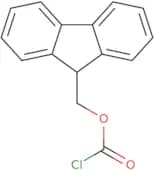
CAS:<p>Fmoc-Cl is a fluorescent derivative that can be used as an analytical method for amino acids in human serum. This reagent is synthesized from chloroformate and derivatization of the amino acid with polymyxin B. Fmoc-Cl reacts with amino acids, producing a fluorescent molecule. The reaction solution can be applied to human serum to determine the concentration of various types of amino acids in the sample. The main matrix effect comes from the presence of human serum proteins, which have been shown to interfere with the measurement of some amino acid concentrations. Fmoc-Cl has also been studied as a potential therapeutic agent for autoimmune diseases, such as multiple sclerosis, lupus erythematosus, and rheumatoid arthritis. It has been shown that Fmoc-Cl inhibits complex enzymes and can reduce levels of certain inflammatory markers in animal models.</p>Formula:C15H11ClO2Purity:Min. 95%Color and Shape:White PowderMolecular weight:258.7 g/mol4-Fluoropyridine HCl
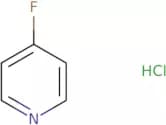
CAS:<p>4-Fluoropyridine HCl is a pyridine that can be used as a stabilizer in organic synthesis. It can react with hydrogen fluoride to give fluorides, which are useful in organic synthesis. 4-Fluoropyridine HCl reacts with anhydrous 4-aminopyridine to give high yields of the salt of 4-aminopyridines, which are aminopyridines that have been substituted by a substituent such as chlorine, bromine, or iodine. This product is also used for the fluorination of benzene and other aromatic substrates.</p>Formula:C5H4FN·HClPurity:Min. 95%Color and Shape:PowderMolecular weight:133.55 g/mol4-Fluoro-3-nitrobenzaldehyde
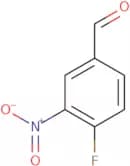
CAS:<p>4-Fluoro-3-nitrobenzaldehyde is a diphenyl ether that has been used as a starting material for the synthesis of dihydroisoquinolines and related compounds. The compound also inhibits IL-10 production in an experiment with human cells, which might be due to its ability to act as a pro-inflammatory cytokine. 4-Fluoro-3-nitrobenzaldehyde can be used as a control experiment for 4-fluoroaniline, which was found to inhibit IL-10 production in an experiment with human cells.<br>4-Fluoro-3-nitrobenzaldehyde is not active against P. aeruginosa, but does have antinociceptive effects and can be considered to have nucleophilic properties.</p>Formula:C7H4FNO3Purity:Min. 95%Color and Shape:PowderMolecular weight:169.11 g/mol5-Fluoroindole-2-carboxylic acid
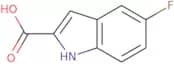
CAS:<p>5-Fluoroindole-2-carboxylic acid is a new substance that has been found to be an inhibitor of the influenza virus. It prevents the virus from replicating by inhibiting the synthesis of viral proteins and nucleic acids. 5-Fluoroindole-2-carboxylic acid can be prepared by dispersive solid phase extraction of a mixture of fluoroindole, fumaric acid, and potassium hydroxide in water. The compound has also been shown to potentiate the effects of carbamazepine on caspases and enhance mass spectrometric analysis for gaseous hydrochloric acid. 5-Fluoroindole-2-carboxylic acid produces antinociceptive effects in animals.</p>Formula:C9H6FNO2Color and Shape:PowderMolecular weight:179.15 g/molFmoc-L-valine N-hydroxysuccinimide ester
CAS:<p>Fmoc-L-valine N-hydroxysuccinimide ester is a pegylated, cytotoxic drug that is used in the treatment of cancer. It is delivered to cells by an organic solvent, which causes uptake into the cell and intracellular delivery. Fmoc-L-valine N-hydroxysuccinimide ester forms particles that are excreted from the body through the kidneys. This drug has been shown to be effective against a number of different types of cancer cells, including breast cancer, lung cancer, and colon cancer cells. Fmoc-L-valine N-hydroxysuccinimide ester has been shown to be cytotoxic in vivo and in vitro against tumor tissue and MFC-7 cells with no effect on normal tissue or healthy cells.<br>Fmoc-L-valine N-hydroxysuccinimide ester can also be used as a</p>Formula:C24H24N2O6Purity:Min. 98 Area-%Color and Shape:White PowderMolecular weight:436.46 g/molFA-Leu-Gly-Pro-Ala-OH
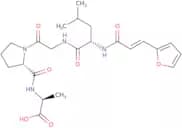
CAS:<p>FA-Leu-Gly-Pro-Ala-OH is a gelatinase inhibitor that inhibits the action of collagenase, an enzyme that breaks down collagen. It has been shown to inhibit the growth of cancer cells in vitro and may be useful as a therapeutic agent against skin cancer. FA-Leu-Gly-Pro-Ala-OH binds to the active site of the enzyme and blocks its catalytic activity by preventing proton transfer during the hydrolysis of peptide bonds. This inhibitor also has proteolytic properties, which are due to its ability to cleave proteins with basic amino acids such as arginine and lysine. The inhibitory effects of FA-Leu-Gly-Pro-Ala-OH on histological analysis were also tested on fibroblast cells with collagenase activity, which showed a significant reduction in enzyme activity after incubation with this inhibitor.</p>Formula:C23H32N4O7Purity:Min. 95%Color and Shape:PowderMolecular weight:476.52 g/moltrans-Ferulic acid
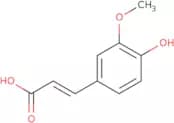
CAS:<p>Hydroxycinnamic acid; inhibitor of 5-LO and 12-LO enzymes</p>Formula:C10H10O4Purity:Min. 99.0 Area-%Color and Shape:White PowderMolecular weight:194.18 g/mol5-Fluoroanthranilic acid
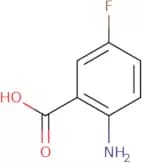
CAS:<p>5-Fluoroanthranilic acid is a synthetic compound that belongs to the class of anthranilic acid derivatives. It inhibits the growth of bacteria by reacting with the hydroxyl group on the bacterial cell wall and binding to its target, which is a cellular component found in Gram-positive bacteria. The molecular modeling and gene analysis have shown that this compound has an optimal reaction at pH 8.5, which is not in accordance with the natural environment of bacteria. 5-Fluoroanthranilic acid has been shown to have anticancer activity against wild-type cells but not against resistant mutants.</p>Formula:C7H6FNO2Purity:Min. 95%Color and Shape:PowderMolecular weight:155.13 g/molβ-Fluoro-DL-alanine
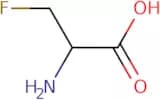
CAS:<p>b-Fluoro-DL-alanine is an amino acid that is synthesized by the asymmetric synthesis of hydrogen fluoride and acetic anhydride. b-Fluoro-DL-alanine has a deuterium isotope effect on the NMR spectra, which can be used to determine the structure of the molecule. It has been found that this amino acid inhibits ribonucleotide reductase activity. The inhibition constant for b-fluoro-DL-alanine is 1.6 mM with a kinetic rate of 0.0012 min−1 M−1, which can be used to compare its inhibitory effect with other chemicals. This chemical also has inhibitory effects on transcriptase polymerase chain and protein synthesis by binding to the A site on RNA polymerase and preventing transcription from occurring.</p>Formula:C3H6FNO2Purity:Min. 95%Color and Shape:PowderMolecular weight:107.08 g/molFurosine dihydrochloride
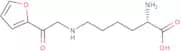
CAS:<p>Reference material for food analysis</p>Formula:C12H18N2O4•2HClPurity:Min. 98 Area-%Color and Shape:PowderMolecular weight:327.20 g/mol4-Formyl-N-methylbenzenesulfonamide
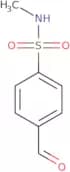
CAS:<p>4-Formyl-N-methylbenzenesulfonamide is a fine chemical that is used as a versatile building block in the synthesis of complex compounds, research chemicals, and reagents. It is highly useful as a reagent or speciality chemical in laboratory experiments involving many different reactions. 4-Formyl-N-methylbenzenesulfonamide has been shown to be an excellent intermediate for the synthesis of high quality products. This product can also be used as a scaffold in complex organic syntheses.</p>Formula:C8H9NO3SPurity:Min. 95%Color and Shape:PowderMolecular weight:199.23 g/mol2,5-Furandicarboxylic acid
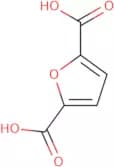
CAS:<p>Interest in renewable based polymers has led to 2,5-furandicarboxylic acid being proposed as a green, sustainable alternative to the widely used petroleum-based terephthalic acid in the synthesis of polyesters. 2,5-Furandicarboxylic acid is produced from oxidation of 5-hydroxymethylfurfural (HMF) which is obtained from the dehydration of bio-based sugars such as fructose.</p>Formula:C6H4O5Purity:Min. 98 Area-%Color and Shape:White Clear LiquidMolecular weight:156.09 g/molFmoc-Thr(tBu)-Ser-OH
<p>Fmoc-Thr(tBu)-Ser-OH is a building block that is often used in organic synthesis as a reagent or scaffold. It can be used in the synthesis of complex compounds, such as peptides and proteins. Fmoc-Thr(tBu)-Ser-OH has been shown to be useful in the preparation of high quality reagents and research chemicals. This chemical can also be used as an intermediate for the synthesis of other compounds, such as pharmaceuticals and pesticides. Fmoc-Thr(tBu)-Ser-OH is soluble in organic solvents, which makes it versatile for use in a wide variety of reactions. Fmoc-Thr(tBu)-Ser-OH has a CAS number that can be found by searching on the Chemical Abstract Services website (CAS).</p>Formula:C26H32N2O7Purity:Min. 95%Color and Shape:PowderMolecular weight:484.54 g/molFmoc-D-Asp(OtBu)-L-Ser(Psi(Me,Me)pro)-OH
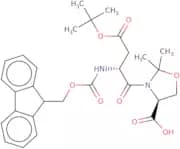
<p>Fmoc-D-Asp(OtBu)-L-Ser(Psi(Me,Me)pro)-OH is a high quality reagent that can be used as an intermediate in the synthesis of complex compounds. It is a useful building block for the synthesis of speciality chemicals and research chemicals. Fmoc-D-Asp(OtBu)-L-Ser(Psi(Me,Me)pro)-OH is also a versatile building block that can be used to synthesize different types of compounds.</p>Formula:C29H34N2O8Purity:Min. 95%Color and Shape:PowderMolecular weight:538.59 g/molFmoc-Leu-OH
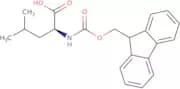
CAS:<p>Fmoc-Leu-OH is a fatty acid that contains a hydroxyl group. It is used in the synthesis of polymer drugs, especially sodium salt polymers. The activity of Fmoc-Leu-OH can be reversed with degarelix acetate, an irreversible inhibitor of ns3 protease. In addition to its use as an antidiabetic agent, Fmoc-Leu-OH has been shown to have immunomodulatory effects and antiinflammatory activity. In tumor treatment, Fmoc-Leu-OH has been shown to inhibit the growth of fat cells without affecting normal cells or causing any toxic side effects.</p>Formula:C21H23NO4Purity:Min. 98 Area-%Color and Shape:White PowderMolecular weight:353.41 g/molFmoc-Ser(tBu)-OH
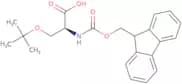
CAS:<p>Fmoc-Ser(tBu)-OH is a synthetic amino acid that is used in the synthesis of degarelix acetate, an amide ester of the vasodilator, prostaglandin F2α. Degarelix acetate binds to the fibrinogen receptor on the surface of cells and inhibits platelet aggregation. This drug has been shown to be effective in treating prostate cancer by inhibiting epidermal growth factor receptor signaling. It also has immune modulating effects by binding to monoclonal antibodies and altering antibody responses. Fmoc-Ser(tBu)-OH is synthesized from the amino acid serine and t-butyl alcohol, which are combined with trifluoroacetic acid (TFA) and hydroxyl group. The resulting product is then reacted with dansyl chloride or benzoyl chloride (BzCl), which cleaves off one carboxylic acid group from serine, forming an</p>Formula:C22H25NO5Purity:Min. 98 Area-%Color and Shape:White Off-White PowderMolecular weight:383.44 g/molFmoc-Thr(tBu)-OH
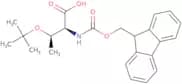
CAS:<p>Fmoc-Thr(tBu)-OH is an ester hydrochloride that is synthesized by reacting the amino acid, Fmoc-Thr(tBu) with trifluoroacetic acid. It has been used to synthesize a cyclic peptide with a protonated amide group, which allows for stereoselective synthesis of the chloride. This product has shown to be resistant to hydrolysis by atosiban and carbonyl oxygens, and also binds to mammalian cell receptors.</p>Formula:C23H27NO5Purity:Min. 98 Area-%Color and Shape:White PowderMolecular weight:397.46 g/molFmoc-Cys(Trt)-OH
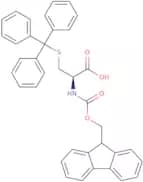
CAS:<p>Fmoc-Cys(Trt)-OH is a cyclic peptide that has potent antitumor activity. It binds to albumin and inhibits protein synthesis, leading to cell death by inhibiting the production of proteins vital for cell division. Fmoc-Cys(Trt)-OH has been shown to be effective against cancer cells in vitro and in vivo. Fmoc-Cys(Trt)-OH also binds the plasma glucose, which may be due to its ability to impede insulin release from the pancreas. This compound is synthesized by a stepwise light-induced solid-phase synthesis with trifluoroacetic acid as a solvent.</p>Formula:C37H31NO4SPurity:Min. 98 Area-%Color and Shape:White PowderMolecular weight:585.71 g/molFmoc-Arg(Pbf)-OH
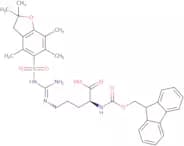
CAS:<p>The Fmoc-Arg(Pbf)-OH is a cyclic peptide that has been shown to have significant cytotoxicity against human tumor cells. It binds to integrin receptors, which are involved in transcriptional regulation and cellular proliferation. The Fmoc-Arg(Pbf)-OH has been shown to be hypoglycemic and it also possesses redox potential. The chemical biology of this compound is not yet known, but toxicity studies have shown that it is nontoxic in mice.</p>Formula:C34H40N4O7SPurity:Min. 98 Area-%Color and Shape:White Off-White PowderMolecular weight:648.77 g/mol