


Building Blocks
This section contains fundamental products for the synthesis of organic and biological compounds. Building blocks are the essential starting materials used to construct complex molecules through various chemical reactions. They play a critical role in drug discovery, material science, and chemical research. At CymitQuimica, we offer a diverse range of high-quality building blocks to support your innovative research and industrial projects, ensuring you have the essential components for successful synthesis.
Subcategories of "Building Blocks"
- Boronic Acids & Boronic Acid Derivatives(5,756 products)
- Chiral Building Blocks(1,242 products)
- Hydrocarbon Building Blocks(6,095 products)
- Organic Building Blocks(61,038 products)
Found 196817 products of "Building Blocks"
Sort by
Purity (%)
0
100
|
0
|
50
|
90
|
95
|
100
5-Nitroindole
CAS:<p>5-Nitroindole is a nitro functionalized indole. It is a fine chemical that has a wide range of uses in research, industry and education. 5-Nitroindole can be used as a versatile building block for the synthesis of complex compounds and as an intermediate for the production of other chemicals. 5-Nitroindole is soluble in organic solvents and can be used to synthesize other compounds with high purity. This compound is also known as CAS No. 6146-52-7 and is considered to be of high quality.</p>Formula:C8H6N2O2Purity:Min. 99.0 Area-%Molecular weight:162.15 g/molRef: 3D-N-3000
1kgTo inquire100gTo inquire250gTo inquire500gTo inquire2500gTo inquire-Unit-ggTo inquire4-Nitroindole
CAS:<p>4-Nitroindole is a versatile building block with a variety of applications. It can be used in the synthesis of complex compounds, research chemicals, and reagents. 4-Nitroindole is also useful in the synthesis of speciality chemicals and as an intermediate for the preparation of other compounds. This compound is high quality and has many uses as a reaction component or scaffold.</p>Formula:C8H6N2O2Molecular weight:162.15 g/molRef: 3D-N-2980
25gTo inquire50gTo inquire100gTo inquire250gTo inquire500gTo inquire-Unit-kgkgTo inquireCyproheptadine Related Compound A
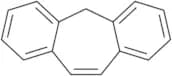
CAS:<p>Cyproheptadine Related Compound A is a molecule that binds to the histamine H2 receptor and can be used for the treatment of inflammatory bowel disease, chronic bronchitis, and diabetic neuropathy. It is metabolized by hydrolysis of the ester group by hydroxylases or oxidases in the liver. Cyproheptadine Related Compound A has been shown to have anti-inflammatory effects due to its ability to inhibit prostaglandin synthesis.</p>Formula:C15H12Purity:Min. 95%Molecular weight:192.26 g/mol4-Chlorophenylurea
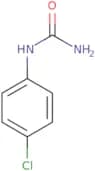
CAS:<p>4-Chlorophenylurea is an urea derivative that has been shown to inhibit the activity of a number of enzymes. It has been used as a chemical intermediate and in the synthesis of other compounds. 4-Chlorophenylurea is stable in dry environments and does not react with air. The enzyme hydrolysis can be inhibited by adding piperonyl butoxide, which prevents the cleavage of the urea ring. The enzyme's activity can also be suppressed by adding acidic compounds such as hydrochloric acid, which increases its activation energy. The chemical structure of 4-Chlorophenylurea contains a carbonyl group and two chloro groups that are responsible for its inhibitory effect on tumour cells. This compound can also be analysed using liquid chromatography methods, which provide structural data about the product being tested.</p>Formula:C7H7ClN2OPurity:Min. 95%Color and Shape:PowderMolecular weight:170.6 g/mol1,2,4,5-Tetrachloro-3-nitrobenzene
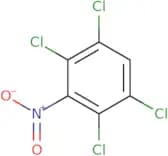
CAS:<p>1,2,4,5-Tetrachloro-3-nitrobenzene is a heterocyclic compound that has the chemical formula C6H2Cl4NO2. It is a yellow crystalline solid that is soluble in organic solvents. It has applications as a standard for quantitative analysis by nuclear magnetic resonance.</p>Formula:HC6Cl4NO2Purity:Min. 95%Color and Shape:PowderMolecular weight:260.89 g/mol1-[(Methylcarbamoyl)amino]-1-oxopropan-2-yl 4-{[(4-methyl-2-oxo-2H-chromen-7-yl)oxy]methyl}benzoate
CAS:<p>1-[(Methylcarbamoyl)amino]-1-oxopropan-2-yl 4-{[(4-methyl-2-oxo-2H-chromen-7-yl)oxy]methyl}benzoate is a versatile, high quality building block that can be used to make a range of compounds with different activities. This compound is an excellent reagent, useful as a research chemical and speciality chemical. It can be used in the synthesis of pharmaceuticals, agricultural chemicals, and other organic compounds. 1-[(Methylcarbamoyl)amino]-1-oxopropan-2-yl 4-[(4 methyl 2 oxo 2H chromen 7 yl)oxy]methyl benzoate is also known by CAS number 937891 - 74 - 2.</p>Formula:C23H22N2O7Purity:Min. 95%Color and Shape:PowderMolecular weight:438.4 g/mol1-(Carbamoylamino)-1-oxopropan-2-yl 4-{[(4-methyl-2-oxo-2H-chromen-7-yl)oxy]methyl}benzoate
CAS:<p>1-(Carbamoylamino)-1-oxopropan-2-yl 4-[(4-methyl-2-oxo-2H-chromen-7-yl)oxy]methylbenzoate is a fine chemical that can be used as a building block, a research chemical and reagent, or in the synthesis of other complex compounds. It has been shown to be useful in the synthesis of a number of complicated compounds. 1-(Carbamoylamino)-1-oxopropan-2-yl 4-[(4-methyl-2-oxo-2Hchromen 7yl)oxy]methylbenzoate is also versatile as it can be used as an intermediate for other reactions, or as scaffold for the synthesis of new compounds. CAS No. 937874 - 01 - 6</p>Formula:C22H20N2O7Purity:Min. 95%Color and Shape:PowderMolecular weight:424.4 g/molN-(1,3-Benzothiazol-2-yl)pyrrolidine-2-carboxamide hydrochloride
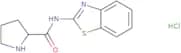
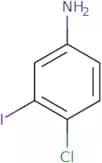
CAS:<p>Versatile small molecule scaffold</p>Formula:C12H14ClN3OSPurity:Min. 95%Color and Shape:PowderMolecular weight:283.78 g/mol4-Chloro-3-iodoaniline
CAS:<p>Versatile small molecule scaffold</p>Formula:C6H5ClINPurity:Min. 95%Molecular weight:253.47 g/mol1-(1,2,3,4-Tetrahydronaphthalen-1-yl)cyclopropan-1-amine
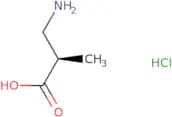
CAS:<p>1-(1,2,3,4-Tetrahydronaphthalen-1-yl)cyclopropan-1-amine is a high quality reagent that can be used as a useful intermediate in the synthesis of complex compounds. It has been shown to be a useful scaffold for the synthesis of various fine chemicals and speciality chemicals. 1-(1,2,3,4-Tetrahydronaphthalen-1-yl)cyclopropan-1-amine is also versatile building block that can be used as a reaction component in many different chemical reactions.</p>Formula:C13H17NPurity:Min. 95%Color and Shape:PowderMolecular weight:187.28 g/mol(R)-3-Amino-2-methylpropanoic acid hydrochloride
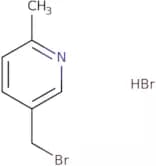
CAS:<p>(R)-3-Amino-2-methylpropanoic acid hydrochloride is a versatile building block that can be used in the synthesis of complex compounds and research chemicals. This chemical is used to produce a wide range of products, including pharmaceuticals, agrochemicals, flavors, fragrances, dyes and pigments. (R)-3-Amino-2-methylpropanoic acid hydrochloride is also an important reagent for research in organic chemistry. It has been used as a building block in the synthesis of new chemical entities with interesting biological properties. The compound is also useful as a scaffold for the development of new drugs or other chemical compounds.</p>Formula:C4H9NO2·HClPurity:Min. 95%Color and Shape:PowderMolecular weight:139.58 g/mol5-(Bromomethyl)-2-methylpyridine hydrobromide
CAS:<p>5-(Bromomethyl)-2-methylpyridine hydrobromide is a brominated reagent that is used as a reaction component in organic synthesis. It has been used to synthesize high quality, versatile building blocks and useful intermediates. 5-(Bromomethyl)-2-methylpyridine hydrobromide is also a fine chemical with CAS No. 718608-10-7.</p>Formula:C7H9Br2NPurity:Min. 95%Molecular weight:266.96 g/mol[Hydroxy(propan-2-yl)carbamoyl]formic acid
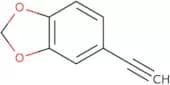
CAS:<p>Hydroxy(propan-2-yl)carbamoyl formic acid is a metabolite of formaldehyde. It is used to measure formaldehyde in biological samples such as blood, serum, and urine. It also acts as a precursor for the production of other metabolites which are related to bowel disease and cardiac function. Hydroxy(propan-2-yl)carbamoyl formic acid has been shown to be a good indicator of iron homeostasis in vivo and in vitro models. This compound can be detected by chemiluminescence methods and can be used with zirconium oxide to study the effects on axonal growth.</p>Formula:C5H9NO4Purity:Min. 95%Molecular weight:147.13 g/mol5-Ethynylbenzo-1,3-dioxole
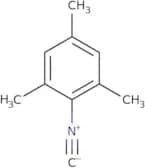
CAS:<p>5-Ethynylbenzo-1,3-dioxole is a terminal alkyne that has two terminal alkyne groups. It can form hydrogen bonds and interactions with other molecules. 5-Ethynylbenzo-1,3-dioxole is a reactive molecule that can be used to create polymers and other chemical compounds. The terminal alkynes are important for the stability of these compounds, as they bind to the polymer chains. 5-Ethynylbenzo-1,3-dioxole is used in organic chemistry to synthesize polymers and other chemical compounds.</p>Formula:C9H6O2Purity:Min. 95%Color and Shape:PowderMolecular weight:146.14 g/mol2-Isocyano-1,3,5-trimethylbenzene
CAS:<p>2-Isocyano-1,3,5-trimethylbenzene is an organic solvent that is insoluble in water. It has been shown to be a bidentate ligand and a ruthenium complex. This compound has been studied in supramolecular chemistry and has shown reversible electrochemical properties.</p>Formula:C10H11NPurity:Min. 95%Molecular weight:145.2 g/mol3,4,5,6-Tetrahydro-2H-cyclopenta-[D][1,3]thiazol-2-one
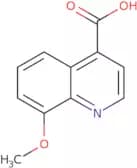
CAS:<p>Versatile small molecule scaffold</p>Formula:C6H7NOSPurity:Min. 95%Color and Shape:PowderMolecular weight:141.19 g/mol8-Methoxyquinoline-4-carboxylic acid
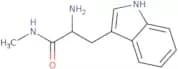
CAS:<p>8-Methoxyquinoline-4-carboxylic acid is a potent inhibitor of phosphodiesterase I, II, IV and V. It has been shown to inhibit the production of inflammatory prostaglandins in asthma patients. 8-Methoxyquinoline-4-carboxylic acid has been used to study the fluorescence properties of acetonitrile and its derivatives. 8-Methoxyquinoline-4-carboxylic acid has been tested as a fluorescent probe for DNA sequencing and has also shown potential as a fluorescent probe for protein sequencing. This molecule is an inhibitor of phosphodiesterases, which are enzymes that break down cyclic nucleotides such as cAMP and cGMP.<br>8-Methoxyquinoline-4-carboxylic acid is a bicyclic heteroaryl compound with an electron donating group at position 4 on the heterocyclic ring. It can be synthesized from ethanol using</p>Formula:C11H9NO3Purity:(¹H-Nmr) Min. 95 Area-%Color and Shape:PowderMolecular weight:203.19 g/mol(2S)-2-Amino-3-(1H-indol-3-yl)-N-methylpropanamide
CAS:<p>Acetaminophen is a non-opioid analgesic and antipyretic drug. It is a common medication used to treat pain, fever, and inflammation. Acetaminophen inhibits matrix metalloproteinase (MMPs) by binding to the active site of the enzyme, thus preventing it from breaking down collagen in the extracellular matrix. This inhibition has been shown to be effective against cancer cells. Acetaminophen also has an antioxidative activity that may be due to its ability to inhibit lipid peroxidation, which is important for cell membrane integrity. Acetaminophen has been shown to reduce ulceration in animal models.</p>Formula:C12H15N3OPurity:Min. 95%Color and Shape:PowderMolecular weight:217.27 g/mol[2-Amino-1-(1-methyl-1H-pyrazol-4-yl)ethyl]dimethylamine
CAS:<p>Versatile small molecule scaffold</p>Formula:C8H16N4Purity:Min. 95%Color and Shape:PowderMolecular weight:168.24 g/molThieno[3,2-c]pyridine-7-carboxylic acid
CAS:<p>Thieno[3,2-c]pyridine-7-carboxylic acid is an anticancer drug that belongs to the class of acid derivatives. It has been shown to be active against solid tumors and has been found to be effective in inhibiting tumor growth and proliferation. Thieno[3,2-c]pyridine-7-carboxylic acid is a prodrug that is activated by hydrolysis of the ester group. The activation process occurs through an enzymatic mechanism that requires two enzymes: carboxylesterase and cytochrome P450.</p>Formula:C8H5NO2SPurity:Min. 95%Color and Shape:PowderMolecular weight:179.2 g/mol


![1-[(Methylcarbamoyl)amino]-1-oxopropan-2-yl 4-{[(4-methyl-2-oxo-2H-chromen-7-yl)oxy]methyl}benzoate](/_next/image/?url=https%3A%2Fstatic.cymitquimica.com%2Fproducts%2F3D%2Fthumb-webp%2FMMB89174.webp&w=3840&q=75)
![1-(Carbamoylamino)-1-oxopropan-2-yl 4-{[(4-methyl-2-oxo-2H-chromen-7-yl)oxy]methyl}benzoate](/_next/image/?url=https%3A%2Fstatic.cymitquimica.com%2Fproducts%2F3D%2Fthumb-webp%2FMMB87401.webp&w=3840&q=75)

![[Hydroxy(propan-2-yl)carbamoyl]formic acid](/_next/image/?url=https%3A%2Fstatic.cymitquimica.com%2Fproducts%2F3D%2Fthumb-webp%2FHFA41803.webp&w=3840&q=75)
![3,4,5,6-Tetrahydro-2H-cyclopenta-[D][1,3]thiazol-2-one](/_next/image/?url=https%3A%2Fstatic.cymitquimica.com%2Fproducts%2F3D%2Fthumb-webp%2FHCA00118.webp&w=3840&q=75)
![[2-Amino-1-(1-methyl-1H-pyrazol-4-yl)ethyl]dimethylamine](/_next/image/?url=https%3A%2Fstatic.cymitquimica.com%2Fproducts%2F3D%2Fthumb-webp%2FCWB66676.webp&w=3840&q=75)
![Thieno[3,2-c]pyridine-7-carboxylic acid](/_next/image/?url=https%3A%2Fstatic.cymitquimica.com%2Fproducts%2F3D%2Fthumb-webp%2FSEC97587.webp&w=3840&q=75)