


Building Blocks
This section contains fundamental products for the synthesis of organic and biological compounds. Building blocks are the essential starting materials used to construct complex molecules through various chemical reactions. They play a critical role in drug discovery, material science, and chemical research. At CymitQuimica, we offer a diverse range of high-quality building blocks to support your innovative research and industrial projects, ensuring you have the essential components for successful synthesis.
Subcategories of "Building Blocks"
- Boronic Acids & Boronic Acid Derivatives(5,756 products)
- Chiral Building Blocks(1,242 products)
- Hydrocarbon Building Blocks(6,095 products)
- Organic Building Blocks(61,038 products)
Found 196817 products of "Building Blocks"
Sort by
Purity (%)
0
100
|
0
|
50
|
90
|
95
|
100
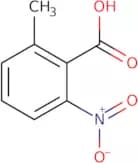
2-Methyl-6-nitrobenzoic acid
CAS:<p>2-Methyl-6-nitrobenzoic acid is a yellow needle solid that is soluble in organic solvents. It is used as a reagent to prepare other chemicals and has been shown to react with sodium hydrogen sulfate, chloride, and sulfuric acid to form 2-methyl-6-nitrobenzenesulfonic acid. The mixture of 2-methyl-6-nitrobenzoic acid and sodium hydrogen sulfate reacts violently with chlorine gas or argon. This reaction solution can be evaporated by heating at atmospheric pressure or under vacuum, leaving 2-methyl-6-nitrobenzenesulfonic acid behind. 2MBA can also be purified by filtration or recrystallization from a suitable solvent such as chloroform or ether.</p>Formula:C8H7NO4Purity:Min. 95%Color and Shape:Slightly Yellow PowderMolecular weight:181.15 g/mol4-Morpholinoaniline
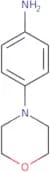
CAS:<p>4-Morpholinoaniline is a synthetic substrate that reacts with hydrochloric acid and sodium nitrite to form the reactive intermediate 4-morpholinonitrosobenzene. The reaction mechanism is proposed to proceed through an initial electron transfer from the substrate to the nitrosobenzene intermediate, followed by protonation of the nitrosobenzene nitrogen atom. The resulting 4-nitrophenyl radical abstracts hydrogen from the substrate to give 4-hydroxyphenyl radical. This radical undergoes a nucleophilic attack on the aromatic ring of the substrate molecule, and cleavage of the disulfide bond in the aromatic ring leads to formation of a cyanohydrin product. Studies have been conducted on rat liver microsomes and hepatitis C virus (HCV) to investigate this reaction mechanism.</p>Formula:C10H14N2OPurity:Min. 98.5 Area-%Color and Shape:Red PowderMolecular weight:178.23 g/molTocinoic acid trifluroacetate
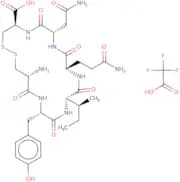
CAS:<p>Please enquire for more information about Tocinoic acid trifluroacetate including the price, delivery time and more detailed product information at the technical inquiry form on this page</p>Formula:C30H44N8O10S2•C2HF3O2Purity:Min. 95%Color and Shape:PowderMolecular weight:854.85 g/mol2,2,4,6-Tetramethyl-1,3-dioxan-5-one
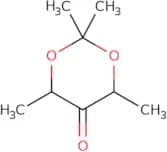
CAS:<p>Please enquire for more information about 2,2,4,6-Tetramethyl-1,3-dioxan-5-one including the price, delivery time and more detailed product information at the technical inquiry form on this page</p>Formula:C8H14O3Purity:Min. 95%Color and Shape:PowderMolecular weight:158.2 g/molTrans-methylisoeugenol
CAS:<p>Trans-methylisoeugenol is a natural compound that has been shown to have anti-inflammatory, antioxidant, and immunomodulatory properties. It is a metabolite of isoeugenol, which is a constituent of the essential oils from plants such as angelica dahurica and eugenia caryophyllata. Trans-methylisoeugenol binds to the glucuronide conjugate receptor on the cell surface, leading to various effects including inflammatory responses. Trans-methylisoeugenol also inhibits the activity of enzymes such as benzalkonium chloride and eugenol that are responsible for inflammation. Molecular docking analysis predicts that trans-methylisoeugenol may bind to the same site on the receptor as benzalkonium chloride.</p>Formula:C11H14O2Purity:Min. 90 Area-%Color and Shape:PowderMolecular weight:178.23 g/mol2-Aminobenzaldehyde
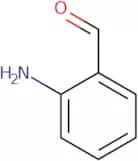
CAS:<p>2-Aminobenzaldehyde is an aromatic compound that contains a hydroxyl group, two nitrogen atoms, and an anhydrous sodium. It can be synthesized by the reaction of hydroxybenzaldehyde with trifluoroacetic acid or nitrobenzene. 2-Aminobenzaldehyde is used as a precursor to other compounds, such as 2-aminobenzonitrile and 2-aminophenol. It also reacts with anthranilic acid in the presence of sodium salts to give a variety of pyrazoles. This product has been shown to react with epidermal growth factor (EGF) in the presence of light to produce light emissions.</p>Formula:C7H7NOPurity:Min. 95%Color and Shape:PowderMolecular weight:121.14 g/mol4,4,5,5-Tetramethyl-2-[4-(pentafluorosulfanyl)phenyl]-1,3,2-dioxaborolane
CAS:<p>Versatile small molecule scaffold</p>Formula:C12H16BF5O2SPurity:Min. 80%Molecular weight:330.13 g/mol2,3,4,6-Tetra-O-benzyl-D-galactopyranose
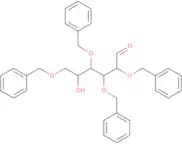
CAS:<p>2,3,4,6-Tetra-O-benzyl-D-galactopyranose is an isomeric sugar that is found in a variety of natural and synthetic carbohydrates. It has been shown to inhibit glycosidase enzymes such as aminoglycoside N-acetyltransferases and α-glycosidases. The stereoselective properties of 2,3,4,6-Tetra-O-benzyl-D-galactopyranose make it a good candidate for the treatment of drug resistant bacteria. This compound has been shown to have inhibitory activity against the hydrolase family of enzymes that includes proteases, lipases, and phospholipases.</p>Formula:C34H36O6Purity:Min. 95%Color and Shape:PowderMolecular weight:540.6 g/mol5-Fluoro-6-hydroxy-2,3-dihydro-1H-indole-2,3-dione
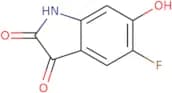
CAS:<p>5-Fluoro-6-hydroxy-2,3-dihydro-1H-indole-2,3-dione is a reagent and useful scaffold for the synthesis of complex compounds. It is a versatile building block that can be used as a precursor in the synthesis of a range of heterocyclic compounds. 5FHDI has been shown to be an excellent reaction component and useful intermediate in organic chemistry. This compound can be used to synthesize various speciality chemicals, such as pesticides and herbicides. 5FHDI is also used as a building block for the synthesis of drugs and pharmaceuticals.</p>Formula:C8H4FNO3Purity:Min. 95%Molecular weight:181.12 g/molO-2-Propynylhydroxylamine hydrochloride
CAS:<p>O-2-Propynylhydroxylamine hydrochloride is a ribosome-inactivating molecule that is used in the treatment of cancer. It binds to the amines on the ribosome and inhibits protein synthesis, leading to cell death. The drug also has a favorable ph profile, which allows it to be administered intravenously. The glycosidic bond makes this drug difficult to metabolize, increasing its half-life in the body. O-2-Propynylhydroxylamine hydrochloride can be easily conjugated with other molecules for targeted delivery, making it an ideal candidate for treating cancers that are resistant to traditional chemotherapy drugs.</p>Formula:C3H5NO•HClPurity:Min. 95%Molecular weight:107.54 g/mol3-(Azidomethyl)-4-methyl-2,5-dihydrofuran-2,5-dione, 1M in acetonitrile
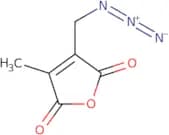
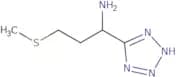
CAS:<p>Please enquire for more information about 3-(Azidomethyl)-4-methyl-2,5-dihydrofuran-2,5-dione, 1M in acetonitrile including the price, delivery time and more detailed product information at the technical inquiry form on this page</p>Formula:C6H5N3O3Purity:Min. 95%Color and Shape:PowderMolecular weight:167.12 g/mol(1S)-3-(Methylsulfanyl)-1-(2H-1,2,3,4-tetrazol-5-yl)propan-1-amine
CAS:<p>Versatile small molecule scaffold</p>Formula:C5H11N5SPurity:Min. 95%Color and Shape:PowderMolecular weight:173.24 g/molCinnolin-4-amine
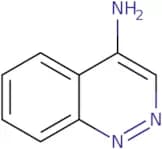
CAS:<p>Cinnolin-4-amine is a protonated cinnoline that has been shown to have tumor-localizing properties. Cinnolin-4-amine has been shown to be cytotoxic to human tumor xenografts in mice, and this activity was demonstrated to be mediated by its interaction with the receptor for the angiotensin II type 1 receptor. It also inhibits the growth of tumor cells in culture by inhibiting DNA synthesis and protein synthesis. Cinnolin-4-amine has been shown to produce antihypertensive effects in animals and humans, which may be due to its ability to decrease blood pressure via inhibition of the sympathetic nervous system.</p>Formula:C8H7N3Purity:Min. 95%Color and Shape:PowderMolecular weight:145.16 g/mol1,5-Anhydro-D-glucitol 6-dihydrogenphosphate disodium
CAS:<p>Please enquire for more information about 1,5-Anhydro-D-glucitol 6-dihydrogenphosphate disodium including the price, delivery time and more detailed product information at the technical inquiry form on this page</p>Formula:C6H13O8P•Na2Purity:Min. 95%Molecular weight:290.12 g/mol3-[3-(Methylcarbamoyl)phenyl]propanoic acid
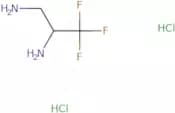
CAS:<p>Versatile small molecule scaffold</p>Formula:C11H13NO3Purity:Min. 95%Color and Shape:PowderMolecular weight:207.23 g/mol3,3,3-Trifluoropropane-1,2-diamine dihydrochloride
CAS:<p>3,3,3-Trifluoropropane-1,2-diamine dihydrochloride is a high quality chemical that belongs to the group of useful building blocks. It is a versatile and complex compound that can be used in research or as a reagent. 3,3,3-Trifluoropropane-1,2-diamine dihydrochloride is also a reaction component for the synthesis of other compounds. This compound has been used as an intermediate for the production of pharmaceuticals and pesticides. It has been studied for its ability to inhibit protein kinase C (PKC) and calcium ion channels.</p>Formula:C3H7F3N2•(HCl)2Purity:Min. 95%Molecular weight:201.02 g/mol3-Butenoic acid, 2,5-dioxo-1-pyrrolidinyl ester
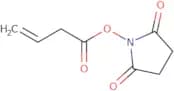
CAS:<p>3-Butenoic acid, 2,5-dioxo-1-pyrrolidinyl ester is a fine chemical that can be used as a scaffold for the synthesis of complex compounds. This chemical is also useful as an intermediate in the synthesis of chemicals and research chemicals. It has CAS number 388091-45-0 and a molecular weight of 220.3 g/mol. 3-Butenoic acid, 2,5-dioxo-1-pyrrolidinyl ester is soluble in organic solvents such as acetone or chloroform and is not toxic to humans at low doses.</p>Formula:C8H9NO4Purity:Min. 95%Color and Shape:PowderMolecular weight:183.16 g/mol4-(Trimethylsilyl)benzaldehyde
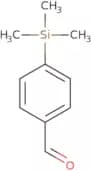
CAS:<p>4-(Trimethylsilyl)benzaldehyde is an undescribed monomer that has been synthesized in the laboratory. It is a centrosymmetric molecule with three phenyl groups and a silicon atom, which are connected by sulfonation. 4-(Trimethylsilyl)benzaldehyde can be used as a precursor to produce amines and covid-19 pandemic. The synthesis of 4-(trimethylsilyl)benzaldehyde can be regiospecifically achieved through chlorination, although this method is not efficient. The carbonyl group in this molecule can be used as part of a catalytic process for the synthesis of carbazones.</p>Formula:C10H14OSiPurity:90%Color and Shape:Clear LiquidMolecular weight:178.3 g/molBCN-PNP carbonate
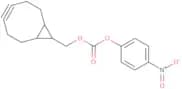
CAS:<p>BCN-PNP carbonate is a versatile building block that can be used as an intermediate in the synthesis of complex compounds. It has a variety of uses in research and as a reagent for fine chemicals. BCN-PNP carbonate is an effective reaction component for the synthesis of speciality chemicals, which are used for research purposes or as intermediates for pharmaceuticals. BCN-PNP carbonate is also useful scaffold for the synthesis of highly pure, high quality building blocks.</p>Formula:C17H17NO5Purity:Min. 95%Color and Shape:PowderMolecular weight:315.32 g/mol1H,4H,6H,7H-Pyrano[4,3-b]pyrrole-2-carboxylic acid
CAS:<p>1H,4H,6H,7H-Pyrano[4,3-b]pyrrole-2-carboxylic acid is a fine chemical that is used as a versatile building block in the synthesis of complex compounds. It can be used as a reagent or speciality chemical for research purposes and has been shown to be useful for the synthesis of high quality building blocks and scaffolds for organic molecules. The CAS No. 1263083-03-9 is 1263083-03-9 and it's molecular formula is C11H10N2O3.</p>Formula:C8H9NO3Purity:Min. 95%Color and Shape:PowderMolecular weight:167.16 g/mol


![4,4,5,5-Tetramethyl-2-[4-(pentafluorosulfanyl)phenyl]-1,3,2-dioxaborolane](/_next/image/?url=https%3A%2Fstatic.cymitquimica.com%2Fproducts%2F3D%2Fthumb-webp%2FLBC27834.webp&w=3840&q=75)

![3-[3-(Methylcarbamoyl)phenyl]propanoic acid](/_next/image/?url=https%3A%2Fstatic.cymitquimica.com%2Fproducts%2F3D%2Fthumb-webp%2FJZB49430.webp&w=3840&q=75)
![1H,4H,6H,7H-Pyrano[4,3-b]pyrrole-2-carboxylic acid](/_next/image/?url=https%3A%2Fstatic.cymitquimica.com%2Fproducts%2F3D%2Fthumb-webp%2FNAC08303.webp&w=3840&q=75)