


Building Blocks
This section contains fundamental products for the synthesis of organic and biological compounds. Building blocks are the essential starting materials used to construct complex molecules through various chemical reactions. They play a critical role in drug discovery, material science, and chemical research. At CymitQuimica, we offer a diverse range of high-quality building blocks to support your innovative research and industrial projects, ensuring you have the essential components for successful synthesis.
Subcategories of "Building Blocks"
- Boronic Acids & Boronic Acid Derivatives(5,756 products)
- Chiral Building Blocks(1,242 products)
- Hydrocarbon Building Blocks(6,095 products)
- Organic Building Blocks(61,051 products)
Found 199813 products of "Building Blocks"
Sort by
Purity (%)
0
100
|
0
|
50
|
90
|
95
|
100
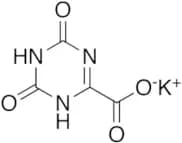
Oxonic Acid Potassium Salt
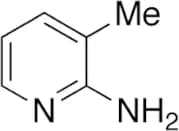
CAS:Controlled Product<p>Applications Antitumor effect potentiator and antitumor agent.<br>References Chelbova, et al.: Biochem. Pharmacol., 19, 1785 (1970), Collins, J., et al.: Clin. Pharmacol. Ther., 28, 235 (1980), Hoff, P., et al.: Anticancer Drugs, 9, 479 (1998), Backus, H., et al.: Oncol. Res., 12, 231(2000), Peters, G., et al.: J. Clin. Oncol., 19, 4267 (2001).<br></p>Formula:C4H2N3O4·KColor and Shape:NeatMolecular weight:195.172-Amino-3-methylpyridine
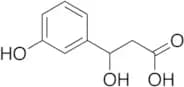
CAS:Controlled Product<p>Applications 2-Amino-3-methylpyridine is used in the synthesis of ketones from aldehydes.<br>References Jun, C. et al.: J. Org. Chem., 62, 1200 (1997); Jun, C. et al.: Angew. Chem. Int. Ed., 37, 145 (1998);<br></p>Formula:C6H8N2Color and Shape:NeatMolecular weight:108.14β-(m-Hydroxyphenyl)hydracrylic Acid
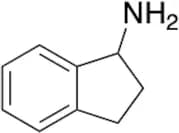
CAS:Controlled Product<p>Applications β-(m-Hydroxyphenyl)hydracrylic Acid is a urinary metabolite of phenylalanine from the Clostridium gram-positive bacteria cell line. Urinary metabolite of Rutin (R701800), a capillary protectant in plants.<br>References Harrison, et al.: J. Am. Pharm. Assoc., 39, 557 (1950), Humphreys, et al.: Econ. Bot., 18, 195 (1964), Khalifa, T.I., et al.: Anal. Profiles Drug Subs., 12, 623 (1983); Shigeo, B. et al.: J. Pharm. Sci., 72, 1155 (1983)<br></p>Formula:C9H10O4Color and Shape:NeatMolecular weight:182.171-Aminoindan
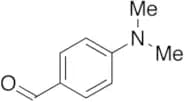
CAS:Controlled Product<p>Applications 1-aminoindan (cas# 34698-41-4) is a useful research chemical.<br></p>Formula:C9H11NColor and Shape:NeatMolecular weight:133.194-(Dimethylamino)benzaldehyde
CAS:Controlled ProductFormula:C9H11NOColor and Shape:Off-White To BrownMolecular weight:149.196-Oxo DL-Norleucine, Formate Salt
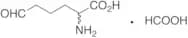
CAS:<p>Stability Hygroscopic<br>Applications A metabolite of Lysine in human lens crystallins during aging and in diabetes.<br>References Pirie, A., et al.: Invest. Ophthalmol., 7, 634 (1968), Thornalley, P., et al.: Biochem. J., 375, 581 (2003), Peng, D., et al.: J. Biol. Chem., 280, 33775 (2005),<br></p>Formula:C6H11NO3•x(HCO2H)Color and Shape:NeatMolecular weight:145.1646033-Methylnonane-2,4-dione (>80%)
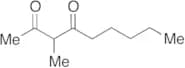
CAS:Controlled Product<p>Applications 3-Methylnonane-2,4-dione is a compound that possesses a butter-like and beany off flavour that is a result of flavour reversion of soya-bean oil. 3-Methylnonane-2,4-dione is also present in Japanese green tea and pressure-cooked hen meat.<br>References Farkaš, P., et al.: Food Chem., 60, 617 (1997); Guth, H. & Grosch, W.: Flav. Chem., No vol. given, 377 (1999); Kumazawa, K. & Masuda, H.: J. Agr. Food Chem., 47, 5169 (1999)<br></p>Formula:C10H18O2Purity:>80%Color and Shape:NeatMolecular weight:170.25Methyl Methanethiosulfonate
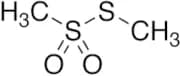
CAS:Controlled ProductFormula:C2H6O2S2Color and Shape:NeatMolecular weight:126.202-Oxohexanoic Acid
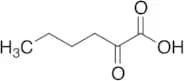
CAS:Controlled Product<p>Applications 2-Oxohexanoic Acid (cas# 2492-75-3) has been useful in a biological study that investigated the impact of glutathione on wines oxidative stability.<br>References Nikolantonaki, M., et al.: Front. Chem. (Lausanne, Switzerland), 6, 182 (2018)<br></p>Formula:C6H10O3Color and Shape:NeatMolecular weight:130.14Decamethyltetrasiloxane
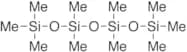
CAS:Controlled Product<p>Stability Moisture Sensitive<br>Applications A non-cyclic silicone oligomer. Used in the methylation of mercury(II) salts. Study shows that it transformed by a specific microflora and in the natural environment degraded by mechanisms similar to other organic compounds.<br>References Radeva, E. et al.: J. Optoelec. Adv. Mat., 11, 1432 (2009); Wasserbauer, R. et al.: Folia Microbiologica, 35, 384 (1990); Watanabe, N. et al.: Ecotoxic. Env. Safety, 11, 174 (1986);<br></p>Formula:C10H30O3Si4Color and Shape:Colourless To Light YellowMolecular weight:310.692-Hydroxy-1-phenyl-1-propanone
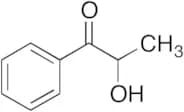
CAS:<p>Stability Hygroscopic<br>Applications 2-Hydroxy-1-phenyl-1-propanone is a reagent used in the synthesis of heterocycles via heterocyclization of α-hydroxyarylketones.<br>References Li, G. et al.: Org. Lett., 18, 4526 (2016);<br></p>Formula:C9H10O2Color and Shape:NeatMolecular weight:150.173-Formyl-5-methylbenzoic Acid
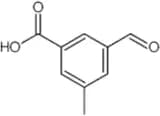
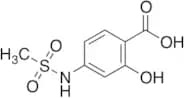
CAS:Controlled Product<p>Applications 3-Formyl-5-methylbenzoic Acid<br></p>Formula:C9H8O3Color and Shape:NeatMolecular weight:164.162-Hydroxy-4-methanesulfonamidobenzoic Acid
CAS:Controlled ProductFormula:C8H9NO5SColor and Shape:NeatMolecular weight:231.2261,4-Diphenylbutane
CAS:<p>Applications 1,4-Diphenylbutane (cas# 1083-56-3) is a useful research chemical.<br></p>Formula:C16H18Color and Shape:NeatMolecular weight:210.31Methyl 4-Chloropicolinate
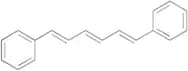
CAS:Controlled Product<p>Applications Methyl 4-Chloropicolinate (cas# 24484-93-3) is a compound useful in organic synthesis.<br></p>Formula:C7H6ClNO2Color and Shape:NeatMolecular weight:171.581,6-Diphenyl-1,3,5-hexatriene
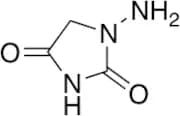
CAS:Controlled Product<p>Applications 1,6-Diphenyl-1,3,5-hexatriene is an alternative to Nile red for fluorescent detection of lipid droplets.<br></p>Formula:C18H16Color and Shape:NeatMolecular weight:232.321-Amino-imidazolidine-2,4-dione
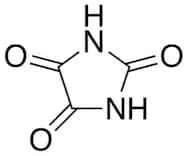
CAS:<p>Applications 1-Amino-imidazolidine-2,4-dione (cas# 6301-02-6) is a useful research chemical.<br></p>Formula:C3H5N3O2Color and Shape:NeatMolecular weight:115.09Parabanic Acid
CAS:Controlled Product<p>Applications Parabanic acid appears to be an important marker of free radical reactions in vivo and may be used to monitor free radical activity and to evaluate pharmacological therapy with radical scavengers.<br>References Koumoto, Y., et al.: J. Biol. Chem., 276, 29688 (2001), Gibon, Y., et al.: Plant Cell, 16, 3304 (2004), Kaplan, F., et al.: Plant J., 44, 730 (2005), Ishii, N., et al.: Science, 316, 593 (2007),<br></p>Formula:C3H2N2O3Color and Shape:NeatMolecular weight:114.06Dipyrazino[2,3-f:2',3'-h]quinoxaline
CAS:Controlled ProductFormula:C12H6N6Color and Shape:NeatMolecular weight:234.216




![Dipyrazino[2,3-f:2',3'-h]quinoxaline](/_next/image/?url=https%3A%2Fstatic.cymitquimica.com%2Fproducts%2FTR%2Fthumb-webp%2FD492485.webp&w=3840&q=75)