Building Blocks
This section contains fundamental products for the synthesis of organic and biological compounds. Building blocks are the essential starting materials used to construct complex molecules through various chemical reactions. They play a critical role in drug discovery, material science, and chemical research. At CymitQuimica, we offer a diverse range of high-quality building blocks to support your innovative research and industrial projects, ensuring you have the essential components for successful synthesis.
Subcategories of "Building Blocks"
- Boronic Acids & Boronic Acid Derivatives(5,756 products)
- Chiral Building Blocks(1,242 products)
- Hydrocarbon Building Blocks(6,095 products)
- Organic Building Blocks(61,038 products)
Found 196817 products of "Building Blocks"
Sort by
Purity (%)
0
100
|
0
|
50
|
90
|
95
|
100
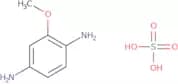
2-Methoxybenzene-1,4-diamine sulfate
CAS:<p>2-Methoxybenzene-1,4-diamine sulfate (2MBDS) is a chemical that inhibits the synthesis of quinolines and dyes. 2MBDS is used as a control in animal experiments to maintain the level of sulfate in the blood. It is injected into animals and then measured using assays to measure the concentration of sulfate in the blood. 2MBDS has been shown to cause genetic damage and death in animals, as well as brittleness of muscle cells. The effects of 2MBDS on DNA replication and cell division have been studied by observing its effect on meiosis in mice. This chemical also simplifies chromosome structure and reduces chromosome number during meiosis, which may lead to chromosomal aberrations.</p>Formula:C7H10N2O·H2O4SPurity:Min. 95%Color and Shape:Off-White PowderMolecular weight:236.25 g/molMethyl 4-chlorobenzoate
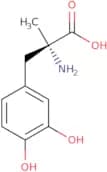
CAS:<p>Methyl 4-chlorobenzoate is a synthetic chemical that belongs to the group of phenyl compounds. It is a solvent for organic solvents and has been shown to be toxic to humans. Methyl 4-chlorobenzoate is used in various industrial applications, such as in the production of pesticides, herbicides, and pharmaceuticals. Methyl 4-chlorobenzoate can also be used as an intermediate for the synthesis of other chemicals, such as chlorinated hydrocarbons. This chemical has been reported to cause environmental pollution and has been classified as a carcinogen by the International Agency for Research on Cancer (IARC).</p>Formula:C8H7ClO2Purity:Min. 98.5%Color and Shape:White PowderMolecular weight:170.59 g/mol3-(3,4-Dihydroxyphenyl)-2-methyl-L-alanine sesquihydrate
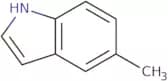
CAS:<p>3-(3,4-Dihydroxyphenyl)-2-methyl-L-alanine sesquihydrate is a biological sample that is an active inhibitor of the enzyme methyldopa. This compound has been shown to reduce blood pressure in rats and humans by blocking the α7 nicotinic acetylcholine receptor. 3-(3,4-Dihydroxyphenyl)-2-methyl-L-alanine sesquihydrate is also a polymer composition that has been shown to be toxic in animal studies. The toxicity of 3-(3,4-dihydroxyphenyl)-2-methyl-L-alanine sesquihydrate can be attributed to its structural similarity to methyldopa or its ability to act as a receptor agonist.</p>Formula:C10H13NO4•(H2O)1Purity:Min. 95%Molecular weight:238.24 g/mol5-Methylindole
CAS:<p>5-Methylindole is a molecule that has been found to be active against Staphylococcus aureus. This drug interferes with the synthesis of glycogen, which is an important energy storage molecule in animals. 5-Methylindole inhibits glycogen synthase kinase 3 (GSK-3) activity and thereby reduces the production of proinflammatory cytokines. This drug has also been shown to have cardiac effects, such as tachycardia and arrhythmias in mice. The optical properties of 5-methylindole are characterized by fluorescence and absorbance spectra, as well as its chemical reactions. 5-Methylindole is detectable at concentrations of 10 µg/mL and reacts with aminoglycosides by forming an adduct that can be detected using chromatographic methods.</p>Formula:C9H9NPurity:Min. 95%Color and Shape:PowderMolecular weight:131.17 g/molMethanesulfonamide
CAS:<p>Methanesulfonamide is a drug that is used to treat infectious diseases and in the treatment of HIV. It is a non-steroidal anti-inflammatory drug that inhibits prostaglandin synthesis by blocking the activity of cyclooxygenase (COX) enzymes, COX-1 and COX-2. Methanesulfonamide has been shown to have chemoprotective effects against HIV infection and may reduce the risk of opportunistic infections associated with AIDS. Methanesulfonamide may also inhibit the production of inflammatory cytokines such as tumor necrosis factor alpha (TNFα) and interleukin-1β (IL-1β).</p>Formula:CH5NO2SPurity:Min. 95%Color and Shape:PowderMolecular weight:95.12 g/molMethyl 4-amino-2-methyl benzoate
CAS:Methyl 4-amino-2-methyl benzoate is a fine chemical that can be used as a building block for research chemicals, pharmaceuticals, and speciality chemicals. Methyl 4-amino-2-methyl benzoate is a versatile building block in organic synthesis because it can be used as a reaction component and intermediate to synthesize other compounds. This compound is also an excellent scaffold for the synthesis of complex compounds, making it a useful intermediate for organic chemistry. Methyl 4-amino-2-methyl benzoate has CAS No. 6933-47-7 and is soluble in organic solvents such as dichloromethane, chloroform, ether, or acetone.Formula:C9H11NO2Purity:Min. 95%Color and Shape:PowderMolecular weight:165.19 g/mol2-Methylcinnamic acid, predominantly trans
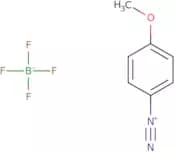
CAS:<p>The 2-methylcinnamic acid is a derivative of cinnamic acid. It is an organic compound that is a colorless liquid at room temperature. The 2-methylcinnamic acid can be synthesized via the Suzuki coupling reaction between 2-chlorocinnamic acid and 4-hydroxycinnamic acid in the presence of a ruthenium complex, a diphosphine ligand, and an acidic co-solvent. This organic compound has been shown to inhibit prostaglandin synthesis by interacting with the prostanoid receptor, a protein located on the surface of cells that binds to inflammatory agents or hormones. These interactions may also lead to the inhibition of cyclooxygenase (COX) enzymes, which are responsible for prostaglandin synthesis. The 2-methylcinnamic acid can also be converted into flavonoids such as quercetin and apigenin through oxidation reactions.</p>Formula:C10H10O2Purity:Min. 95%Color and Shape:PowderMolecular weight:162.19 g/mol4-Methoxybenzenediazonium tetrafluoroborate
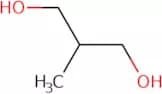
CAS:<p>4-Methoxybenzenediazonium tetrafluoroborate (MBD) is a synthetic molecule that can be prepared by the reaction of sodium hydrogen with UV irradiation. MBD has been shown to have a pharmacokinetic profile similar to methyl cinnamate and is used in the treatment of hyperpigmentation, such as melasma and post-inflammatory hyperpigmentation. MBD interacts with the amino acid tyrosine at its 4-hydroxyl group, cleaving the C-O bond and forming an intramolecular hydrogen bond with the oxygen atom. This results in the formation of diazonium salt which reacts with tyrosinase and inhibits its activity.</p>Formula:C7H7BF4N2OPurity:Min. 98 Area-%Color and Shape:PowderMolecular weight:221.95 g/mol2-Methyl-1,3-propanediol
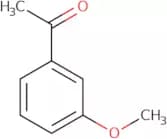
CAS:<p>2-Methyl-1,3-propanediol is a glycol ether that is used in sample preparation for chemical analysis. It is an antimicrobial agent that has been shown to be active against bacteria such as Escherichia coli and Staphylococcus aureus. 2-Methyl-1,3-propanediol has also been shown to have the ability to inhibit the growth of epidermal cells. This chemical has been shown to be effective in treating skin lesions caused by dermatophytes, fungi and bacterial infections. 2-Methyl-1,3-propanediol inhibits the synthesis of glycol esters, fatty acids and epidermal growth factor through competition with hydroxyl groups on cell membranes. It also chelates metal ions such as Cu2+, Zn2+, Cd2+ and Pb2+.</p>Formula:C4H10O2Purity:Min. 95%Color and Shape:Colorless PowderMolecular weight:90.12 g/mol3-Methoxyacetophenone
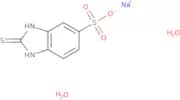
CAS:<p>3-Methoxyacetophenone is a bacterial metabolite that is produced by the metabolism of caproic acid. 3-Methoxyacetophenone has been shown to possess antibacterial activity against gram-positive bacteria and to inhibit protein synthesis in these bacteria. The compound class of 3-methoxyacetophenone includes methyl ketones, which are a type of organic compounds containing a carbonyl group (C=O). This compound can be found in bacterial strains such as Pseudomonas aeruginosa and Streptococcus pneumoniae. These bacteria produce 3-methoxyacetophenone during growth on l-tartaric acid or hydrogen tartrate as the sole carbon sources. The organism’s DNA sequences have been determined by deuterium isotope sequencing and l-tartaric acid as the sole carbon source.</p>Formula:C9H10O2Purity:Min. 95%Color and Shape:Colorless Clear LiquidMolecular weight:150.17 g/mol2-Mercapto-5-benzimidazole sulfonic acid sodium salt dihydrate
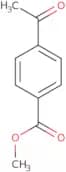
CAS:<p>2-Mercapto-5-benzimidazole sulfonic acid sodium salt dihydrate is a molecule that can be used in devices. It has been shown to reversibly change the morphology of a monolayer and to generate asymmetric structures. 2-Mercapto-5-benzimidazole sulfonic acid sodium salt dihydrate can be used to generate fluorescent emulsions, which are systems where the magnetic particles are suspended in an oil droplet and illuminated by light of an appropriate wavelength. The molecules that make up 2-Mercapto-5-benzimidazole sulfonic acid sodium salt dihydrate have been shown to function as acceptors for molecular orbitals, which are wave functions that describe electron distribution around the atomic nucleus. These properties make it a promising candidate for use in microscopy techniques, such as scanning tunneling microscopy (STM) or atomic force microscopy (AFM).</p>Formula:C7H5N2NaO3S2·2H2OPurity:Min. 95%Color and Shape:PowderMolecular weight:288.28 g/molMethyl 4-acetylbenzoate
CAS:<p>Methyl 4-acetylbenzoate is a synthetic compound that can be used for the synthesis of imatinib and other pharmaceuticals. It is an effective method for the synthesis of butyric acid with high enantiomeric purity. The cross-coupling reaction was first reported by Suzuki in 1979, which has been widely applied to organic synthesis because it is efficient and produces simple byproducts. This reaction has also been used in the synthesis of model compounds and natural products, as well as in environmental pollution studies.</p>Formula:C10H10O3Purity:Min. 95%Color and Shape:PowderMolecular weight:178.18 g/mol6-Methylpyridine-2-carboxylic acid
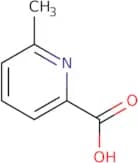
CAS:<p>6-Methylpyridine-2-carboxylic acid is a human metabolite that can be found in the serum matrix. It is part of a ternary complex formation with picolinic acid and fatty acid, which may result in an intramolecular hydrogen transfer from the methyl group to the oxygen atom of the carboxylic acid group. 6-Methylpyridine-2-carboxylic acid has been shown to react with hydroxyl groups to form n-oxides and redox potentials. These reactions are catalyzed by detergents.</p>Formula:C7H7NO2Purity:Min. 97 Area-%Color and Shape:PowderMolecular weight:137.14 g/mol6-Methyl-1H-indole-2,3-dione
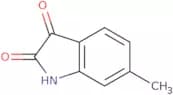
CAS:<p>6-Methyl-1H-indole-2,3-dione is a synthetic molecule that has an amide orientation. The molecule is a crystalline solid and can be found in the form of a white powder. This product also contains impurities such as amino acids, transport molecules, and formic acid. 6-Methyl-1H-indole-2,3-dione is soluble in solvents like formic acid and water. It has been shown to have transport properties for electrons and aldehydes.</p>Formula:C9H7NO2Purity:Min. 95%Color and Shape:PowderMolecular weight:161.16 g/mol6-Mercapto-1-hexanol
CAS:<p>6-Mercapto-1-hexanol is a redox active molecule that has been shown to be a potent inhibitor of human immunodeficiency virus type 1 reverse transcriptase. It has also been shown to inhibit the polymerase chain reaction and transfer reactions, including those mediated by DNA-dependent RNA polymerase. 6-Mercapto-1-hexanol can be detected with high sensitivity in human serum, which is its main application for the diagnosis of HIV infection. This compound reacts with molecular oxygen to form superoxide radicals, which are responsible for its redox potential. The rate constant for this reaction has been shown to be dependent on pH and temperature. 6-Mercapto-1-hexanol can also form stable complexes with proteins such as albumin or human immunoglobulin G (IgG). These complexes have been shown to exhibit electrochemical impedance spectroscopy activity at low concentrations and chemical stability in biological media.</p>Formula:C6H14OSPurity:Min. 96%Color and Shape:Clear LiquidMolecular weight:134.24 g/mol2-Mercaptopyridine N-oxide
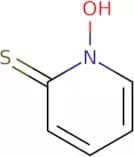
CAS:<p>2-Mercaptopyridine N-oxide is a radical that has been shown to have antifungal activity in vitro. It also inhibits the synthesis of peptide hormones by binding to copper ions, which are required for this process. 2-Mercaptopyridine N-oxide has been shown to chelate metal ions such as iron, which can lead to oxidative injury. This compound has been shown to be toxic in vivo, but it is not currently known if it is toxic in vitro.</p>Formula:C5H5NOSPurity:Min 97%Color and Shape:Off-White PowderMolecular weight:127.17 g/mol3-Methoxy-2,4,5-trifluorobenzoic acid
CAS:<p>3-Methoxy-2,4,5-trifluorobenzoic acid (3MTBF) is a ligand that binds to the active site of bacterial dehydrogenases. It is used to inhibit the growth of bacteria in the environment and food products. 3MTBF inhibits the production of fluoroquinolones by methylating their chlorides with methoxy groups. This compound also has bifunctional properties, as it can act as both a methylating agent and an inhibitor of dehydrogenase enzymes. 3MTBF inhibits the production of cancer cells by inhibiting transcription and translation, preventing cell division and proliferation. 3MTBF is thermostable, meaning it does not break down in high temperatures or at pH extremes.</p>Formula:C8H5F3O3Purity:Min. 95%Color and Shape:White to off-white solid.Molecular weight:206.12 g/mol3-(3-Methoxyphenyl)propionic acid
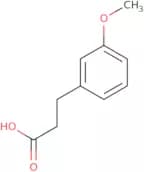
CAS:<p>3-(3-Methoxyphenyl)propionic acid is a phenylpropionic acid with the chemical formula C9H11O2. It is a competitive antagonist of the h3 receptors, and has been shown to inhibit acetylcholinesterase activity in vitro. 3-(3-Methoxyphenyl)propionic acid also has antioxidant properties, which may be due to its ability to inhibit lipase activity. This compound also has anti-inflammatory effects, which may be due to its ability to inhibit tryptophan metabolism. 3-(3-Methoxyphenyl)propionic acid has been shown to have therapeutic potential for Alzheimer's disease, as it can cross the blood brain barrier and inhibits amyloid beta (Aβ) aggregation.</p>Formula:C10H12O3Purity:Min. 95%Color and Shape:PowderMolecular weight:180.2 g/molMethyl-3-Formylindole-5-carboxylate
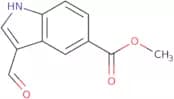
CAS:<p>Please enquire for more information about Methyl-3-Formylindole-5-carboxylate including the price, delivery time and more detailed product information at the technical inquiry form on this page</p>Formula:C11H9NO3Purity:Min. 95%Molecular weight:203.19 g/molMethyl 3,4-diaminobenzoate
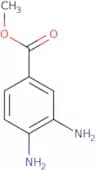
CAS:<p>Methyl 3,4-diaminobenzoate is a molecule that has been shown to inhibit nitrite reductase. It also binds to the receptor binding domain of the growth factor and to quinoxalines, which are antimicrobial peptides. In vitro assays have revealed that methyl 3,4-diaminobenzoate has antimicrobial properties against bacteria such as Enterococcus faecalis, Pseudomonas aeruginosa, Staphylococcus aureus, and Bacillus cereus. The mechanism of action for these activities is not well understood. Methyl 3,4-diaminobenzoate has been shown to be an inhibitor of tryptophan fluorescence in vitro and may act as a competitive inhibitor of the enzyme tryptophan fluorescence decarboxylase.</p>Formula:C8H10N2O2Purity:Min. 95%Color and Shape:White PowderMolecular weight:166.18 g/mol