Building Blocks
This section contains fundamental products for the synthesis of organic and biological compounds. Building blocks are the essential starting materials used to construct complex molecules through various chemical reactions. They play a critical role in drug discovery, material science, and chemical research. At CymitQuimica, we offer a diverse range of high-quality building blocks to support your innovative research and industrial projects, ensuring you have the essential components for successful synthesis.
Subcategories of "Building Blocks"
- Boronic Acids & Boronic Acid Derivatives(5,756 products)
- Chiral Building Blocks(1,242 products)
- Hydrocarbon Building Blocks(6,095 products)
- Organic Building Blocks(61,038 products)
Found 196817 products of "Building Blocks"
Sort by
Purity (%)
0
100
|
0
|
50
|
90
|
95
|
100
4-(Dimethylamino)-3-nitrobenzoic acid
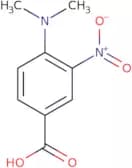
CAS:<p>4-(Dimethylamino)-3-nitrobenzoic acid is a chemical compound with CAS No. 28096-56-2. It is a high quality chemical reagent, useful as an intermediate for the synthesis of complex compounds and fine chemicals. It is also a useful building block for the synthesis of versatile building blocks, and can be used in reactions to form new chemical compounds. 4-(Dimethylamino)-3-nitrobenzoic acid is also a versatile building block that can be used in many reactions to form new chemical compounds, and can be used as a research chemical or speciality chemical.</p>Formula:C9H10N2O4Purity:Min. 95%Molecular weight:210.19 g/mol2,3-Dichloro-5,6-dicyanobenzoquinone
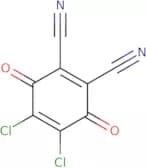
CAS:<p>2,3-Dichloro-5,6-dicyanobenzoquinone is a chemical compound with the molecular formula C12H4Cl2O2. It is used as a chemical intermediate in the production of dyes and pesticides. 2,3-Dichloro-5,6-dicyanobenzoquinone has been shown to have cytotoxic properties against lung fibroblasts in a model system that mimics the human body's reaction to this compound. The mechanism of action is thought to involve the formation of reactive oxygen species that leads to DNA damage. 2,3-Dichloro-5,6-dicyanobenzoquinone also has antiestrogenic activity and has been shown to be active against MDA-MB-231 breast cancer cells. The activation energies for these reactions are 7.8 kcal/mol for carbonyl group elimination and 8.1 kcal/mol for hyd</p>Formula:C8Cl2N2O2Color and Shape:Yellow PowderMolecular weight:227 g/mol2-Aminoethyl Acetate Hydrochloride
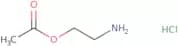
CAS:<p>Versatile small molecule scaffold</p>Formula:C4H9NO2·HClPurity:Min. 95%Color and Shape:PowderMolecular weight:139.58 g/mol2,6-Dichlorobenzaldehyde
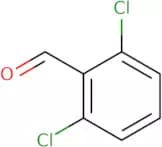
CAS:<p>2,6-Dichlorobenzaldehyde is a nucleophilic compound that has the ability to form hydrogen bonds. It reacts with phosphorus pentachloride to produce 2-chloro-4,6-dichlorobenzene. 2,6-Dichlorobenzaldehyde can be used in the synthesis of β-unsaturated ketones and anticancer drugs such as aziridines. It is also used as a precursor for coordination complexes. This compound is an efficient method for making nitrogen nucleophiles, which are important in chain reactions and the production of polymers. The 2,6-dichlorobenzaldehyde molecule contains two chiral centers that give rise to four stereoisomers. X-ray diffraction data shows that this molecule exists as a mixture of these four isomers.</p>Formula:C7H4Cl2OPurity:Min. 97.5%Color and Shape:PowderMolecular weight:175.01 g/mol1-(Ethenesulfonyl)-4-fluorobenzene
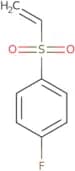
CAS:<p>1-(Ethenesulfonyl)-4-fluorobenzene is a versatile chemical that can be used as a building block for the synthesis of complex compounds. It is also a reagent and speciality chemical with many applications in research. 1-(Ethenesulfonyl)-4-fluorobenzene is an excellent starting material for the synthesis of useful scaffolds and it has shown to have high quality.</p>Formula:C8H7FO2SPurity:Min. 95%Molecular weight:186.21 g/mol2,6-Dichloropyridine-1-oxide
CAS:<p>2,6-Dichloropyridine-1-oxide is a reactive compound that has been synthesized by the reaction of ethyl diazoacetate and trifluoroacetic acid. The synthesis is scalable and can be immobilized in a ruthenium complex. The reactivity of this compound has been studied in kinetic experiments and molecular modeling simulations. 2,6-Dichloropyridine-1-oxide can form an epoxide with ethyl diazoacetate, which is used as the control experiment.</p>Formula:C5H3Cl2NOPurity:Min. 95%Color and Shape:White PowderMolecular weight:163.99 g/mol1-Butanoic acid-2-(O-methyl-L-tyrosine)-1-carbaoxytocin
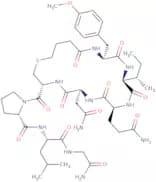
CAS:<p>1-Butanoic acid-2-(O-methyl-L-tyrosine)-1-carbaoxytocin (BMT) is a synthetic analog of oxytocin. Oxytocin is a hormone that is produced in the hypothalamus and released by the pituitary gland to stimulate uterine contractions and milk letdown in mammals. 1-Butanoic acid-2-(O-methyl-L-tyrosine)-1-carbaoxytocin has been shown to bind to the oxytocin receptor and stimulate the release of insulin, which may be useful for treating type 2 diabetes. BMT also stimulates epidermal growth factor (EGF) production and induces skin cell growth. It has been used as an animal health drug for stimulating appetite, increasing weight gain, reducing inflammation, and lowering blood pressure.</p>Formula:C45H69N11O12SPurity:Min. 95%Color and Shape:White PowderMolecular weight:988.16 g/mol2',4'-Dihydroxyacetophenone
CAS:<p>2',4'-Dihydroxyacetophenone is a compound that can be used in wastewater treatment. It has been shown to have an inhibitory effect on the activity of glucose-injection-hydrochloric acid and electrochemical impedance spectroscopy. 2',4'-Dihydroxyacetophenone also has an inhibitory effect on the diazonium salt, enzyme activities, hydroxyl group, and acetylcholinesterase inhibition. In addition, it has been shown to have cytotoxicity against human osteosarcoma cells, as well as fetal bovine and acetate extracts. The histological analysis of 2',4'-dihydroxyacetophenone showed that it also has anti-inflammatory properties.</p>Formula:C8H8O3Purity:Min. 95%Color and Shape:Red PowderMolecular weight:152.15 g/mol2,3-Dihydroxybenzaldehyde
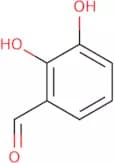
CAS:<p>2,3-Dihydroxybenzaldehyde is a chemical compound that has been shown to have antimicrobial properties. It inhibits bacterial growth by binding to the ribosome and preventing mRNA synthesis. 2,3-Dihydroxybenzaldehyde binds to the 50S ribosomal subunit and prevents protein synthesis by inhibiting the transfer mechanism of tRNA from the A site to the P site on the ribosome. The drug also inhibits mitochondrial superoxide production in V79 cells and human serum.<br>2,3-Dihydroxybenzaldehyde has been shown to be effective against methicillin resistant S. aureus (MRSA) strains but not against Group P2 Staphylococcus aureus (GPA). It is also active against Gram-positive bacteria such as Bacillus subtilis but not against Gram-negative bacteria like Escherichia coli or Pseudomonas aeruginosa.</p>Formula:C7H6O3Purity:Min. 96 Area-%Color and Shape:Slightly Yellow PowderMolecular weight:138.12 g/mol2,4-Dihydroxybenzaldehyde
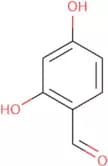
CAS:<p>2,4-Dihydroxybenzaldehyde (2,4DBA) is a copper complex that has been shown to have biological properties. This compound has been studied in biological studies and is classified as group p2 on the periodic table. It is a redox potential of -0.95 V and can undergo intramolecular hydrogen bonding with itself or with other molecules to form hydrogen bonds. Hydroxyl groups are found on 2,4DBA and can coordinate with the nitrogen atoms found on penicillin-binding proteins or acetylcholinesterase inhibition. The coordination geometry of 2,4DBA is tetrahedral and its methyl ethyl group is also found on this molecule.</p>Formula:C7H6O3Purity:Min. 98 Area-%Color and Shape:White PowderMolecular weight:138.12 g/mol[Hydroxy(propan-2-yl)carbamoyl]formic acid
CAS:<p>Hydroxy(propan-2-yl)carbamoyl formic acid is a metabolite of formaldehyde. It is used to measure formaldehyde in biological samples such as blood, serum, and urine. It also acts as a precursor for the production of other metabolites which are related to bowel disease and cardiac function. Hydroxy(propan-2-yl)carbamoyl formic acid has been shown to be a good indicator of iron homeostasis in vivo and in vitro models. This compound can be detected by chemiluminescence methods and can be used with zirconium oxide to study the effects on axonal growth.</p>Formula:C5H9NO4Purity:Min. 95%Molecular weight:147.13 g/mol2,5-Dihydroxybenzaldehyde
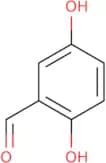
CAS:<p>2,5-Dihydroxybenzaldehyde is a compound that can be used as an antioxidant. It is also a precursor for the synthesis of benzalkonium chloride. 2,5-Dihydroxybenzaldehyde reacts with p-hydroxybenzoic acid to form 2,5-dihydroxyphenylacetic acid and benzoic acid. The reaction mechanism of 2,5-dihydroxybenzaldehyde has been studied in detail using hl-60 cells and has been shown to be significant cytotoxicity. The hydroxyl group in this molecule creates a hydrogen bond with the carbonyl group in p-hydroxybenzoic acid and the two react together to form products. This reaction is catalyzed by Michaelis–Menten kinetics and proceeds via an electrochemical detector. Nitrogen atoms are not present in this molecule but do exist in benzalkonium chloride, which is synthesized from 2</p>Formula:C7H6O3Purity:Min. 95%Color and Shape:Yellow PowderMolecular weight:138.12 g/mol3,4-Dihydroxybenzoic acid
CAS:<p>Dietary polyphenol</p>Formula:C7H6O4Purity:Min. 95%Color and Shape:PowderMolecular weight:154.12 g/mol(R)-3-Amino-2-methylpropanoic acid hydrochloride
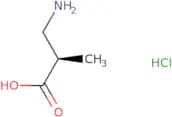
CAS:<p>(R)-3-Amino-2-methylpropanoic acid hydrochloride is a versatile building block that can be used in the synthesis of complex compounds and research chemicals. This chemical is used to produce a wide range of products, including pharmaceuticals, agrochemicals, flavors, fragrances, dyes and pigments. (R)-3-Amino-2-methylpropanoic acid hydrochloride is also an important reagent for research in organic chemistry. It has been used as a building block in the synthesis of new chemical entities with interesting biological properties. The compound is also useful as a scaffold for the development of new drugs or other chemical compounds.</p>Formula:C4H9NO2·HClPurity:Min. 95%Color and Shape:PowderMolecular weight:139.58 g/mol3,5-Dihydroxybenzoic acid
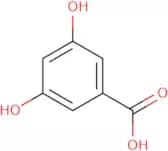
CAS:<p>3,5-Dihydroxybenzoic acid is a phenolic compound that belongs to the class of aromatic compounds. It is an inhibitor of the enzyme 3-hydroxyphenylpyruvate dioxygenase and is used in the treatment of obesity. It has been shown to have a low potency for inhibiting this enzyme, although it does not inhibit other enzymes such as p-hydroxybenzoate hydroxylase. 3,5-Dihydroxybenzoic acid binds to human serum albumin through hydrogen bonding interactions and can inhibit the absorption of dietary phenols by binding to them. This compound also acts as a protocatechuic acid structural analog and has been shown to be hydrated in solution.</p>Formula:C7H6O4Purity:Min. 95%Color and Shape:White PowderMolecular weight:154.12 g/mol3,5-Dihydroxybenzoic acid methyl ester
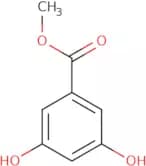
CAS:<p>3,5-Dihydroxybenzoic acid methyl ester is a potent tyrosinase inhibitor that has been shown to be effective in inhibiting the production of melanin. 3,5-Dihydroxybenzoic acid methyl ester is an active ingredient in skin lightening products and has been shown to be more potent than kojic acid, arbutin and ascorbic acid. The reaction mechanism of 3,5-Dihydroxybenzoic acid methyl ester is stepwise with hydroxybenzoic acid (HBA) being the first substrate. HBA reacts with iron oxides to form a ferric hydroxide intermediate that undergoes gelation reactions with chloride ions. This results in a molecule containing three ether linkages, which are responsible for its inhibitory activity on the enzyme tyrosinase.</p>Formula:C8H8O4Purity:Min. 95%Color and Shape:PowderMolecular weight:168.15 g/mol2,6-Dimethylbenzoic acid
CAS:<p>2,6-Dimethylbenzoic acid is a colorless solid that has a molecular weight of 162.2 g/mol and an empirical formula of C7H8O2. It has a melting point of about 82 degrees Celsius and a boiling point of about 315 degrees Celsius. 2,6-Dimethylbenzoic acid is soluble in water at 100 degrees Celsius. It has been shown to act as a potent antagonist for the muscarinic acetylcholine receptors. This compound also has basic properties due to its hydrogen bonding interactions with proteins and other molecules. 2,6-Dimethylbenzoic acid has been shown to be efficient in supramolecular chemistry because it is electron deficient and contains thermodynamic functional groups such as carboxylic acids and alcohols.</p>Formula:C9H10O2Purity:Min. 95%Color and Shape:PowderMolecular weight:150.17 g/mol2,4-Dimethylpyrrole
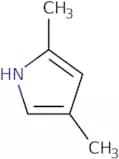
CAS:<p>2,4-dimethylpyrrole (DMP) is a N-heterocycle with two methyl groups. It is used as a dopant in jet fuels to promote oxidative degradation and is converted into a reactive fuel (Kabana, 2011). To a lesser extent, 2,4-dimethylpyrrole has shown antifungal properties and has been used as an active agent against pathogens causing head blight and root rot in some cereals (Sefer, 2017).</p>Formula:C6H9NPurity:Min. 96%Color and Shape:Brown Colorless Clear LiquidMolecular weight:95.14 g/molMinoxidil
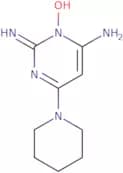
CAS:<p>Anti-androgen; anti-hypertensive; alopecia treatment</p>Formula:C9H15N5OPurity:Min. 95%Color and Shape:White Off-White PowderMolecular weight:209.25 g/molProbenecid
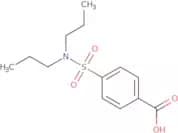
CAS:Controlled Product<p>Organic anion transporter inhibitor; pannexin 1 channel inhibitor</p>Formula:C13H19NO4SPurity:Min. 97.5 Area-%Color and Shape:White PowderMolecular weight:285.36 g/mol



![[Hydroxy(propan-2-yl)carbamoyl]formic acid](/_next/image/?url=https%3A%2Fstatic.cymitquimica.com%2Fproducts%2F3D%2Fthumb-webp%2FHFA41803.webp&w=3840&q=75)