Building Blocks
This section contains fundamental products for the synthesis of organic and biological compounds. Building blocks are the essential starting materials used to construct complex molecules through various chemical reactions. They play a critical role in drug discovery, material science, and chemical research. At CymitQuimica, we offer a diverse range of high-quality building blocks to support your innovative research and industrial projects, ensuring you have the essential components for successful synthesis.
Subcategories of "Building Blocks"
- Boronic Acids & Boronic Acid Derivatives(5,756 products)
- Chiral Building Blocks(1,242 products)
- Hydrocarbon Building Blocks(6,095 products)
- Organic Building Blocks(61,051 products)
Found 199813 products of "Building Blocks"
Sort by
Purity (%)
0
100
|
0
|
50
|
90
|
95
|
100
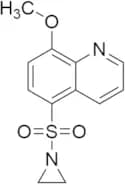
5-(1-Aziridinylsulfonyl)-8-methoxyquinoline
CAS:Controlled ProductFormula:C12H12N2O3SColor and Shape:NeatMolecular weight:264.3Malonuric Acid
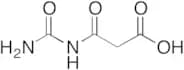
CAS:Controlled Product<p>Applications Malonuric Acid is produced during degradation of sodium barbiturates.<br>References Fretwurst, F., et al.: Arzneimittel-Forschung, 8, 44-50 (1958)<br></p>Formula:C4H6N2O4Color and Shape:NeatMolecular weight:146.14-Sulfamoylbenzoic Acid
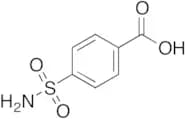
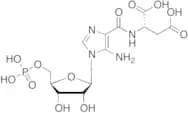
CAS:Controlled Product<p>Applications 4-Sulfamoylbenzoic Acid is used as a reagent in the synthesis of carbonic anhydrase inhibitors anticonvulsant agents.<br>References Singh, S. et al.: J. Enz. Inhib. Med. Chem., 31, 417 (2016);<br></p>Formula:C7H7NO4SColor and Shape:NeatMolecular weight:201.2N-Succinyl-5-aminoimidazole-4-carboxamide Ribose 5’-Phosphate
CAS:<p>Applications N-Succinyl-5-aminoimidazole-4-carboxamide Ribose 5’-Phosphate is a metabolite of Purine. Since adenosine is a potent inhibitor of neuronal function, depressing the release of several excitatory transmitters and causing direct hyperpolarization of neurons, it was possible that the symptoms seen in adenylosuccinate lyase (ASase) deficient patients could reflect an interference of succinylpurines with neurotransmission.<br>References Gollub, E.G., et al.: J. Bacteriol., 78, 320 (1959), Srivastava, P.C., et al.: J. Med. Chem., 17, 1207 (1974),<br></p>Formula:C13H19N4O12PColor and Shape:NeatMolecular weight:454.284-Acetylpyridine
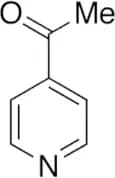
CAS:Controlled Product<p>Applications 4-Acetylpyridine is a acetylated pyridine used in the preparation of nitrogen containing bicyclic heterocycles and other organic compounds. 4-Acetylpyridine is also present in mainstream cigarette smoke.<br>References Kulshreshtha, N.P. et al.: J. Chrom. A, 985, 303 (2003); Scian, M. et al.: Inhal. Toxicol., 21, 1040 (2009);<br></p>Formula:C7H7NOColor and Shape:Yellow To BrownMolecular weight:121.145-Acetyloxolan-2-one
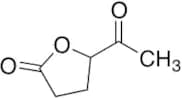
CAS:Controlled Product<p>Applications 5-acetyloxolan-2-one (cas# 29393-32-6) is a useful research chemical.<br></p>Formula:C6H8O3Color and Shape:NeatMolecular weight:128.12[[3-[(Dimethylamino)carbonyl]-2-pyridinyl]sulfonyl]carbamic Acid Methyl Ester
CAS:Controlled Product<p>Applications Nicosulfuron intermediate.<br></p>Formula:C10H13N3O5SColor and Shape:NeatMolecular weight:287.292tert-Butylhydrazine Hydrochloride
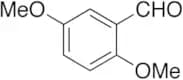
CAS:Controlled Product<p>Applications tert-Butylhydrazine Hydrochloride is a a hydrazine compound used in organic synthesis for aromatic nucleophilic N-N exchange reaction. tert-Butylhydrazine Hydrochloride is also used in the preparation of insect growth regulator.<br>References Hojo, M. et al.: Synthesis, 6, 481 (1990); Zhang, J. et al.: Huax. Shijie, 36, 576 (1995);<br></p>Formula:C4H13ClN2Color and Shape:NeatMolecular weight:124.612,5-Dimethoxybenzaldehyde
CAS:Controlled Product<p>Applications 2,5-Dimethoxybenzaldehyde (cas# 93-02-7) is a compound useful in organic synthesis.<br></p>Formula:C9H10O3Color and Shape:NeatMolecular weight:166.17Palmitoyl Chloride
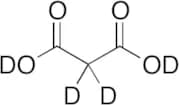
CAS:Controlled Product<p>Stability Moisture Sensitive<br>Applications Palmitoyl Chloride was used as a polymeric carriers for plasmid DNA (pDNA) delivery to 293T cells.<br>References Remant, B.K.C., et al.: J. Biomaterials. Sci. Poly. Ed., 22, 873 (2011); Allard, E., et al.: Int. J. Pharma., 379, 217 (2009);<br></p>Formula:C16H31ClOColor and Shape:Light YellowMolecular weight:274.87Malonic Acid-d4
CAS:Controlled Product<p>Stability Moisture Sensitive<br>Applications Malonic Acid-d4 is the isotope labelled analog of Malonic Acid (M158005); a small bioactive molecule that can be used in various reactions. It is the classic example of a competitive inhibitor which acts against succinate dehydrogenase (complex II) in the respiratory electron transport chain.<br>References Weiner, N., "Malonic Acid", Org. Synth.; Coll. Vol. 2: 376<br></p>Formula:C3D4O4Color and Shape:NeatMolecular weight:108.0861,10-Decanedioic-2,2,9,9-d4 Acid
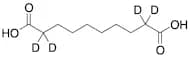
CAS:Controlled Product<p>Applications 1,10-Decanedioic-2,2,9,9-d4 Acid (CAS# 339080-77-2) is a useful isotopically labeled research compound.<br></p>Formula:C10H14D4O4Color and Shape:NeatMolecular weight:206.27Malonic Acid
CAS:Controlled Product<p>Applications Malonic Acid, is a small bioactive molecule, that can be used in variuos reactions. It is the classic example of a competitive inhibitor, which acts against succinate dehydrogenase (complex II) in the respiratory electron transport chain.<br>References Weiner, N., "Malonic acid", Org. Synth.; Coll. Vol. 2: 376;<br></p>Formula:C3H4O4Color and Shape:WhiteMolecular weight:104.06



![[[3-[(Dimethylamino)carbonyl]-2-pyridinyl]sulfonyl]carbamic Acid Methyl Ester](/_next/image/?url=https%3A%2Fstatic.cymitquimica.com%2Fproducts%2FTR%2Fthumb-webp%2FD460866.webp&w=3840&q=75)