Building Blocks
This section contains fundamental products for the synthesis of organic and biological compounds. Building blocks are the essential starting materials used to construct complex molecules through various chemical reactions. They play a critical role in drug discovery, material science, and chemical research. At CymitQuimica, we offer a diverse range of high-quality building blocks to support your innovative research and industrial projects, ensuring you have the essential components for successful synthesis.
Subcategories of "Building Blocks"
- Boronic Acids & Boronic Acid Derivatives(5,778 products)
- Chiral Building Blocks(1,242 products)
- Hydrocarbon Building Blocks(6,098 products)
- Organic Building Blocks(61,034 products)
Found 199601 products of "Building Blocks"
Sort by
Purity (%)
0
100
|
0
|
50
|
90
|
95
|
100
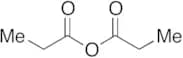
Propionic Anhydride
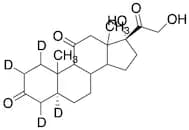
CAS:Controlled ProductFormula:C6H10O3Color and Shape:NeatMolecular weight:130.14185α-Pregnan-17α,21-diol-3,11,20-trione-1,2,4,5-d4
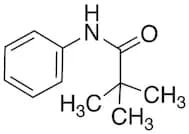
CAS:Controlled ProductFormula:C21D4H26O5Color and Shape:NeatMolecular weight:366.49N-Pivaloylaniline
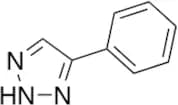
CAS:<p>Applications An intermediate for the synthesis of Norharmane.<br>References Peifer, C., et al.: J. Med. Chem., 50, 1213 (2007),<br></p>Formula:C11H15NOColor and Shape:Off-White To Light YellowMolecular weight:177.245-Phenyl-1H-1,2,3-triazole
CAS:Controlled Product<p>Applications 5-Phenyl-1H-1,2,3-triazole (cas# 1680-44-0) is a useful research chemical.<br></p>Formula:C8H7N3Color and Shape:NeatMolecular weight:145.161Phosphorus(V) Oxybromide
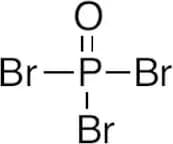
CAS:Controlled Product<p>Applications Phosphorus(V) Oxybromide is a reagent used in the preparation of phosphoryl halide for N-protection of amino acids using group assisted purification (GAP). Phosphorus(V) Oxybromide is a brominating agent.<br>References An, G., et al.: Heterocycles, 90, 344 (2015); Guo, J., et al.: Hebei Gongye Daxue Xuebao, 40, 57 (2011); Golding, D., et al.: J. Org. Chem., 12, 293 (1947)<br></p>Formula:Br3OPColor and Shape:NeatMolecular weight:286.69Phosphoric Acid Dibenzyl Ester
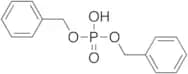
CAS:<p>Stability Moisture Sensitive<br>Applications Eye irritant.<br>References Bagley, D. M. et al.; Toxicol. In Vitro 13, 505 (1999); Gilleron, L. et al.; Toxicol. In Vitro 11, 641 (1997)<br></p>Formula:C14H15O4PColor and Shape:NeatMolecular weight:278.243-Phenyl-5-vinyl-1,2,4-oxadiazole
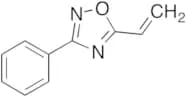
CAS:<p>Stability Light Sensitive<br>Applications 3-Phenyl-5-vinyl-1,2,4-oxadiazole is a chemical reagent used in the synthesis of pharmaceutically active motifs.<br>References Burns, A. et al.: Org. Biomol. Chem., 8, 2777 (2010); Catanese, B. et al.: Exp. Mol. Path. Supp., 2, 28 (1963);<br></p>Formula:C10H8N2OColor and Shape:NeatMolecular weight:172.1834-Phenyl-1,2,4-triazoline-3,5-dione
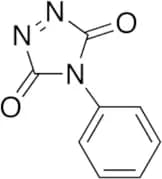
CAS:<p>Applications Azodicarbonyl reagent used in the methods for determining levels of 1,25 dihydroxyvitamin d2 and d3 in biological and food samples and dietary supplements.<br>References Aranov, P. K. et al.: Anal. Bioanal. Chem., 391, 1917 ( 2008),<br></p>Formula:C8H5N3O2Color and Shape:NeatMolecular weight:175.14(S)-1-Phenyl-1,2,3,4-tetrahydroisoquinoline
CAS:Controlled Product<p>Impurity Solifenacin EP impurity A<br>Applications Solifenacin (S676700) intermediate.<br>References Andersson, K., et al.: Drugs, 35, 477 (1988), Wallis, R., et al.: Life Sci., 64, 395 (1999), Mitsuya, M., et al.: J. Med. Chem., 43, 5017 (2000), Ohtake, A., et al.: Eur. J. Pharmacol., 492, 243 (2004),<br></p>Formula:C15H15NColor and Shape:White To Off-WhiteMolecular weight:209.29rac 1-Phenyl-1,2,3,4-tetrahydroisoquinoline
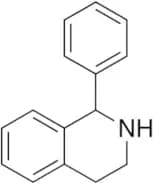
CAS:Controlled Product<p>Applications 1-Phenyl-1,2,3,4-tetrahydroisoquinoline is a Solifenacin (S676700) intermediate. 1-Phenyl-1,2,3,4-tetrahydroisoquinoline had been detected in parkinsonian human brain. 1-Phenyl-1,2,3,4-tetrahydroisoquinoline maybe a candidate for endogenous MPTP-like neurotoxin since it is a structural analogue of MPTP which produces parkinsonism in humans.<br>References Kajita, M. et al.: J. Chrom. B Biomed. Appl., 669, 345 (1995);<br></p>Formula:C15H15NColor and Shape:NeatMolecular weight:209.29Phenylboronic Acid (95%)
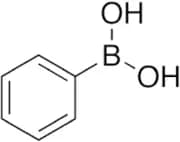
CAS:Controlled Product<p>Applications Phenylboronic Acid is a compound used in organic synthesis of various pharmaceutical goods.<br>References Ainley, A.D., et al.: J. Chem. Soc., 2171 (1930);<br></p>Formula:C6H7BO2Purity:95%Color and Shape:NeatMolecular weight:121.93(E)-1-Phenyl-1-butene
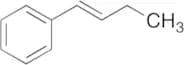
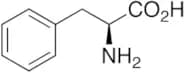
CAS:Controlled Product<p>Applications (E)-1-Phenyl-1-butene was used to study olefin oxidation by cytochrome P-450. It can be used to synthesize nonracemic allylic amines. It can also be used to prepare aryl oxiranes by direct epoxidation.<br>References Liebler, D., et al.: Biochem., 22, 5482 (1983); Liang, C., et al.: J. Am. Chem. Soc., 130, 343 (2008); Imuta, M., et al.: J. Org. Chem., 44, 1351 (1979)<br></p>Formula:C10H12Color and Shape:NeatMolecular weight:132.20L-Phenylalanine
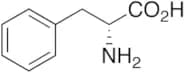
CAS:<p>Impurity Aspartame EP Impurity C<br>Applications L-Phenylalanine (Aspartame EP Impurity C) is an essential amino acid. L-Phenylalanine is biologically converted into L-tyrosine, another one of the DNA-encoded amino acids, which in turn is converted to L-DOPA and further converted into dopamine, norepinephrine, and epinephrine. L-Phenylalanine is produced for medical, feed, and nutritional applications such as in the preparation of Aspartame. Neuroprotective product.<br>References Hollunger, G. et al.: Acta Pharmacol. Toxicol., 34, 391 (1974); Bagchi, S.P. et al.: Biochem. Pharmacol., 26, 900 (1977);<br></p>Formula:C9H11NO2Color and Shape:WhiteMolecular weight:165.19D-Phenylalanine
CAS:Controlled Product<p>Applications D-Phenylalanine, the stereoisomer of L-Phenylalanine (P319415) has been used in the synthesis of Schaeffer’s acid analogues as important structures in tuberculostatic design. They exhibit the ability to inhibit Mycobacterium tuberculosis type II dehydroquinase.<br>References Schmidt, M. et al.: ChemMedChem., 8, 54 (2013);<br></p>Formula:C9H11NO2Color and Shape:NeatMolecular weight:165.19Pyrrolo[1,2-a]pyrazine-1-carboxylic Acid (>90%)
CAS:Controlled Product<p>Applications pyrrolo[1,2-a]pyrazine-1-carboxylic acid (cas# 1895300-97-6) is a useful research chemical.<br></p>Formula:C8H6N2O2Purity:>90%Color and Shape:YellowMolecular weight:162.145Sodium Perchlorate monohydrate
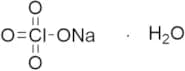
CAS:Controlled ProductFormula:ClO4·Na·H2OColor and Shape:White To Off-WhiteMolecular weight:140.461,2,2,6,6-Pentamethylpiperidine
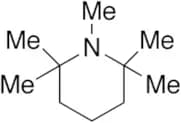
CAS:Controlled Product<p>Applications 1,2,2,6,6-Pentamethylpiperidine is used in the synthesis of BN-fused polycyclic aromatic molecules for potential application to electronic materials and apparatus. In addition, it is a catalyst for the chemoselective silylation of benzylic alcohols.<br> Not a dangerous good if item is equal to or less than 1g/ml and there is less than 100g/ml in the package<br>References Hatakeyama, T. J. Am. Chem. Soc., 133, 18614 (2011); Naiki, M. et al.: Tetrahedron Lett., 42, 5467 (2001);<br></p>Formula:C10H21NColor and Shape:NeatMolecular weight:155.28Pentafluorobenzoyl Chloride
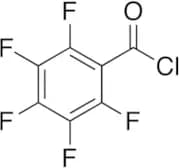
CAS:Controlled Product<p>Stability Moisture Sensitive<br>Applications Pentafluorobenzoyl Chloride is a useful analytical reagent in the derivatization amphetamines as well as other primary amines.<br> Not a dangerous good if item is equal to or less than 1g/ml and there is less than 100g/ml in the package<br>References Koster, E. et al.: Analyst, 127, 598 (2002);<br></p>Formula:C7ClF5OColor and Shape:NeatMolecular weight:230.52Hexadecanoic-9,9,10,10,11,11,12,12,13,13,14,14,15,15,16,16,16-d17 Acid
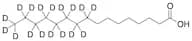
CAS:Controlled Product<p>Applications Hexadecanoic-9,9,10,10,11,11,12,12,13,13,14,14,15,15,16,16,16-d17 Acid (CAS# 81462-28-4) is a useful isotopically labeled research compound.<br></p>Formula:C16H15D17O2Color and Shape:White To Off-WhiteMolecular weight:273.53


![Pyrrolo[1,2-a]pyrazine-1-carboxylic Acid (>90%)](/_next/image/?url=https%3A%2Fstatic.cymitquimica.com%2Fproducts%2FTR%2Fthumb-webp%2FP308506.webp&w=3840&q=75)