Building Blocks
This section contains fundamental products for the synthesis of organic and biological compounds. Building blocks are the essential starting materials used to construct complex molecules through various chemical reactions. They play a critical role in drug discovery, material science, and chemical research. At CymitQuimica, we offer a diverse range of high-quality building blocks to support your innovative research and industrial projects, ensuring you have the essential components for successful synthesis.
Subcategories of "Building Blocks"
- Boronic Acids & Boronic Acid Derivatives(5,756 products)
- Chiral Building Blocks(1,242 products)
- Hydrocarbon Building Blocks(6,095 products)
- Organic Building Blocks(61,038 products)
Found 196817 products of "Building Blocks"
Sort by
Purity (%)
0
100
|
0
|
50
|
90
|
95
|
100
Quinoline 2,4-dicarboxylic acid
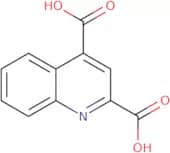
CAS:<p>Quinoline 2,4-dicarboxylic acid (QDA) is a novel cytotoxic agent that targets cervical cancer cells. It inhibits the uptake of glucose and other nutrients by cervical cancer cells, leading to cell death through apoptosis. QDA also inhibits the expression of genes involved in cross-linking reactions, which are important for the structural integrity of proteins. This agent has been shown to inhibit the growth of aniline-induced breast cancer cells and glutamate-stimulated PC12 cells. QDA binds to DNA and forms covalent bonds with nucleotide bases, inhibiting DNA synthesis, as well as interfering with protein synthesis and cell division. The QDA mechanism is similar to that of benzoquinolines and estrone sulfate.</p>Formula:C11H7NO4Purity:Min. 95%Color and Shape:White PowderMolecular weight:217.18 g/mol2-Hydroxy-3-methoxybenzaldehyde
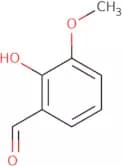
CAS:<p>2-Hydroxy-3-methoxybenzaldehyde is a model compound that is used to study the reaction mechanism of hydrogen bonding. It has been shown to have antioxidative properties and amoebicidal activity. The biological properties of 2-hydroxy-3-methoxybenzaldehyde are still being studied. There are also no reports on its toxicity or carcinogenicity in humans. This compound is a member of the group P2, which includes compounds with two aromatic rings connected by one carbon atom. The molecular geometry around this carbon atom is pyramidal and the molecule can exist in either an axial or equatorial orientation. Synchronous fluorescence experiments have shown that 2-hydroxymethoxybenzaldehyde reacts with Toll-like receptor 4 (TLR4).</p>Formula:C8H8O3Purity:Min. 95%Color and Shape:Yellow PowderMolecular weight:152.15 g/mol2-Hydroxy-4-methoxybenzaldehyde
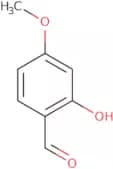
CAS:<p>2-Hydroxy-4-methoxybenzaldehyde is an antifungal agent that has been shown to have a broad spectrum of activity against filamentous fungi. It is able to inhibit the growth of fungi by inhibiting the enzyme shikimate dehydrogenase, which is involved in the synthesis of aromatic amino acids and other essential metabolites. 2-Hydroxy-4-methoxybenzaldehyde also inhibits xylose reductase and alpha-galactosidase, enzymes that are involved in cell wall biosynthesis. This compound is effective against Candida albicans, Aspergillus niger, and Trichophyton mentagrophytes. 2-Hydroxy-4-methoxybenzaldehyde has also been shown to have bacteriostatic effects on Escherichia coli.</p>Formula:C8H8O3Purity:Min. 95%Color and Shape:Off-White PowderMolecular weight:152.15 g/molPamoic acid
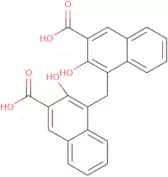
CAS:<p>Pamoic acid is a natural compound that has been found to exhibit antimicrobial activity against a variety of microorganisms. Pamoic acid is also used in the treatment of infectious diseases, such as leprosy, tuberculosis, and AIDS. The biological properties of pamoic acid are due to its ability to bind with peptide hormones and act as a pharmacological agent. Pamoic acid is able to inhibit the synthesis of peptide hormones by binding to their receptors on the cell surface. This inhibition can lead to immunosuppression (e.g., autoimmune diseases) and mitochondrial membrane depolarization. Pamoic acid is also able to bind with benzalkonium chloride, which may account for some of its antimicrobial activity.<br>Pamoic acid is synthesized from pantothenic acid (vitamin B5) and caproic acid by means of an enzymatic process called transamination.</p>Formula:C23H16O6Purity:Min. 95%Color and Shape:Yellow PowderMolecular weight:388.37 g/mol1-Phenyl-3-(propan-2-yl)urea
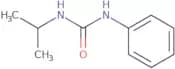
CAS:<p>1-Phenyl-3-(propan-2-yl)urea is a chemical compound that is used in the synthesis of organic compounds. It has been shown to be useful as a building block and also has applications in the preparation of complex compounds. 1-Phenyl-3-(propan-2-yl)urea can be used as a reagent for reactions involving esterification, hydrolysis, cyclization, and nitration. The compound is also useful for research purposes and can be used as an intermediate for other chemicals.</p>Formula:C10H14N2OPurity:Min. 95%Color and Shape:PowderMolecular weight:178.23 g/molPPACK hydrochloride
CAS:<p>Please enquire for more information about PPACK hydrochloride including the price, delivery time and more detailed product information at the technical inquiry form on this page</p>Formula:C21H31ClN6O3•xHClPurity:Min. 95%Color and Shape:PowderMolecular weight:487.42 g/mol6-Phenoxy-3-pyridinemethanol
CAS:<p>Please enquire for more information about 6-Phenoxy-3-pyridinemethanol including the price, delivery time and more detailed product information at the technical inquiry form on this page</p>Formula:C12H11NO2Purity:Min. 95%Color and Shape:Clear LiquidMolecular weight:201.22 g/mol1,1,2,3,3-Pentachloropropane
CAS:<p>Please enquire for more information about 1,1,2,3,3-Pentachloropropane including the price, delivery time and more detailed product information at the technical inquiry form on this page</p>Formula:C3H3Cl5Purity:Min. 95%Color and Shape:Clear LiquidMolecular weight:216.32 g/mol2-(Pyridin-4-ylformamido)acetic acid
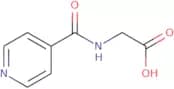
CAS:<p>2-(Pyridin-4-ylformamido)acetic acid is a chemical intermediate that is used in the synthesis of other compounds. It is a chemical building block, useful for the production of fine chemicals and speciality chemicals. 2-(Pyridin-4-ylformamido)acetic acid can be used as a reaction component or reagent in organic synthesis. It has been shown to have high purity and quality for research purposes. CAS No. 2015-20-5.br><br>2-(Pyridin-4-ylformamido)acetic acid can be used to synthesize a variety of compounds with different properties, such as antihistamines, antibiotics, antihypertensives, and antipsychotics.</p>Formula:C8H8N2O3Purity:Min. 95 Area-%Color and Shape:PowderMolecular weight:180.16 g/molPhospho-L-tyrosine disodium
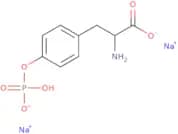
CAS:<p>Phospho-L-tyrosine disodium is a versatile building block that has many different uses in research. It is used as a reagent for the synthesis of other chemicals, such as vitamins, drugs and pesticides. The compound can be used to make high quality, useful intermediates for chemical reactions or as a reaction component. Phospho-L-tyrosine disodium is a speciality chemical that can be used in the production of many complex compounds. This product also has CAS number 1610350-91-8.</p>Formula:C9H10NNa2O6PPurity:Min. 95%Color and Shape:White PowderMolecular weight:305.13 g/mol2-(1-Methyl-4-oxo-1,4-dihydro-5H-pyrazolo[3,4-d]pyrimidin-5-yl)acetohydrazide
CAS:Controlled Product<p>2-(1-Methyl-4-oxo-1,4-dihydro-5H-pyrazolo[3,4-d]pyrimidin-5-yl)acetohydrazide is a fine chemical that is a versatile building block in the synthesis of complex compounds. It is also a useful intermediate for the synthesis of pharmaceuticals and agrochemicals. CAS No. 938018-24-7</p>Formula:C8H10N6O2Purity:Min. 95%Molecular weight:222.2 g/molPyridine 4-acetic acid HCl
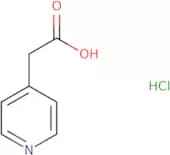
CAS:<p>Pyridine 4-acetic acid HCl is a synthetic, fluorescent probe with reactive and luminescence properties. It is used for the detection of hydrogen bond formation in organic compounds. It is also used as a probe to study the molecular interactions between metal ions and β-unsaturated aldehydes. Pyridine 4-acetic acid HCl has been shown to be useful for transduction of light energy into chemical energy. The pyridine ring makes this compound an excellent candidate for molecular modeling studies due to its rigid structure.</p>Formula:C7H8ClNO2Purity:Min. 95%Color and Shape:PowderMolecular weight:173.6 g/molPyrene
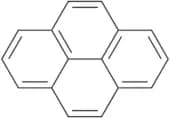
CAS:<p>Pyrene is a chemical compound that has been found to bind to DNA and inhibit the transcription of genetic information. It has been used as a fluorescence probe in biochemical research, wastewater treatment, and surface methodology. As a redox probe, pyrene can be used to measure the redox potential of reaction solutions. Pyrene has also been used as an analytical method for measuring transfer reactions in biological studies.</p>Formula:C16H10Purity:Min. 98 Area-%Color and Shape:PowderMolecular weight:202.25 g/molPiperazin-2-one
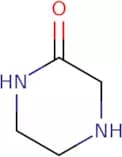
CAS:<p>Building block in medicinal chemistry</p>Formula:C4H8N2OPurity:Min. 95%Color and Shape:White PowderMolecular weight:100.12 g/molPropiolic acid
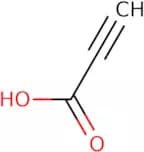
CAS:<p>Propiolic acid is a glucuronide conjugate that has been shown to inhibit the JAK1 protein. It is an organic compound with a hydroxyl group at the C-3 position and a trifluoroacetate ester at the C-4 position. Propiolic acid has been shown to be effective in treating autoimmune diseases in CD-1 mice. It is also used as an environmental agent for wastewater treatment, which can remove nitrogen from water by converting it into nitrate. The intramolecular hydrogen bond between carbonyl oxygen and hydroxyl oxygen has been shown to be responsible for its high solubility properties. This property is utilized in detergent compositions, where propiolic acid is added to break down fatty acids into their constituent parts of glycerol and fatty acids.</p>Formula:C3H2O2Purity:Min. 95%Color and Shape:Colorless Clear LiquidMolecular weight:70.05 g/molPropionamide
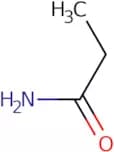
CAS:<p>Propionamide is an amide that inhibits bacterial growth by binding to the DNA-dependent RNA polymerase and preventing transcription. It is used in treatment trials for bacterial infections. Propionamide has been shown to inhibit the growth of bacteria in vitro and in vivo, as well as to have an inhibitory effect on experimental solubility data. The chemical properties of propionamide are consistent with a potential use as a drug for treating metabolic disorders, such as diabetes mellitus and obesity.</p>Formula:C3H7NOPurity:Min. 95%Color and Shape:White PowderMolecular weight:73.09 g/molPentachlorocyclopropane
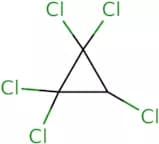
CAS:<p>Pentachlorocyclopropane is a chemical compound that belongs to the class of cyclic chlorinated hydrocarbons. It is a colorless liquid with a strong odor and a boiling point of 176 °C. Pentachlorocyclopropane has been used as an intermediate for the production of other chemicals, such as alkyl chlorides, amines, and polymers. Pentachlorocyclopropane can be synthesized from hydrogen chloride and 1-chloro-2-propanone in the presence of aluminum chloride or zinc chloride. The Friedel-Crafts reaction can also be used to produce pentachlorocyclopropane from benzene and chlorine gas. The chemical stability of pentachlorocyclopropane is due to its intramolecular hydrogen bonds. This allows it to be stored at room temperature without undergoing any reactions or decomposing. Pentachlorocyclopropane is not</p>Formula:C3HCl5Purity:Min. 95%Color and Shape:Colorless Clear LiquidMolecular weight:214.3 g/mol2,3-Pyrazinedicarboxylic acid
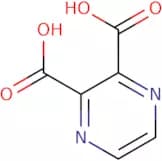
CAS:<p>2,3-Pyrazinedicarboxylic acid is a molecule that can be found in bacteria and is the product of an intramolecular hydrogen reaction. It has been shown to have antibacterial activity against a strain of Bacillus subtilis. 2,3-Pyrazinedicarboxylic acid has been shown to react with hydrochloric acid to form an acid complex. The intramolecular hydrogen bond of 2,3-pyrazinedicarboxylic acid makes it hydrophilic and therefore it is soluble in water. This molecule also has the ability to form hydrogen bonding interactions with other molecules.<br>2,3-Pyrazinedicarboxylic acid has been shown to have anti-inflammatory properties because it inhibits prostaglandin synthesis by inhibiting cyclooxygenase and lipoxygenase enzymes.</p>Formula:C6H4N2O4Purity:Min. 95%Color and Shape:White PowderMolecular weight:168.11 g/molGlycine
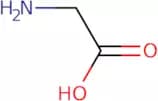
CAS:<p>Glycine is the simplest amino acid and is used as a reagent for the synthesis of proteins. It is also a component of buffer solutions to maintain a stable pH in lab applications like electrophoresis and enzyme assays.</p>Formula:NH2CH2COOHColor and Shape:White Off-White PowderMolecular weight:75.07 g/molGlyceryl-4-aminobenzoate monomer
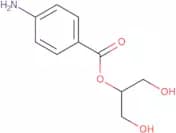
CAS:<p>Glyceryl-4-aminobenzoate monomer is a fine chemical that is an important building block in the synthesis of a variety of complex compounds. It has been used as a reagent and intermediate in research and development of pharmaceuticals and agrochemicals. Glyceryl-4-aminobenzoate monomer is a versatile building block, which can be used to form polymers, coatings, adhesives, elastomers, polyurethanes, and more. The compound also has been shown to have anticancer activity against human breast cancer cells.</p>Formula:C10H13NO4Purity:Min. 75 Area-%Color and Shape:Off-white to beige solid.Molecular weight:211.21 g/mol


![2-(1-Methyl-4-oxo-1,4-dihydro-5H-pyrazolo[3,4-d]pyrimidin-5-yl)acetohydrazide](/_next/image/?url=https%3A%2Fstatic.cymitquimica.com%2Fproducts%2F3D%2Fthumb-webp%2FNMB01824.webp&w=3840&q=75)