Building Blocks
This section contains fundamental products for the synthesis of organic and biological compounds. Building blocks are the essential starting materials used to construct complex molecules through various chemical reactions. They play a critical role in drug discovery, material science, and chemical research. At CymitQuimica, we offer a diverse range of high-quality building blocks to support your innovative research and industrial projects, ensuring you have the essential components for successful synthesis.
Subcategories of "Building Blocks"
- Boronic Acids & Boronic Acid Derivatives(5,756 products)
- Chiral Building Blocks(1,242 products)
- Hydrocarbon Building Blocks(6,095 products)
- Organic Building Blocks(61,051 products)
Found 199813 products of "Building Blocks"
Sort by
Purity (%)
0
100
|
0
|
50
|
90
|
95
|
100
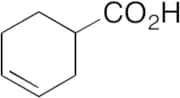
3-Cyclohexenylcarboxylic Acid
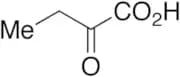
CAS:Controlled Product<p>Applications 3-Cyclohexenylcarboxylic Acid has been found to be an oxidizable, nongrowth substrate and induces the metabolism of cyclohexanecarboxylic acid and benzoic acid in a strain of Pseudomonas putida. 3-Cyclohexenylcarboxylic Acid has been used as food for cultures of Streptomyces sp. KCTC 11604BP fkbO deletion mutant to make 32-dehydroxy-FK506, a FK506 analogue containing a non-natural starter unit.<br> Not a dangerous good if item is equal to or less than 1g/ml and there is less than 100g/ml in the package<br>References Blakley, E.R., Papish, B.: Can. J. Microbiol., 28, 1324 (1982); Ban, Y.H., et. al.: Mol. bioSystems, 9, 944 (2013)<br></p>Formula:C7H10O2Color and Shape:NeatMolecular weight:126.15a-Ketobutyric Acid
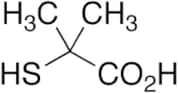
CAS:Controlled Product<p>Applications A substrate for the determination of lactate dehydrogenase isoenzymes.This compound is suitable for lactate dehydrogenase (LDH) related research.<br>References Hegeman, G., et al.: J. Bacteriol., 91, 1155 (1966), Dobritzsch, D., et al.: J. Biol. Chem., 273, 20196 (1998), Chang, A., et al.: Biochem. J., 339, 255 (1999),<br></p>Formula:C4H6O3Color and Shape:Colourless Solid With A Low Melting PointMolecular weight:102.092-Mercaptoisobutyric Acid, 90%
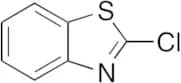
CAS:Controlled Product<p>Applications 2-Mercaptoisobutyric Acid, 90% (cas# 4695-31-2) is a compound useful in organic synthesis.<br>References McIntosh, J.M. and Siddiqui, M.A.: Can. J. Chem., 61, 1872-1875 (1983), Bienlarz, C. and Cornwall, M.J.: Tetrahedron Lett., 34 (6), 939-942 (1993)<br></p>Formula:C4H8O2SPurity:90%Color and Shape:NeatMolecular weight:120.172-Chloro-1,3-benzothiazole
CAS:Controlled Product<p>Applications 2-Chloro-1,3-benzothiazole is used in the synthesis of CBTs which are good building blocks for bioluminescent compounds for imaging.<br>References Hauser, J. et al.: Bell. J. Org. Chem., 12, 2019 (2016);<br></p>Formula:C7H4ClNSColor and Shape:NeatMolecular weight:169.632-Mercapto-4-methyl-5-thiazoleacetic Acid
CAS:Controlled Product<p>Applications 2-Mercapto-4-methyl-5-thiazoleacetic Acid is used as a reagent for determination of hydroxylamine using fused gold nanoparticles immobilized on sol-gel film modified gold electrode.<br> Not a dangerous good if item is equal to or less than 1g/ml and there is less than 100g/ml in the package<br>References Kannan, P., John, A.: Anal. Chim. Acta, 663, 158 (2010);<br></p>Formula:C6H7NO2S2Color and Shape:NeatMolecular weight:189.26N-(5-Methyl-3-isoxazolyl)benzenesulfonamide
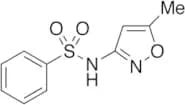
CAS:<p>Applications N-(5-Methyl-3-isoxazolyl)benzenesulfonamide is used in the preparation of isoxazolecarboxylic acid derivatives as agricultural fungicides.<br>References Gomes, J.R.B., et al.: Tetrahedron, 61, 2705 (2005),<br></p>Formula:C10H10N2O3SColor and Shape:Light Yellow SolidMolecular weight:238.266-Mercapto-1-hexanol
CAS:Controlled Product<p>Applications 6-Mercapto-1-hexanolcan be used as a chemical linker for anchoring biological molecules to gold surfaces.<br>References McKinlay, C. J. et al.: J. Am. Chem. Soc 138, 3510 (2016)<br></p>Formula:C6H14OSColor and Shape:NeatMolecular weight:134.242-Ethoxybenzoic Acid
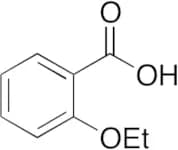
CAS:<p>Applications 2-Ethoxybenzoic Acid is a component of dental cement. Low concentrations of 2-Ethoxybenzoic Acid in combination with Eugenol (E938640), gives a stabilizing effect to liposomes to lower damages to cells.<br>References Fujisawa, S., et al.: J. Dent. Res., 82, 43(2003); Brauer, G.M., et al.: J. Dent. Res., 62, 366 (1983); Brauer, G.M., et al.: J. Dent. Res., 63, 137 (1984); Fujisawa, S., et al.: J. Biomed. Mater. Res., 21, 89 (1987)<br></p>Formula:C9H10O3Color and Shape:NeatMolecular weight:166.173-Methyl-2-oxovaleric Acid Sodium Salt
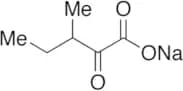
CAS:Controlled Product<p>Applications 3-Methyl-2-oxovaleric Acid is an α-ketomonocarboxylic acid that triggers insulin release by acting upon receptor sites which differ from those occupied by amino acids. 4-Methyl-2-oxovaleric Acid is an analogue of Isoleucine.<br>References Panten, U. et al.: Naun.-Schmied. Arch. Pharmacol., 291, 405 (1975); Funk, M.A. et al.: J. Nutrit., 117, 1550 (1987);<br></p>Formula:C6H9O3·NaColor and Shape:NeatMolecular weight:152.125-Chloro-2-methylphenol
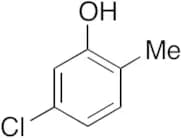
CAS:Controlled Product<p>Applications 5-Chloro-2-methylphenol can be used in the preparation of dichlorotoluqinones.<br>References James, C., et al.: J. Org. Chem., 16, 328 (1951)<br></p>Formula:C7H7ClOColor and Shape:NeatMolecular weight:142.58β-Bromoethylphosphoryl Dichloride
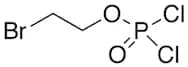
CAS:Controlled Product<p>Stability Moisture Sensitive<br>Applications A phosphorylating agent.<br> Not a dangerous good if item is equal to or less than 1g/ml and there is less than 100g/ml in the package<br>References Sartori: Chem. Rev., 48, (1951), Nachmansohn, et al.: Adv. Enzymology, 12, 259 (1951)<br></p>Formula:C2H4BrCl2O2PColor and Shape:ColourlessMolecular weight:241.844-Chloro-7-azaindole
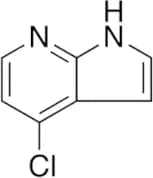
CAS:Controlled Product<p>Applications A useful intermediate for drug discovery research.<br> Not a dangerous good if item is equal to or less than 1g/ml and there is less than 100g/ml in the package<br>References Caldwell, J., et al.: Tet. Lett., 48, 1527 (2007)<br></p>Formula:C7H5ClN2Color and Shape:NeatMolecular weight:152.587-Methyl-7H-purin-6-amine
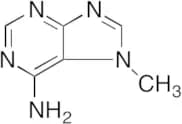
CAS:Controlled Product<p>Applications 7-Methyl-7H-purin-6-amine is a biomarker of DNA damage from exposure to methylating agents. Also, it is a partial agonist for the G protein-coupled receptor in rats.<br>References Harroun, S. G., et al.: Spectrochim. Acta Mol. Biomol. Spectrosc., 176, 1-7 (2017); Gorzalka, S., et al.: Mol. Pharmacol., 67, 955-964 (2005)<br></p>Formula:C6H7N5Color and Shape:Off White SolidMolecular weight:149.1531,4-Cyclohexanedimethanol
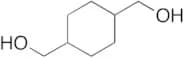
CAS:Controlled Product<p>Applications 1,4-Cyclohexanedimethanol is extensively used as cross-linking reagent in polymer industry. It has been used in the synthesis of polyketal copolymers. It was used as diol comonomer during the synthesis of polyester-carbonates based on 1,3-propylene-co-1,4-cyclohexanedimethylene succinate.<br>References Yang, S., et al.: Bioconjugate Chem., 19, 1164 (2008); Liu, Y., et al.: J. Polym. Sci. A Polym. Chem., 39, 2508 (2011); Hungria, A., et al.: Angewandte Chemie, 45, 4782 (2006)<br></p>Formula:C24H30O3SiColor and Shape:NeatMolecular weight:394.579Menthone (Mixture of Diastereomers)
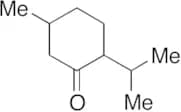
CAS:Formula:C10H18OColor and Shape:ColourlessMolecular weight:154.255-Methoxyresorcinol
CAS:<p>Applications 5-Methoxyresorcinol (cas# 2174-64-3) is a useful research chemical.<br></p>Formula:C7H8O3Color and Shape:NeatMolecular weight:140.1373-(4-Hydroxyphenyl)-1-propanol
CAS:<p>Applications 3-(4-Hydroxyphenyl)-1-propanol is a reagent in the synthesis of heteroarylmethoxyphenylalkoxyiminoalkylcarboxylic acids as leukotriene biosynthesis inhibitors.<br>References Kolasa, T. et al.: J. Med. Chem., 43, 690 (2000); Brooks, C., et al.: J. Med. Chem., 39, 2629 (1996)<br></p>Formula:C9H12O2Color and Shape:NeatMolecular weight:152.192-Chloroethylamine Hydrochloride
CAS:Controlled Product<p>Applications 2-Chloroethylamine Hydrochloride is used as a reagent in the synthesis of 6-desfluoroquinolones as potential anti-HIV drugs. Also used as a reagent in the synthesis of ellipticine derivatives as anticancer agents.<br> Not a dangerous good if item is equal to or less than 1g/ml and there is less than 100g/ml in the package<br>References Sancineto, L., et al.: Bioorg. Med. Chem., 22, 4658 (2014); Mori, R., et al.: Eur. J. Med. Chem., 82, 16 (2014)<br></p>Formula:C2H6ClN·ClHColor and Shape:NeatMolecular weight:115.99Hydroxypropyl Chitosan
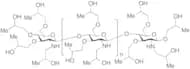
CAS:Controlled Product<p>Applications Hydroxypropyl Chitosan is an antibacterial used to make organic rectorite-based nanofibrous mats with bacterial inhibition. Hydroxypropyl Chitosanhas been shown to exhibit inhibitory effects on the levels of Fe, Zn and Ca in liver, heart, lung, spleen, kidney and femur at high dosages in mice.<br>References Deng, H., et. al.: J. Biotma. Sci-Polym. E., 24, 485 (2013); Wang, Z., et. al.: Int. J. Biol. Macromol., 64, 25 (2014);<br></p>Formula:C36H72N2O17C15H29NO7nColor and Shape:Light Yellow To BrownMolecular weight:1140.353