Building Blocks
This section contains fundamental products for the synthesis of organic and biological compounds. Building blocks are the essential starting materials used to construct complex molecules through various chemical reactions. They play a critical role in drug discovery, material science, and chemical research. At CymitQuimica, we offer a diverse range of high-quality building blocks to support your innovative research and industrial projects, ensuring you have the essential components for successful synthesis.
Subcategories of "Building Blocks"
- Boronic Acids & Boronic Acid Derivatives(5,756 products)
- Chiral Building Blocks(1,242 products)
- Hydrocarbon Building Blocks(6,095 products)
- Organic Building Blocks(61,038 products)
Found 196817 products of "Building Blocks"
Sort by
Purity (%)
0
100
|
0
|
50
|
90
|
95
|
100
2-Methylamino-2-phenylbutanol hydrochloride
CAS:<p>2-Methylamino-2-phenylbutanol hydrochloride is a fine chemical that can be used in the production of research chemicals, pharmaceuticals, and other specialty chemicals. It is a versatile building block with many applications in organic synthesis. 2-Methylamino-2-phenylbutanol hydrochloride is an intermediate for the production of other useful compounds and has many reactions that are applicable to complex compounds. 2-Methylamino-2-phenylbutanol hydrochloride can also be used as a reagent and has high quality standards.</p>Formula:C11H17NO•HClPurity:(%) Min. 95%Color and Shape:PowderMolecular weight:215.72 g/mol5-Amino-pentanamide Hydrochloride
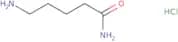
CAS:<p>5-Amino-pentanamide hydrochloride is a chemical substance with CAS number 97965-80-5. It is a reaction component, reagent, and useful scaffold for the synthesis of various complex compounds. This chemical has been used in the synthesis of many speciality chemicals and fine chemicals for research purposes. 5-Amino-pentanamide hydrochloride is also a versatile building block that can be used as an intermediate or building block for the synthesis of other compounds.</p>Formula:C5H13ClN2OPurity:Min. 95%Color and Shape:PowderMolecular weight:152.62 g/mol4-Methylbenzophenone
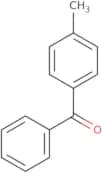
CAS:<p>4-Methylbenzophenone is a molecule that belongs to the group of p2 molecules. It is used as an additive in animal health products, as well as for the synthesis of other organic compounds. The analytical method for 4-methylbenzophenone is thermal expansion, which can be determined using a test sample. The reaction mechanism of this compound is not well understood, but it may involve multi-walled carbon and matrix effect. 4-Methylbenzophenone has been shown to form metastable forms when heated to high temperatures or when exposed to sunlight. This compound also has potential skin cancer risk and should be handled with care.</p>Formula:C14H12OPurity:Min. 95%Color and Shape:White PowderMolecular weight:196.24 g/mol3-Aminobenzonitrile
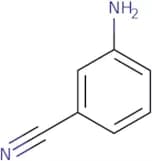
CAS:<p>3-Aminobenzonitrile is an amine that has been shown to inhibit the growth of bacteria. It was synthesized by the reaction of nitrobenzene with benzamide in the presence of acetic acid. The chemical structure of 3-aminobenzonitrile is similar to that of a group of natural amino acids, including cysteine and tryptophan, which are known inhibitors of bacterial growth. This compound is soluble in organic solvents and can be used as an injection solution. 3-Aminobenzonitrile has been evaluated by kinetic studies and found to have a high affinity for bacterial cells, with an inhibition constant (Ki) value of 0.37 mM. It is also active against other microorganisms such as yeast or mold fungi, but not against plant or animal cells. 3-Aminobenzonitrile inhibits the synthesis of proteins by binding to a number of different sites on the ribosomes where</p>Purity:Min. 95%Color and Shape:Yellow PowderMolecular weight:118.14 g/mol(R)-2-Methylbutyric acid
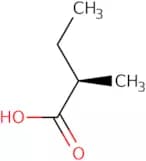
CAS:<p>(R)-2-Methylbutyric acid is a synthetic compound that has the same stereoisomeric configuration as 2-methylbutyric acid. The difference in the two molecules is that the (R) form has a hydroxyl group on the alpha carbon, while 2-methylbutyric acid does not. This compound is stable under acidic conditions, but hydrolyzes to form butyric acid when exposed to basic conditions. It is used in industrial applications such as food production and as an intermediate in synthesizing other compounds such as tiglic acid or amido groups.</p>Formula:C5H10O2Purity:Min. 95%Color and Shape:Yellow PowderMolecular weight:102.13 g/mol2-Methylcinnamic acid, predominantly trans
CAS:<p>The 2-methylcinnamic acid is a derivative of cinnamic acid. It is an organic compound that is a colorless liquid at room temperature. The 2-methylcinnamic acid can be synthesized via the Suzuki coupling reaction between 2-chlorocinnamic acid and 4-hydroxycinnamic acid in the presence of a ruthenium complex, a diphosphine ligand, and an acidic co-solvent. This organic compound has been shown to inhibit prostaglandin synthesis by interacting with the prostanoid receptor, a protein located on the surface of cells that binds to inflammatory agents or hormones. These interactions may also lead to the inhibition of cyclooxygenase (COX) enzymes, which are responsible for prostaglandin synthesis. The 2-methylcinnamic acid can also be converted into flavonoids such as quercetin and apigenin through oxidation reactions.</p>Formula:C10H10O2Purity:Min. 95%Color and Shape:PowderMolecular weight:162.19 g/mol4-Methoxybenzenediazonium tetrafluoroborate
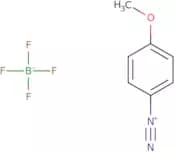
CAS:<p>4-Methoxybenzenediazonium tetrafluoroborate (MBD) is a synthetic molecule that can be prepared by the reaction of sodium hydrogen with UV irradiation. MBD has been shown to have a pharmacokinetic profile similar to methyl cinnamate and is used in the treatment of hyperpigmentation, such as melasma and post-inflammatory hyperpigmentation. MBD interacts with the amino acid tyrosine at its 4-hydroxyl group, cleaving the C-O bond and forming an intramolecular hydrogen bond with the oxygen atom. This results in the formation of diazonium salt which reacts with tyrosinase and inhibits its activity.</p>Formula:C7H7BF4N2OPurity:Min. 98 Area-%Color and Shape:PowderMolecular weight:221.95 g/mol4-Amino-3-nitropyridine
CAS:<p>4-Amino-3-nitropyridine is a molecule with the chemical formula C6H6N4O2. It is an organic compound that has been shown to have analgesic, antimicrobial, and antiviral properties. 4-Amino-3-nitropyridine has been shown to inhibit the growth of bacteria in vitro by reducing the ability of bacteria to synthesize DNA. It is not active against bacteria that use RNA as their genetic material. 4-Amino-3-nitropyridine also inhibits viral replication and may be useful in treating chronic pain, diabetic neuropathy, and other conditions related to nerve damage. This drug binds to chloride ions and nucleophilic functional groups on microbial metabolites, which prevents their conversion into other metabolites.</p>Formula:C5H5N3O2Purity:Min. 95%Color and Shape:PowderMolecular weight:139.11 g/mol2-Methyl-1,3-propanediol
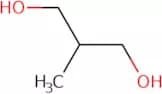
CAS:<p>2-Methyl-1,3-propanediol is a glycol ether that is used in sample preparation for chemical analysis. It is an antimicrobial agent that has been shown to be active against bacteria such as Escherichia coli and Staphylococcus aureus. 2-Methyl-1,3-propanediol has also been shown to have the ability to inhibit the growth of epidermal cells. This chemical has been shown to be effective in treating skin lesions caused by dermatophytes, fungi and bacterial infections. 2-Methyl-1,3-propanediol inhibits the synthesis of glycol esters, fatty acids and epidermal growth factor through competition with hydroxyl groups on cell membranes. It also chelates metal ions such as Cu2+, Zn2+, Cd2+ and Pb2+.</p>Formula:C4H10O2Purity:Min. 95%Color and Shape:Colorless PowderMolecular weight:90.12 g/mol3-Methoxyacetophenone
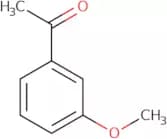
CAS:<p>3-Methoxyacetophenone is a bacterial metabolite that is produced by the metabolism of caproic acid. 3-Methoxyacetophenone has been shown to possess antibacterial activity against gram-positive bacteria and to inhibit protein synthesis in these bacteria. The compound class of 3-methoxyacetophenone includes methyl ketones, which are a type of organic compounds containing a carbonyl group (C=O). This compound can be found in bacterial strains such as Pseudomonas aeruginosa and Streptococcus pneumoniae. These bacteria produce 3-methoxyacetophenone during growth on l-tartaric acid or hydrogen tartrate as the sole carbon sources. The organism’s DNA sequences have been determined by deuterium isotope sequencing and l-tartaric acid as the sole carbon source.</p>Formula:C9H10O2Purity:Min. 95%Color and Shape:Colorless Clear LiquidMolecular weight:150.17 g/mol2-Mercapto-5-benzimidazole sulfonic acid sodium salt dihydrate
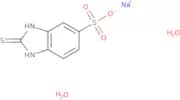
CAS:<p>2-Mercapto-5-benzimidazole sulfonic acid sodium salt dihydrate is a molecule that can be used in devices. It has been shown to reversibly change the morphology of a monolayer and to generate asymmetric structures. 2-Mercapto-5-benzimidazole sulfonic acid sodium salt dihydrate can be used to generate fluorescent emulsions, which are systems where the magnetic particles are suspended in an oil droplet and illuminated by light of an appropriate wavelength. The molecules that make up 2-Mercapto-5-benzimidazole sulfonic acid sodium salt dihydrate have been shown to function as acceptors for molecular orbitals, which are wave functions that describe electron distribution around the atomic nucleus. These properties make it a promising candidate for use in microscopy techniques, such as scanning tunneling microscopy (STM) or atomic force microscopy (AFM).</p>Formula:C7H5N2NaO3S2·2H2OPurity:Min. 95%Color and Shape:PowderMolecular weight:288.28 g/molMethyl 4-acetylbenzoate
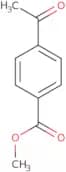
CAS:<p>Methyl 4-acetylbenzoate is a synthetic compound that can be used for the synthesis of imatinib and other pharmaceuticals. It is an effective method for the synthesis of butyric acid with high enantiomeric purity. The cross-coupling reaction was first reported by Suzuki in 1979, which has been widely applied to organic synthesis because it is efficient and produces simple byproducts. This reaction has also been used in the synthesis of model compounds and natural products, as well as in environmental pollution studies.</p>Formula:C10H10O3Purity:Min. 95%Color and Shape:PowderMolecular weight:178.18 g/mol6-Methylpyridine-2-carboxylic acid
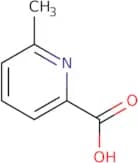
CAS:<p>6-Methylpyridine-2-carboxylic acid is a human metabolite that can be found in the serum matrix. It is part of a ternary complex formation with picolinic acid and fatty acid, which may result in an intramolecular hydrogen transfer from the methyl group to the oxygen atom of the carboxylic acid group. 6-Methylpyridine-2-carboxylic acid has been shown to react with hydroxyl groups to form n-oxides and redox potentials. These reactions are catalyzed by detergents.</p>Formula:C7H7NO2Purity:Min. 97 Area-%Color and Shape:PowderMolecular weight:137.14 g/mol6-Methyl-1H-indole-2,3-dione
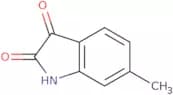
CAS:<p>6-Methyl-1H-indole-2,3-dione is a synthetic molecule that has an amide orientation. The molecule is a crystalline solid and can be found in the form of a white powder. This product also contains impurities such as amino acids, transport molecules, and formic acid. 6-Methyl-1H-indole-2,3-dione is soluble in solvents like formic acid and water. It has been shown to have transport properties for electrons and aldehydes.</p>Formula:C9H7NO2Purity:Min. 95%Color and Shape:PowderMolecular weight:161.16 g/mol6-Mercapto-1-hexanol
CAS:<p>6-Mercapto-1-hexanol is a redox active molecule that has been shown to be a potent inhibitor of human immunodeficiency virus type 1 reverse transcriptase. It has also been shown to inhibit the polymerase chain reaction and transfer reactions, including those mediated by DNA-dependent RNA polymerase. 6-Mercapto-1-hexanol can be detected with high sensitivity in human serum, which is its main application for the diagnosis of HIV infection. This compound reacts with molecular oxygen to form superoxide radicals, which are responsible for its redox potential. The rate constant for this reaction has been shown to be dependent on pH and temperature. 6-Mercapto-1-hexanol can also form stable complexes with proteins such as albumin or human immunoglobulin G (IgG). These complexes have been shown to exhibit electrochemical impedance spectroscopy activity at low concentrations and chemical stability in biological media.</p>Formula:C6H14OSPurity:Min. 96%Color and Shape:Clear LiquidMolecular weight:134.24 g/mol2-Methyl-6-nitrobenzoic acid
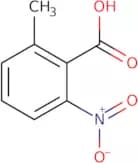
CAS:<p>2-Methyl-6-nitrobenzoic acid is a yellow needle solid that is soluble in organic solvents. It is used as a reagent to prepare other chemicals and has been shown to react with sodium hydrogen sulfate, chloride, and sulfuric acid to form 2-methyl-6-nitrobenzenesulfonic acid. The mixture of 2-methyl-6-nitrobenzoic acid and sodium hydrogen sulfate reacts violently with chlorine gas or argon. This reaction solution can be evaporated by heating at atmospheric pressure or under vacuum, leaving 2-methyl-6-nitrobenzenesulfonic acid behind. 2MBA can also be purified by filtration or recrystallization from a suitable solvent such as chloroform or ether.</p>Formula:C8H7NO4Purity:Min. 95%Color and Shape:Slightly Yellow PowderMolecular weight:181.15 g/mol4-Morpholinoaniline
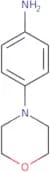
CAS:<p>4-Morpholinoaniline is a synthetic substrate that reacts with hydrochloric acid and sodium nitrite to form the reactive intermediate 4-morpholinonitrosobenzene. The reaction mechanism is proposed to proceed through an initial electron transfer from the substrate to the nitrosobenzene intermediate, followed by protonation of the nitrosobenzene nitrogen atom. The resulting 4-nitrophenyl radical abstracts hydrogen from the substrate to give 4-hydroxyphenyl radical. This radical undergoes a nucleophilic attack on the aromatic ring of the substrate molecule, and cleavage of the disulfide bond in the aromatic ring leads to formation of a cyanohydrin product. Studies have been conducted on rat liver microsomes and hepatitis C virus (HCV) to investigate this reaction mechanism.</p>Formula:C10H14N2OPurity:Min. 98.5 Area-%Color and Shape:Red PowderMolecular weight:178.23 g/mol1-Adamantane carbonitrile
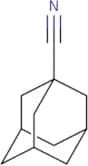
CAS:<p>1-Adamantane carbonitrile is a compound that has been shown to have high binding constants to the covid-19 pandemic. The compound has been shown to be a good candidate for oxidation catalysts and radiation. 1-Adamantane carbonitrile is also a metastable molecule, which means it can exist in two different states with different energy levels. This compound has been found to bind to an endogenous enzyme, as well as being crystalline and having a coordination complex. It has been shown that 1-Adamantane carbonitrile reacts with hydrogen chloride and produces reactive intermediates such as hydrogen chloride. 1-Adamantane carbonitrile has also been shown to have antiviral properties against influenza virus with nmr spectra data showing the presence of this compound in the active site of the influenza virus.</p>Formula:C11H15NPurity:Min. 96.0%Color and Shape:PowderMolecular weight:161.24 g/mol2-Methoxy-3-methylbenzoic acid
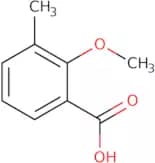
CAS:<p>2-Methoxy-3-methylbenzoic acid is a methoxy methyl, benzyl, methyl ether that can be used as a reagent in organic chemistry. It is an intermediate in the synthesis of phthalic anhydride and in the production of esters and quinones. 2-Methoxy-3-methylbenzoic acid is also used to produce potassium t-butoxide, which can be used for the synthesis of new types of reagents for organic synthesis. The chemical reacts with potassium hydroxide or potassium t-butoxide to form potassium 2-methoxy 3-methyl benzoate, which is soluble in water. This compound can also be produced from methoxy methyl benzyl chloride by reacting it with either potassium or sodium hydroxide.</p>Formula:C9H10O3Purity:Min. 95%Color and Shape:White PowderMolecular weight:166.17 g/mol3-Methylphenylacetone
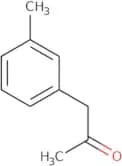
CAS:<p>3-Methylphenylacetone is a dioxane with functional groups, which can be synthesized by coupling of acetoacetate and nitrobenzene. 3-Methylphenylacetone is a versatile precursor for the synthesis of various esters, such as phenylethyl acetate. This compound can also be deacylated to form 3-methylphenol, which is used in the synthesis of nitrophenols. In addition, 3-methylphenylacetone can be used in the production of acetophenones, ketones, and other aromatic compounds by using catalysts such as iodine or phosphoric acid. Nitro groups on 3-methylphenylacetone react with chloro-, bromo-, or methoxy-substituted substrates to form nitrosated derivatives. The tert-butyl group is eliminated spontaneously to form an amine.</p>Formula:C10H12OPurity:Min. 95%Color and Shape:Clear LiquidMolecular weight:148.2 g/mol