Building Blocks
This section contains fundamental products for the synthesis of organic and biological compounds. Building blocks are the essential starting materials used to construct complex molecules through various chemical reactions. They play a critical role in drug discovery, material science, and chemical research. At CymitQuimica, we offer a diverse range of high-quality building blocks to support your innovative research and industrial projects, ensuring you have the essential components for successful synthesis.
Subcategories of "Building Blocks"
- Boronic Acids & Boronic Acid Derivatives(5,778 products)
- Chiral Building Blocks(1,242 products)
- Hydrocarbon Building Blocks(6,098 products)
- Organic Building Blocks(61,084 products)
Found 198714 products of "Building Blocks"
Sort by
Purity (%)
0
100
|
0
|
50
|
90
|
95
|
100
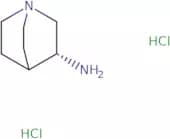
(R)-(+)-3-Aminoquinuclidine dihydrochloride
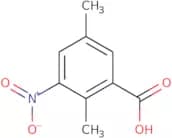
CAS:A building block; used for synthesis tryptophan 2,?3-?dioxygenase inhibitorsFormula:C7H14N2•(HCl)2Purity:Min. 95%Color and Shape:PowderMolecular weight:199.12 g/mol2,5-Dimethyl-3-nitrobenzoic acid
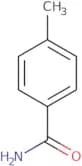
CAS:<p>2,5-Dimethyl-3-nitrobenzoic acid is a versatile building block that can be used in the synthesis of a wide range of compounds. It is also an important intermediate for the synthesis of pharmaceuticals and other speciality chemicals. 2,5-Dimethyl-3-nitrobenzoic acid has been shown to be useful in the preparation of high quality fine chemicals and research chemicals. This compound has been found to be an excellent reagent for various chemical reactions.</p>Formula:C9H9NO4Purity:Min. 95%Color and Shape:PowderMolecular weight:195.17 g/mol4-Methylbenzamide
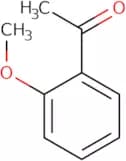
CAS:<p>4-Methylbenzamide is a palladium complex that has been used in the synthesis of imatinib, a drug used to treat chronic myeloid leukemia. 4-Methylbenzamide has been shown to form a hydrogen bond with water molecules and also exhibits cavity effects. The cavity effect can be explained by intermolecular hydrogen bonding and the deuterium isotope effect. The deuterium isotope effect is observed when an atom of deuterium replaces an atom of hydrogen in a molecule. This substitution leads to reduced boiling point and increased solubility for the compound. 4-Methylbenzamide is also known for its inhibitory effects on p38 kinase, which are seen through titration calorimetry.</p>Formula:C8H9NOPurity:Min. 95%Color and Shape:PowderMolecular weight:135.16 g/mol2'-Methoxyacetophenone
CAS:<p>2'-Methoxyacetophenone is a member of the class of halogenated phenols that exhibits anti-inflammatory activities. It inhibits protease activity in vitro and has been shown to have anti-inflammatory effects in vivo. 2'-Methoxyacetophenone is a ruthenium complex with hydrochloride salt that has been shown to be an efficient catalyst for acylation reactions. This compound also inhibits the transfer of the nerve impulse from the trigeminal nerve to the brain, which may be due to its ability to inhibit lipid peroxidation and protein autoxidation. 2'-Methoxyacetophenone has also been shown to have antimicrobial activity against gram-negative bacterial species, such as Proteus vulgaris, Escherichia coli, Pseudomonas aeruginosa, and Salmonella enterica.</p>Formula:C9H10O2Purity:Min. 98 Area-%Color and Shape:Clear LiquidMolecular weight:150.17 g/mol4-Aminobenzonitrile
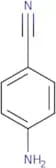
CAS:<p>4-Aminobenzonitrile is a chemical compound that has been shown to be an antimicrobial agent. It has been found to be active against bacteria and fungi, such as Candida albicans and Aspergillus niger. 4-Aminobenzonitrile binds with epidermal growth factor (EGF) by intramolecular hydrogen bonding, which leads to the disruption of the protein's tertiary structure. The nitrogen atoms in this compound have been shown to react with water vapor at high temperatures, which results in the release of hydrogen gas. This reaction can be used for phase transition temperature studies. 4-Aminobenzonitrile also shows intermolecular hydrogen bonding with fatty acids, which causes the molecule to change its shape and protonation state. These changes affect its frequency shift and molecular modeling study results.</p>Formula:C7H6N2Purity:Min. 95%Color and Shape:Off-White PowderMolecular weight:118.14 g/mol1-Adamantanemethanol
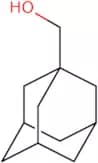
CAS:<p>Adamantanemethanol is a molecule used in the process of translation. It is structurally analyzed by trifluoromethanesulfonic acid, which is a cavity. The pharmacokinetic properties of adamantanemethanol are determined by its acyl chain. Adamantanemethanol has been studied in clinical trials, and the minimal inhibitory concentration for this drug is determined by chloride. This molecule also forms hydrogen bonds with hydroxyl groups and functional groups. Adamantanemethanol has been shown to be an effective antimicrobial agent against bacterial replication in cell culture and has optical properties that can be used to identify it.</p>Formula:C11H18OPurity:Min. 95%Color and Shape:White PowderMolecular weight:166.26 g/mol2-Amino-3-(1H-pyrrol-3-yl)propanoic acid
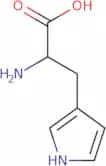
CAS:Versatile small molecule scaffoldFormula:C7H10N2O2Purity:Min. 95%Color and Shape:PowderMolecular weight:154.17 g/mol4-Nitrobenzophenone
CAS:<p>4-Nitrobenzophenone is an aromatic organic compound that is synthesized by the nitration of benzophenone. The coordination complex formed with p. aeruginosa was found to be acidic and readily hydrolyzed in water. This compound has been used in the synthesis of cinnamic acid derivatives, which are intermediates for azo dyes and pharmaceuticals. 4-Nitrobenzophenone can also undergo acylation reactions to form esters or amides with alcohols or carboxylic acids. It is also a precursor to the drug metronidazole, which is used to treat bacterial infections. Acute toxicity studies have shown that this compound has low acute toxicities and causes no irritation on skin contact. 4-Nitrobenzophenone reacts with hydrogen fluoride to form hydrogen chloride and x-ray crystal structures have shown that it forms tetrahedral complexes with chlorine, fluorine, and bromine at low temperatures (0</p>Formula:C13H9NO3Purity:Min. 95%Color and Shape:PowderMolecular weight:227.22 g/mol2-Amino-1-methoxypropane
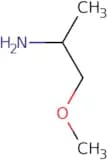
CAS:<p>2-Amino-1-methoxypropane (AMP) is a bifunctional amine that has been used as a diluent for lipase. It has been shown to have deprotective properties against metal surfaces and to be able to react with the nucleophilic group of an amine, which is useful in organic synthesis. The constant temperature of AMP, which is useful in organic synthesis, was obtained by recycling it through a constant temperature bath. This process also prevents the formation of unwanted products during the reaction.</p>Formula:C4H11NOPurity:Min. 95 Area-%Color and Shape:Clear LiquidMolecular weight:89.14 g/mol2-(Morpholin-4-yl)-1,3-benzothiazole
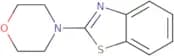
CAS:<p>2-(Morpholin-4-yl)-1,3-benzothiazole is a natural product that is found in the soil. It can be synthesized by reacting benzotriazole with morpholine and an acid catalyst. This compound has been used as a chromatographic stationary phase for the analysis of hydrocarbons and other organic compounds. The experimentally determined profile of this substance consists of peaks at m/z 265, 273, and 289. The technique used to detect these peaks was photometric.</p>Formula:C11H12N2OSPurity:Min. 95%Color and Shape:PowderMolecular weight:220.29 g/mol3,5-Dichloro-4-hydroxyacetophenone
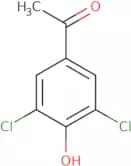
CAS:<p>3,5-Dichloro-4-hydroxyacetophenone (3,5-DCA) is a phosphorylating agent that is used as a reagent to form conjugates with amines. It has been extensively used in the synthesis of natural products and drugs. 3,5-DCA is commonly used in the kinetic method for determining phosphatase activity. 3,5-DCA has high specificity and can be used to measure acid phosphatase activity. It is also synthesized from lapatinib and can be used in biomimetic synthesis schemes for the production of anticancer drugs.</p>Formula:C8H6Cl2O2Purity:Min. 95%Color and Shape:PowderMolecular weight:205.04 g/mol6-Aminoindole
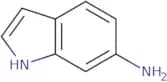
CAS:<p>6-Aminoindole is a model complex that can be used for studying the interactions of primary amines with acidic molecules in bioinorganic chemistry. The molecule was synthesized by electropolymerization, which involves the oxidation of aniline with bifunctional oxidases. 6-Aminoindole has been shown to have protonation and salicylaldehyde properties. It reacts with metal surfaces to form a molecular target.</p>Formula:C8H8N2Purity:Min. 97 Area-%Color and Shape:PowderMolecular weight:132.16 g/molFmoc-Leu-OH
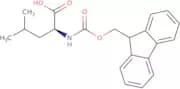
CAS:<p>Fmoc-Leu-OH is a fatty acid that contains a hydroxyl group. It is used in the synthesis of polymer drugs, especially sodium salt polymers. The activity of Fmoc-Leu-OH can be reversed with degarelix acetate, an irreversible inhibitor of ns3 protease. In addition to its use as an antidiabetic agent, Fmoc-Leu-OH has been shown to have immunomodulatory effects and antiinflammatory activity. In tumor treatment, Fmoc-Leu-OH has been shown to inhibit the growth of fat cells without affecting normal cells or causing any toxic side effects.</p>Formula:C21H23NO4Purity:Min. 98 Area-%Color and Shape:White PowderMolecular weight:353.41 g/mol6-Azaindole
CAS:<p>6-Azaindole is a drug that inhibits the activity of the enzyme aromatase, which is responsible for the conversion of testosterone to estrogen. 6-Azaindole has shown potent inhibitory activity against cancer cells in vitro and in vivo. It also has an inhibitory effect on pain relief mechanisms at low doses, but not at high doses. The mechanism of action is complex and multifactorial; it may involve inhibition of proton transfer, receptor activity, and/or inhibition of nitrogen atoms. The synthesis of 6-azaindoles can be carried out using a variety of methods and starting materials, including asymmetric synthesis or reduction of an n-oxide moiety.</p>Formula:C7H6N2Purity:Min. 95%Color and Shape:PowderMolecular weight:118.14 g/mol2-Methyl-1,2,3-propanetriol
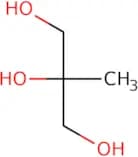
CAS:<p>2-Methyl-1,2,3-propanetriol is a monomer that is used in the production of polymers. It has been shown to be an efficient cross-linking agent for metal surfaces and is used as a polymerization catalyst. 2-Methyl-1,2,3-propanetriol also plays a role in the synthesis of amino acids by acting as a substrate for kinesin and aliphatic hydrocarbon. It can be used as a feedstock for producing plastics with deionized water or aromatic hydrocarbons such as phenol. This chemical has been shown to be pluripotent in mammalian cells and can act as a cationic surfactant.</p>Formula:C4H10O3Purity:Min. 95 Area-%Color and Shape:Clear LiquidMolecular weight:106.12 g/mol3-Methyl-4-(4,4,5,5-tetramethyl-1,3,2-dioxaborolan-2-yl)isoxazole
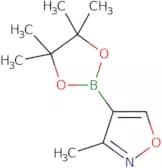
CAS:<p>3-Methyl-4-(4,4,5,5-tetramethyl-1,3,2-dioxaborolan-2-yl)isoxazole is a fine chemical that belongs to the class of boron compounds. It can be used as a reagent or in the synthesis of other compounds. 3-Methyl-4-(4,4,5,5-tetramethyl-1,3,2-dioxaborolan-2-yl)isoxazole is an intermediate for the production of pharmaceuticals and agrochemicals. It can also be used as a building block in organic synthesis and a scaffold for the preparation of complex molecules.</p>Formula:C10H16BNO3Purity:Min. 95%Color and Shape:PowderMolecular weight:209.05 g/molMethyl 3,4-diaminobenzoate
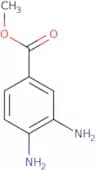
CAS:<p>Methyl 3,4-diaminobenzoate is a molecule that has been shown to inhibit nitrite reductase. It also binds to the receptor binding domain of the growth factor and to quinoxalines, which are antimicrobial peptides. In vitro assays have revealed that methyl 3,4-diaminobenzoate has antimicrobial properties against bacteria such as Enterococcus faecalis, Pseudomonas aeruginosa, Staphylococcus aureus, and Bacillus cereus. The mechanism of action for these activities is not well understood. Methyl 3,4-diaminobenzoate has been shown to be an inhibitor of tryptophan fluorescence in vitro and may act as a competitive inhibitor of the enzyme tryptophan fluorescence decarboxylase.</p>Formula:C8H10N2O2Purity:Min. 95%Color and Shape:White PowderMolecular weight:166.18 g/mol3-Amino-2,4-dimethylpyridine
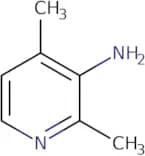
CAS:Building blockFormula:C7H10N2Purity:Min. 95%Color and Shape:Clear Viscous LiquidMolecular weight:122.17 g/mol5-Amino-2-mercaptobenzimidazole
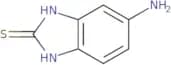
CAS:<p>5-Amino-2-mercaptobenzimidazole is a molecule that has been shown to have antibacterial activity. It binds to the active site of bacterial ribosomes, which prevents the synthesis of proteins. This binding also inhibits the growth of bacteria such as Staphylococcus aureus and Escherichia coli. 5-Amino-2-mercaptobenzimidazole has been studied using vibrational spectroscopy, molecular modeling and surface-enhanced Raman spectroscopy. The binding constants have been determined by measuring the dissociation constant using sodium carbonate as an electrolyte. The optimum concentration for this molecule is when it is in anhydrous sodium at a constant concentration of 0.1 M.</p>Formula:C7H7N3SPurity:Min. 95%Color and Shape:PowderMolecular weight:165.22 g/mol1,4-Dimethyl-1H-imidazole-5-carboxylic acid
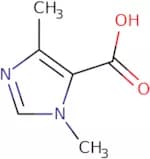
CAS:Versatile small molecule scaffoldFormula:C6H8N2O2Purity:Min. 90%Molecular weight:140.14 g/mol