Building Blocks
This section contains fundamental products for the synthesis of organic and biological compounds. Building blocks are the essential starting materials used to construct complex molecules through various chemical reactions. They play a critical role in drug discovery, material science, and chemical research. At CymitQuimica, we offer a diverse range of high-quality building blocks to support your innovative research and industrial projects, ensuring you have the essential components for successful synthesis.
Subcategories of "Building Blocks"
- Boronic Acids & Boronic Acid Derivatives(5,778 products)
- Chiral Building Blocks(1,242 products)
- Hydrocarbon Building Blocks(6,098 products)
- Organic Building Blocks(61,098 products)
Found 199594 products of "Building Blocks"
Sort by
Purity (%)
0
100
|
0
|
50
|
90
|
95
|
100
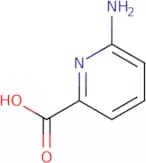
6-Amino-2-pyridinecarboxylic acid
CAS:<p>6-Amino-2-pyridinecarboxylic acid is a potentiating agent that belongs to the class of cyclic peptides. It has been shown to have anti-leukemic activity and can be used for the treatment of leukemia. The mechanism of action is not yet fully understood, but it may involve hydrogen bonding interactions with other molecules or cavities in proteins. 6-Amino-2-pyridinecarboxylic acid forms stable complexes with halides and intramolecular hydrogen bonds. This drug also has quantum theory effects, including a short lifetime in solution and an increase in fluorescence intensity when excited with light at low energies.</p>Formula:C6H6N2O2Purity:Min. 95%Color and Shape:PowderMolecular weight:138.12 g/mol1-Adamantane carbonitrile
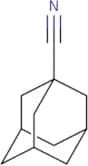
CAS:<p>1-Adamantane carbonitrile is a compound that has been shown to have high binding constants to the covid-19 pandemic. The compound has been shown to be a good candidate for oxidation catalysts and radiation. 1-Adamantane carbonitrile is also a metastable molecule, which means it can exist in two different states with different energy levels. This compound has been found to bind to an endogenous enzyme, as well as being crystalline and having a coordination complex. It has been shown that 1-Adamantane carbonitrile reacts with hydrogen chloride and produces reactive intermediates such as hydrogen chloride. 1-Adamantane carbonitrile has also been shown to have antiviral properties against influenza virus with nmr spectra data showing the presence of this compound in the active site of the influenza virus.</p>Formula:C11H15NPurity:Min. 96.0%Color and Shape:PowderMolecular weight:161.24 g/mol5-Aminoindole
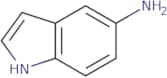
CAS:<p>5-Aminoindole is a hydrogen bond acid. It has been shown to have an optimum concentration of 0.1 mM in the presence of 0.2 mM potassium chloride and 2 mM magnesium chloride, which is similar to the pH range for biological systems. 5-Aminoindole also acts as a competitive inhibitor of quinoline derivatives, such as chloroquine and hydroxychloroquine, which are used in the treatment of malaria and rheumatoid arthritis. The compound has been shown to be active against primary cells grown in culture, including mouse erythrocytes and human hepatocytes. When used with agarose gel electrophoresis or electrochemical impedance spectroscopy, 5-aminoindole shows excellent selectivity for kinases over other enzymes. 5-Aminoindole is not reactive under physiological conditions because it does not have any redox potentials that can be measured by Langmuir adsorption isother</p>Formula:C8H8N2Purity:Min. 97%Color and Shape:Brown PowderMolecular weight:132.16 g/mol4-Amino-3-nitropyridine
CAS:<p>4-Amino-3-nitropyridine is a molecule with the chemical formula C6H6N4O2. It is an organic compound that has been shown to have analgesic, antimicrobial, and antiviral properties. 4-Amino-3-nitropyridine has been shown to inhibit the growth of bacteria in vitro by reducing the ability of bacteria to synthesize DNA. It is not active against bacteria that use RNA as their genetic material. 4-Amino-3-nitropyridine also inhibits viral replication and may be useful in treating chronic pain, diabetic neuropathy, and other conditions related to nerve damage. This drug binds to chloride ions and nucleophilic functional groups on microbial metabolites, which prevents their conversion into other metabolites.</p>Formula:C5H5N3O2Purity:Min. 95%Color and Shape:PowderMolecular weight:139.11 g/mol4-Acetoxyindole
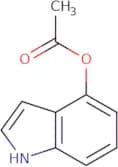
CAS:<p>4-Acetoxyindole is a chromophore that belongs to the pyrrole family of compounds. It has been shown to react with an ionic liquid under acidic conditions to form a protonated intermediate, which can be deprotonated by a nucleophile. This reaction yields an acetate anion and a fluorescing product. 4-Acetoxyindole also reacts with deuterium gas, yielding an acetate, a deuterium atom, and fluorescing product. The reaction is reversible and the yield of the product depends on the concentration of the reactants. 4-Acetoxyindole has strong carbonyl groups that make it reactive towards other functional groups. These reactions are useful for synthesizing heterocycles such as indoles and isoquinolines.</p>Formula:C10H9NO2Purity:Min. 97 Area-%Color and Shape:White PowderMolecular weight:175.18 g/mol1-Amino-4,4-dimethylcyclohexane-1-carboxamide
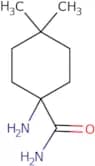
CAS:<p>Versatile small molecule scaffold</p>Formula:C9H18N2OPurity:Min. 95%Color and Shape:PowderMolecular weight:170.25 g/mol8-Aminoquinoline
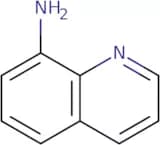
CAS:<p>8-Aminoquinoline is a fluorescent probe that is used to detect the presence of nitrite ions in biological samples. It is used in electron paramagnetic resonance (EPR) experiments and can be used as a chemical inhibitor of cytochrome P450 enzymes. 8-Aminoquinoline has been shown to have minimal toxicity in animal models. It has been shown to inhibit the growth of Leishmania, an organism that causes leishmaniasis, by arresting protein synthesis at the ribosome level. The drug interactions of 8-aminoquinoline have not been well studied, but it may be necessary for patients to avoid other drugs that are metabolized by cytochrome P450 enzymes when taking this agent.</p>Formula:C9H8N2Purity:Min. 95%Color and Shape:Slightly Yellow PowderMolecular weight:144.17 g/mol1,3-Adamantanediacetic acid
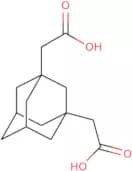
CAS:<p>1,3-Adamantanediacetic acid is a linker molecule that is used in analytical chemistry. It is a bifunctional reagent that reacts with trifluoroacetic acid and triflic acid to form a chelate ring. This reaction product can be analyzed using analytical methods such as gas chromatography or nuclear magnetic resonance spectroscopy. 1,3-Adamantanediacetic acid has been shown to react with amides and hydrogen bonding interactions to form supramolecular structures. The introduction of this compound into the synthesis of peptides has allowed for the elucidation of the structural analysis of these molecules.</p>Formula:C14H20O4Purity:Min. 98 Area-%Color and Shape:PowderMolecular weight:252.31 g/mol2-Amino-5-fluoropyridine
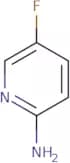
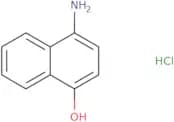
CAS:<p>2-Amino-5-fluoropyridine is a precursor to the amino acid L-glutamic acid. It is used in organic synthesis as an acetylating agent and can be synthesized from ethyl bromoacetate and anhydrous sodium acetate. 2-Amino-5-fluoropyridine has shown efficacy in treating cancer, including leukemia cells. This compound also has allosteric modulator activity, which may be due to its ability to form hydrogen bonds with other molecules. The synthesis of 2-amino-5-fluoropyridine requires a chloride ion source that is not chlorinated, such as magnesium chloride or potassium chloride. The optimal reaction temperature is between 60°C and 80°C.</p>Formula:C5H5FN2Purity:Min. 95%Color and Shape:White PowderMolecular weight:112.11 g/mol4-Amino-1-naphthol hydrochloride
CAS:<p>4-Amino-2-methyl-1-naphthol is a menadione analog. Most commonly seen in its hydrochloride form, 4-amini-2-methyl-1-naphtol posseses vitamin K activity, effective against microbes and bacteria, and as antibiotic.</p>Formula:C10H9NO•HClPurity:Min. 85.0 Area-%Color and Shape:PowderMolecular weight:195.65 g/molAdenine
CAS:<p>Purine nucleobase; component of nucleic acids and coenzymes</p>Formula:C5H5N5Purity:Min. 98 Area-%Color and Shape:White PowderMolecular weight:135.13 g/molN-Acetyl-3-hydroxyindole
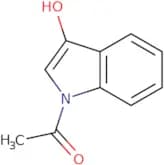
CAS:<p>N-Acetyl-3-hydroxyindole is a chemical compound that can be used as a building block for other organic compounds. It is an intermediate in the synthesis of 3-amino-2,4,6-trichloropyrimidine, which is used in the synthesis of some pharmaceuticals and pesticides. N-Acetyl-3-hydroxyindole has been shown to react with thiourea to yield 2-(3,4-dihydroxyphenyl)acetic acid. It also reacts with hydroxylamine to produce 2-(aminooxymethyl)pyrrolidinone. N-Acetyl-3-hydroxyindole has been shown to have antioxidant properties, which may be due to its ability to reduce lipid peroxidation and scavenge reactive oxygen species.</p>Formula:C10H9NO2Purity:Min. 98.0 Area-%Molecular weight:175.19 g/mol2-Acetylfuran
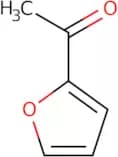
CAS:2-Acetylfuran is a chemical compound that has been shown to have in vitro antifungal activity. It is an aromatic, hydroxylated compound with a 2-acetyl group and two double bonds, one of which is conjugated. 2-Acetylfuran has been used as a model system for the study of biological properties and kinetic data. It also inhibits the reaction by binding to the pyrimidine compound, preventing it from undergoing nucleophilic substitution. This inhibition can be reversed by adding ethyl decanoate to the reaction solution, which may be due to its ability to chelate the metal ion that activates the enzyme.2-Acetylfuran has been tested for its ability to inhibit fungal growth in tissue culture by inhibiting RNA synthesis. The matrix effect can cause variations in results obtained when using different solvents and this should be taken into account when conducting experiments with 2-acetylfuran.Formula:C6H6O2Purity:Min. 95%Color and Shape:Yellow Clear LiquidMolecular weight:110.11 g/mol8-Amino-2-naphthol
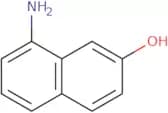
CAS:<p>8-Amino-2-naphthol (8AN) is a natural product that has been found to have anti-inflammatory, antioxidant, and antiviral properties in vitro. It has been shown to inhibit the production of protonated species of 8AN by adding a proton to the hydroxyl group on the naphthalene ring. This reaction occurs at an activation energy of 17.2 kJ/mol and is reversible, with a protonation equilibrium constant of 1.0 x 10 M. The intramolecular hydrogen transfer mechanism is shown in Figure 1 below:</p>Formula:C10H9NOPurity:Min. 98 Area-%Color and Shape:White PowderMolecular weight:159.18 g/molEthyl 2-methoxybenzoate
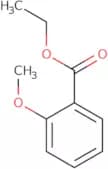
CAS:<p>Ethyl 2-methoxybenzoate is a colorless liquid that is used as an intermediate in the synthesis of other organic compounds. It has been shown to be an effective insect repellent, with an LD50 of 14 mg/kg. This compound also has a high affinity for protonated amines and amino acids, which may account for its adsorption to riparia. Ethyl 2-methoxybenzoate is biosynthesized from monoketones and monohydric alcohols. The hydroxyl group on the benzoic acid moiety reacts with methyl anthranilate to produce ethyl 2-methoxybenzoate.</p>Formula:C10H12O3Purity:Min. 95%Color and Shape:PowderMolecular weight:180.2 g/mol2-Amino-6-chloro-3-nitropyridine
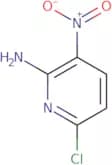
CAS:<p>2-Amino-6-chloro-3-nitropyridine is a cytotoxic drug that has been shown to have anti-viral potency, as well as antiviral activity in an activity test. It is synthesized by reacting hydrogen tartrate with oxadiazole, and then hydrolyzing the resulting product with chloride. 2-Amino-6-chloro-3-nitropyridine has also been shown to inhibit human immunodeficiency virus type 1 (HIV) replication in vitro and to be effective against other viruses such as type 2 influenza. This drug can bind to the viral envelope and inhibit fusion of the viral membrane with host cells by preventing the release of viral contents into the cytoplasm. The binding affinity of 2-amino 6-chloro 3 nitropyridine for chloride may be due to hydrogen bonding interactions.<br>2AMINO 6 CHLORO 3 NITROPYRIDINE CAN</p>Purity:Min. 95%Color and Shape:PowderMolecular weight:173.56 g/mol3-Aminobenzonitrile
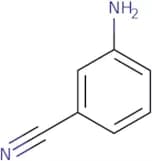
CAS:<p>3-Aminobenzonitrile is an amine that has been shown to inhibit the growth of bacteria. It was synthesized by the reaction of nitrobenzene with benzamide in the presence of acetic acid. The chemical structure of 3-aminobenzonitrile is similar to that of a group of natural amino acids, including cysteine and tryptophan, which are known inhibitors of bacterial growth. This compound is soluble in organic solvents and can be used as an injection solution. 3-Aminobenzonitrile has been evaluated by kinetic studies and found to have a high affinity for bacterial cells, with an inhibition constant (Ki) value of 0.37 mM. It is also active against other microorganisms such as yeast or mold fungi, but not against plant or animal cells. 3-Aminobenzonitrile inhibits the synthesis of proteins by binding to a number of different sites on the ribosomes where</p>Purity:Min. 95%Color and Shape:Yellow PowderMolecular weight:118.14 g/molD-Alanine
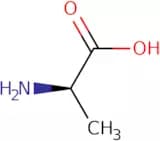
CAS:<p>D-Alanine is a small-molecule drug that inhibits the hepatitis B virus. It has been shown to decrease the levels of HBV-DNA in chronic hepatitis patients. D-Alanine may be effective for reducing hepatic steatosis and improving liver function, which may be due to its ability to reduce the expression of δ receptors. D-Alanine can inhibit viral replication by interfering with the polymerase chain reaction and inhibiting human serum albumin from binding to HBV-DNA. D-alanine also has an antioxidant effect and can scavenge anion radicals.</p>Formula:C3H7NO2Purity:Min. 98 Area-%Color and Shape:White PowderMolecular weight:89.09 g/molIodocyclopentane (stabilised with copper)
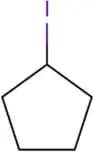
CAS:Iodocyclopentane is an organic compound that has been synthesized for the treatment of infectious diseases. Iodocyclopentane binds to the active site of a lipid kinase and inhibits the enzyme activity, which prevents the synthesis of phospholipids and lipids. This compound also inhibits bacterial growth by binding to nitrogen atoms in their DNA, preventing replication. The X-ray crystal structure of iodocyclopentane shows that it is a symmetric molecule.Formula:C5H9IPurity:Min. 95%Molecular weight:196.03 g/molAgaric acid
CAS:<p>Agaric acid is a high-quality, versatile chemical that is used as an intermediate in many organic and biochemistry reactions. It is also used as a reagent for the isolation of metals such as silver and gold. As a complex compound, it has many uses, including being a useful building block in the synthesis of various drugs. Agaric acid can be used to produce other chemicals such as speciality chemicals or research chemicals</p>Formula:C22H40O7Molecular weight:416.56 g/molRef: 3D-A-3920
1gTo inquire5gTo inquire250mgTo inquire500mgTo inquire2500mgTo inquire-Unit-ggTo inquire