Building Blocks
This section contains fundamental products for the synthesis of organic and biological compounds. Building blocks are the essential starting materials used to construct complex molecules through various chemical reactions. They play a critical role in drug discovery, material science, and chemical research. At CymitQuimica, we offer a diverse range of high-quality building blocks to support your innovative research and industrial projects, ensuring you have the essential components for successful synthesis.
Subcategories of "Building Blocks"
- Boronic Acids & Boronic Acid Derivatives(5,778 products)
- Chiral Building Blocks(1,242 products)
- Hydrocarbon Building Blocks(6,098 products)
- Organic Building Blocks(61,098 products)
Found 199594 products of "Building Blocks"
Sort by
Purity (%)
0
100
|
0
|
50
|
90
|
95
|
100
L-Histidine monohydrochloride monohydrate
CAS:<p>L-Histidine monohydrochloride monohydrate is a histidine derivative that is used in the treatment of chronic oral and bowel diseases. L-histidine has been shown to activate phospholipase A2, which releases arachidonic acid from phospholipids. Arachidonic acid then reacts with other molecules to form prostaglandins and leukotrienes. L-histidine also inhibits the release of tumor necrosis factor (TNF) by blocking the activity of lipoxygenase, or it can stimulate the production of prostaglandins and leukotrienes that suppress inflammation in animal models. L-histidine monohydrochloride monohydrate has been shown to have an anti-inflammatory effect in animals with inflammatory bowel disease due to its ability to inhibit the production of prostaglandin E2 (PGE2). This drug has also been shown to be capable of neutralizing acidic ph by forming a salt with</p>Formula:C6H9N3O2·HCl·H2OColor and Shape:White PowderMolecular weight:209.63 g/mol4-(2,5-Dimethyl-1H-pyrrol-1-yl)-N-(2,5-dioxopyrrolidin-1-yl)benzamide
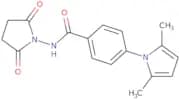
CAS:4-(2,5-Dimethyl-1H-pyrrol-1-yl)-N-(2,5-dioxopyrrolidin-1-yl)benzamide is a useful scaffold that can be used to synthesize high quality and versatile building blocks. This compound is also a useful intermediate in the synthesis of complex compounds. This chemical is not an approved pharmaceutical, but it has shown promising activity as an antihistamine.Formula:C17H17N3O3Purity:Min. 95%Molecular weight:311.33 g/mol4-Hydroxy-3-nitrobenzaldehyde
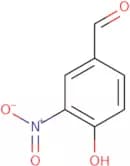
CAS:<p>4-Hydroxy-3-nitrobenzaldehyde (4NBA) is a chemical compound that belongs to the class of aromatic compounds. It is an intermediate in the synthesis of various pharmaceuticals, including benzocaine and nitroglycerin, and has been researched for its potential use in cancer diagnosis. 4NBA has shown optical properties that allow it to be used as a model system for studying the interactions between water and benzyl groups. It also possesses anti-inflammatory properties due to its ability to inhibit the production of inflammatory cytokines such as IL-1β, IL-6, and TNFα.</p>Formula:C7H5NO4Purity:Min. 95%Color and Shape:PowderMolecular weight:167.12 g/mol2-Amino-3-(furan-3-yl)propanoic acid hydrochloride
CAS:<p>Please enquire for more information about 2-Amino-3-(furan-3-yl)propanoic acid hydrochloride including the price, delivery time and more detailed product information at the technical inquiry form on this page</p>Formula:C7H9NO3•HClPurity:Min. 95%Color and Shape:PowderMolecular weight:191.61 g/mol1,6-Anhydrochitobiose hydrochloride
<p>Please enquire for more information about 1,6-Anhydrochitobiose hydrochloride including the price, delivery time and more detailed product information at the technical inquiry form on this page</p>Formula:C12H22N2O8•(HCl)xPurity:Min. 95%Color and Shape:PowderMolecular weight:322.31 g/mol3,3-Diphenylpropylamine
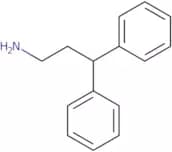
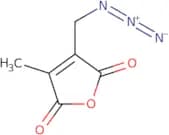
CAS:<p>3,3-Diphenylpropylamine is an organic compound that is used in the analytical method for infectious diseases. It has been shown to be stable under acidic conditions and can be hydrolyzed by enzymes to form 3,3-diphenylpropionic acid. This chemical is also an enantiomer of 2,2-diphenylpropanolamine. The hydrochloride salt of 3,3-diphenylpropylamine has been used as a pharmaceutical preparation for the treatment of gastric ulcers. This drug has pharmacokinetic properties that include a long half-life and low oral bioavailability.</p>Formula:C15H17NPurity:Min. 95%Color and Shape:PowderMolecular weight:211.31 g/mol3-(Azidomethyl)-4-methyl-2,5-dihydrofuran-2,5-dione, 1M in acetonitrile
CAS:Please enquire for more information about 3-(Azidomethyl)-4-methyl-2,5-dihydrofuran-2,5-dione, 1M in acetonitrile including the price, delivery time and more detailed product information at the technical inquiry form on this pageFormula:C6H5N3O3Purity:Min. 95%Color and Shape:PowderMolecular weight:167.12 g/mol1,1,1,3,3,3-Hexafluoro-2-propanol
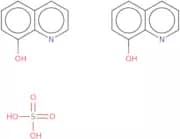
CAS:<p>Hexafluoroisopropanol is a chemical compound that is used in the laboratory to study biological properties. It reacts with hydrogen fluoride, forming hydrogen hexafluoride gas and a fluorescent derivative. This reaction solution can be titrated using calorimetric techniques, which involves measuring the heat released by the reaction. Fluorescence probe studies can also be done to determine the conformational properties of hexafluoroisopropanol. Studying this molecule under different conditions can yield important thermodynamic data for its use in structural biology and fluorescence probe experiments.</p>Formula:C3H2F6OPurity:Min. 98.5%Color and Shape:Clear LiquidMolecular weight:168.04 g/mol8-Hydroxyquinoline sulfate
CAS:<p>8-Hydroxyquinoline sulfate is a drug that has been used to study the cancer tissue response to various drugs. The 8-hydroxyl group in the molecule interacts with metals and forms chelate complexes, which may be the reason for its cytotoxic effect. 8-Hydroxyquinoline sulfate also inhibits mitochondrial membrane potential and blocks the receptor activity of some cell types. It has been shown to be significantly cytotoxic to HL-60 cells, as well as other cell lines.</p>Formula:C18H14N2O2·H2SO4Purity:Min. 95%Color and Shape:Yellow PowderMolecular weight:388.4 g/mol1,5-Anhydro-D-glucitol 6-dihydrogenphosphate disodium
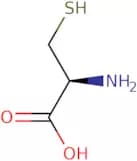
CAS:Please enquire for more information about 1,5-Anhydro-D-glucitol 6-dihydrogenphosphate disodium including the price, delivery time and more detailed product information at the technical inquiry form on this pageFormula:C6H13O8P•Na2Purity:Min. 95%Molecular weight:290.12 g/molD-Cysteine
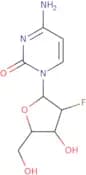
CAS:<p>D-Cysteine is a versatile building block for the synthesis of complex compounds and peptides.</p>Formula:C3H7NO2SMolecular weight:121.16 g/mol4-Amino-1-(2-deoxy-2-fluoro-β-D-arabinofuranosyl)-2(1H)-pyrimidinone
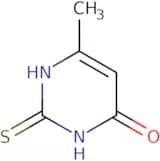
CAS:<p>Please enquire for more information about 4-Amino-1-(2-deoxy-2-fluoro-β-D-arabinofuranosyl)-2(1H)-pyrimidinone including the price, delivery time and more detailed product information at the technical inquiry form on this page</p>Formula:C9H12FN3O4Purity:Min. 95%Molecular weight:245.21 g/mol4-Hydroxy-2-mercapto-6-methy1-pyrimidine
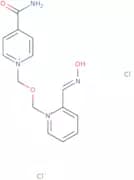
CAS:<p>4-Hydroxy-2-mercapto-6-methylpyrimidine is a structural analysis of the molecule. It is a pyrimidine compound that has been found to be effective against human bowel disease and congestive heart failure, as well as in a model system of infectious diseases. 4-Hydroxy-2-mercapto-6-methylpyrimidine inhibits the activity of cyclin D2 by binding to it and preventing its attachment to the G1/S phase checkpoint. This compound also inhibits the activity of c. glabrata polymerase chain reaction (PCR) and human leukemia cells HL60 cells. 4-Hydroxy-2-mercapto-6-methylpyrimidine is an analytical method for xray diffraction data, which has been shown to have antibacterial properties due to its ability to inhibit methylthiouracil from being converted into thyroxine in the body.</p>Formula:C5H6N2OSPurity:Min. 95%Color and Shape:White Clear LiquidMolecular weight:142.18 g/molAsoxime chloride
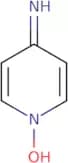
CAS:<p>A Hagedorn oxime used in the treatment of organophosphate poisoning.</p>Formula:C14H16Cl2N4O3Purity:Min. 95%Color and Shape:PowderMolecular weight:359.21 g/mol4-Aminopyridine N-oxide
CAS:<p>4-Aminopyridine N-oxide is a white, crystalline solid that is soluble in water and alcohol. It has a molecular weight of 128.2 and formula weight of 135.2. 4-Aminopyridine N-oxide reacts with acid solutions to produce nitrous acid and ammonia gas. The rate of the reaction depends on the concentration of aminopyridine and aniline, as well as the pH of the solution. The acetylation, diazotisation, and kinetics have also been studied extensively for this compound. Nitrous acid can react with amides to form azulene, which can then react with amines to form a molecule containing nitrogen, oxygen, carbon, hydrogen and one other element or compound from each group (e.g., NHCOCH). This reaction is reversible when solvents are present.br> 4-Aminopyridine N-oxide may be used as a precursor for other organic</p>Formula:C5H6N2OPurity:Min. 95%Color and Shape:Slightly Yellow PowderMolecular weight:110.11 g/mol4-Aminoindole hydrochloride
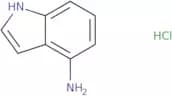
CAS:<p>4-Aminoindole hydrochloride is a white crystalline solid that can be used as a versatile building block in organic synthesis. It is also used as an intermediate in the production of various pharmaceuticals and other chemical compounds. 4-Aminoindole hydrochloride is soluble in most polar solvents, but insoluble in ethers and oils. This compound is also a useful reagent for the conversion of nitrobenzenes to aminobenzoic acids. CAS Number 174854-93-4</p>Formula:C8H9ClN2Purity:Min. 95%Color and Shape:PowderMolecular weight:168.62 g/molcis-4-Hydroxy-L-proline
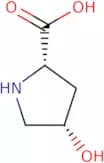
CAS:<p>Cis-4-Hydroxy-L-proline is a bound form of proline that is formed by the condensation of two molecules of glyoxylate. It is a basic structure and an intermediate in the synthesis of collagen, which is a protein found in connective tissue. Cis-4-Hydoxy-L-proline has been shown to be an active form of proline for the treatment of primary sclerosing cholangitis, as it can decrease bile acid levels. This compound has also been used as an analytical method for determining collagen content in biological samples. The polymerase chain reaction technique uses cis-4-Hydroxy-L-proline as a matrix effect to amplify DNA sequences. Cis-4-Hydroxy-L-proline has also been shown to have optimum concentrations at 3mM and 0.5mM in model systems.br></p>Formula:C5H9NO3Purity:Min. 95%Color and Shape:White PowderMolecular weight:131.13 g/mol2-(Aminomethyl)-1,3-thiazole-4-carboxamide
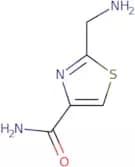
CAS:2-(Aminomethyl)-1,3-thiazole-4-carboxamide is a chemical compound that can be used as a chemical reagent and as a reaction component. It is a versatile building block with many possible uses. 2-(Aminomethyl)-1,3-thiazole-4-carboxamide has been shown to be useful in the synthesis of complex compounds and fine chemicals. It is also an intermediate for the production of pharmaceuticals and other research chemicals.Formula:C5H7N3OSPurity:Min. 95%Color and Shape:PowderMolecular weight:157.2 g/mol4-Aminobenzoic acid
CAS:<p>4-Aminobenzoic acid is a chemical compound that can be used as an antibacterial agent in wastewater treatment. It has been shown to be effective against Aerobacter aerogenes and other bacteria. 4-Aminobenzoic acid is a basic compound with an aromatic ring and four amine groups. It is often used in the synthesis of polymers, pharmaceuticals, dyes, and pigments. The polymerase chain reaction (PCR) technique uses 4-aminobenzoic acid as a cofactor for DNA synthesis. Electrochemical impedance spectroscopy (EIS) is another application of this chemical compound in which it acts as a redox mediator in the electrical circuit. 4-Aminobenzoic acid also has been shown to have toxic effects on bowel disease cells, which may be due to its ability to react with nucleophilic groups on cell surfaces or by inhibiting the production of essential proteins or enzymes within the cells</p>Formula:C7H7NO2Purity:Min. 98 Area-%Color and Shape:PowderMolecular weight:137.14 g/mol2-Aminoacridone
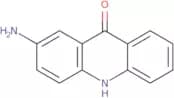
CAS:<p>2-Aminoacridone is a fluorescent dye. The applications of 2-Aminoacridone are extensive in biochemical and analytical research. It is commonly employed in glycoprotein and glycoconjugate studies, leveraging its high sensitivity and specificity in detecting saccharide structures. Researchers utilize this dye in various assays, including high-performance liquid chromatography (HPLC) and electrophoresis, to analyze carbohydrate content and structure. Its role is critical in advancing our understanding of carbohydrate-related biological processes, such as cell signaling and disease pathogenesis, facilitating developments in both diagnostics and therapeutic strategies.</p>Formula:C13H10N2OPurity:Min. 95%Color and Shape:PowderMolecular weight:210.23 g/mol