Building Blocks
This section contains fundamental products for the synthesis of organic and biological compounds. Building blocks are the essential starting materials used to construct complex molecules through various chemical reactions. They play a critical role in drug discovery, material science, and chemical research. At CymitQuimica, we offer a diverse range of high-quality building blocks to support your innovative research and industrial projects, ensuring you have the essential components for successful synthesis.
Subcategories of "Building Blocks"
- Boronic Acids & Boronic Acid Derivatives(5,778 products)
- Chiral Building Blocks(1,242 products)
- Hydrocarbon Building Blocks(6,098 products)
- Organic Building Blocks(61,034 products)
Found 199601 products of "Building Blocks"
Sort by
Purity (%)
0
100
|
0
|
50
|
90
|
95
|
100
3-[4-(Difluoromethoxy)phenyl]propanenitrile
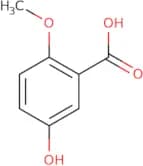
CAS:<p>Versatile small molecule scaffold</p>Formula:C10H9F2NOPurity:Min. 95%Color and Shape:PowderMolecular weight:197.18 g/mol5-Hydroxy-2-methoxybenzoic acid
CAS:<p>Apigenin is a flavonoid found in plants of the genus Labiatae, such as chamomile and feverfew. It is a potent anti-inflammatory agent that may be due to its ability to inhibit cyclooxygenase (COX) enzymes and subsequent production of proinflammatory prostaglandins, leukotrienes, and thromboxanes. Apigenin has also been shown to inhibit cancer cell growth by binding to DNA and inhibiting transcription. Apigenin is chemically stable at room temperature and has been used in techniques such as liquid chromatography-mass spectrometry (LC-MS).</p>Formula:C8H8O4Purity:Min. 95%Color and Shape:PowderMolecular weight:168.14 g/mol4-Amino-3-chloro-N-[2-(diethylamino)ethyl]benzamide
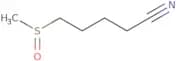
CAS:4-Amino-3-chloro-N-[2-(diethylamino)ethyl]benzamide (4ACB) is a benzoquinone analog that has been shown to inhibit the proliferation of muscle cells. It has also been found to be reactive with reactive functional groups, such as the fatty acids found in the liver and bowel. 4ACB suppresses mitochondrial functions, which may contribute to its anti-inflammatory effects. This drug is also a pharmacological agent that inhibits bowel disease by reducing the secretion of inflammatory substances from cells in the bowel.Formula:C13H20ClN3OPurity:Min. 95%Color and Shape:PowderMolecular weight:269.77 g/mol5-Methanesulfinylpentanenitrile
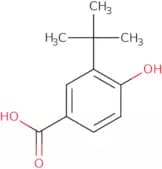
CAS:<p>5-Methanesulfinylpentanenitrile is a compound that is found in plants such as broccoli, cabbage, and cauliflower. It has been shown to have anticarcinogenic properties in cell culture studies. The activity of sulforaphane can be increased by the presence of glucosinolates. Sulforaphane inhibits the synthesis of fatty acids and is metabolized by detoxification enzymes. Amides are formed from sulforaphane, which can be detected using preparative high performance liquid chromatography (prep-HPLC). The water solubility of sulforaphane can be increased by heating it to a temperature above its boiling point so that it becomes supercritical (above its critical temperature). This allows for the preparation of dry weight samples for analysis.</p>Formula:C6H11NOSPurity:Min. 95%Molecular weight:145.23 g/mol3-tert-Butyl-4-hydroxybenzoic acid
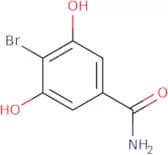
CAS:3-tert-Butyl-4-hydroxybenzoic acid is a phenolic compound that is found in the plant species of "Solanum xanthocarpum". It has antioxidant properties and has been shown to have anticancer activity in vitro. 3-tert-Butyl-4-hydroxybenzoic acid also inhibits the growth of human colon carcinoma cells. It is soluble in organic solvents and homopolymers at high temperatures, but insoluble at lower temperatures.Formula:C11H14O3Purity:Min. 95%Color and Shape:PowderMolecular weight:194.23 g/mol4-Bromo-3,5-dihydroxybenzamide
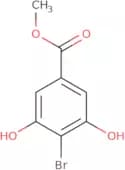
CAS:<p>4-Bromo-3,5-dihydroxybenzamide is a versatile building block that can be used as a reagent or as an intermediate in the synthesis of other compounds. It can also be used as a research chemical. 4-Bromo-3,5-dihydroxybenzamide has shown to be useful for the synthesis of complex organic compounds and is an excellent starting point for the preparation of novel scaffolds. This compound is also useful for making high quality products.</p>Formula:C7H6BrNO3Purity:90%Color and Shape:PowderMolecular weight:232.03 g/mol4-Bromo-3,5-dihydroxybenzoic acid methyl ester
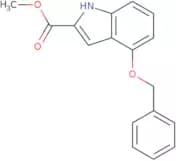
CAS:The compound 4-Bromo-3,5-dihydroxybenzoic acid methyl ester is an ether that is a natural product. It has been shown to have diastereoselective coupling with phenolic groups and unsymmetrically with lactones. This compound also undergoes epoxidation and farnesylation reactions. The intramolecular chain of the ether is methylated by formylation and reductive elimination.Formula:C8H7BrO4Purity:Min. 95%Color and Shape:PowderMolecular weight:247.04 g/mol4-Benzyloxy-1H-indole-2-carboxylic acid methyl ester
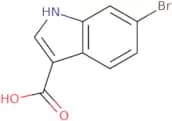
CAS:<p>4-Benzyloxy-1H-indole-2-carboxylic acid methyl ester is a high quality reagent that is used as an intermediate in the synthesis of various complex compounds, including useful scaffolds and building blocks. It is a versatile building block with a wide range of reactions that can be carried out on it. 4-Benzyloxy-1H-indole-2-carboxylic acid methyl ester has been shown to be useful for the synthesis of speciality chemicals and research chemicals. This compound has also been shown to be useful for the preparation of fine chemicals, such as pharmaceuticals, pesticides, and flavorants.</p>Formula:C17H15NO3Color and Shape:PowderMolecular weight:281.31 g/mol6-Bromo-1H-indole-3-carboxylic acid
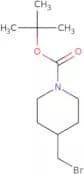
CAS:<p>6-Bromo-1H-indole-3-carboxylic acid is a natural product that is isolated from the marine sponge Smenospongia purpurea. It was first reported in 1979 and has been used for the synthesis of other compounds. 6-Bromoindole, a precursor to 6-bromo-1H-indole-3-carboxylic acid, is biosynthesized from methyl ester and NMR spectra indicate that it has a dihedral angle of 173°. This compound has been shown to have antibacterial activity against staphylococcus.</p>Formula:C9H6BrNO2Purity:Min. 95%Color and Shape:PowderMolecular weight:240.05 g/mol1-Boc-4-bromomethylpiperidine
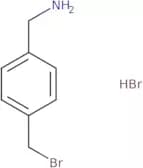
CAS:1-Boc-4-bromomethylpiperidine is a versatile building block for the synthesis of complex compounds with diverse biological activity. It is an excellent reagent for the synthesis of 1,2,3-triazoles, which are useful scaffolds in the synthesis of high quality pharmaceuticals. This compound can be used as a reaction component and as a useful intermediate in various chemical reactions.Formula:C11H20BrNO2Purity:Min. 97 Area-%Color and Shape:PowderMolecular weight:278.19 g/mol4-(Bromomethyl)benzylamine HBr
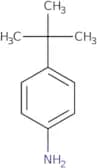
CAS:4-(Bromomethyl)benzylamine HBr is a fine chemical that can be used as a building block for organic synthesis. This compound is also a useful research chemical, reagent, and specialty chemical. 4-(Bromomethyl)benzylamine HBr has been used as a reaction component in the synthesis of various pharmaceuticals, such as theophylline and ampicillin. It has also been used as an intermediate in the production of other compounds, such as 4-hydroxybutyric acid and 3-methylthiopropionic acid. This complex compound can be purchased at high quality and is versatile enough to act as a scaffold for many reactions.Formula:C8H11Br2NPurity:Min. 95%Color and Shape:PowderMolecular weight:280.99 g/mol4-tert-Butylaniline
CAS:<p>4-tert-Butylaniline is a chemical compound with the molecular formula C6H7N. It is an organic base that has acidic properties and can be used as an amine. 4-tert-Butylaniline is used in the manufacture of other chemicals, such as herbicides, pesticides, and pharmaceuticals. 4-tert-Butylaniline binds to metal ions such as palladium by hydrogen bonding. This binding increases the reactivity of the metal ion and allows it to catalyze reactions that would otherwise not occur. 4-tert-Butylaniline also has transport properties and binds to replicon cells through adsorption mechanisms.</p>Formula:C10H15NPurity:Min. 95%Color and Shape:Colorless Clear LiquidMolecular weight:149.23 g/mol2-Bromo-5-iodopyridine
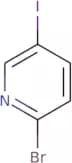
CAS:2-Bromo-5-iodopyridine is a compound that has been studied for its potential use in the treatment of neurodegenerative diseases. It inhibits nicotinic acetylcholine receptors, which are involved in the transmission of nerve impulses to the muscles. 2-Bromo-5-iodopyridine binds to acetylcholine receptors, blocking the uptake of acetylcholine and preventing it from binding with the receptor. This leads to an increase in acetylcholine levels, which increases muscle contraction and improves brain function. The crystal structure of 2-bromo-5-iodopyridine has been determined by x-ray diffraction studies. The molecule contains two bromine atoms and five iodine atoms, which are arranged such that they form a square planar geometry around a central metal ion (hydrochloric acid). Nitrogen atoms are found on opposite corners of this square plane. These nitrogen atoms can be substituted with chlorideFormula:C5H3BrINPurity:Min. 95%Color and Shape:Off-White PowderMolecular weight:283.89 g/molBetonicine
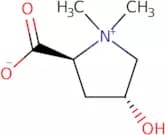
CAS:<p>Betonicine is a natural compound that has been shown to have therapeutic effects in autoimmune diseases. It has been used as a model system for studying plant physiology and to determine the transport properties of hydroxyl groups. Betonicine has also been shown to have receptor activity, which is responsible for its disease-modifying effects in autoimmune diseases. Betonicine is an inorganic acid that can be synthesized from the reaction between ammonia and nitric acid. It can also be extracted from plants such as cress seeds, which are rich in nitrogen atoms. The titration calorimetry method was used to measure the concentration of betonicine in coli K-12 cells.</p>Formula:C7H13NO3Purity:Min. 95%Color and Shape:PowderMolecular weight:159.18 g/mol1-[5-Bromo-2-(difluoromethoxy)phenyl]ethan-1-one
CAS:<p>1-[5-Bromo-2-(difluoromethoxy)phenyl]ethan-1-one is an organic chemical compound. It is a reaction component and a reagent. 1-[5-Bromo-2-(difluoromethoxy)phenyl]ethan-1-one has been used in research for the synthesis of complex compounds, fine chemicals, and speciality chemicals. This chemical may be used as a versatile building block, useful intermediate, or useful building block. 1-[5-Bromo-2-(difluoromethoxy)phenyl]ethan-1-one has also been shown to be a high quality product with high purity.</p>Formula:C9H7BrF2O2Purity:Min. 95%Color and Shape:PowderMolecular weight:265.05 g/mol3'-Bromoacetophenone
CAS:<p>3'-Bromoacetophenone is a synthetic chemical that has been synthesized for the purpose of studying molecular orbitals and vibrational spectra. It is an enantiopure compound with a formyl group and an ethyl bromoacetate. The molecule has four nitrogen atoms and two methyl ketones, which are bonded to each other in the form of a ring. 3'-Bromoacetophenone can be used as a starting material in the synthesis of other compounds. It can also be used as a reagent to make carbon-carbon bonds in organic molecules. 3'-Bromoacetophenone has been shown to have optical properties that can be used for detection of light and fluorescence microscopy.</p>Formula:C8H7BrOPurity:Min. 98.5 Area-%Color and Shape:Slightly Yellow Clear LiquidMolecular weight:199.04 g/mol2-Benzoylpyridine
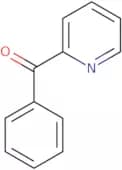
CAS:<p>2-Benzoylpyridine is a novel, potent antimicrobial compound that kills bacteria by targeting the bacterial membrane. 2-Benzoylpyridine binds to the bacterial membrane and causes leakage of ions and other molecules that disrupts the cell's redox potential. It has been shown to be active against human colon adenocarcinoma cells in vitro, with significant cytotoxicity observed. 2-Benzoylpyridine also has a coordination geometry that allows for intermolecular hydrogen bonding, which may contribute to its high potency as an antimicrobial agent.</p>Formula:C12H9NOPurity:Min. 99.0 Area-%Color and Shape:Slightly Yellow PowderMolecular weight:183.21 g/mol(1S,3S,5S)-2-Azabicyclo[3.1.0]hexane-3-carboxylic Acid
CAS:(1S,3S,5S)-2-Azabicyclo[3.1.0]hexane-3-carboxylic Acid is a crystalline compound in the form of a white solid with a melting point of 210°C and a molecular weight of 164.09 g/mol. It has been used to stabilize the helical conformation of l-proline and proline, which are amino acids that have been shown to inhibit the conformational changes in proteins that may lead to protein misfolding and aggregation. (1S,3S,5S)-2-Azabicyclo[3.1.0]hexane-3-carboxylic Acid also has structural properties that make it suitable for x-ray crystallography experiments as well as structural studies with dichroism or tetrameric techniques.Formula:C6H9NO2Purity:Min. 95%Molecular weight:127.14 g/mol3'-Bromo-4'-methylacetophenone
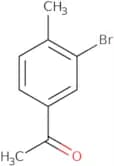
CAS:<p>3'-Bromo-4'-methylacetophenone is a reactive methyl ester that binds to the receptor in the central nervous system. It has been found to be an effective anti-cancer drug, and also inhibits serotonin release in the brain. 3'-Bromo-4'-methylacetophenone is chiral, meaning it can exist as two different forms, or enantiomers. These two forms have different pharmacological profiles, with one being more potent than the other. 3'-Bromo-4'-methylacetophenone is synthesized from methylamine and acetaldehyde using diethyl ether as a solvent. The reaction product is then hydrolyzed by acetonitrile to produce the final product. This drug is used for the treatment of Parkinson's disease and schizophrenia.</p>Formula:C9H9BrOPurity:Min. 95%Color and Shape:PowderMolecular weight:213.07 g/mol3-Bromo-5-hydroxybenzoic acid
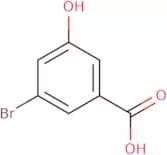
CAS:<p>3-Bromo-5-hydroxybenzoic acid is a metabolite of 3,5-dihydroxybenzoic acid (DHB) in the metabolism of benzoic acid. It has been shown to be an antibacterial agent and has been used to treat metabolic disorders in hamsters. Symptoms of 3-bromo-5-hydroxybenzoic acid include dyslipidemia, which can lead to metabolic disorders such as diabetes mellitus and atherosclerosis. The compound may also have a role in tuberculosis and cancer due to its ability to induce apoptosis.</p>Formula:C7H5O3BrPurity:Min. 95%Color and Shape:White PowderMolecular weight:217.02 g/mol
![3-[4-(Difluoromethoxy)phenyl]propanenitrile](/_next/image/?url=https%3A%2Fstatic.cymitquimica.com%2Fproducts%2F3D%2Fthumb-webp%2FHSB67627.webp&w=3840&q=75)

![4-Amino-3-chloro-N-[2-(diethylamino)ethyl]benzamide](/_next/image/?url=https%3A%2Fstatic.cymitquimica.com%2Fproducts%2F3D%2Fthumb-webp%2FAAA89160.webp&w=3840&q=75)
![1-[5-Bromo-2-(difluoromethoxy)phenyl]ethan-1-one](/_next/image/?url=https%3A%2Fstatic.cymitquimica.com%2Fproducts%2F3D%2Fthumb-webp%2FQYB99475.webp&w=3840&q=75)

![(1S,3S,5S)-2-Azabicyclo[3.1.0]hexane-3-carboxylic Acid](/_next/image/?url=https%3A%2Fstatic.cymitquimica.com%2Fproducts%2F3D%2Fthumb-webp%2FPIA19313.webp&w=3840&q=75)