Building Blocks
This section contains fundamental products for the synthesis of organic and biological compounds. Building blocks are the essential starting materials used to construct complex molecules through various chemical reactions. They play a critical role in drug discovery, material science, and chemical research. At CymitQuimica, we offer a diverse range of high-quality building blocks to support your innovative research and industrial projects, ensuring you have the essential components for successful synthesis.
Subcategories of "Building Blocks"
- Boronic Acids & Boronic Acid Derivatives(5,778 products)
- Chiral Building Blocks(1,242 products)
- Hydrocarbon Building Blocks(6,098 products)
- Organic Building Blocks(61,098 products)
Found 199594 products of "Building Blocks"
Sort by
Purity (%)
0
100
|
0
|
50
|
90
|
95
|
100
4-Bromo-1H-pyrrolo[2,3-b]pyridine-3-carboxylic acid
CAS:<p>4-Bromo-1H-pyrrolo[2,3-b]pyridine-3-carboxylic acid is a high quality reagent that is used as an intermediate in the synthesis of other compounds. It has a CAS No. of 1000340-36-2 and can be purchased at a very competitive price. This chemical is useful for the synthesis of complex compounds, such as fine chemicals and speciality chemicals. It can also be used as a building block for versatile chemical reactions, or as a building block for the synthesis of valuable research chemicals.</p>Formula:C8H5BrN2O2Purity:Min. 95%Color and Shape:PowderMolecular weight:241.04 g/mol1-[3-(Trifluoromethyl)phenyl]-1H-1,2,3-triazole-4-carboxylic acid
CAS:<p>1-[3-(Trifluoromethyl)phenyl]-1H-1,2,3-triazole-4-carboxylic acid (TFTCA) is a versatile building block used as a reagent in research and speciality chemical synthesis. TFTCA is used as a reactant in the synthesis of complex compounds and can be used as an intermediate or scaffold. The compound has been used to synthesize drugs such as 3,5-dichloro-N-(3-(trifluoromethyl)phenyl)-2-thiophenecarboxamide (PF23410), which is a potent inhibitor of protein kinase C.</p>Formula:C10H6F3N3O2Purity:Min. 95%Color and Shape:PowderMolecular weight:257.17 g/mol6-Bromo-4-chlorocinnoline
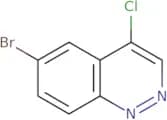
CAS:<p>6-Bromo-4-chlorocinnoline is a versatile building block that can be used as a reaction component, reagent, or speciality chemical. It can be converted into other useful compounds with the help of various reactions. 6-Bromo-4-chlorocinnoline is a fine chemical that is a useful scaffold for the synthesis of complex compounds. This compound has been shown to react with amines to form ureas and with nitriles to form azides.</p>Formula:C8H4BrClN2Purity:Min. 95%Color and Shape:PowderMolecular weight:243.5 g/mol2-(Pyrrolidin-2-yl)cyclohexan-1-one hydrochloride
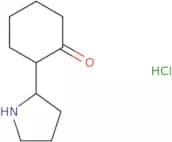
CAS:<p>Versatile small molecule scaffold</p>Formula:C10H18ClNOPurity:Min. 95%Color and Shape:PowderMolecular weight:203.71 g/mol4-[(1E)-2-(3-Hydroxyphenyl)ethenyl]phenol
CAS:<p>4-[(1E)-2-(3-Hydroxyphenyl)ethenyl]phenol is a metabolite of estrone sulfate. It is a potent estrogen that can be used in the treatment of prostate cancer, to inhibit the growth of cancer cells. 4-[(1E)-2-(3-Hydroxyphenyl)ethenyl]phenol has been shown to have antiestrogenic activity in breast cancer cell lines and to inhibit the formation of estrogen analogs in vitro. 4-[(1E)-2-(3-Hydroxyphenyl)ethenyl]phenol has been used as an estrogen receptor ligand in transfection experiments with human breast cancer cells, resulting in inhibition of target gene expression. The molecule also inhibits DNA polymerase activity and is believed to form carcinogenic nitrosamines and diazonium ions when subjected to nitrite and hydrogen peroxide. This molecule also exhibits weak antioxidant activity, which may be</p>Formula:C14H12O2Purity:Min. 95%Color and Shape:PowderMolecular weight:212.24 g/mol[4-(tert-Butyl)phenyl]methanethiol
CAS:<p>4-(tert-Butyl)phenyl methanethiol is a reagent that is used as an intermediate in the synthesis of more complex compounds. It has been shown to be a useful building block for the synthesis of a wide range of compounds, including speciality chemicals and research chemicals. This product can be used as a reaction component in the preparation of large quantities of fine chemicals, such as pharmaceuticals and agrochemicals. 4-(tert-Butyl)phenyl methanethiol is also commercially available as a fine chemical or research chemical.</p>Formula:C11H16SPurity:Min. 95%Color and Shape:Clear LiquidMolecular weight:180.31 g/mol2-Chloro-N-(3-methoxyphenyl)-7H-purin-6-amine
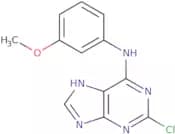
CAS:<p>2-Chloro-N-(3-methoxyphenyl)-7H-purin-6-amine is a plant growth regulator that inhibits the growth of plants by inhibiting the activity of enzymes involved in the synthesis of dinucleotide phosphates. This product has been shown to inhibit the development of leaf chlorophyll and photosynthetic pigments, as well as other physiological effects. 2-Chloro-N-(3-methoxyphenyl)-7H-purin-6-amine also inhibits the antioxidant system and can be used to study plant cell life cycles. The compound has been found to be effective on wheat leaves and triticum aestivum, but not on alfalfa or corn leaves.</p>Formula:C12H10ClN5OPurity:Min. 95%Molecular weight:275.69 g/mol6-Chloro-1H-pyrazolo[3,4-b]pyridine
CAS:<p>6-Chloro-1H-pyrazolo[3,4-b]pyridine (6CPD) is a synthetic compound that acts as a cation channel blocker. 6CPD has been shown to inhibit fatty acid oxidation and cardiac uptake of fatty acids in the heart by blocking the uptake of fatty acids into the mitochondria. 6CPD also inhibits the proton uptake in the mitochondria and reduces oxygen consumption. The compound can be transplacental, which means it crosses the placenta from mother to fetus, which may cause fetal death. 6CPD is an endogenous compound that is involved in death by reducing cell proliferation and inhibiting DNA synthesis.</p>Formula:C6H4ClN3Purity:Min. 95%Molecular weight:153.57 g/mol3-(Difluoromethyl)-1-methyl-1H-pyrazole-4-carboxamide
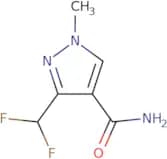
CAS:<p>This drug is a pyrazole analog and is used as an insecticide. 3-(Difluoromethyl)-1-methyl-1H-pyrazole-4-carboxamide inhibits the growth of insects by interfering with their ability to synthesize fatty acids. The effective dose for this compound has been determined in rat hepatocytes. Target pest includes bromodomain proteins, which are proteins that regulate DNA transcription and replication. Control agents include n-oxide, fatty acid, and carbonyl group. Risk group includes prioritizing monoclonal antibodies, sequences, and heart disease</p>Formula:C6H7F2N3OPurity:Min. 95%Molecular weight:175.14 g/molPyridine-2-sulfonamide
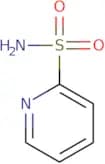
CAS:<p>Pyridine-2-sulfonamide is a synthetic drug that has been shown to inhibit the growth of cancer cells. It binds to the endothelin-A receptor, which is found in many tissues including the heart, brain, and skin. This binding inhibits the binding of epidermal growth factor to its receptor. Pyridine-2-sulfonamide also inhibits pancreatitis by inhibiting the production of hydrogen ions from hydrochloric acid and reducing inflammation. This drug has been shown to be effective against HIV infection.</p>Formula:C5H6N2O2SPurity:Min. 95%Color and Shape:PowderMolecular weight:158.18 g/mol2-Chloro-2-fluoro-2-phenylacetic acid
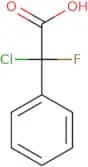
CAS:<p>Versatile small molecule scaffold</p>Formula:C8H6ClFO2Purity:90%MinColor and Shape:PowderMolecular weight:188.58 g/mol5-(Phenoxymethyl)-2H-1,2,3,4-tetrazole
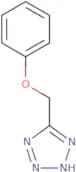
CAS:<p>5-(Phenoxymethyl)-2H-1,2,3,4-tetrazole is a versatile compound with various applications. It acts as a hydroxyl radical scavenger and is commonly used as an inhibitor in chemical reactions. Additionally, it has antiviral properties and has been studied for its potential in treating viral infections. This compound is also used in the production of cellulose-based materials, where it enhances the properties of the final product. It has been found to improve the mechanical strength and thermal stability of cellulose materials. In the field of medicine, 5-(Phenoxymethyl)-2H-1,2,3,4-tetrazole is known as a CYP3A4 substrate. This means that it can interact with enzymes involved in drug metabolism, affecting how certain medications are processed by the body. Researchers have studied its interactions with drugs like carbamazepine and ezetimibe. Furthermore, this compound has shown</p>Formula:C8H8N4OPurity:Min. 95%Color and Shape:PowderMolecular weight:176.18 g/molMethyl 2-[1-(3-hydroxyphenyl)-N-methylformamido]acetate
CAS:Versatile small molecule scaffoldFormula:C11H13NO4Purity:Min. 95%Color and Shape:Clear LiquidMolecular weight:223.22 g/mol1-(Aminooxy)propane hydrochloride
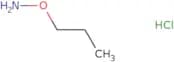
CAS:<p>1-Aminooxypropane hydrochloride is an alkylthio group with a phenoxy group and an antibacterial activity. It is used as a precursor for the synthesis of many organic compounds. 1-Aminooxypropane hydrochloride is produced by the reaction of ethyl bromoacetate and ammonia in liquid ammonia, or by the reaction of propylene oxide with methylamine to produce 1-aminooxypropane. It has been shown to exhibit antimicrobial activity against certain strains of Escherichia coli and Salmonella enterica serovar Typhimurium, but not against Staphylococcus aureus. This compound is also used as a building block for metal ion catalysts such as copper complexes, amines, trifluoromethylated heterocyclic compounds, and others.</p>Formula:C3H10ClNOPurity:Min. 95%Color and Shape:PowderMolecular weight:111.57 g/mol8α-Phenyl-octahydropyrrolo[1,2-a]pyrimidin-6-one
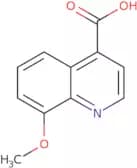
CAS:<p>Versatile small molecule scaffold</p>Formula:C13H16N2OPurity:Min. 95%Color and Shape:PowderMolecular weight:216.3 g/mol8-Methoxyquinoline-4-carboxylic acid
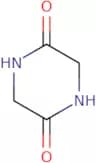
CAS:<p>8-Methoxyquinoline-4-carboxylic acid is a potent inhibitor of phosphodiesterase I, II, IV and V. It has been shown to inhibit the production of inflammatory prostaglandins in asthma patients. 8-Methoxyquinoline-4-carboxylic acid has been used to study the fluorescence properties of acetonitrile and its derivatives. 8-Methoxyquinoline-4-carboxylic acid has been tested as a fluorescent probe for DNA sequencing and has also shown potential as a fluorescent probe for protein sequencing. This molecule is an inhibitor of phosphodiesterases, which are enzymes that break down cyclic nucleotides such as cAMP and cGMP.<br>8-Methoxyquinoline-4-carboxylic acid is a bicyclic heteroaryl compound with an electron donating group at position 4 on the heterocyclic ring. It can be synthesized from ethanol using</p>Formula:C11H9NO3Purity:(¹H-Nmr) Min. 95 Area-%Color and Shape:PowderMolecular weight:203.19 g/molGlycine anhydride
CAS:<p>Glycine anhydride is a fine chemical that is used as a building block in the synthesis of many other compounds. It is also used as a reagent, and can be found in research chemicals, speciality chemicals, or high-quality products. Glycine anhydride is also used as a reaction component to make other molecules. It is versatile and can be used as a scaffold for complex compounds. Glycine anhydride has CAS No. 106-57-0 and can be found in the following chemical name: 3-(2-Aminoethyl)glycine anhydride</p>Formula:C4H6N2O2Molecular weight:114.1 g/molRef: 3D-G-4600
1kgTo inquire5kgTo inquire10kgTo inquire25kgTo inquire2500gTo inquire-Unit-kgkgTo inquireβ-Glycerophosphate, disodium salt pentahydrate, max. 2% α
CAS:<p>Beta-Glycerophosphate, Disodium Salt Pentahydrate is a complex compound that is used as a reagent, useful intermediate, and fine chemical. It is also useful as a scaffold or building block for the synthesis of organic compounds. Beta-glycerophosphate has CAS No. 13408-09-8 and is classified as a speciality chemical. This compound can be used in research and development for versatile building blocks and reaction components to synthesize organic compounds.</p>Formula:C3H17Na2O11PMolecular weight:306.12 g/molRef: 3D-G-4200
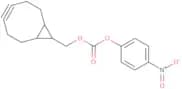
1kgTo inquire100gTo inquire250gTo inquire500gTo inquire2500gTo inquire-Unit-kgkgTo inquireBCN-PNP carbonate
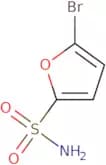
CAS:<p>BCN-PNP carbonate is a versatile building block that can be used as an intermediate in the synthesis of complex compounds. It has a variety of uses in research and as a reagent for fine chemicals. BCN-PNP carbonate is an effective reaction component for the synthesis of speciality chemicals, which are used for research purposes or as intermediates for pharmaceuticals. BCN-PNP carbonate is also useful scaffold for the synthesis of highly pure, high quality building blocks.</p>Formula:C17H17NO5Purity:Min. 95%Color and Shape:PowderMolecular weight:315.32 g/mol5-Bromofuran-2-sulfonamide
CAS:<p>Versatile small molecule scaffold</p>Formula:C4H4BrNO3SPurity:Min. 95%Color and Shape:PowderMolecular weight:226.05 g/mol
![4-Bromo-1H-pyrrolo[2,3-b]pyridine-3-carboxylic acid](/_next/image/?url=https%3A%2Fstatic.cymitquimica.com%2Fproducts%2F3D%2Fthumb-webp%2FAQB34036.webp&w=3840&q=75)

![1-[3-(Trifluoromethyl)phenyl]-1H-1,2,3-triazole-4-carboxylic acid](/_next/image/?url=https%3A%2Fstatic.cymitquimica.com%2Fproducts%2F3D%2Fthumb-webp%2FNEA93433.webp&w=3840&q=75)
![4-[(1E)-2-(3-Hydroxyphenyl)ethenyl]phenol](/_next/image/?url=https%3A%2Fstatic.cymitquimica.com%2Fproducts%2F3D%2Fthumb-webp%2FNCA87776.webp&w=3840&q=75)
![[4-(tert-Butyl)phenyl]methanethiol](/_next/image/?url=https%3A%2Fstatic.cymitquimica.com%2Fproducts%2F3D%2Fthumb-webp%2FZBA54363.webp&w=3840&q=75)
![6-Chloro-1H-pyrazolo[3,4-b]pyridine](/_next/image/?url=https%3A%2Fstatic.cymitquimica.com%2Fproducts%2F3D%2Fthumb-webp%2FNCA72551.webp&w=3840&q=75)
![Methyl 2-[1-(3-hydroxyphenyl)-N-methylformamido]acetate](/_next/image/?url=https%3A%2Fstatic.cymitquimica.com%2Fproducts%2F3D%2Fthumb-webp%2FVQB93340.webp&w=3840&q=75)
![8α-Phenyl-octahydropyrrolo[1,2-a]pyrimidin-6-one](/_next/image/?url=https%3A%2Fstatic.cymitquimica.com%2Fproducts%2F3D%2Fthumb-webp%2FGAA02925.webp&w=3840&q=75)