Building Blocks
This section contains fundamental products for the synthesis of organic and biological compounds. Building blocks are the essential starting materials used to construct complex molecules through various chemical reactions. They play a critical role in drug discovery, material science, and chemical research. At CymitQuimica, we offer a diverse range of high-quality building blocks to support your innovative research and industrial projects, ensuring you have the essential components for successful synthesis.
Subcategories of "Building Blocks"
- Boronic Acids & Boronic Acid Derivatives(5,778 products)
- Chiral Building Blocks(1,242 products)
- Hydrocarbon Building Blocks(6,098 products)
- Organic Building Blocks(61,034 products)
Found 199601 products of "Building Blocks"
Sort by
Purity (%)
0
100
|
0
|
50
|
90
|
95
|
100
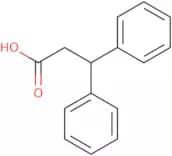
3,3-Diphenylpropionic acid
CAS:<p>3,3-Diphenylpropionic acid is a synthetic compound that is used to treat high blood pressure. It is an ester of hydrochloric acid and 3,3-diphenylpropionic acid. 3,3-Diphenylpropionic acid lowers blood pressure by inhibiting the activity of angiotensin II, which causes constriction and shrinking of the blood vessels. The safety profile for this drug has been evaluated in a number of studies in which it was shown that there were no significant adverse effects on the heart or other organs. This drug also has a beneficial effect on diabetic neuropathy and metabolic rate. 3,3-Diphenylpropionic acid is not active against bacteria or fungi but has been shown to be effective against amines by binding to them and preventing their interaction with DNA.</p>Formula:C15H14O2Purity:Min. 95%Color and Shape:White PowderMolecular weight:226.27 g/mol(2S)-2-(4-Chloro-2-methylphenoxy)propanoic acid
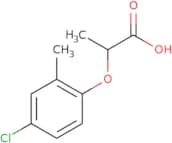
CAS:<p>(2S)-2-(4-Chloro-2-methylphenoxy)propanoic acid (MCPP) is a phenoxy herbicide that is used in the control of annual and perennial broadleaf weeds. It is often found in wastewater treatment plants because it binds to iron ions and can be removed by coagulation, adsorption, or chemical precipitation. MCPP has been shown to produce genotoxic effects in model systems and high values for enzyme activities. The long-term efficacy of MCPP was studied using a bacterial strain with high levels of resistance to this compound. Structural analysis showed that MCPP contains a chlorophenoxy radical, which may contribute to its carcinogenic potential.</p>Formula:C10H11ClO3Purity:Min. 95%Color and Shape:PowderMolecular weight:214.64 g/moltrans-Isoferulic acid
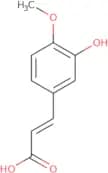
CAS:<p>Trans-iso-ferulic acid is a bioactive phenolic compound that has been shown to have antioxidant and anti-inflammatory properties. It is produced by the metabolism of ferulic acid in the body and can be found in plant cell walls. Trans-iso-ferulic acid has been shown to act as an antimicrobial agent against bacterial strains such as Escherichia coli, Bacillus cereus, Staphylococcus aureus, Klebsiella pneumoniae, Pseudomonas aeruginosa, and Candida albicans. It also has locomotor activity and has been shown to reduce the severity of cardiac disorders. Trans-iso-ferulic acid works by blocking the synthesis of fatty acids which are necessary for energy storage and making regulatory proteins that control metabolism. Trans-iso-ferulic acid also binds to anion radicals which may scavenge free radicals that are formed during oxidative stress. This process prevents lipid peroxidation from occurring which reduces inflammation caused</p>Formula:C10H10O4Purity:Min. 95%Molecular weight:194.18 g/mol6-Bromonaphthalene-2-sulfonyl chloride
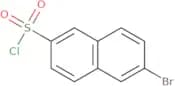
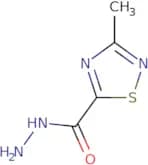
CAS:Versatile small molecule scaffoldFormula:C10H6BrClO2SPurity:Min. 95%Color and Shape:PowderMolecular weight:305.58 g/mol3-Methyl-1,2,4-thiadiazole-5-carbohydrazide
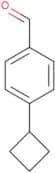
CAS:3-Methyl-1,2,4-thiadiazole-5-carbohydrazide is an intermediate in the synthesis of fezolinetant. It can be used as a pharmaceutical intermediate.Formula:C4H6N4OSPurity:Min. 95%Molecular weight:158.18 g/mol4-Cyclobutylbenzaldehyde
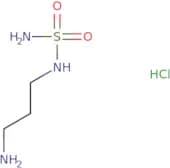
CAS:<p>4-Cyclobutylbenzaldehyde is a versatile building block that is used in the synthesis of complex compounds. This chemical is a reagent and speciality chemical which can be used for research purposes. It also has potential use as an intermediate or scaffold in organic synthesis. 4-Cyclobutylbenzaldehyde is a high quality compound with a CAS number of 875306-94-8.</p>Formula:C11H12OPurity:Min. 95%Color and Shape:Clear LiquidMolecular weight:160.22 g/mol(3-Aminopropyl)(sulfamoyl)amine hydrochloride
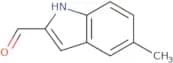
CAS:<p>Versatile small molecule scaffold</p>Formula:C3H12ClN3O2SPurity:Min. 95%Color and Shape:PowderMolecular weight:189.67 g/mol5-Methyl-1H-indole-2-carbaldehyde
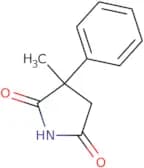
CAS:<p>Versatile small molecule scaffold</p>Formula:C10H9NOPurity:Min. 95%Molecular weight:159.18 g/mol2-Methyl-2-phenylsuccinimide
CAS:<p>2-Methyl-2-phenylsuccinimide is a synthetic cannabinoid that has been found in urine samples. It is not known whether 2-methyl-2-phenylsuccinimide has any psychoactive effects. Phensuximide, a drug that is used to treat epilepsy, has been shown to interact with 2-methyl-2-phenylsuccinimide and other drugs. 5HT7 receptor agonists are thought to be involved in the treatment of depression and anxiety. The terminal half-life of 2-methyl-2-phenylsuccinimide is unknown at this time, but it may be shorter than that of phensuximide. Clinical studies have shown that carbamazepine and enzyme inducing antiepileptic drugs can decrease the concentration of 2-methyl-2-phenylsuccinimide in the blood. Chromatography techniques have been used to detect 2 methyl -2 phenyl</p>Formula:C11H11NO2Purity:Min. 95%Molecular weight:189.21 g/molQuestiomycin A
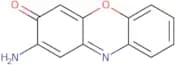
CAS:<p>Questiomycin A is a sesquiterpene lactone that is an antimicrobial agent. It has been shown to modulate the immune system by inhibiting the production of cytokines and altering the expression of genes related to autoimmune diseases. Questiomycin A also inhibits cell growth in myeloma cells, which is due to its ability to inhibit dinucleotide phosphate (NADPH) reductase, an enzyme required for mitochondrial membrane potential maintenance and other cellular functions. In addition, questiomycin A has been shown to induce apoptosis in liver cells as well as carcinoma cell lines. This drug can also be used for body formation, as it stimulates bone growth and inhibits osteoclast activity.</p>Formula:C12H8N2O2Purity:Min. 95 Area-%Color and Shape:PowderMolecular weight:212.2 g/molMethyl 9-Oxononanoate
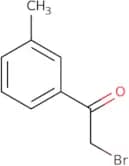
CAS:<p>Methyl 9-oxononanoate is a monomer that is used as a biodiesel fuel additive. It is a peroxide decomposition product of α-tocopherol, which is often used as an antioxidant in biodiesel fuels. Methyl 9-oxononanoate can be produced by the reaction of fatty acid and alkoxy radical, or by the thermal decomposition of pentane fatty esters. This compound can also be obtained by cleavage of fatty acids with phosphotungstic acid, producing methyl 9-oxohexadecanoate and methyl 9-oxodecanoate. The two compounds are isomers that have different physical properties and boiling points. The methyl 9-oxohexadecanoate has a higher boiling point than the methyl 9-oxodecanoate.</p>Formula:C10H18O3Purity:Min. 95%Color and Shape:Clear LiquidMolecular weight:186.25 g/mol2-Bromo-1-(m-tolyl)ethanone
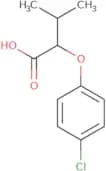
CAS:<p>2-Bromo-1-(m-tolyl)ethanone is a ketone that can be used as an oxidant. It is synthesized by the reaction of 2-bromoethanol and m-tolylmagnesium bromide in ether. The bromoethane reacts with the magnesium to form a Grignard reagent, which then reacts with the alcohol to produce the ketone. This chemical can also be used as a reagent for synthesizing biomolecules such as alkenes or solvents. 2-Bromo-1-(m-tolyl)ethanone is soluble in nonpolar solvents, making it an ideal solvent for reactions involving alkenes and other unsaturated compounds. The sequence of the synthesis involves:</p>Formula:C9H9BrOPurity:Min. 95%Color and Shape:PowderMolecular weight:213.07 g/mol2-(4-Chlorophenoxy)-3-methylbutanoic acid
CAS:<p>Versatile small molecule scaffold</p>Formula:C11H13ClO3Purity:Min. 95%Color and Shape:PowderMolecular weight:228.67 g/mol4-Bromo-3-methyl-1,2-oxazole
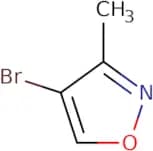
CAS:<p>4-Bromo-3-methyl-1,2-oxazole is a chemical compound that is used as a reaction component in organic synthesis. It is also used as a reagent for the synthesis of various pharmaceuticals. 4-Bromo-3-methyl-1,2-oxazole can be used to produce useful scaffolds and intermediates. This compound has been shown to be useful in the production of complex compounds and fine chemicals. CAS No. 101084-19-9</p>Formula:C4H4BrNOPurity:Min. 90%Color and Shape:Clear LiquidMolecular weight:161.98 g/mol[1-Methyl-4-(piperidin-1-yl)piperidin-4-yl]methanamine
CAS:<p>Versatile small molecule scaffold</p>Formula:C12H25N3Purity:(%) Min. 85%Color and Shape:PowderMolecular weight:211.35 g/molFmoc-Trp(5-OH)-OH
CAS:Fmoc-Trp(5-OH)-OH is a molecule that has been shown to have anticancer activity. It inhibits the proliferation of cancer cells and inhibits the production of fatty acids. It also has antiinflammatory properties and inhibits the growth of bacteria by inhibiting chloride channels. Fmoc-Trp(5-OH)-OH has been shown to inhibit the binding of 4-methylumbelliferone (4MU) to human erythrocytes, which is an indicator of its capability as a coumarin derivative. Fmoc-Trp(5-OH)-OH has also been found to be effective against tuberculosis through hydrogen bond interactions with the enzyme mycobacterium tuberculosis DNA polymerase.Formula:C26H22N2O5Purity:Min. 95%Color and Shape:PowderMolecular weight:442.5 g/molγ-Glutamyl-4-methoxy-β-naphthylamide
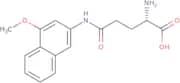
CAS:<p>Gamma-Glutamyl-4-methoxy-beta-naphthylamide is a versatile building block that can be used in the synthesis of a variety of complex compounds. It is a high quality chemical that is useful as an intermediate in organic syntheses and as a reagent in research. Gamma-Glutamyl-4-methoxy-beta-naphthylamide has been shown to be an effective scaffold for the preparation of other chemical substances.</p>Formula:C16H18N2O4Purity:Min. 95%Molecular weight:302.33 g/mol5-Amino-piperidin-2-one hydrochloride
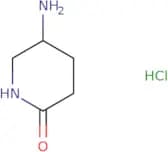
CAS:<p>5-Amino-piperidin-2-one hydrochloride is an enantiomerically pure chiral molecule. It is a white solid with a molecular weight of 138.12 that has been shown to exhibit anti-inflammatory properties in experiments conducted on mice. This drug also has the ability to inhibit the enzyme cyclooxygenase, which plays an important role in the production of prostaglandins. 5-Amino-piperidin-2-one hydrochloride binds to the active site of cyclooxygenase and prevents its conversion of arachadonic acid into prostaglandins. 5-Amino-piperidin-2-one hydrochloride has been shown to be effective against many bacteria, including methicillin resistant Staphylococcus aureus (MRSA) and Mycobacterium tuberculosis, but not against Mycobacterium avium complex.</p>Formula:C5H11ClN2OPurity:Min. 95%Molecular weight:150.61 g/mol5-Methyl-2,3-dihydro-1H-isoindole hydrochloride
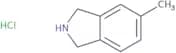
CAS:<p>5-Methyl-2,3-dihydro-1H-isoindole hydrochloride is a chemical that can be used as a reagent in organic synthesis. It may also be useful in the manufacture of pharmaceuticals, dyes, and other chemicals. 5-Methyl-2,3-dihydro-1H-isoindole hydrochloride is an important building block for making complex compounds and fine chemicals. This chemical has been assigned CAS No. 1204600-16-7, which identifies it as a high quality research chemical.</p>Formula:C9H12ClNPurity:Min. 95%Color and Shape:PowderMolecular weight:169.65 g/mol3-formyl-5-(trifluoromethyl)benzoic acid
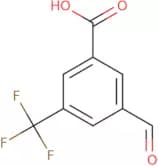
CAS:<p>3-formyl-5-(trifluoromethyl)benzoic acid is a reagent, complex compound with CAS No. 604001-03-8. It is a useful intermediate, fine chemical and speciality chemical that can be used as a reaction component in organic synthesis. 3-Formyl-5-(trifluoromethyl)benzoic acid also has versatile uses as a building block in the synthesis of other complex compounds, such as pharmaceuticals and pesticides.</p>Formula:C9H5F3O3Purity:Min. 95%Color and Shape:PowderMolecular weight:218.1 g/mol


![[1-Methyl-4-(piperidin-1-yl)piperidin-4-yl]methanamine](/_next/image/?url=https%3A%2Fstatic.cymitquimica.com%2Fproducts%2F3D%2Fthumb-webp%2FBKB71783.webp&w=3840&q=75)