Building Blocks
This section contains fundamental products for the synthesis of organic and biological compounds. Building blocks are the essential starting materials used to construct complex molecules through various chemical reactions. They play a critical role in drug discovery, material science, and chemical research. At CymitQuimica, we offer a diverse range of high-quality building blocks to support your innovative research and industrial projects, ensuring you have the essential components for successful synthesis.
Subcategories of "Building Blocks"
- Boronic Acids & Boronic Acid Derivatives(5,778 products)
- Chiral Building Blocks(1,242 products)
- Hydrocarbon Building Blocks(6,098 products)
- Organic Building Blocks(61,034 products)
Found 199601 products of "Building Blocks"
Sort by
Purity (%)
0
100
|
0
|
50
|
90
|
95
|
100
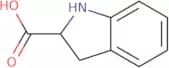
Indoline-2-carboxylic acid
CAS:<p>Indoline-2-carboxylic acid is a photophysical molecule with an absorption maximum at 518 nm. It has been shown to inhibit the activity of enzymes such as cyclooxygenase, lipoxygenase, and monoamine oxidases. This compound has been found to be effective in the treatment of cancer cells. Indoline-2-carboxylic acid is also used in pharmaceutical preparations, where it binds to enantiomers of other molecules and inhibits their biological activity. Indoline-2-carboxylic acid reacts with hydrochloric acid to form allyl carbonate and amide.</p>Formula:C9H9NO2Purity:Min. 97 Area-%Color and Shape:PowderMolecular weight:163.17 g/mol5-(Trifluoromethyl)thiophene-3-carboxylic acid
CAS:<p>Versatile small molecule scaffold</p>Formula:C6H3F3O2SPurity:Min. 95%Molecular weight:196.15 g/mol1-Iododecane - Stabilized with copper chip
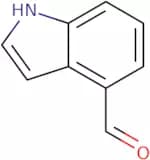
CAS:<p>Precursor to prepare 9-nonadecanone</p>Formula:C10H21IPurity:Min. 98 Area-%Color and Shape:Colorless Clear LiquidMolecular weight:268.18 g/molIndole-4-carboxaldehyde
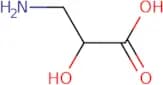
CAS:<p>Indole-4-carboxaldehyde is a natural compound that can be found in the acetate extract of the roots of Scopolia japonica. It has been shown to have an inhibitory effect on locomotor activity and may also have an inhibitory effect on protein synthesis. The mechanism of this inhibition is not yet known, but it may be due to an intramolecular hydrogen bond or other interactions with proteins. Indole-4-carboxaldehyde has also been shown to induce apoptotic cell death in 3T3-L1 preadipocytes by inducing mitochondrial dysfunction and oxidative stress.</p>Formula:C9H7NOColor and Shape:Off-White PowderMolecular weight:145.16 g/molD-Isoserine
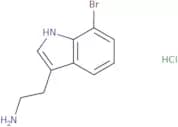
CAS:<p>D-Isoserine is a stereoselective synthetic amino acid that can be used as a structural analog of l-serine. D-Isoserine is synthesized from d-threonine and has been shown to inhibit the bacterial enzyme tyrosine kinase, which is important in cell signaling. D-Isoserine is also being investigated as a treatment for inflammatory diseases such as rheumatoid arthritis and Crohn's disease. The marine sponge Aerogenes sp. produces this compound, which is also produced by the microbial species Aerobacter aerogenes and Staphylococcus aureus.</p>Formula:C3H7NO3Purity:Min. 95%Molecular weight:105.09 g/mol2-(7-Bromo-1H-indol-3-yl)ethanamine hydrochloride
CAS:Controlled Product<p>2-(7-Bromo-1H-indol-3-yl)ethanamine hydrochloride is an organic chemical compound that belongs to the group of versatile building blocks. It is a colorless solid and has a melting point of 160°C. 2-(7-Bromo-1H-indol-3-yl)ethanamine hydrochloride can be used as a research chemical, reagent, or specialty chemical. This compound is a useful building block for the synthesis of complex compounds and can be used as a reaction component in the synthesis of useful scaffolds.</p>Formula:C10H12BrClN2Purity:Min. 95%Color and Shape:PowderMolecular weight:275.57 g/mol3-Iodo-4-methylbenzoic acid
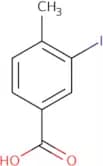
CAS:<p>3-Iodo-4-methylbenzoic acid is a synthetic growth factor that is used in the production of monoclonal antibodies. It is synthesized by reacting 3-iodo-4-methylbenzoic acid with trifluoroacetic acid, then purified by dispersive solid-phase extraction. The synthesis of 3-Iodo-4-methylbenzoic acid requires a labeling agent to be added to the reaction mixture for detection purposes. The labeled compound can be detected using assays such as radioimmunoassay or ELISA. In order to synthesize 3-Iodo-4-methylbenzoic acid, methyl esterification of 3-(2′,2′,2′,-trichloroethoxy)phenylacetic acid is required. This process involves an organic solvent and bromine as a catalyst. This compound has been shown to inhibit the BCR/ABL tyrosine kinase receptor</p>Formula:C8H7IO2Purity:Min. 95%Color and Shape:PowderMolecular weight:262.04 g/mol1H-Indazole-3-carboxylic acid
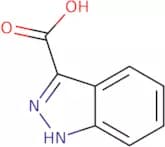
CAS:<p>1H-Indazole-3-carboxylic acid is an organic compound with a molecular formula of C9H6N2O2. It is a colorless solid, but appears yellow in solution. This compound has been shown to inhibit protein synthesis by binding to the apical site of the ribosome, preventing the peptide bond from forming between amino acids. It also inhibits carboxylate metabolism and cellular glycolysis by inhibiting ATP production. 1H-Indazole-3-carboxylic acid has been shown to be effective against cancer cells and can be used as a potential anti-cancer drug.</p>Formula:C8H6N2O2Purity:Min. 98 Area-%Color and Shape:PowderMolecular weight:162.15 g/mol4-Cyclobutylbenzaldehyde
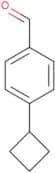
CAS:<p>4-Cyclobutylbenzaldehyde is a versatile building block that is used in the synthesis of complex compounds. This chemical is a reagent and speciality chemical which can be used for research purposes. It also has potential use as an intermediate or scaffold in organic synthesis. 4-Cyclobutylbenzaldehyde is a high quality compound with a CAS number of 875306-94-8.</p>Formula:C11H12OPurity:Min. 95%Color and Shape:Clear LiquidMolecular weight:160.22 g/mol4-Hydroxyacetophenone oxime
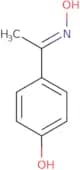
CAS:<p>4-Hydroxyacetophenone oxime is a reactive amide that can be synthesized by the Suzuki coupling of 4-hydroxyacetophenone and an allyl bromide. This product reacts with aluminium, chloride, and hydrochloric acid to produce a nucleophilic attack. The reaction products are alkanoic acids, which are recycled for use in the next process in this synthetic process. Trifluoroacetic acid is used as a catalyst, protonating the 4-hydoxyacetophenone oxime and producing trifluoroacetic anhydride.</p>Formula:C8H9NO2Purity:Min. 95%Color and Shape:PowderMolecular weight:151.16 g/mol2-Chloro-5-hydroxybenzonitrile
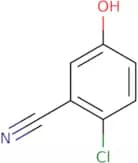
CAS:<p>2-Chloro-5-hydroxybenzonitrile is a versatile, building block chemical that can be used as a reactant or intermediate in the synthesis of other compounds. It is also an excellent research chemical with a high quality and purity. 2-Chloro-5-hydroxybenzonitrile has many uses, such as being a reagent for organic synthesis, a speciality chemical, and a useful intermediate. This compound is suitable for complex synthesis and has been shown to be useful as a building block or scaffold in the production of other chemicals.</p>Formula:C7H4ClNOPurity:Min. 95%Color and Shape:Off-White PowderMolecular weight:153.57 g/mol2-Carboxythiazole
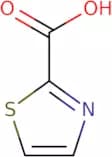
CAS:<p>2-Carboxythiazole is a heterocyclic compound that contains a thiazole ring fused with a carboxylic acid. It has been shown to have potent antagonist effects at the histamine H4 receptor, which may be due to its hydrogen bond interactions with the receptor. 2-Carboxythiazole has also been shown to be an effective treatment for autoimmune diseases, such as psoriasis and rheumatoid arthritis. This compound inhibits the production of T cells in the immune system by binding to the H4 receptor on T cells. 2-Carboxythiazole is also used as an anti-tuberculosis drug for the treatment of tuberculosis infections. It inhibits bacterial growth by binding to DNA-dependent RNA polymerase, thereby preventing transcription and replication. The high frequency of human activity has been shown using a patch-clamp technique on human erythrocytes. This active form is metabolized through a number of metabolic transformations, including hydroly</p>Formula:C4H3NO2SPurity:Min. 95%Color and Shape:PowderMolecular weight:129.14 g/mol1-(4-Chlorophenyl)-2-nitroethene
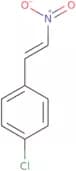
CAS:1-(4-Chlorophenyl)-2-nitroethene is a high yield, versatile reagent for the synthesis of nitro groups. It is prepared by the reaction of 1-(4-chlorophenyl)ethanone with nitric acid in an organic solvent at a temperature of 100 °C. The product can be used as a dehydrating agent, and also has functional groups such as carbonyl, hydroxyl, methoxy, azide, phenyliodonium. It has been shown to be effective in the conversion of diacetates to oximes and ketones. The 1-(4-chlorophenyl)-2-nitroethene reagent is a yellowish liquid that can be handled magnetically, but should be stored under nitrogen gas to avoid oxidation.Formula:C8H6ClNO2Purity:Min. 95%Color and Shape:Yellow PowderMolecular weight:183.59 g/mol2-Chloro-3-methylbenzylamine HCl - 90%
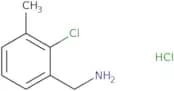
CAS:<p>2-Chloro-3-methylbenzylamine HCl is a fine chemical that is a versatile building block for synthesis of pharmaceuticals and research chemicals. It is also a useful intermediate in the production of other compounds, such as speciality chemicals, complex compounds, and reaction components. 2-Chloro-3-methylbenzylamine HCl has many potential applications in both academia and industry because it is a high quality reagent with many uses.</p>Formula:C8H10ClN·HClPurity:Min. 95%Color and Shape:PowderMolecular weight:192.09 g/molCyanodibenzylamine
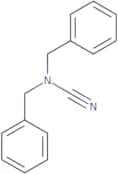
CAS:<p>Cyanodibenzylamine is a synthetic, pharmaceutical preparation. It is an amine that undergoes nucleophilic attack by an amide to form a cyanoguanidine. Cyanodibenzylamine can be used as a stabilizer and additive in pharmaceutical preparations. It also has the ability to bind metal hydroxides, which may be due to the presence of basic fibroblast growth factor and isoquinoline compound. Cyanodibenzylamine is also used as a polymerization initiator in organic chemistry, with hydrocarbon solvents such as benzene or toluene as its solvent.</p>Formula:C15H14N2Purity:Min. 95%Color and Shape:PowderMolecular weight:222.29 g/mol3-Chloro-2,6-dihydroxy-4-methylbenzaldehyde
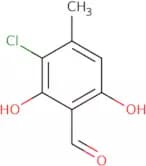
CAS:3-Chloro-2,6-dihydroxy-4-methylbenzaldehyde is a hydroxylated compound that is used in wastewater treatment. It can be found in many products including plastics and pesticides. 3-Chloro-2,6-dihydroxy-4-methylbenzaldehyde has been shown to inhibit the growth of bacteria such as Usnic Acid through its ability to react with hydrogen atoms on the bacterial cell wall and replace them with chlorine. This replacement halts the production of benzoate, which is essential for bacterial growth. The reaction mechanism has been detected using an electrochemical detector, chloroatranol.Formula:C8H7ClO3Purity:Min. 95%Color and Shape:Off-White PowderMolecular weight:186.59 g/mol4-Chloro-3,5-dihydroxybenzoic acid
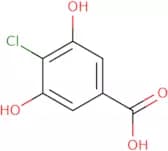
CAS:<p>4-Chloro-3,5-dihydroxybenzoic acid is a chemical substance that can be used as a building block in organic synthesis. It is also a versatile intermediate and scaffold for the synthesis of more complex compounds. 4-Chloro-3,5-dihydroxybenzoic acid has been found to be useful in research and as a reagent because it is an inexpensive, high quality chemical. This compound reacts rapidly with many other chemicals, including alcohols and amines. 4-Chloro-3,5-dihydroxybenzoic acid has been shown to be stable under acidic conditions and can be purified by crystallization or recrystallization.</p>Formula:C7H5ClO4Purity:Min. 95%Color and Shape:PowderMolecular weight:188.56 g/mol1-(3-Carboxypropionyl)naphthalene
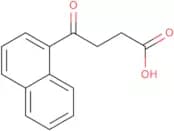
CAS:<p>1-(3-Carboxypropionyl)naphthalene is a drug that belongs to the class of reactive drugs. It is a prodrug that is metabolized by cytochrome P450 enzymes to 1-(3-carboxypropionyl)naphthoquinone (1CPRNQ). Its main mechanism of action is through binding to magnesium, which induces cell membrane permeability and results in apoptosis. 1-(3-Carboxypropionyl)naphthalene has shown an antibody response to eye disorders and cardiovascular diseases, as well as anti-angiogenic properties. It also has been shown to inhibit the proliferation of tumor cells and induce leukocyte antigen expression.</p>Formula:C14H12O3Purity:Min. 95%Color and Shape:Off-White PowderMolecular weight:228.24 g/mol2-Chloro-4-methylsulfonylbenzoic acid
CAS:<p>2-Chloro-4-methylsulfonylbenzoic acid is a chlorinating agent that can be used to produce triketones from ketones. It is usually used as a hydrogen peroxide scavenger and a chlorinating agent in the food industry. 2-Chloro-4-methylsulfonylbenzoic acid can also be used to produce glyphosate, phosphoric acid solution, and chloride. The chlorinating property of this compound is due to its ability to form hypochlorous acid when it reacts with water. This reaction produces hypochlorite ions that are active against microorganisms by disrupting the cell membrane. 2-Chloro-4-methylsulfonylbenzoic acid can react with organic solvents such as carbon tetrachloride and optimizes the introduction of chlorine into organic compounds.</p>Formula:C8H7ClO4SPurity:Min. 95%Color and Shape:White PowderMolecular weight:234.66 g/mol2-Chloro-4-fluorobenzonitrile
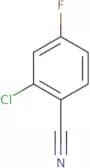
CAS:<p>2-Chloro-4-fluorobenzonitrile is a drug that has been shown to have antitumor effects by binding to the CB2 receptor. It inhibits hydrogenation reduction of the molecule, which may be due to its ability to react with both functional groups. 2-Chloro-4-fluorobenzonitrile has also been shown to inhibit progesterone receptor, which may lead to an increase in progesterone levels and a decrease in estrogen levels. The pharmacokinetic properties of this compound are not yet known.</p>Formula:C7H3ClFNPurity:Min. 95%Color and Shape:White PowderMolecular weight:155.56 g/mol