Building Blocks
This section contains fundamental products for the synthesis of organic and biological compounds. Building blocks are the essential starting materials used to construct complex molecules through various chemical reactions. They play a critical role in drug discovery, material science, and chemical research. At CymitQuimica, we offer a diverse range of high-quality building blocks to support your innovative research and industrial projects, ensuring you have the essential components for successful synthesis.
Subcategories of "Building Blocks"
- Boronic Acids & Boronic Acid Derivatives(5,756 products)
- Chiral Building Blocks(1,242 products)
- Hydrocarbon Building Blocks(6,095 products)
- Organic Building Blocks(61,051 products)
Found 199813 products of "Building Blocks"
Sort by
Purity (%)
0
100
|
0
|
50
|
90
|
95
|
100
Glycidyl Caprate
CAS:Controlled Product<p>Applications Glycidyl Caprate is an epoxy monomer used as a crosslinking agents for alkyd coatings.<br>References Sorokin, M.F. et al.: Lakokras. Mat. Ikh Prim., 5, 9 (1979);<br></p>Formula:C13H24O3Color and Shape:ColourlessMolecular weight:228.33Glycidol (~90%)
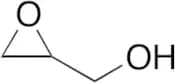
CAS:Controlled Product<p>Applications Stabilizer in manufacturing of vinyl polymers; intermediate in synthesis of glycerol, glycidyl ethers, and amines; additive for oil and synthetic hydraulic fluids; epoxy resin diluent.<br> Not a dangerous good if item is equal to or less than 1g/ml and there is less than 100g/ml in the package<br>References Hiles, R.A., et al.: Food Cosmet. Toxicol., 19, 347 (1981); Thompson, E.D., et al.: Food Chem. Toxicol., 22, 665 (1984);<br></p>Formula:C3H6O2Purity:~90%Color and Shape:ColourlessMolecular weight:74.083-Bromophenanthrene
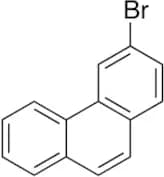
CAS:Controlled Product<p>Applications 3-BROMOPHENANTHRENE (cas# 715-50-4) is a useful research chemical.<br> Not a dangerous good if item is equal to or less than 1g/ml and there is less than 100g/ml in the package<br></p>Formula:C14H9BrColor and Shape:NeatMolecular weight:257.125-Hydroxymethyluracil
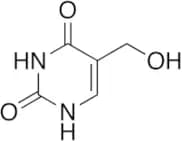
CAS:Controlled Product<p>Applications 5-Hydroxymethyluracil (cas# 4433-40-3) is a compound useful in organic synthesis.<br></p>Formula:C5H6N2O3Color and Shape:NeatMolecular weight:142.11Glyoxylic Acid (50% aqueous solution)
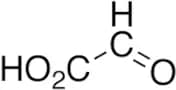
CAS:<p>Applications Glyoxylic Acid is used as a reagent in the synthesis of N-{[6-chloro-4-(2,6-dimethoxyphenyl)quinazolin-2-yl]carbonyl}-L-leucine, a novel nonpeptide chemotype selective for neurotensin receptor 2. Also used as a reagent in the synthesis of elemonic acid derivatives as Pin1 inhibitors.<br>References Thomas, J.B., et al.: Bioorg. Med. Chem. Lett., 25, 292 (2015); Li, X., et al.: Bioorg. Med. Chem. Lett., 24, 5612 (2014)<br></p>Formula:C2H2O3Color and Shape:Colourless LiquidMolecular weight:74.04Glyoxylic Acid Monohydrate
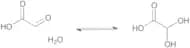
CAS:Controlled Product<p>Applications Occurs in unripe fruit and in young green leaves; has also been found in very young sugar beets.<br>References Lelieveld, J., et al.: Nature, 452, 737 (2008), da Silva, G., et al.: Environ. Sci. Technol., 44, 250 (2010),<br></p>Formula:C2H4O4Color and Shape:NeatMolecular weight:92.052-Oxazolidinone
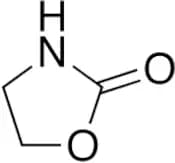
CAS:Controlled Product<p>Applications An oxazole derivative used as an antibiotic. It is also used in the preparation of compounds with antitumor activity. A metabolite of Furazolidone (F864100).<br>References Miyahara, M. et al.: CHem. Pharmac. Bull., 29, 2366 (1981); Hunder, G. et al.: Arch. Toxicol., 61, 161 (1987); Roloff, T. et al.: Med. Monat. Pharrm., 22, 370 (1999);<br></p>Formula:C3H5NO2Color and Shape:NeatMolecular weight:87.082-(3-hydroxyphenyl)propanoic acid
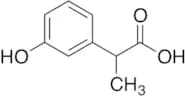
CAS:Controlled ProductFormula:C9H10O3Color and Shape:NeatMolecular weight:166.174Oxazole
CAS:Controlled Product<p>Applications Oxazole (cas# 288-42-6) is a compound useful in organic synthesis.<br> Not a dangerous good if item is equal to or less than 1g/ml and there is less than 100g/ml in the package<br></p>Formula:C3H3NOColor and Shape:NeatMolecular weight:69.065-[(3-hydroxyphenyl)methyl]oxolan-2-one
CAS:<p>Stability Hygroscopic<br>Applications 5-[(3-hydroxyphenyl)methyl]oxolan-2-one (cas# 21618-91-7) is a useful research chemical.<br></p>Formula:C11H12O3Color and Shape:NeatMolecular weight:192.213-Hydroxy-2-methylpyridine
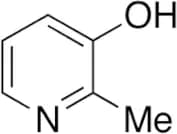
CAS:Controlled ProductFormula:C6H7NOColor and Shape:NeatMolecular weight:109.135-(3-hydroxyphenyl)pentanoic Acid
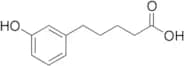
CAS:<p>Applications 5-(3-hydroxyphenyl)pentanoic acid (cas# 31129-95-0) is a useful research chemical.<br></p>Formula:C11H14O3Color and Shape:NeatMolecular weight:194.234-Hydroxybutyric Acid Methyl Ester (>80%)
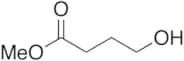
CAS:Controlled Product<p>Stability Hygroscopic<br>Applications 4-Hydroxybutyric Acid Methyl Ester is a derivative of 4-Hydroxybutyric Acid (H833015). A reactant used in the preparation of 4-aminothiazolyl analogs of natural product GE2270 A, useful against Clostridium difficile infection.<br>References LaMarche, M. et al.: J. Med. Chem., 55, 2376 (2012)<br></p>Formula:C5H10O3Purity:>80%Color and Shape:NeatMolecular weight:118.13N-Boc-piperazine
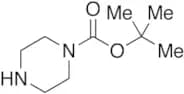
CAS:<p>Applications N-Boc-piperazine (cas# 57260-71-6) is a compound useful in organic synthesis.<br></p>Formula:C9H18N2O2Color and Shape:NeatMolecular weight:186.25(4E)-4-Hexen-1-ol
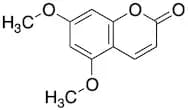
CAS:Controlled Product<p>Applications 4-Hexen-1-ol, (4E)- (cas# 928-92-7) is a useful research chemical.<br></p>Formula:C6H12OColor and Shape:NeatMolecular weight:100.165,7-Dimethoxycoumarin
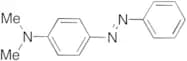
CAS:Controlled Product<p>Applications 5,7-Dimethoxycoumarin is a derivitized coumarin compound.<br></p>Formula:C11H10O4Color and Shape:NeatMolecular weight:206.19Dimethyl Yellow
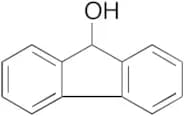
CAS:Controlled Product<p>Applications Dimethyl Yellow can induce cytochrome P-448, monooxygenase activities and UDPGT activity.<br> Not a dangerous good if item is equal to or less than 1g/ml and there is less than 100g/ml in the package<br>References Fujita, S., et. al.: Chem-Biol. Interact., 52, 15 (1984);<br></p>Formula:C14H15N3Color and Shape:Dark YellowMolecular weight:225.299-Hydroxyfluorene
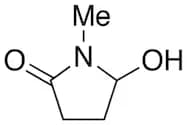
CAS:Controlled Product<p>Applications 9-Hydroxyfluorene is a wake promoting agent and is considered as the next generation anti-narcolepsy drug. It is also a potential environmental carcinogen.<br>References Dunn, D., et al.: Bioorg. Med. Chem. Lett., 22, 3751 (2012); Clark, J., et al.: Environ. Res., 117, 132 (2012); Li, F., et al.: Environ. Toxicol. Phar., 32, 373 (2011)<br></p>Formula:C13H10OColor and Shape:NeatMolecular weight:182.225-Hydroxy-N-methyl-2-pyrrolidinone
CAS:Controlled Product<p>Applications 5-Hydroxy-N-methyl-2-pyrrolidinone is a metabolite of N-methylpyrrolidone (NMP).<br>References Payan, J., et al.: Drug Metab. Dispos., 30, 1418 (2002), Carnerup, M., et al.: Food Chem. Toxicol., 43, 1441 (2005), Angerer, J., et al.: Toxicol. Sci., 93, 3 (2006),<br></p>Formula:C5H9NO2Color and Shape:NeatMolecular weight:115.132-Hydroxy-5-methylpyridine
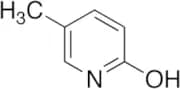
CAS:Controlled Product<p>Applications 2-Hydroxy-5-methylpyridine (cas# 1003-68-5) is a useful compound for organic synthesis. In particular it has been used for the diastereoselective preparation of cyclobutane-fused pyridinyl sulfonyl fluorides.<br>References Liu, J., et al.: Org. Biomol. Chem., 18, 4019 (2020)<br></p>Formula:C6H7NOColor and Shape:Light YellowMolecular weight:109.13


![5-[(3-hydroxyphenyl)methyl]oxolan-2-one](/_next/image/?url=https%3A%2Fstatic.cymitquimica.com%2Fproducts%2FTR%2Fthumb-webp%2FH100690.webp&w=3840&q=75)