Building Blocks
This section contains fundamental products for the synthesis of organic and biological compounds. Building blocks are the essential starting materials used to construct complex molecules through various chemical reactions. They play a critical role in drug discovery, material science, and chemical research. At CymitQuimica, we offer a diverse range of high-quality building blocks to support your innovative research and industrial projects, ensuring you have the essential components for successful synthesis.
Subcategories of "Building Blocks"
- Boronic Acids & Boronic Acid Derivatives(5,778 products)
- Chiral Building Blocks(1,242 products)
- Hydrocarbon Building Blocks(6,098 products)
- Organic Building Blocks(61,098 products)
Found 199594 products of "Building Blocks"
Sort by
Purity (%)
0
100
|
0
|
50
|
90
|
95
|
100
2-(4-Bromophenyl)-1,3-thiazole
CAS:<p>Versatile small molecule scaffold</p>Formula:C9H6BrNSPurity:Min. 95%Color and Shape:PowderMolecular weight:240.12 g/mol2-(2,4-Difluorophenyl)pyrrolidine hydrochloride
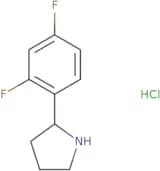
CAS:Versatile small molecule scaffoldFormula:C10H11NF2•HClPurity:Min. 95%Color and Shape:PowderMolecular weight:219.65 g/molCyclohexylmethanethiol
CAS:<p>Cyclohexylmethanethiol is a reactive chemical that is a colorless liquid with a strong odor. It is an organic compound belonging to the group of polybasic, hydroxamic acids and has been found to be an antimicrobial agent. Cyclohexylmethanethiol reacts with the hydroxyl groups on the surface of bacteria and damages the cell wall by disrupting the cross-linking of peptidoglycan. This reaction product inhibits bacterial growth by binding to proteins in the cell membrane, which prevents essential molecules from entering or exiting the cell. Cyclohexylmethanethiol also reacts with alkylthio groups on proteins in bacterial cells, which alters their function and leads to protein denaturation.</p>Formula:C7H14SPurity:Min. 95%Molecular weight:130.25 g/mol2-Phenylethanimidamide hydrochloride
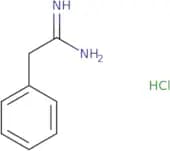
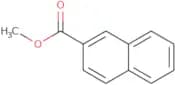
CAS:<p>2-Phenylethanimidamide hydrochloride is a chemical compound that is used as an insecticide and acaricide. It is a derivative of benzonitrile, which contains a chlorine atom. 2-Phenylethanimidamide hydrochloride is typically sprayed on plants to control pests such as mites, aphids, and beetles. This product can be mixed with other chemicals that help it stay on the plant for longer periods of time. The use of 2-phenylethanimidamide hydrochloride does not pose any health risks to humans or animals when use according to the directions on the label.</p>Formula:C8H10N2•HClPurity:Min. 95%Color and Shape:PowderMolecular weight:170.64 g/molMethyl 2-naphthoate
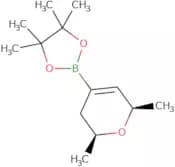
CAS:<p>Methyl 2-naphthoate is a chinese herb that has been used as a traditional medicine to treat inflammatory diseases. Methyl 2-naphthoate contains a carbonyl group, which is an important part of the molecule. The 13C NMR spectroscopy and X-ray crystal structures reveal the presence of a hydrogen bond between the carbonyl group and water molecule. The kinetic data demonstrate that methyl 2-naphthoate has significant cytotoxicity in vitro. These results were confirmed by in vivo experiments using mice with myeloma cells. Moreover, methyl 2-naphthoate was found to significantly suppress pro-inflammatory factors such as TNF-α and IL-1β.<br>Methyl 2-naphthoate is an analytical method for detecting carboxylic acid derivatives in organic solvents because it reacts with thiourea to produce colorless crystals of methyl naphthylamide.</p>Formula:C10H7CO2CH3Purity:Min. 95%Color and Shape:PowderMolecular weight:186.21 g/mol2-(2,6-dimethyl-3,6-dihydro-2H-pyran-4-yl)-4,4,5,5-tetramethyl-1,3,2-dioxaborolane
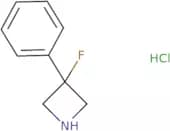
CAS:<p>2-(2,6-dimethyl-3,6-dihydro-2H-pyran-4-yl)-4,4,5,5-tetramethyl-1,3,2-dioxaborolane is a reagent that is used in the synthesis of other compounds. It is a high quality research chemical and useful scaffold for the preparation of fine chemicals. This versatile building block is also used as an intermediate or building block in the synthesis of complex compounds.</p>Formula:C13H23BO3Purity:(%) Min. 95%Color and Shape:Clear Viscous LiquidMolecular weight:238.13 g/mol3-Fluoro-3-phenylazetidine hydrochloride
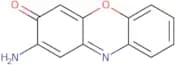
CAS:<p>3-Fluoro-3-phenylazetidine hydrochloride is a versatile building block that can be used in the synthesis of complex compounds. This compound has been shown to have high quality and is a useful reagent for research chemists. 3-Fluoro-3-phenylazetidine hydrochloride is also used as a valuable intermediate for the preparation of many important organic compounds, including pharmaceuticals and agrochemicals. It has been shown to be an effective scaffold for the synthesis of new chemical compounds with high drug potential.</p>Formula:C9H11ClFNPurity:Min. 95%Color and Shape:PowderMolecular weight:187.64 g/molQuestiomycin A
CAS:<p>Questiomycin A is a sesquiterpene lactone that is an antimicrobial agent. It has been shown to modulate the immune system by inhibiting the production of cytokines and altering the expression of genes related to autoimmune diseases. Questiomycin A also inhibits cell growth in myeloma cells, which is due to its ability to inhibit dinucleotide phosphate (NADPH) reductase, an enzyme required for mitochondrial membrane potential maintenance and other cellular functions. In addition, questiomycin A has been shown to induce apoptosis in liver cells as well as carcinoma cell lines. This drug can also be used for body formation, as it stimulates bone growth and inhibits osteoclast activity.</p>Formula:C12H8N2O2Purity:Min. 95 Area-%Color and Shape:PowderMolecular weight:212.2 g/mol(1S,3S,5S)-2-Azabicyclo[3.1.0]hexane-3-carboxylic Acid
CAS:(1S,3S,5S)-2-Azabicyclo[3.1.0]hexane-3-carboxylic Acid is a crystalline compound in the form of a white solid with a melting point of 210°C and a molecular weight of 164.09 g/mol. It has been used to stabilize the helical conformation of l-proline and proline, which are amino acids that have been shown to inhibit the conformational changes in proteins that may lead to protein misfolding and aggregation. (1S,3S,5S)-2-Azabicyclo[3.1.0]hexane-3-carboxylic Acid also has structural properties that make it suitable for x-ray crystallography experiments as well as structural studies with dichroism or tetrameric techniques.Formula:C6H9NO2Purity:Min. 95%Molecular weight:127.14 g/moltert-Butyl 7-oxo-2-azaspiro[4.4]nonane-2-carboxylate
CAS:<p>Versatile small molecule scaffold</p>Formula:C13H21NO3Purity:Min. 95%Molecular weight:239.31 g/mol6-[(1E)-2-(3,4-Dihydroxyphenyl)ethenyl]-3,4-dihydroxy-2H-pyran-2-one
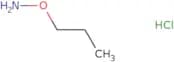
CAS:<p>Versatile small molecule scaffold</p>Formula:C13H10O6Purity:Min. 95%Color and Shape:PowderMolecular weight:262.2 g/mol1-(Aminooxy)propane hydrochloride
CAS:<p>1-Aminooxypropane hydrochloride is an alkylthio group with a phenoxy group and an antibacterial activity. It is used as a precursor for the synthesis of many organic compounds. 1-Aminooxypropane hydrochloride is produced by the reaction of ethyl bromoacetate and ammonia in liquid ammonia, or by the reaction of propylene oxide with methylamine to produce 1-aminooxypropane. It has been shown to exhibit antimicrobial activity against certain strains of Escherichia coli and Salmonella enterica serovar Typhimurium, but not against Staphylococcus aureus. This compound is also used as a building block for metal ion catalysts such as copper complexes, amines, trifluoromethylated heterocyclic compounds, and others.</p>Formula:C3H10ClNOPurity:Min. 95%Color and Shape:PowderMolecular weight:111.57 g/mol8α-Phenyl-octahydropyrrolo[1,2-a]pyrimidin-6-one
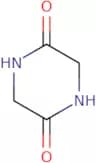
CAS:<p>Versatile small molecule scaffold</p>Formula:C13H16N2OPurity:Min. 95%Color and Shape:PowderMolecular weight:216.3 g/molGlycine anhydride
CAS:<p>Glycine anhydride is a fine chemical that is used as a building block in the synthesis of many other compounds. It is also used as a reagent, and can be found in research chemicals, speciality chemicals, or high-quality products. Glycine anhydride is also used as a reaction component to make other molecules. It is versatile and can be used as a scaffold for complex compounds. Glycine anhydride has CAS No. 106-57-0 and can be found in the following chemical name: 3-(2-Aminoethyl)glycine anhydride</p>Formula:C4H6N2O2Molecular weight:114.1 g/molRef: 3D-G-4600
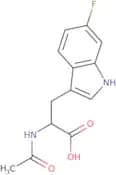
1kgTo inquire5kgTo inquire10kgTo inquire25kgTo inquire2500gTo inquire-Unit-kgkgTo inquire2-Acetamido-3-(6-fluoro-1H-indol-3-yl)propanoic acid
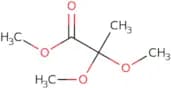
CAS:<p>2-Acetamido-3-(6-fluoro-1H-indol-3-yl)propanoic acid is a fine chemical that can be used as a versatile building block in the synthesis of a wide range of compounds. It is also an intermediate in research and industrial processes, and is used as a reaction component for complex compound synthesis. 2-Acetamido-3-(6-fluoro-1H-indol-3-yl)propanoic acid has been shown to be useful as a building block in high quality synthesis.</p>Formula:C13H13FN2O3Purity:Min. 95%Molecular weight:264.25 g/molMethyl 2,2-Dimethoxypropionate
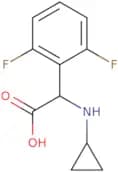
CAS:<p>Methyl 2,2-dimethoxypropionate is an oxidation catalyst that is used to convert terminal alkynes into alcohols. It is also a model system for the study of the biosynthesis of a number of natural products and drugs. In addition, methyl 2,2-dimethoxypropionate has been shown to have anticancer properties, although it has not been studied in humans. It has also been shown to have anti-inflammatory effects in animals and may be a potential treatment for hepatitis and depression in humans. Methyl 2,2-dimethoxypropionate can be synthesized by reacting citric acid with methanol or ethanol in the presence of hydroxyl ions.</p>Formula:C6H12O4Purity:Min. 95%Color and Shape:Clear LiquidMolecular weight:148.16 g/mol2-(Cyclopropylamino)-2-(2,6-difluorophenyl)acetic acid
CAS:Versatile small molecule scaffoldFormula:C11H11F2NO2Purity:Min. 95%Color and Shape:PowderMolecular weight:227.21 g/mol3-[3-(Methylcarbamoyl)phenyl]propanoic acid
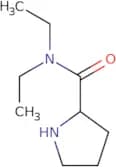
CAS:<p>Versatile small molecule scaffold</p>Formula:C11H13NO3Purity:Min. 95%Color and Shape:PowderMolecular weight:207.23 g/molN,N-Diethylpyrrolidine-2-carboxamide
CAS:<p>Versatile small molecule scaffold</p>Formula:C9H18N2OPurity:Min. 90%Color and Shape:PowderMolecular weight:170.25 g/molAdipoRon
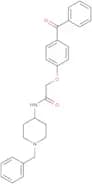
CAS:<p>AdipoRon is a high-quality, versatile building block that can be used in the synthesis of complex molecules. It is a reagent and speciality chemical with applications in research and development. AdipoRon reacts with other chemicals to form new compounds, which are useful as scaffolds for the synthesis of pharmaceuticals or fine chemicals.</p>Formula:C27H28N2O3Purity:Min. 95%Color and Shape:PowderMolecular weight:428.53 g/mol



![(1S,3S,5S)-2-Azabicyclo[3.1.0]hexane-3-carboxylic Acid](/_next/image/?url=https%3A%2Fstatic.cymitquimica.com%2Fproducts%2F3D%2Fthumb-webp%2FPIA19313.webp&w=3840&q=75)
![tert-Butyl 7-oxo-2-azaspiro[4.4]nonane-2-carboxylate](/_next/image/?url=https%3A%2Fstatic.cymitquimica.com%2Fproducts%2F3D%2Fthumb-webp%2FUCC71642.webp&w=3840&q=75)
![6-[(1E)-2-(3,4-Dihydroxyphenyl)ethenyl]-3,4-dihydroxy-2H-pyran-2-one](/_next/image/?url=https%3A%2Fstatic.cymitquimica.com%2Fproducts%2F3D%2Fthumb-webp%2FZWC96466.webp&w=3840&q=75)
![8α-Phenyl-octahydropyrrolo[1,2-a]pyrimidin-6-one](/_next/image/?url=https%3A%2Fstatic.cymitquimica.com%2Fproducts%2F3D%2Fthumb-webp%2FGAA02925.webp&w=3840&q=75)
![3-[3-(Methylcarbamoyl)phenyl]propanoic acid](/_next/image/?url=https%3A%2Fstatic.cymitquimica.com%2Fproducts%2F3D%2Fthumb-webp%2FJZB49430.webp&w=3840&q=75)