Building Blocks
This section contains fundamental products for the synthesis of organic and biological compounds. Building blocks are the essential starting materials used to construct complex molecules through various chemical reactions. They play a critical role in drug discovery, material science, and chemical research. At CymitQuimica, we offer a diverse range of high-quality building blocks to support your innovative research and industrial projects, ensuring you have the essential components for successful synthesis.
Subcategories of "Building Blocks"
- Boronic Acids & Boronic Acid Derivatives(5,756 products)
- Chiral Building Blocks(1,242 products)
- Hydrocarbon Building Blocks(6,095 products)
- Organic Building Blocks(61,055 products)
Found 199650 products of "Building Blocks"
Sort by
Purity (%)
0
100
|
0
|
50
|
90
|
95
|
100
6-Phenoxy-3-pyridinemethanol
CAS:<p>Please enquire for more information about 6-Phenoxy-3-pyridinemethanol including the price, delivery time and more detailed product information at the technical inquiry form on this page</p>Formula:C12H11NO2Purity:Min. 95%Color and Shape:Clear LiquidMolecular weight:201.22 g/mol1,1,2,3,3-Pentachloropropane
CAS:<p>Please enquire for more information about 1,1,2,3,3-Pentachloropropane including the price, delivery time and more detailed product information at the technical inquiry form on this page</p>Formula:C3H3Cl5Purity:Min. 95%Color and Shape:Clear LiquidMolecular weight:216.32 g/mol2-(Pyridin-4-ylformamido)acetic acid
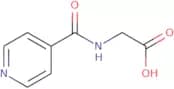
CAS:<p>2-(Pyridin-4-ylformamido)acetic acid is a chemical intermediate that is used in the synthesis of other compounds. It is a chemical building block, useful for the production of fine chemicals and speciality chemicals. 2-(Pyridin-4-ylformamido)acetic acid can be used as a reaction component or reagent in organic synthesis. It has been shown to have high purity and quality for research purposes. CAS No. 2015-20-5.br><br>2-(Pyridin-4-ylformamido)acetic acid can be used to synthesize a variety of compounds with different properties, such as antihistamines, antibiotics, antihypertensives, and antipsychotics.</p>Formula:C8H8N2O3Purity:Min. 95 Area-%Color and Shape:PowderMolecular weight:180.16 g/molPhospho-L-tyrosine disodium
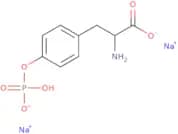
CAS:<p>Phospho-L-tyrosine disodium is a versatile building block that has many different uses in research. It is used as a reagent for the synthesis of other chemicals, such as vitamins, drugs and pesticides. The compound can be used to make high quality, useful intermediates for chemical reactions or as a reaction component. Phospho-L-tyrosine disodium is a speciality chemical that can be used in the production of many complex compounds. This product also has CAS number 1610350-91-8.</p>Formula:C9H10NNa2O6PPurity:Min. 95%Color and Shape:White PowderMolecular weight:305.13 g/molPoly epsilon L-lysine HCl approx MW 4500Da
CAS:<p>Poly epsilon L-lysine HCl is a water soluble, biodegradable, cationic peptide that can be produced via fermentation by Streptomyces albulus. It shows a wide range of antimicrobial activity against microorganisms such as bacteria, yeasts and molds and is stable at high temperatures and under both acidic and alkaline conditions. This non-toxic poly-L-lysine is commonly used as a supplement or preservative in various food, beverage and cosmetics products. It can also be used for microscopy glass slides coating.</p>Formula:(C6H12N2O•HCl)nPurity:Min. 95.0 Area-%Color and Shape:Off-White Yellow Powder4-Mercaptobenzonitrile
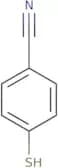
CAS:<p>4-mercaptobenzonitrile (4MBN) is a typical compound used in many spectroscopic experiments. The addition of 4-mercaptobenzonitrile to metal surfaces is used to create self-assembled monolayers with metals. For numerous reasons, it can difficult to immbolize certain chemical groups on surfaces. The addition of 4-mercaptobenzonitrile forms a modified metal surface that enhances technique sensitivity and serves as tool for a better understanding of the interfaces. In recent years, the use of 4-mercaptobenzonitrile together with other molecules on metal nanoparticles has been explored for biomedicinal purposes, serving as a tool for creating surface-enhanced Raman scattering tags (SER tags), useful as cancer biomarker imaging (Li, 2018).</p>Formula:C7H5NSPurity:Min. 95%Color and Shape:PowderMolecular weight:135.19 g/mol7-Methylindole
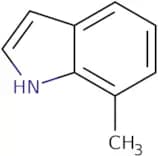
CAS:<p>7-Methylindole is a biochemical substance that is synthesized in the body. It is produced in the liver, and it can be found in the brain, heart, and kidney. 7-Methylindole has been shown to have cancer-fighting properties. 7-Methylindole binds to DNA by methylating nucleic acid bases, which causes a change in the genetic code. This leads to tumor cells being more sensitive to treatment with other substances that inhibit DNA synthesis or repair, such as anthranilate and 5-methoxyindole.</p>Formula:C9H9NPurity:Min 98%Color and Shape:PowderMolecular weight:131.17 g/mol7-Methoxy-1H-indole
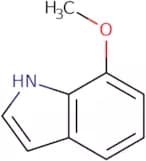
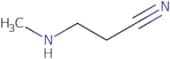
CAS:<p>7-Methoxy-1H-indole (7MI) is a synthetic compound that exhibits anti-inflammatory activity. It is an analog of the amino acid methionine found in proteins and its synthesis involves the condensation of a chlorinated alkyl acetate with an esterified hydrazide to form the corresponding amide. 7MI has been shown to inhibit both bacterial and mammalian protein synthesis, as well as to inhibit tumor cell growth. 7MI binds reversibly to the N7 atom of the adenine base in DNA, thereby inhibiting DNA replication through inhibition of DNA polymerase.</p>Formula:C9H9NOPurity:Min. 95%Color and Shape:Clear LiquidMolecular weight:147.17 g/molN-Methyl-beta-alaninenitrile
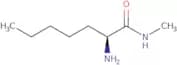
CAS:<p>Formamide is a colorless gas with a pungent, irritating odor. It is used as an antiseptic and an intermediate in the production of other organic compounds. Formamide has been shown to be effective against animal-derived pathogens such as Covid-19 and influenza A/H5N1, and it has been proposed as a potential treatment for pandemic influenza. Formamide reacts with chlorine to produce formate salt (formic acid), which can then be converted into amines or hexamethylphosphoramide. The reaction rate of formamide increases with increasing temperature, but decreases with increasing concentration of hydrogen.<br>Formamide is also used as a solvent in microscopy to dissolve tissue samples for analysis by electron microscopy techniques.</p>Formula:C4H8N2Purity:Min. 98 Area-%Color and Shape:Colorless Clear LiquidMolecular weight:84.12 g/mol6-Bromo-3h-imidazo[4,5-β]pyridine-5-carboxylic acid
CAS:<p>Versatile small molecule scaffold</p>Formula:C7H4BrN3O2Purity:Min. 95%Color and Shape:PowderMolecular weight:242.03 g/mol4-Methoxy-6-methyl-2H,5H,6H,7H,8H-[1,3]dioxolo[4,5-G]isoquinoline
CAS:<p>4-Methoxy-6-methyl-2H,5H,6H,7H,8H-[1,3]dioxolo[4,5-G]isoquinoline is an electron donor that has been shown to have an excitatory effect on cells. It has been used for the treatment of cancer and other diseases. 4-Methoxy-6-methyl-2H,5H,6H,7H,8H-[1,3]dioxolo[4,5-G]isoquinoline has been shown to have a cavity inhibiting effect in mice and also inhibits the growth of tumor cells in rats. This drug has been evaluated for clinical use in humans and is available as a granule formulation. The particle size of 4-Methoxy-6-methyl-2H,5H,6H,7H,8H-[1,3]dioxolo[4,5-G]</p>Formula:C12H15NO3Purity:Min. 95%Color and Shape:PowderMolecular weight:221.25 g/mol3,3-Difluorocyclobutanone
CAS:<p>Versatile small molecule scaffold</p>Formula:C4H4F2OPurity:Min. 95%Color and Shape:Clear LiquidMolecular weight:106.07 g/mol[3-(Morpholinomethyl)phenyl]methylamine
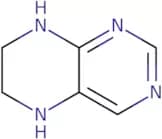
CAS:<p>3-(Morpholinomethyl)phenyl]methylamine (3-MP) is a modified form of the drug 3-morpholinoaniline. It is an organic compound that has been used as a stabilizer in polyolefins, such as polyethylene, to prevent degradation by heat and light. 3-MP is also used to modify copolymers of polypropylene and polyethylene. This modification prevents the copolymer from being degraded by heat, light, or oxygen. The polymerization reaction creates a cross-linked structure that protects the copolymer from degradation.</p>Formula:C12H18N2OPurity:Min. 95%Color and Shape:Clear LiquidMolecular weight:206.29 g/mol5,6,7,8-Tetrahydropteridine
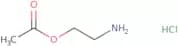
CAS:<p>5,6,7,8-Tetrahydropteridine is a prodrug of 5-fluorouracil. It has been shown to be effective in the treatment of solid tumours in animals. The effects of 5,6,7,8-tetrahydropteridine on cancer cells depend on the pH of the environment. It is active at low pH and inactive at high pH. 5,6,7,8-Tetrahydropteridine has been used as a predictive biomarker for human cancer cells. A study showed that 5,6,7,8-tetrahydropteridine was effective against depression in rats. However it can cause side effects such as nausea and vomiting when taken orally and needs to be administered intravenously or intramuscularly. 5-Fluorouracil (5FU) is an anti-cancer drug that belongs to the group of fluoropyrimidines and inter</p>Formula:C6H8N4Purity:Min. 95%Color and Shape:PowderMolecular weight:136.15 g/mol2-Aminoethyl Acetate Hydrochloride
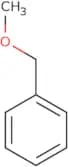
CAS:<p>Versatile small molecule scaffold</p>Formula:C4H9NO2·HClPurity:Min. 95%Color and Shape:PowderMolecular weight:139.58 g/molBenzyl methyl ether
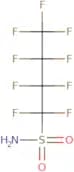
CAS:<p>Benzyl methyl ether is a colorless liquid with a sweet odor. It is used as an organic solvent in chemical reactions and as a solvent in the synthesis of pharmaceuticals, dyes, pesticides, and other organic compounds. Benzyl methyl ether has been shown to react with oxygen and light to produce benzoic acid. The reaction between benzyl methyl ether and glycol ether can be used for sample preparation prior to analysis using gas chromatography-mass spectrometry (GC-MS). GC-MS is often used for the identification of unknown substances in environmental samples. Benzyl methyl ether can also be used for chemical ionization (CI) in mass spectrometry.</p>Formula:C8H10OPurity:Min. 95%Molecular weight:122.17 g/molPerfluorobutylsulphonamide
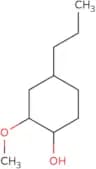
CAS:<p>Perfluorobutylsulphonamide is an atrial reactive agent that has been shown to be effective in the treatment of autoimmune diseases. It is a monoclonal antibody that binds to a specific site on the Na+ channel, which is located in the heart and brain cells. This drug has been shown to have no adverse effects on cardiac function or weight gain, which makes it preferable to other drugs in this class. Perfluorobutylsulphonamide also inhibits the production of reactive oxygen species and nitric oxide, which are important in the development of autoimmune diseases. The following product details are for 3-desacetylcefotaxime potassium:</p>Formula:C4H2F9NO2SPurity:Min. 95%Color and Shape:PowderMolecular weight:299.12 g/mol2-Methoxy-4-propylcyclohexan-1-ol
CAS:<p>2-Methoxy-4-propylcyclohexan-1-ol is a versatile compound with various applications. It is commonly used as an anesthetic and can be found in research chemicals. This compound has been shown to have colloidal properties, making it suitable for use in the formulation of various products. Additionally, 2-Methoxy-4-propylcyclohexan-1-ol has been studied for its potential therapeutic effects on conditions such as casein-related disorders and fatty acid metabolism. Its unique structure allows it to interact with different biological pathways, including protein kinase signaling and carotenoid synthesis. Overall, this compound offers a wide range of possibilities for scientific research and product development.</p>Formula:C10H20O2Purity:Min. 95%Color and Shape:Clear LiquidMolecular weight:172.26 g/mol3-[(1H-1,2,3,4-Tetrazol-5-yl)methyl]-1H-indole
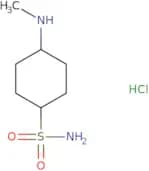
CAS:<p>Versatile small molecule scaffold</p>Formula:C10H9N5Purity:Min. 95%Color and Shape:PowderMolecular weight:199.21 g/mol4-(Methylamino)cyclohexane-1-sulfonamide hydrochloride
CAS:<p>Versatile small molecule scaffold</p>Formula:C7H16N2O2S•HClPurity:Min. 95%Color and Shape:PowderMolecular weight:228.7 g/mol


![6-Bromo-3h-imidazo[4,5-β]pyridine-5-carboxylic acid](/_next/image/?url=https%3A%2Fstatic.cymitquimica.com%2Fproducts%2F3D%2Fthumb-webp%2FPKB93941.webp&w=3840&q=75)
![4-Methoxy-6-methyl-2H,5H,6H,7H,8H-[1,3]dioxolo[4,5-G]isoquinoline](/_next/image/?url=https%3A%2Fstatic.cymitquimica.com%2Fproducts%2F3D%2Fthumb-webp%2FAAA55010.webp&w=3840&q=75)

![[3-(Morpholinomethyl)phenyl]methylamine](/_next/image/?url=https%3A%2Fstatic.cymitquimica.com%2Fproducts%2F3D%2Fthumb-webp%2FRDA27183.webp&w=3840&q=75)
![3-[(1H-1,2,3,4-Tetrazol-5-yl)methyl]-1H-indole](/_next/image/?url=https%3A%2Fstatic.cymitquimica.com%2Fproducts%2F3D%2Fthumb-webp%2FQAA99212.webp&w=3840&q=75)